

Sourcing premium Stacked Stone Veneer requires balancing authentic mineral aesthetics with strict building code weight limits; selecting low-grade batches often leads to patchy visual results and costly site rework. For high-volume wholesalers, failing to control color consistency at the quarry level destroys margins through rejected shipments and customer disputes.
We benchmark material performance against ASTM C170 strength standards and the 15 lbs/sqft adhered veneer threshold. This evaluation focuses on how direct quarry sourcing and 17.5-ton container weight optimization protect your supply chain and ensure road-legal transport for North American distribution.
What is Natural Stacked Stone Veneer? (Anatomy of a Panel)
Modular panels of genuine quarried stone strips, typically 6″x24″, using a Z-shape interlock for seamless, grout-free wall cladding in commercial and residential projects.
Natural ułożony kamień panels serve as an engineered solution for large-scale masonry projects. Instead of installing individual stones, we assemble multiple hand-selected strips into a single modular unit. This system drastically reduces labor hours while ensuring the final wall maintains the authentic depth and shadow lines of traditional dry-stack masonry. For B2B procurement, understanding the physical tolerances and material composition is vital for structural planning and container weight optimization.
| Technical Parameter | Górny kamień źródłowy Standard |
|---|---|
| Standard Dimensions | 6″ x24″ (approx. 150mm x 600mm) |
| Nominal Thickness | 1 inch (25mm) with ±1/4 inch tolerance |
| Average Weight | 8–12 lbs per square foot |
| Face Texture | Natural Split (Cleft) for organic shadows |
| Back Finish | Precision Sawn for maximum mortar contact |
| HS Codes | Slate: 6803.00.90 | Quartzite: 6802.93.11 |
Modular Construction and Component Anatomy
The integrity of a stacked stone panel depends on how the raw quarry blocks are processed. We use a guillotine splitting method to create strips with a natural cleft face, preserving the geological character of the slate or quartzite. The back of each strip undergoes precision sawing to create a flat, consistent surface. This ensures the installer achieves 100% mortar coverage, preventing hollow spots that lead to debonding in exterior applications.
- Material Origin: 100% genuine stone sourced from our quarries, including slate, quartzite, marble, and sandstone.
- Shadow Depth: The split face provides micro-textures that vary in depth, creating authentic shadows under architectural lighting.
- Bonding Agent: High-strength, industrial-grade epoxy bonds the individual strips into a single panel, meeting ASTM C170 requirements.
- Code Compliance: Unit weights stay below the 15 lbs/sqft threshold, qualifying these as adhered masonry veneers per IBC standards.
The Seamless Z-Shape Interlocking System
To avoid the “stair-step” look common in low-grade stone products, we utilize an interlocking Z-shape design. This geometry hides vertical joints, allowing the panels to flow across the wall as if they were hand-stacked on-site. For distributors, this means fewer installation complaints and a higher quality finish for the end client.
- Installation Speed: The 6″x24″ format allows contractors to cover large square footages 5x faster than individual stone units.
- Grout-Free Aesthetic: Tight tolerances during assembly eliminate the need for mortar joints between panels.
- Batch Control: We implement color consistency protocols at the quarry level to prevent patchy, inconsistent visual results across different production lots.
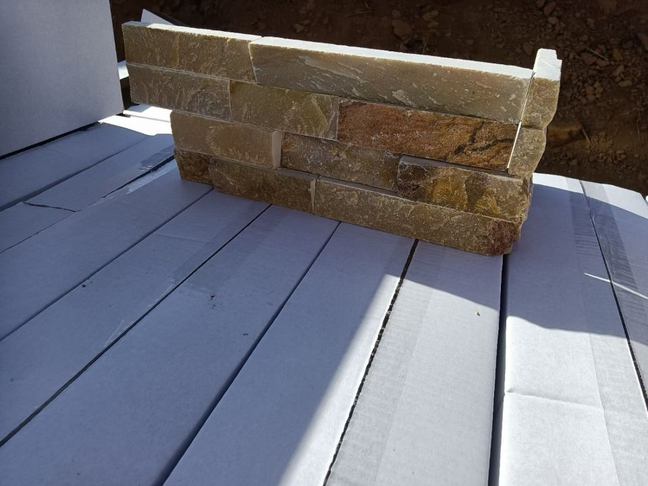
- Corner Units: Matching L-shaped corner pieces ensure a professional wrap around columns and pillars without exposed seams.
Wholesalers must also consider logistics when ordering. We optimize our packaging to 17.5 tons per 20GP container for North American road weight limits, protecting your transport margins while ensuring product safety during ocean transit.

Comparing Material Types: Slate, Quartzite, Sandstone, and Marble
Quartzite and slate provide the highest density for exterior use, while marble and sandstone suit high-end interiors when properly sealed. Choose based on climate and porosity.
Performance Benchmarks for Absorption and Weather Resistance
Material selection dictates the longevity of a commercial facade. We select natural stone to meet high-density requirements equivalent to ASTM C170 for compressive strength and ASTM C97 for absorption. These metrics separate professional-grade cladding from decorative interior tile.
- Quartzite and Slate: These materials exhibit the lowest water absorption rates. This makes them the standard for freeze-thaw climates and exterior retaining walls.
- Sandstone and Marble: These stones possess higher porosity. While they offer premium aesthetics for interior feature walls, they require professional-grade sealing to prevent spalling in exterior applications.
- Weight Profile: Our standard 6″ x24″ panels weigh 8–12 lbs/sqft, keeping them within the 15 lb/ft² limit for adhered masonry veneer codes.
Direct Quarry Selection for Batch Color Consistency
Wholesale buyers often face the “patchy wall” problem caused by mixing production lots. Buying direct from the quarry eliminates this risk. We implement strict sorting protocols at the source in Hebei to ensure Grade A material consistency across hundreds of square meters.
Our factory-direct model removes middleman markups while protecting dealer margins. We provide pre-shipment visual verification, including photos and videos, so wholesalers can verify batch uniformity before the balance payment. This transparency ensures that high-volume orders for commercial cladding maintain a professional, interlocking appearance.
- Glacier White (Quartzite): Maintains high-level sorting to prevent yellowing or off-color streaks in large batches.
- Carbon Black / Midnight Slate: Selected for mineral stability to avoid the “rusting” or oxidation common in lower-grade slates.
- Seamless Z-Shape: Every panel uses a precision interlocking design to hide vertical seams and create a grout-free finish.
Wholesalers in North America benefit from our specialized US-Port Weight Optimization. We cap container loads at approximately 17.5 tons to comply with strict road weight regulations while maximizing the pallet count per shipment.
Grade A vs. Grade B: What Distributors Need to Know About Color Variation
Grade A panels maintain 5% color consistency through quarry-level sorting, while Grade B lots often deviate by 50%, causing patchy, unmarketable installations for wholesalers.
Natural Shade Variation Standards (V3–V4)
Natural stone panels carry V3 (moderate) or V4 (substantial) shade variation ratings. These ratings reflect the 100% authentic quarry origin of the material. Unlike manufactured stone, which relies on surface-level pigments that can fade or chip, our natural stacked stone maintains full-body color through every cut and edge.
Perceived contrast between individual pieces changes based on lighting and environmental factors. We advise distributors to showcase samples under site-specific lighting to manage client expectations. Authentic stone variation provides the depth that high-end architectural projects require, but it must be managed through professional batch control.
Batch Color Consistency and Visual Verification Protocols
Direct quarry control at our Hebei factory allows us to sort material at the source. We reduce batch-to-batch deviation to approximately 5%. Substandard Grade B products often lack this lot control, leading to mismatched pallets that create visible banding on finished walls. We utilize specific protocols to ensure inventory remains consistent for large-scale orders.
- Pre-Shipment Visual Verification: We send high-resolution photos and videos of the actual production lot to the distributor before they make the final 70% balance payment.
- Direct Quarry Sourcing: Factory-direct sorting eliminates middleman mixing, ensuring that models like Alaska Gray or Carbon Black Slate maintain their intended color profile.
- Sorting Tolerance: We strictly adhere to a 5% margin for color deviation, preventing the “patchy” appearance common in lower-grade stone batches.
- Inventory Protection: We label and track every production run to prevent dealers from receiving mixed lots that cause installation rework.
Maintaining these standards protects dealer margins by reducing returns and disputes. Professional wholesalers rely on this level of batch control to provide predictable results for commercial contractors and architects who cannot afford visual inconsistencies on-site.
Premium Stacked Stone for Architectural Success
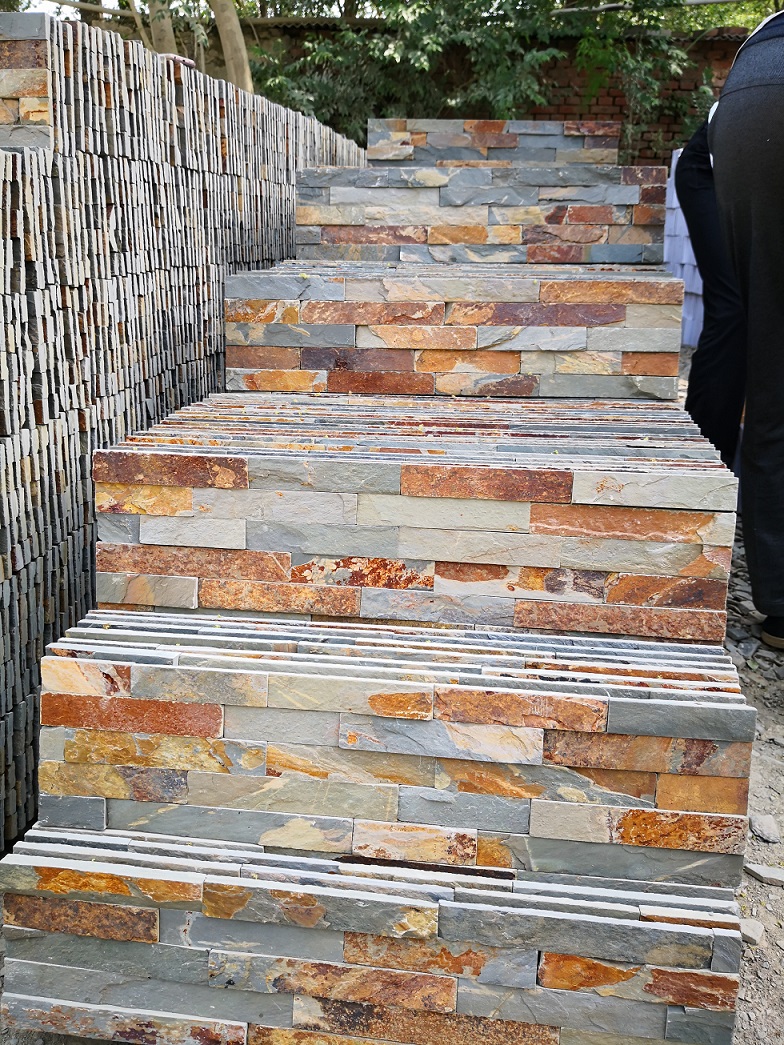
Texture Options: Split Face, Honed, and Antiqued Finishes
Texture dictates visual depth and maintenance. Split-face offers rugged 3D relief for exteriors, while honed and antiqued finishes provide refined surfaces for high-traffic commercial interiors.
Visual and Structural Characteristics of Natural Stone Finishes
Finish selection affects more than aesthetics. It changes how the stone interacts with light and how the panel adheres to the substrate. Mechanical processing at our factory determines the final relief and surface porosity of each series.
- Split-face: We use mechanical cleavage along natural stone bedding to create irregular, high-relief surfaces that emphasize light and shadow.
- Honed: Abrasive grinding achieves a flat, matte appearance that eliminates surface shadowing for a modern, minimalist look.
- Antiqued/Tumbled: Edge softening and surface distressing simulate a historical, weathered stone profile.
- Mechanical Key: Increased surface roughness in split-face panels provides a better grip for mortar but requires high-quality sealing to manage water absorption.
Technical Performance and Series Specifications for 2026 Designs
We engineer our product lines to balance visual impact with logistical efficiency. By controlling the thickness and relief of each finish, we ensure every panel stays within the 15 lbs/sqft limit required for adhered masonry veneer codes.
- Flat Series: Utilizes honed and low-relief textures (0.75” to 1.25” thickness) for interior feature walls and backsplashes.
- Rough Series: Features deep 3D textures up to 1.75” thick, weighing approximately 55kg/m2, ideal for exterior chimneys.
- ASTM Compliance: All textures maintain compliance with ASTM C170 for compressive strength and ASTM C97 for low absorption rates.
- Batch Sorting: Our factory-level sorting ensures textures like the Pencil Series maintain a uniform visual flow across large-scale commercial installations.
Choosing the right texture prevents “patchy” walls and reduces field sorting time. For high-exposure commercial retaining walls, we recommend quartzite split-face options due to their density and natural resistance to environmental wear.

Backing Systems: Glue-joined, Mesh-backed, or Cement-backed?
Select backing based on structural load. Cement-backed systems suit high-rise exteriors, while high-strength epoxy glue-joined panels optimize weight and installation speed for residential interiors.
| System Type | Primary Application | Weight Profile | Key Technical Limit |
|---|---|---|---|
| Glue-joined (TSS Standard) | Interior feature walls, fireplaces, residential facades | 8–12 lbs/sqft | Requires high-strength epoxy for stone stability |
| Mesh-backed | Lightweight interior mosaics, dry-area backsplashes | <8 lbs/sqft | Not recommended for freeze-thaw cycles |
| Cement-backed | Commercial high-rise cladding, exterior wet walls | 13–15 lbs/sqft | ASTM C1670 compliance for heavy structural loads |
Bond Strength and Substrate Compatibility Standards
For distributors, the choice of backing dictates the project’s long-term liability. We focus on matching the panel’s mechanical bond to the wall’s expected movement. Interior installs over wood framing require flexibility that traditional cement-backed units often lack. Conversely, exterior commercial facades demand rigid compliance with high-load standards to prevent delamination in extreme weather.
- Bond Shear Strength: Must reach at least 50 psi per ASTM C1242 standards to ensure the stone does not detach from the substrate.
- Deflection Limits: Supporting walls should not exceed a stiffness limit of L/360 for stone veneer over flexible framing.
- Commercial Compliance: Use cement-backed units for high-load facades requiring ASTM C1670 standards.
- Fiberglass Mesh Risks: These systems often fail in northern climates (2026 projects) due to mesh degradation during repeated freeze-thaw cycles.
High-Strength Epoxy Resin for Seamless Interlocking Panels
We utilize a proprietary high-strength epoxy resin for our quartzite and slate panels. This formulation addresses the common “stone pop-off” issue found in cheap glue-joined alternatives. By controlling the curing environment at our factory, we guarantee that the stone-to-panel adhesion survives international logistics and rough site handling.
- Z-Shape Interlocking: Designed for a grout-free, professional finish that hides seams and speeds up installation.
- Absorption Rating: We select stones meeting ASTM C97 standards to maintain adhesive integrity in wet areas like showers or backsplashes.
- Epoxy Stability: The resin handles dense materials like Midnight Slate and Arctic Golden without chemical degradation over time.
- Handling Durability: Controlled curing prevents detachment during 20GP container shipping and heavy handling.
Wholesalers should note that while cement-backed systems offer high structural integrity, our glue-joined panels provide a competitive edge for residential dealers by maximizing container volume (up to 864 m2) and reducing shipping costs per unit.
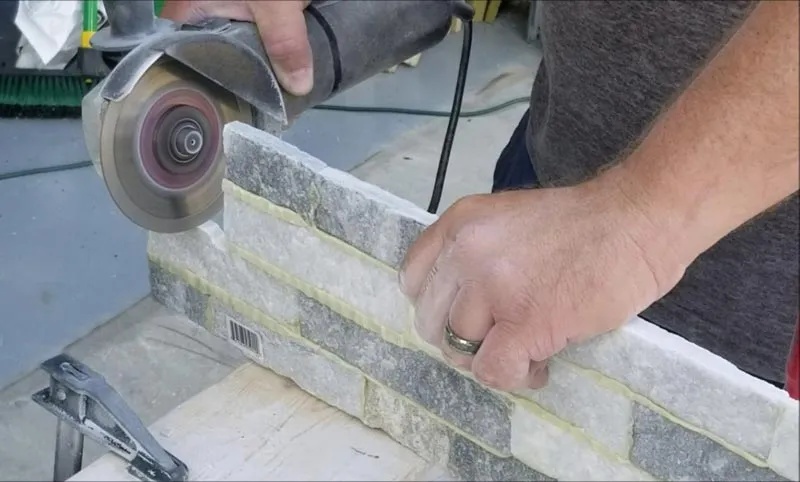
Weight per Square Foot: Optimizing Container Weight Limits
Natural stacked stone averages 8-13 lbs/sqft, staying under the 15-lb code limit for adhered veneers while allowing 17.5-ton container optimization for North American road transport.
Technical weight requirements dictate both the structural feasibility of a project and the landed cost of the material. By keeping natural stone panels within specific density thresholds, we ensure they function as adhered veneers rather than heavy masonry. This distinction removes the need for structural footings or wall ties, significantly lowering total project costs for your clients.
Building Code Standards for Thin Stone Veneer
International Building Code (IBC) Section 1404.11 establishes the safety ceiling for adhered veneers. To maintain substrate stability without mechanical anchors, the material must not exceed 15 pounds per square foot. Our production process maintains a profile thickness between 0.75 and 2.5 inches to guarantee compliance.
- Weight Limit: Maximum 15 psf to meet IBC and IRC standards for adhered masonry.
- Support Requirements: Standard 2×4 framing at 16-inch spacing supports these panels without extra engineering.
- Material Density: Natural stone selection meets ASTM C1670 standards for high-performance cladding.
- Structural Edge: Eliminating masonry ledges and footings reduces onsite labor and material overhead.
Port-Specific Weight Optimization for 20GP Containers
Logistics strategy directly impacts dealer margins. We solve the “last mile” problem by optimizing container weights based on regional road regulations. For North American distributors, we calibrate 20GP loads to prevent overweight fines and simplify inland trucking from the port to your warehouse.
- US Port Optimization: We load to approximately 17.5 tons to comply with strict road weight limits.
- Flat/Pencil Panel Weight: 8–12 lbs/sqft (30–40kg/m2), allowing 756 to 864 square meters per container.
- Rough Series Weight: Approximately 13 lbs/sqft (55kg/m2) due to higher relief and stone density.
- Heavy-Weight Options: Regions with flexible enforcement can request loads of 24–26.5 tons with prior approval.
We manage the balance between product volume and transport weight. This precision ensures you receive the maximum square footage per shipment without risking the logistical delays associated with overweight containers. Direct quarry control allows us to monitor these specs at the source, protecting your cash flow and delivery timelines.
Retail Packaging Design: Custom Boxes and Private Labeling
We use 3-5 ply export cartons and 17.5-ton container optimization to prevent transit damage and meet strict 2026 North American road weight regulations.
Structural Integrity and Damage Prevention in Transit
Natural stone panels are heavy and brittle. Every impact during transit risks a debonded corner or a fractured edge. We engineer our internal packaging to eliminate the sorting labor usually forced onto contractors at the job site.
- Standardized Coverage: Each carton contains 5–10 ft² of material to align with standard architectural estimation norms.
- Internal Buffering: High-density foam inserts and corrugated dividers isolate fragile quartzite and slate edges from friction.
- Visual Guides: Cartons include orientation graphics to prevent installers from creating visible vertical seams or incorrect interlocking patterns.
- Lot Tracking: Every box features clear batch and lot numbers so wholesalers can ensure installers maintain color consistency across large surfaces.
Private Labeling and 3-5 Ply Export Carton Specs
Wholesalers need brand identity to protect margins. Our private label program allows dealers to move away from generic factory boxes, building equity in their own local product lines while utilizing our industrial-strength specs.
- Custom Branding: Private label programs are available for distributor branding with a minimum order quantity (MOQ) of 300 m2.
- High-Strength Construction: We utilize 3-5 ply export-grade cartons specifically designed to support unit weights of 8–12 lbs per square foot.
- Logistics Efficiency: We optimize US port deliveries at 17.5 tons per container, maximizing value while adhering to strict 2026 road weight limits.
- Export Crating: Fumigated wooden crates hold 48–60 cartons, stabilized with reinforced strapping to ensure zero movement during ocean freight.
Secure Your Material Advantage
Choosing substandard stone leads to “patchy” walls and expensive site rework that erodes dealer profits. Our Grade A quarry sorting limits color deviation to 5%, ensuring your clients receive the seamless architectural finish they expect. By optimizing container loads to 17.5 tons, we protect your margins from road-weight fines while maximizing your inventory per shipment.
Build your brand equity with a 300 m2 private label trial or request our “Big 10” core inventory catalog for immediate shipping. We provide full transparency through pre-shipment visual verification, sending high-resolution footage of your actual batch before you make the final payment. Contact our procurement team today to lock in factory-direct pricing and secure your 2026 project timelines.
Często zadawane pytania
What are the weight and dimension standards for natural thin stone panels?
Industry standards like ASTM C1670 require thin veneer to stay under 15 lbs per square foot. Top Source Stone panels typically range from 8 to 12 lbs per square foot with a standard thickness of 3/4″ to 1-1/2″, meeting North American building codes without requiring structural footings.
Is natural stone veneer heavier than manufactured stone products?
Traditional full-bed stone often exceeds 40 lbs per square foot, but natural thin veneer is cut to 8-15 lbs per square foot. This allows distributors to offer authentic natural stone within the same installation weight limits as cement-based manufactured alternatives.
Does natural stone veneer fade or change color over years of exposure?
Natural stone is color-stable and does not fade from UV exposure. While manufactured stones use iron-oxide pigments that chalk or fade over time, natural stone maintains its integrity for decades. Visual changes usually stem from mineral oxidation or environmental patina rather than pigment loss.
Can these stone panels be used in wet areas or shower interiors?
Natural stone panels are suitable for wet areas when installed with a moisture management system. This requires a waterproof membrane behind the cement board and a high-quality penetrating sealer. We recommend periodic resealing to prevent water ingress and biological growth.
What is the primary difference between thin veneer and full-bed masonry?
Thin veneer is a non-load-bearing facing, typically 1/2″ to 1-1/2″ thick, adhered directly to substrates like CMU or cement board. Full-bed stone is structural-weight material (3″ to 5″ thick) that requires a concrete foundation ledge and mechanical wall ties for support.
Are stacked stone panels safe for use around fireplaces and chimneys?
Natural stone is non-combustible and heat-resistant, making it a standard choice for fireplace surrounds and hearths. It provides a durable thermal barrier that meets most local fire-rated application codes, though installers should verify specific clearance regulations for 2026 safety standards.
