

Analyzing the Stone Life-Cycle Cost is the only way for facility managers to avoid the replacement trap that triggers massive maintenance debt. While manufactured stone veneers offer lower entry prices, they typically fail within twenty years, forcing a second capital expenditure that triples the actual cost of ownership compared to natural alternatives.
We benchmark material performance against the ASTM freeze-thaw resistance standard to ensure 75-year durability. By sourcing 100% natural minerals like Quartzite and Slate directly from the quarry, we provide a UV-stable solution that eliminates the fading and structural delamination common in pigmented concrete products.
Initial Purchase Price vs. Total Life-Cycle Cost (LCC)
Natural stone averages $1.37 per square foot annually over a 75-year lifespan, proving more economical than manufactured alternatives that require replacement every 20 years.
| Material Type | Initial Cost (sq.ft.) | Useful Life | Life-Cycle Cost (Total) | Cost Per Year |
|---|---|---|---|---|
| Kamień naturalny (Granite/Quartzite) | $24.30 – $26.65 | 75+ Years | Competitive | $1.37 |
| Manufactured Stone Veneer | $8.00 – $12.50 | 20 – 30 Years | High (Replacements) | Varies |
| Laminate | $8.49 | 20 Years | $138.45 | $1.85 |
| Nylon Broadloom Carpet | $5.86 | 5 Years | $125.41 | $1.67 |
Economic Principles of Life-Cycle Cost Analysis
Life-cycle cost analysis (LCCA) functions as a bullshit detector for construction budgets. It moves beyond the sticker price to calculate the actual burden of ownership. For B2B importers and developers, LCCA provides the financial evidence needed to justify premium materials over short-term “savings” that trigger massive maintenance debt.
- Scope of Analysis: LCCA tracks acquisition, professional maintenance, structural repairs, and eventual disposal costs over the full building lifespan.
- The Replacement Trap: Materials like carpet or manufactured laminate show low entry prices but force 5-to-20-year replacement cycles, tripling the effective cost of the original install.
- Asset Retention: Natural stone maintains structural integrity for 75 years or more. This longevity eliminates the need for repeated capital reinvestment in the same surface area.
- Resale Value: Financial planning over longer study periods rewards natural materials because they retain high reclaimed value, unlike synthetic alternatives that become landfill waste.
Longevity Specs of Natural Stacked Stone
We produce natural ułożony kamień that outlasts manufactured “faux” products by decades. Top Source Stone utilizes 100% natural minerals—specifically Quartzite and Slate—to ensure the physical properties match the long-term financial projections found in LCCA studies.
- UV Stability: Natural minerals possess inherent UV resistance. Unlike manufactured stone that uses iron oxide pigments prone to fading within 8-10 years, our natural stone retains its hue for life.
- Climate Resilience: Our materials meet ASTM-standard freeze-thaw resistance. This ensures exterior walls survive extreme temperature cycles without the cracking or delamination common in cement-based imitations.
- Moisture & Salinity: High humidity and salinity resistance make Quartzite and Slate ideal for coastal projects where lesser materials degrade rapidly from salt spray exposure.
- B2B Profit Protection: Direct quarry sourcing from our factory removes middleman markups. Importers get a 75-year material at a price point that significantly improves the initial acquisition-to-value ratio.
Investing in natural stone isn’t about luxury—it’s about basic math. While manufactured stone starts to fail and show visible wear after 15 years, Górny kamień źródłowy panels remain structurally and aesthetically sound, protecting the building owner’s bottom line for generations.

The Replacement Cycle: When Does Manufactured Stone Fail?
Manufactured stone typically requires replacement within 20-30 years as UV and moisture degrade its concrete core. Natural stone panels provide a permanent, fading-free solution for the building’s entire life.
The Degradation Timeline of Concrete Composites
Manufactured stone is essentially colored concrete. While it looks consistent upon installation, it follows a predictable path of decay that eventually forces building owners into a second major capital expenditure.
- 8-10 Years: UV rays break down iron oxide pigments in the concrete, leading to noticeable color fading.
- 10-12 Years: Coastal installations show significant surface failure and pitting due to salt spray and high humidity.
- 12-15 Years: Visible structural deterioration and surface erosion appear in standard climates.
- 25 Years: Moisture penetration through cementitious aggregates causes internal cracking, requiring full replacement to maintain property value.

Inherent UV Stability and ASTM Freeze-Thaw Resistance
Top Source Stone eliminates this replacement cycle by sourcing 100% natural minerals directly from the quarry. These materials possess geological stability that concrete composites cannot replicate.
- Permanent Pigmentation: We use real slate and quartzite with zero risk of fading because the color is part of the mineral structure.
- ASTM Standards: Our natural stone panels meet strict freeze-thaw resistance requirements, preventing the delamination seen in cement-based products.
- Material Density: Panels ranging from 1cm to 3.5cm in thickness provide a structural density that resists mechanical wear and harsh weather.
- Environmental Resilience: High salinity resistance ensures the stone maintains its integrity in coastal or Gulf environments without surface crumbling.
- Long-Term Economics: Using real minerals ensures the installation lasts 50+ years, removing the need for a secondary replacement project over the building’s lifespan.
Premium Natural Stone Panels for Professionals
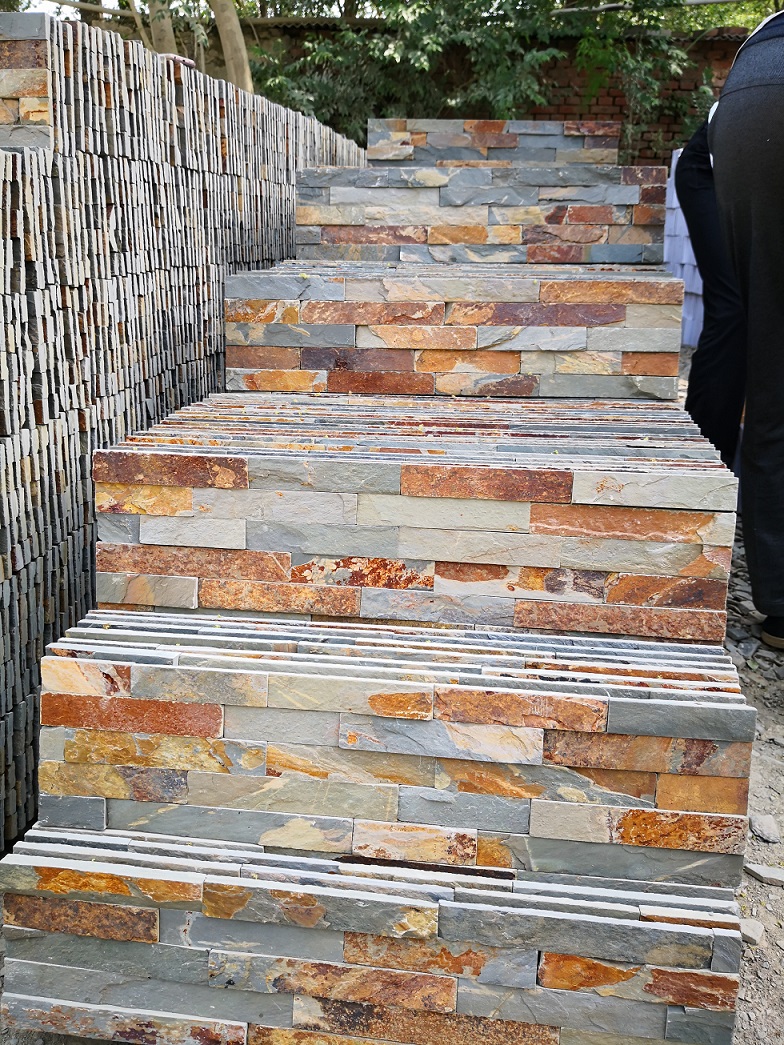
Maintenance and Repair: Costs You Haven’t Considered
Natural stone maintenance requires recurring sealing and restoration. Precision-cut panels reduce long-term labor and prevent the 15-year failure cycle common in manufactured alternatives.
Professional Sealing and Restoration Cycles
Stone ownership involves recurring financial commitments that buyers often overlook during the initial sale. Sealing keeps moisture from destroying the substrate, but it requires a consistent budget. If owners defer this maintenance, they face catastrophic structural failure and massive replacement bills.
- Professional Sealing: Budget $500 to $1,500 every two to three years to block moisture infiltration.
- Restoration Labor: Deep restoration for heavily soiled surfaces costs between $3 and $7 per square foot.
- Lippage Correction: Grinding uneven surfaces to restore a flat finish adds $120 to $500 per repair job.
- Replacement Risk: Total failure from neglected care often exceeds $10,000 for standard residential walls.
Mitigating Upkeep with CNC-Engineered Joint Integrity
Top Source Stone uses engineering to lower long-term labor costs. Poorly cut stone creates wide gaps that trap dirt and grime, forcing more frequent deep cleanings. Our factory production eliminates these vulnerabilities by ensuring every panel fits with mechanical precision.
- CNC Diamond-Blade Precision: Our edges ensure a tight, consistent fit that removes the wide gaps where dirt typically accumulates.
- Interlocking Systems: Z-Shape and S-Shape designs utilize a male-female connection to camouflage vertical joints and reduce grout repairs.
- Freeze-Thaw Resistance: Natural stone maintains structural integrity through extreme temperature cycles, preventing the cracking common in concrete substitutes.
- Environmental Stability: High salinity and humidity resistance reduces the need for frequent chemical cleaning in coastal or high-moisture environments.

Energy Efficiency Savings Over Decades
Natural stone’s high thermal mass and 100-year lifespan drastically lower HVAC loads and eliminate replacement costs, delivering superior long-term ROI compared to synthetic cladding.
Natural okładzina kamienna functions as a thermodynamic asset rather than just a decorative finish. While synthetic alternatives offer lower entry prices, professional Life Cycle Cost Analysis (LCCA) reveals that these materials become a liability over a 30-year mortgage period. Natural minerals provide a level of density that synthetic aggregates simply cannot replicate, creating a permanent energy-saving layer for the building envelope.
Thermal Mass and Passive Temperature Regulation
Stone works as a passive thermal buffer by absorbing heat during peak sunlight hours and releasing it slowly as external temperatures drop. This phase-shift effect stabilizes the indoor climate, allowing property owners to maintain comfort levels with significantly lower mechanical intervention. In the B2B sector, this thermal efficiency translates directly into lower operational expenses (OPEX) for commercial developments and large-scale residential projects.
- Thermal Stabilization: Slow heat release reduces the “spike” loads on HVAC systems during mid-day heat.
- LCCA Performance: Operational energy savings typically offset the higher initial material cost within the first 15 years of a 75-year service life.
- Carbon Footprint: Reduced reliance on mechanical systems lowers the building’s total lifetime emissions.
Freeze-Thaw Resistance and Building Envelope Integrity
Energy efficiency depends entirely on the integrity of the building envelope. When cladding cracks or delaminates, thermal leakage occurs. Górny kamień źródłowy products meet strict ASTM freeze-thaw resistance standards, ensuring the material does not develop the micro-fissures common in cement-based manufactured stone. These fissures are the primary entry points for moisture and air, which degrade insulation values over time.
- ASTM Standards: Natural slate and quartzite resist the expansion-contraction cycles that cause “faux” stone to fail.
- UV Stability: 100% natural mineral composition prevents the sun-bleaching and structural weakening found in pigmented concrete products after 8-10 years.
- Design Life: With a 60-to-200-year lifespan, natural stone eliminates the energy-intensive manufacturing and logistics costs required for the two or three replacement cycles typical of synthetic siding.
Choosing natural materials protects the building’s insulation layer from environmental degradation. By maintaining a consistent, airtight seal, natural stacked stone ensures that the energy performance designed on day one remains effective in 2026 and for decades to come. This geological stability is why historic structures using natural granite and marble maintain their performance while modern synthetic builds require frequent envelope remediation.
Why “Temporary” Materials are the Most Expensive Mistakes
Low-cost materials trap projects in expensive replacement cycles. Natural stone provides permanent structural integrity, eliminating recurring labor and disposal fees through 75-year life-cycle efficiency.
Hidden Financial Burdens of Recurring Material Cycles
Initial purchase prices often hide the true cost of ownership. Life-Cycle Cost Analysis (LCCA) demonstrates that materials with the lowest upfront costs, like manufactured veneers or synthetics, generate the highest long-term expenses. These “temporary” solutions trigger a loop of failure and replacement that drains project margins over time.
- Labor Inflation: Recurring teardowns require specialized crews. By 2026, skilled labor rates for material removal and re-installation range from $70 to $110 per hour, often exceeding the original material cost.
- Disposal Liabilities: Failed cement-based or composite products incur heavy landfill and waste management fees that property owners rarely budget for during initial construction.
- Maintenance Creep: Low-durability finishes demand frequent professional cleaning to prevent mold and deep restoration work that costs between $3 and $7 per square foot.
Data shows that while natural stone carries a higher initial investment, its 75-year service life results in a competitive annual cost of approximately $1.37 per square foot. In contrast, materials requiring replacement every 15 to 20 years effectively triple their lifetime cost due to the compounding expenses of new procurement and site prep.
Permanent Integrity of UV-Stable Natural Stone
Top Source Stone panels eliminate the need for future replacements by utilizing the inherent geological stability of 100% natural minerals. Unlike manufactured stone, which relies on iron-oxide pigments that begin to fade within 8 to 10 years of sun exposure, natural slate and quartzite remain color-fast for decades.
- UV Stability: Natural minerals resist chemical degradation from solar radiation, maintaining hue integrity without the “bleached” look common in pigment-based imitations.
- Freeze-Thaw Resistance: Our slate and quartzite panels meet strict ASTM standards, ensuring the substrate remains protected against cracking or delamination in extreme northern climates.
- Hue Uniformity: We source from the same quarry vein per order to achieve 95% consistency, preventing the patchy, mismatched appearance found in secondary-market batches.
- CNC Precision: Z-Shape and S-Shape models feature diamond-blade edges for a tight “male-female” interlock, concealing joints and protecting the underlying structure from moisture intrusion.
Choosing natural stone transitions a project from a maintenance-heavy liability to a permanent architectural asset. By avoiding the 20-year failure cycle of manufactured alternatives, developers protect their long-term valuation and eliminate the environmental waste associated with single-use construction materials.
Często zadawane pytania
How long does natural stone cladding last compared to manufactured alternatives?
Natural stone veneer usually outlasts the structure itself, easily exceeding a 50-year lifespan. Manufactured stone generally lasts between 20 and 50 years and remains far more vulnerable to moisture damage and surface cracking. Top Source Stone uses 100% natural minerals like quartzite and slate, providing the inherent UV stability and freeze-thaw resistance that cement-based faux products simply cannot match.
Is it more cost-effective to repair or replace damaged stone veneer?
Restoration typically costs 50% to 70% less than a full replacement. Professional stone restoration runs roughly $2 to $25 per square foot, whereas new installations involve high material costs and significant labor. We only suggest replacement if damage covers more than 50% of the surface or if the structural integrity of the wall is compromised.
What are the typical maintenance costs for natural stacked stone?
Plan for professional sealing every 1 to 3 years, which usually costs between $0.50 and $2.00 per square foot. Routine DIY cleaning is minimal, averaging $50 to $150 annually for pH-neutral cleaners. Small investments in regular sealing prevent deep stains and eliminate the need for expensive professional polishing later in the stone’s life cycle.
Does faux stone require replacement every 15 years?
It is not mandatory, but many manufactured stone installations show heavy aesthetic degradation, like fading or surface wear, within 12 to 15 years. Natural stone avoids this cycle because its color is consistent through the entire material. Since it is not a surface-level pigment, you skip the 15-year replacement cycle entirely.
What is the projected ROI for stone cladding projects in 2026?
Stone veneer provides one of the highest returns in the renovation market, with a national average ROI of approximately 153%. This high value comes from massive curb appeal and long-term durability. B2B buyers can maximize this return by sourcing directly from our quarry, which removes middleman markups and protects project margins.
