Mastering curing science is the primary defense against facade delamination and the massive liability of structural bond failure. Mistaking chemical cross-linking for simple physical drying creates unstable stone panels, leading to expensive warranty claims and project remediation costs.
This analysis benchmarks adhesive performance against ASTM freeze-thaw standards and CNC diamond-blade precision. We utilize high-strength epoxy resin specifications from our Big 10 inventory to ensure permanent bond integrity in high-salinity and high-humidity environments.
Curing vs. Drying: Understanding the Chemical Difference
Drying is physical evaporation; curing is a permanent chemical bond. For stone panels, curing ensures adhesives remain stable against water and extreme temperature fluctuations.
Physical Evaporation vs. Irreversible Chemical Bonding
Drying relies on the evaporation of liquid components to leave a solid film. It is a physical change where the carrier liquid dissipates, but the material remains chemically the same. Under 2026 environmental standards, humidity and airflow dictate how quickly these liquid components leave the system. Because the change is physical, dried materials can often redissolve if they are exposed to their original solvent again.
Curing creates a chemical transformation where molecules cross-link to form an entirely new, distinct substance. This process is permanent and irreversible. Unlike dried coatings, cured materials remain stable and will not redissolve when wet. The speed of this reaction is highly sensitive to the environment.
- Thermal Impact: Every 10°C increase in temperature typically doubles the reaction speed.
- Molecular Integrity: Cross-linking creates a structural density that drying alone cannot achieve.
- Solvent Resistance: Cured bonds resist degradation from water and external chemical exposure.
High-Strength Epoxy Resin and Stone Panel Integrity
Górny kamień źródłowy utilizes specialized high-strength epoxy resin formulated specifically for 100% natural minerals like Quartzite and Slate. This chemical curing process ensures a permanent bond between individual stone pieces and the panel substrate. This bond is what prevents delamination, a common failure point in inferior panels that rely on simple air-drying adhesives.
Properly cured epoxy provides the necessary freeze-thaw resistance required for northern climates in the USA and Canada. The chemical transition transforms the adhesive into a rock-hard solid that manages the weight and expansion of natural stone. This engineering is standard across our core inventory, including heavy-duty models.
- Alaska Gray: Utilizes deep-cure epoxy to secure dense Quartzite fragments.
- Copper Canyon: Engineered with stable chemical bonds to handle the natural cleft of Slate.
- Structural Stability: Curing maintains the integrity of the “Big 10” inventory models under extreme stress.
- Climate Resilience: Cured resins are inherently UV stable and resist high salinity and humidity.

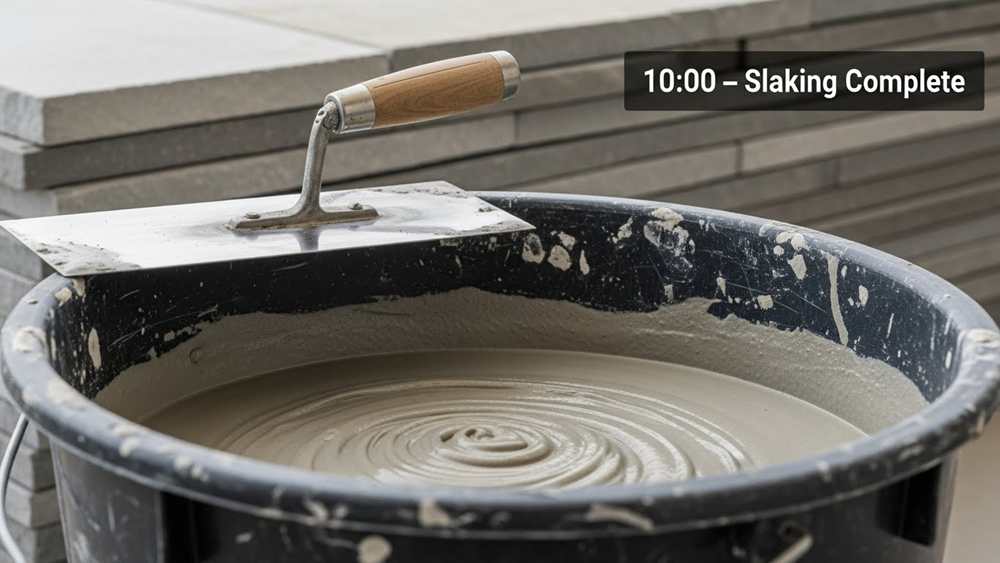
Why is “Slaking” the Most Critical Step in Mortar Preparation?
Slaking ensures quicklime fully hydrates before application. This maturation prevents un-slaked particles from reacting inside joints, which causes mortar to crumble and heavy stone panels to lose their bond.
Mortar performance depends on chemical stability rather than just physical mixing. When using traditional lime-based binders, the slaking period—a designated rest time—allows the quicklime to react completely with water. If you skip this, the lime remains “hot” and continues to expand after the stone is set. This internal expansion is a leading cause of bond failure in heavy masonry projects.
The Chemical Conversion of Quicklime into Stable Binder
Skipping the maturation process leads to incomplete hydration. When un-slaked particles are trapped behind a stone panel, they eventually absorb moisture from the environment or the stone itself. This delayed reaction causes the mortar to expand and then degrade into a fine dust, effectively hollowing out the joint from the inside.
- Hydration Control: Prevents mortar from crumbling by ensuring all lime particles convert into a stable binder before application.
- Strength Optimization: Increases binder volume and expansion to improve the overall compressive strength of the joint.
- Workability: Creates a creamy liquid consistency that provides the water retention necessary for proper stone setting.
- Reaction Elimination: Removes the risk of post-installation chemical shifts that lead to sudden joint failure.
Supporting Freeze-Thaw Resistance in Natural Stone Walls
For heavy installations like Top Source Stone’s 55kg/m² rough-stacked panels, the mortar must act as a rigid, permanent bridge. In regions with extreme temperature swings, any instability in the mortar matrix allows moisture to infiltrate and freeze. A properly slaked mortar creates a dense, low-capillarity bond that resists these cycles.
- ASTM Standards: Ensures the mortar achieves the structural integrity required for ASTM-standard freeze-thaw durability.
- Interlocking Precision: Provides the high-viscosity bond needed for Z-Shape interlocking panels to maintain a seamless appearance without shifting.
- Delamination Defense: Protects heavy 55kg/m² panels from detaching in high-salinity or high-humidity environments.
- Substrate Compatibility: Creates a chemically stable base that matches the 100-year longevity of 100% natural minerals.
Professional installers treat slaking as a non-negotiable step because it dictates the lifespan of the facade. While a surface might look dry and secure within hours, the chemical maturity of the binder determines whether those panels stay on the wall for decades or fail during the first winter cycle.
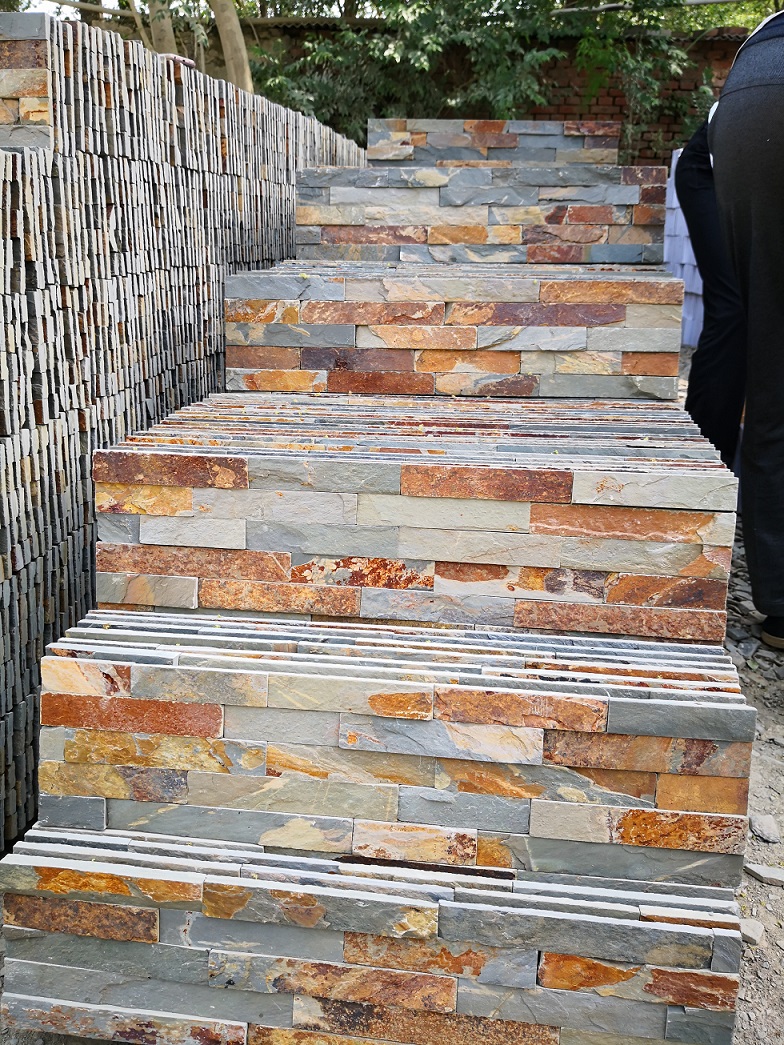
Premium Factory-Direct Stacked Stone Ledger Panels
Optimal Temperature Ranges for ANSI A118.4 Compliance
Install stone between 40°F and 95°F (4°C to 35°C). This range ensures proper chemical hydration and prevents bond failure caused by flash setting or freezing.
Thermal Boundaries for Mortar Hydration and Setting
Mortar cures through a specific chemical reaction rather than simple evaporation. Temperature dictates how these molecular bonds form, directly impacting the shear strength of the final installation.
- Maintain ambient and substrate temperatures between 40°F and 95°F to ensure a complete chemical reaction within the mortar matrix.
- Stop installation if temperatures exceed 95°F. Excessive heat causes flash setting or surface skinning, which destroys the bond between the stone panel and the substrate.
- Vent combustion heaters externally for winter projects. This prevents carbon monoxide buildup and stops mortar carbonation, which can weaken the joints.
- Wait at least 12 hours at 70°F (21°C) before you begin grouting to allow for necessary moisture evaporation.
Freeze-Thaw Resistance and Long-Term Material Stability
For dealers and wholesalers in northern climates, adhering to thermal standards protects the project against extreme weather cycles. Natural stone performance depends on the mortar reaching full structural integrity before the first freeze.
- Protect new installations from freezing temperatures for at least 28 days so the system reaches its full load-bearing capacity.
- Utilize ASTM-standard freeze-thaw resistant stone, such as high-density Quartzite or Slate, to prevent delamination in cold-weather regions like the US and Canada.
- Verify 100% natural mineral composition for inherent UV stability. This ensures panels do not fade when exposed to high-heat, direct sunlight in desert or tropical environments.
- Keep substrate temperatures above 50°F for specialized high-performance mortar formulations when required by specific manufacturer guidelines.
Does High Humidity Extend Your Curing Timeline?
Humidity levels above 60% can increase stone panel cure cycles tenfold, slowing chemical reactions and potentially causing surface blushing or structural bond failure.
The Impact of Ambient Moisture on Evaporation and Hydration
High relative humidity limits the capacity of the air to absorb moisture. This physical barrier stalls the evaporation rate of water within cementitious mortars, which is the first step before the chemical curing process can effectively take hold.
- Evaporation Stalall: High humidity levels reduce the air’s ability to pull water from mortar, stopping the initial drying phase.
- Uneven Hydration: Levels exceeding 60% often result in a “skinning” effect where the exterior hardens while the core remains soft and unstable.
- Adhesion Risks: Excess moisture during the curing stage increases the probability of poor bond strength and structural movement.
High-Strength Epoxy Bonding and Humidity Resistance
Górny kamień źródłowy utilizes a high-strength epoxy resin adhesive to create a permanent bond between the natural stone and the panel substrate. While these systems are engineered for high-salinity and high-moisture environments like coastal regions or the Middle East, the installation environment still dictates the final quality.
- Blushing Prevention: Maintain installation sites at or below 40% humidity to prevent aliphatic amines from reacting with moisture and creating surface defects.
- Cure Sensitivity: Even a 0.1% increase in moisture within the resin mix can lead to a 30% increase in the total cure time.
- Chemical Permanence: Once the epoxy cures, the molecular cross-linking creates a bond that cannot be redissolved by water or solvents.
Controlled environments ensure the CNC diamond-blade edges of our Z-shape and S-shape panels fit tightly without the risk of mortar expansion or shifting caused by trapped atmospheric moisture.

The 28-Day Rule: When is the System Truly Load-Bearing?
Stacked stone systems reach usable stability within 48 hours and 75% design strength by day 7. The 28-day rule is a laboratory testing benchmark, not a mandatory site delay.
| Curing Milestone | Estimated Strength % | Functional Readiness |
|---|---|---|
| 24–48 Hours | Initial Set | Light traffic & surface inspection |
| 7 Days | 50% – 75% | Standard residential wall loads |
| 14 Days | 75% – 85% | Heavy commercial/High-traffic areas |
| 28 Days | 90% – 100% | Peak laboratory testing benchmark |
Compressive Strength Milestones and Usable Curing Phases
Curing is a chemical hydration process where molecules cross-link to form a permanent bond. It is not a simple drying process. While the mortar may feel dry to the touch, the internal structure is still evolving. For most natural stone installations, the 28-day rule serves as an arbitrary standard for peak performance rather than a practical requirement for use.
- Initial Set: Most systems allow for light foot traffic and detailed surface inspection within 24 to 48 hours of installation.
- 7-Day Milestone: This phase typically yields 50% to 75% of the total design strength, which is sufficient for most residential stone loads.
- Structural Curing: Critical elements like supporting beams or heavy commercial floors require a full 14 to 28-day window to reach maximum safety ratings.
- Post-28 Day Gain: Strength gains continue slowly even after the laboratory benchmark is reached, ensuring long-term durability.
Epoxy Resin Adhesion and Lightweight Loading Advantages
Engineering advancements in panel construction have changed traditional masonry timelines. Top Source Stone utilizes high-strength epoxy resin to create a permanent bond between the natural stone and the panel substrate before it even arrives on-site. This pre-bonded structure shifts the weight-bearing responsibility away from the mortar during its most vulnerable hours.
- Load Reduction: Lightweight panel specifications of 8-12 lbs/sq.ft significantly reduce vertical pressure on curing mortar compared to full-bed masonry.
- Weight Distribution: The engineered Z-shape system distributes weight evenly across the wall surface, removing the need for traditional concrete footings.
- Precision Fit: CNC diamond-blade edges ensure tight interlocking that supports the assembly while the underlying mortar achieves its 2026 performance rating.
- Bond Integrity: The combination of factory-applied epoxy and interlocking geometry allows the system to become load-bearing faster than hand-stacked individual stones.

Często zadawane pytania
Why do stones slide if the mortar feels dry on the surface?
Surface dryness is a deceptive metric. Moisture trapped behind the stone-mortar interface causes expansion and destroys bond strength. This usually happens when water infiltrates the system through leaks or failed flashings, causing the panels to shift even when the exterior appears fully set.
Can I use a fan to speed up the mortar curing process?
Using fans during the initial 24 to 48 hours is a mistake. Forced airflow strips surface moisture too quickly, causing shrinkage cracks and structural weak points. Proper hydration requires a slow, natural moisture loss to reach full load-bearing strength throughout the standard 28-day cycle.
How does high humidity affect the long-term bond of stone adhesives?
High humidity creates a physical moisture barrier that prevents proper contact between the substrate and the adhesive. It can also trigger hydrolysis in certain polymers, softening the material and killing its cohesive strength, especially in environments with high salinity or heat.
What are the risks of skipping the slaking period during mortar preparation?
Skipping the 10-minute slaking rest prevents polymer additives from fully hydrating. This starves the cement of the water needed for crystal growth, resulting in a stiff, unworkable mixture that fails to form a permanent bond with the stone panels or the substrate.
Why do stone bonds often fail in high-heat desert climates?
Extreme heat evaporates mortar water before the chemical curing process completes. Large temperature swings between day and night also create thermal expansion stress; the stone and substrate expand at different rates, eventually fracturing the bond at the interface.
