

Specifying the correct Mortar & Adhesives prevents the delamination and escalating warranty claims that plague vertical stone installations. Standard mixes support compressive weight but fail the shear bond requirements of heavy natural panels, creating structural liabilities and lost margins.
We benchmark ANSI A118.15 standards against traditional mortars for 100% natural stone applications. This technical review analyzes how factory-grade epoxy resins and thixotropic modifiers secure 55kg/m² loads to ensure freeze-thaw durability in demanding North American climates.
Why Traditional Type S Mortar is Often the Wrong Choice for Veneer.
Type S mortar lacks the shear bond strength and polymer flexibility required for vertical stone veneers, leading to delamination when exposed to thermal expansion or structural vibration.
Bond Strength Gaps in Masonry Mortar
Traditional Type S mortar is a structural tool designed for compression. It handles the immense downward weight of stacked brick or block but fails in shear—the force that keeps a stone panel attached to a vertical substrate. Because it lacks polymer additives, it often fails to provide the immediate “grab” necessary for heavy natural stone, causing panels to sag or shift during the installation process.
We see high failure rates in field-mixed mortars because they are inherently rigid. These mixtures cannot absorb the vibrations or structural movements common in modern 2026 architectural designs. This brittleness creates a major liability for wholesalers and installers:
- Compressive vs. Shear: Type S exceeds 1,800 psi in compression but lacks the bond strength required for vertical adhesion.
- Thermal Sensitivity: Without polymers, the mortar cannot expand or contract with the natural stone panels.
- Installation Sag: Traditional mixes often require temporary supports to prevent heavy ledgestone from sliding before the set.
Permanent Adhesion via High-Strength Epoxy Resin
Górny kamień źródłowy eliminates the risks associated with field-mixed mortars by using a proprietary high-strength epoxy resin to fuse stones to the panel backing. This factory-level engineering ensures that the bond between the natural stone and the mesh or cement backing is permanent and uniform, a result that manual site-mixing cannot replicate.
By controlling the temperature and pressure during the bonding process, we create a panel that functions as a single structural unit. This approach provides several technical advantages for our B2B partners:
- Elimination of Stone Fall-out: Epoxy resin creates a chemical bond that is significantly stronger than the mechanical bond of cementitious mortar.
- Consistency: Automated factory application ensures 100% coverage on every panel, preventing the “hollow spots” common in back-buttering.
- Moisture Resistance: Our epoxy resins are non-porous, reducing the risk of moisture wicking through the panel and weakening the bond over time.
Moving from traditional field-mixed bonds to factory-engineered epoxy panels reduces labor costs and protects the long-term integrity of the installation. For dealers and brand owners, this means fewer warranty claims and a higher quality standard for large-scale commercial projects.

Understanding ANSI A118.4 and A118.15 Adhesion Standards.
ANSI A118.15 sets a performance tier requiring 450 psi bond strength—50% higher than standard A118.4—making it the mandatory choice for heavy natural stone on exterior facades.
Choosing the right adhesive determines whether a stone facade lasts decades or fails within a few seasons. The industry categorizes polymer-modified mortars into two distinct performance tiers: standard and improved. These standards provide the benchmarks for shear bond strength, which is the primary force keeping heavy panels attached to vertical substrates.
Performance Thresholds and Shear Bond Strength
Standard modified mortars often fall short in high-stress environments. ANSI A118.15 was specifically developed to address demanding applications where temperature fluctuations, moisture, and stone weight create a high risk of delamination.
- ANSI A118.4: Provides a 28-day shear bond strength of 300 psi for glazed wall tiles.
- ANSI A118.15: Increases the minimum threshold to 450 psi to handle greater mechanical stress.
- Sag-Resistance (T): Mortars with this modifier prevent stone from slipping during the curing phase.
- Heavy Tile Modifier (H): Formulated to support large-format panels without shrinkage or “slumping.”
Specifying A118.15 is the professional standard for submerged applications, steam rooms, and exterior facades exposed to heavy wind loads or thermal expansion. The increased polymer content ensures the bond remains flexible enough to absorb substrate movement without cracking.
High-Strength Epoxy Bonding and Freeze-Thaw Durability
Factory-grade engineering offers a layer of security that site-mixed mortars cannot match. At Górny kamień źródłowy, we focus on the structural bond of the panel itself to ensure it withstands extreme climates before the installer even opens the crate.
- High-Strength Epoxy: We utilize specialized resin adhesives to ensure a permanent bond between individual stone pieces and the backer.
- ASTM Standards: Our manufacturing processes prioritize freeze-thaw resistance to prevent stone separation in Northern US and Canadian climates.
- Weight Support: These high-grab systems are mandatory for our “Rough” series panels, which average 55kg/m².
- Precision Assembly: Factory-bonded panels reduce the risk of hollow spots and moisture traps common in traditional hand-set masonry.
Using panels with pre-engineered bonding minimizes on-site labor errors. When you combine factory-grade epoxy with an ANSI A118.15 mortar on-site, you create a dual-layered defense against moisture infiltration and mechanical failure.
Premium Stacked Stone for Professional Projects
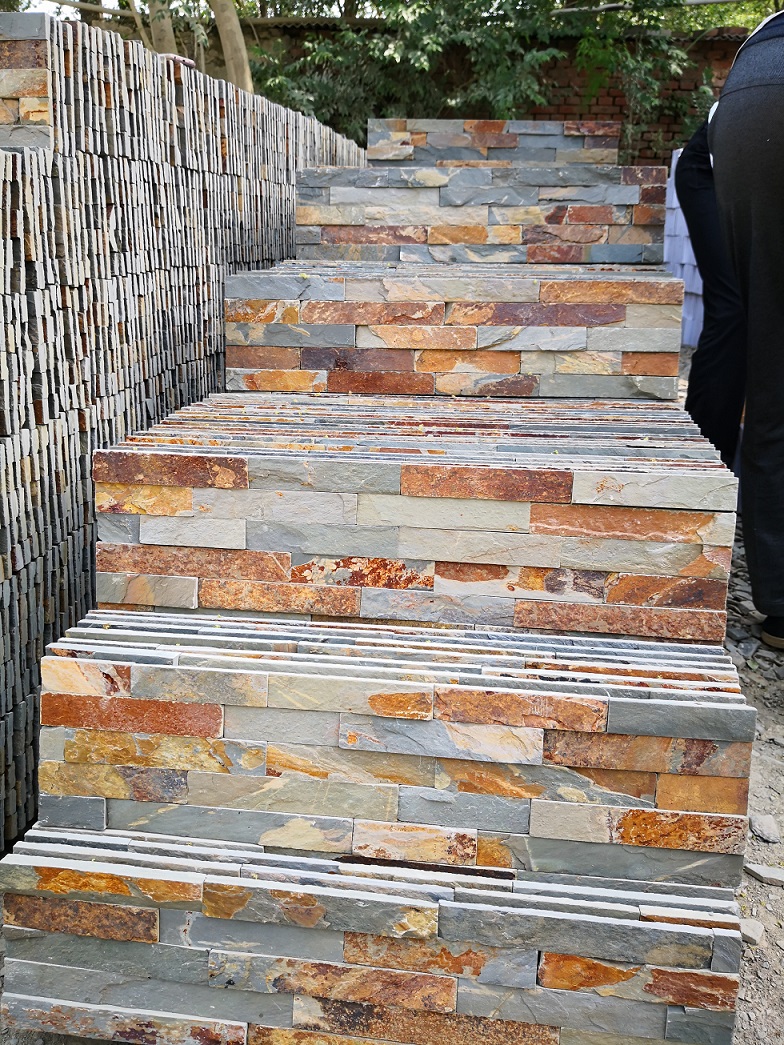
Polymer-Modified Thin-set: The Gold Standard for Professional Ledger Panels.
Professional ledger panel installation requires polymer-modified thin-set for superior bond strength and flexibility to keep heavy natural stone permanently secured under thermal stress.
| Performance Metric | Standard Type S Mortar | Modified Thin-set (A118.15) |
|---|---|---|
| Shear Bond Strength | Approx. 300 psi | >450 psi |
| Build-up Thickness | 1/4″ to 1/2″ | 1/2″ to 3/4″ (Non-sag) |
| Flexibility | Rigid / Brittle | High (Polymer-resins) |
| Weight Support | Standard Veneers | Heavy Panels (55kg/m²) |
Enhanced Flexural Strength and Bond Integrity
Traditional masonry relies on a mechanical grip, but polymer resins create a sophisticated chemical bond. This allows modified thin-sets to outperform Type S mortar in high-stress vertical environments where gravity and structural movement work against the stone. By meeting ANSI A118.4 and A118.15 standards, these adhesives provide the high shear bond strength necessary for large-format natural stone.
- Chemical Bonding: Polymer additives lock into the stone’s pores and the substrate simultaneously, providing a grip that resists delamination.
- Non-Shrink Performance: Installers can achieve build-up thicknesses from 1/2 to 3/4 inch to correct wall irregularities without stone lippage or adhesive shrinkage.
- Thermal Elasticity: The increased elasticity absorbs vibrations and thermal expansion, a critical requirement for modern architectural designs in 2026.
- ANSI Standards: Adhering to A118.4 ensures the installation handles the specific tension and shear forces found in commercial vertical stone applications.
Adhesion Performance for Freeze-Thaw Resistant Stone
Selecting the right adhesive is about matching the durability of the stone itself. Top Source Stone products, including our 100% natural quartzite and slate from the Big 10 inventory, require a mortar that won’t fail when the temperature drops. A high-performance modified thin-set ensures the heavy panels remain locked in place, even when subjected to extreme climate cycles.
- Inventory Compatibility: Formulated to bond specifically with dense minerals like the Glacier White Quartzite or California Gold Slate.
- Climate Resilience: Matches the freeze-thaw resistance of natural stone, preventing water from weakening the bond in Northern US and Canadian winters.
- Environmental Shielding: Offers high salinity and humidity resistance, making it suitable for high-end coastal projects or installations in the Gulf regions.
- Heavy-Duty Support: Securely carries the load of our “Rough” series panels, which reach weights of up to 55kg/m² (approx. 11 lbs/sq.ft) without sagging.

Which Specialized Adhesives are Required for High-Heat Fireplace Zones?
Fireplace surrounds demand adhesives that handle thermal cycling without debonding. Use silicate-based cements for firebox interiors (2,000°F+) and high-performance polymer-modified thin-sets or epoxies for exterior stone veneer applications.
Thermal Stability of Silicate and Refractory Adhesives
Standard masonry mortars often fail when exposed to the concentrated heat of a firebox. These environments require materials engineered for extreme thermal shock and rapid temperature spikes. Using the wrong adhesive leads to smoke leaks and detached masonry within a few heating cycles.
- Silicate-based adhesives: These handle temperatures up to 2,000°F (1,090°C), creating smoke-tight seals for gaskets and metal-to-masonry bonding.
- Refractory cement: This specialized mortar patches firebox cracks and seals firebrick joints, specifically resisting the stress of rapid cooling and heating.
- High-temperature board adhesives: Formulated for bonding ceramic fibers and plasterboards in zones reaching 2,550°F, ensuring the backing stays structural behind the stone.
Durable Panel Bonding with High-Strength Epoxy Resin
Top Source Stone ensures the structural integrity of natural stone panels through factory-controlled bonding processes. While the 100% natural stone is inherently non-combustible, the adhesive system must bridge the gap between the stone and the substrate during the expansion and contraction of the fireplace wall.
- Pressure-Applied Epoxy: We use high-strength epoxy resins applied under controlled pressure to guarantee a permanent bond between the stone and the panel substrate.
- Interlocking Z-Shape Design: Our CNC diamond-blade edges create a precise “male-female” connection that minimizes gaps and protects the underlying adhesive from direct heat exposure.
- ANSI A118.15 Compliance: For on-site installation, we recommend improved modified dry-set mortars that exceed 450 psi shear bond strength to handle elevated expansion and deflection.
Contractors should install these panels over non-combustible cement board or masonry. Using matching L-corners ensures a professional wrap-around finish that maintains visual consistency and protects the adhesive layer at the most vulnerable points of the fireplace surround.

Managing “Sag”: Why High-Grab Mortar Is Mandatory for Vertical Walls.
Sag is the downward movement of stone before curing. High-grab mortars use thixotropic additives to hold panels—up to 13 lbs per square foot—firmly without mechanical supports.
Thixotropic Resistance and the Physics of Vertical Installation
Vertical slump occurs when the weight of the stone exceeds the initial shear strength of the wet mortar. Without specific sag resistance, gravity pulls the panel downward before the cementitious bond can crystallize, resulting in misaligned joints or total delamination.
- Thixotropic Properties: Non-sag formulations remain viscous while stationary but become fluid when troweled, ensuring the mortar stays exactly where applied without running.
- High-Build Capacity: These mortars support applications from 1/4 inch to 2 inches in a single lift, allowing installers to manage substrate irregularities without the material deforming under its own weight.
- Initial Shear Strength: Rapid strength gain within the first 20 to 30 minutes of application supports the stone during the most critical phase of the curing process.
Supporting the Load of 13-Pound Natural Stone Panels
Top Source Stone ledger panels typically weigh between 8 and 12 lbs/sq.ft. Our rough-hewn and premium thick-cut models reach up to 13 lbs/sq.ft (approx. 55kg/m²). This heavy load makes standard mortars insufficient for vertical architectural applications.
- Polymer-Modified Tensile Strength: Polymer resins enhance the bond between the substrate and dense materials like quartzite and slate, which have low porosity and require chemical adhesion.
- Stepping Prevention: High-grab adhesives eliminate the “stepping” effect. This ensures that Z-Shape and S-Shape interlocking panels maintain their precision fit, protecting the seamless architectural finish.
- ANSI A118.15 Standards: We recommend mortars meeting the ANSI A118.15 standard, which provides the higher shear bond strength required for heavy-duty veneer and freeze-thaw durability in North American climates.
Często zadawane pytania
What is the best mortar for natural stacked stone veneer installations?
Type S mortar remains the benchmark for professional installations due to its high-tensile strength, which often exceeds 1,800 psi. For high-performance exterior walls, many installers now prefer polymer-modified thin-sets meeting ANSI A118.4 or A118.15 standards. These provide the superior shear bond strength and freeze-thaw resistance necessary for heavy natural materials like Top Source Stone quartzite and slate.
Is Type S mortar suitable for professional ledger panel applications?
Type S is specifically engineered for adhered masonry veneer and works well for ledger panels. It provides the sag resistance and flexural strength needed to support heavy natural stone on vertical surfaces. Installers must maintain a consistency that allows the mix to hang from a 90-degree trowel to ensure the panels do not slide or delaminate during the setting process.
Should natural stone panels be back-buttered during installation?
Professionals should always back-butter the entire rear surface of every stone panel. This practice ensures 95% coverage, which is vital for exterior facades and wet environments. Full coverage prevents moisture from getting trapped behind the stone, a common cause of bond failure and structural damage in vertical installations.
How long does mortar take to cure before it can withstand environmental exposure?
Mortar reaches approximately 60% of its compressive strength within the first 24 to 48 hours. While you can generally apply grout after two days, the entire assembly needs 28 days for a full structural cure. Protect fresh stone installations from rain for at least 48 hours to ensure the mortar doesn’t wash out or weaken.
What is the functional difference between thin-set and traditional mortar?
Traditional mortar uses a mix of cement, lime, and sand for thick-bed masonry applications. Thin-set is a specialized adhesive designed for layers as thin as 1/16″. Modern thin-sets incorporate polymers to achieve a higher shear bond strength, making them better for adhering dense natural stones like quartzite to cement backer boards or concrete substrates.
