

For private label stone brands, one unclear clause in an OEM/ODM contract can mean losing control over custom textures, molds, or even your sales territory. With lead times ranging from 1–4 weeks for ODM projects to 1–6 months for OEM builds, and tooling costs that can climb into thousands, knowing exactly who owns the CAD files, molds, and rights is the difference between exclusivity and open competition.
This guide breaks down how to review OEM/ODM agreements for stacked stone designs, covering IP ownership structures, exclusivity terms, and tooling control agreements. You’ll see how contract language on mold ownership, QC requirements like ISO 9001, and defined exclusivity durations protect your investment, and learn practical steps to keep manufacturers from reusing designs or targeting your geographic market.
OEM vs. ODM: Distinctions in Stacked Stone Product Development
OEM means the client fully owns the design and patents, bearing tooling costs and longer lead times (1–6 months), while ODM offers a pre-engineered platform owned by the manufacturer with faster delivery (1–4 weeks) and shared risks but less exclusivity.
Core Differences Between OEM and ODM in Stacked Stone
In an OEM arrangement for stacked stone panels, the client owns all CAD files, detailed drawings, and full product architecture. This grants complete control over system geometry, textures, and interlocking mechanisms. ODM models differ sharply—here, the manufacturer retains ownership of the core design platform and grants production rights via licensing. The factory builds on its own design architecture and adapts only surface parameters for each customer.
OEM clients are responsible for securing patents and design registrations tied to their product designs, while in ODM the manufacturer holds the intellectual property and provides the buyer with usage licenses for production and marketing. This distinction affects enforcement of exclusivity in regional markets.
With OEM, buyers cover tooling and mold fabrication costs, providing manufacturing-ready designs. This includes steel molds for panel faces and texture patterns. ODM reduces individual cost exposure by spreading development expenses over multiple clients, using shared molds and standardized backing materials.
Technical Aspects: Time-to-Market, Risk, and Standard Compliance
ODM development cycles for stacked stone panels typically span 1–4 weeks once customization choices are made. OEM projects, by contrast, can require 1–6 months from design approval to first production due to bespoke engineering, tooling setup, and validation processes. This extended timeline can affect seasonal launches and promotional cycles.
In OEM, the client assumes full responsibility for design viability, performance in field conditions, and market acceptance, absorbing the financial and operational risks. ODM balances these risks through pre-validated designs, controlled pilot runs, and shared data from previous deployments, allowing faster commercialization with less uncertainty.
Factories engaged in either model often operate under strict quality systems, such as ISO 9001:2015 and IATF 16949:2016. They integrate PPAP, conduct first article inspections, and maintain complete material traceability. These frameworks ensure dimensional accuracy, consistent color matching, and compliance with freeze–thaw or bond strength standards required for exterior applications.
Intellectual Property (IP) Protection: Legal Framework and Practical Execution
IP protection in OEM/ODM settings relies on clear contractual allocation of ownership over designs, molds, and software, supported by local registrations, exclusivity clauses, audit rights, and operational controls to prevent unauthorized use or replication.
| Contract Type | Typical IP Ownership | Key Protection Clauses |
|---|---|---|
| OEM | Buyer owns trademarks, branding, and sometimes exterior design; factory retains core product know‑how unless agreed otherwise. | Non-use / non-disclosure, ownership of tooling/molds, exclusive manufacturing, replicability restrictions, audit rights, bilingual jurisdiction clauses. |
| ODM | Manufacturer typically owns all product IP; buyer retains branding unless carve‑outs are negotiated. | Carve‑outs for design files, firmware, tooling; exclusivity clauses; penalties for breach; local IP registrations. |
| JDM | Shared or jointly developed IP requires explicit agreements on ownership and usage after project completion. | Joint IP ownership terms, post-project usage rights, non‑use obligations, local filing, dispute‑resolution under factory jurisdiction. |
Legal Framework for IP Ownership and Contractual Protections
OEM contracts generally assign trademarks, branding, and exterior design to the buyer, while factories retain core product IP unless otherwise agreed. This model aligns branding control with the buyer while allowing the factory to protect its proprietary know‑how.
ODM agreements often vest all product IP ownership in the manufacturer, leaving clients with branding rights only unless specific carve‑outs are negotiated. Without these carve-outs, buyers risk losing control over essential technology and long‑term roadmap.
Standard contract clauses form an IP protection stack. These include non‑use and non‑disclosure obligations that cover both technical and commercial data, indemnification for IP breaches, exclusive manufacturing commitments, replicability restrictions, audit rights, and penalties for violations.
Joint development manufacturing presents unique risks. Parties should formalize shared IP ownership and post‑project usage rights to avoid disputes over co‑developed elements. Explicit definitions mitigate claims of co‑ownership or unrestricted reuse of improvements.
Early local filing of trademarks and design rights in the manufacturing jurisdiction increases enforceability under local laws, especially in first‑to‑file systems such as China. This step is critical for securing market protection before production starts.
Contracts should be bilingual and incorporate local jurisdiction and dispute‑resolution provisions matching factory location. This ensures courts and authorities can interpret and enforce terms in both parties’ languages.
Practical Execution and Operational Controls for IP Protection
Physical controls on the factory floor reduce risk of IP leakage. Regular on‑site inspections should check for unsecured confidential documents, exposed whiteboard notes, and unprotected computer systems where sensitive files may be stored or displayed.
Secure data‑sharing protocols are essential for safeguarding design files and manufacturing data. Coupled with periodic IP compliance audits, these measures verify ongoing adherence to ownership and usage terms, which is particularly important in electronics manufacturing.
Electronics manufacturing contracts often integrate IP safeguards with IPC quality standards and component traceability systems. This ensures that production quality controls also protect proprietary design and technology transfer processes.
Exclusive manufacturing clauses paired with audit rights and monetary penalties provide enforcement leverage against breaches, such as copycat production or unauthorized reuse of molds and software. These contractual remedies tie IP security directly to operational accountability.
Operational IP protection playbooks can guide factories on restricted access zones, document handling protocols, and risk mitigation steps. Defined processes help prevent leakage and reinforce contractual security measures.
Common risks in manufacturing include product design leakage, mold reuse, unauthorized extra production runs, and disputes over IP ownership after project completion. Addressing these in both contract drafting and operational control helps maintain control over brand assets.
Exclusive Ownership Agreement for Molds and Custom Designs
In OEM/ODM manufacturing, exclusive ownership agreements for molds and custom designs are formalized through dedicated Tooling/Mold Ownership Agreements that run alongside primary manufacturing contracts. These agreements clearly define the scope of tooling, specify when ownership transfers, separate hardware and IP rights, restrict use to the commissioning client, and include physical marking, record‑keeping, and maintenance obligations to ensure control and prevent unauthorized use.
| Clause/Element | Typical Provision | Purpose/Control Mechanism |
|---|---|---|
| Scope of Tooling | Includes molds, dies, jigs, fixtures, gauges, assembly equipment, DFA documentation | Ensures all related manufacturing assets fall under the agreement |
| Ownership Trigger | Transfers to buyer upon full payment of tooling cost | Establishes clear title and control for the client |
| Exclusive Use Restriction | Factory prohibited from use without buyer’s written consent | Prevents unauthorized production or reverse‑engineering |
| Physical Marking | Molds labeled “Property of [Brand Owner]” in records | Provides visible and documented notice of ownership |
| Record‑Keeping | Tooling Record with cost and identity for all tools | Supports audits and life‑cycle tracking |
| Maintenance Liability | Manufacturer responsible, liable for damage beyond wear | Protects asset condition and readiness |
| IP Separation | Distinct terms for hardware vs. designs, drawings, documentation | Clarifies ownership and licensing of intellectual property |
| Legal Notice Filings | Supplier cooperates in property/security filings | Secures public legal notice to third parties |
| Quality System Integration | Compliance with inspection, calibration, traceability standards | Links tooling control to broader manufacturing quality system |
Defining Tooling Scope
A comprehensive agreement starts with a broad definition of tooling. This usually covers not only molds or dies but also jigs, fixtures, gauges, specialized assembly machinery, and any Design for Assembly documentation. By capturing all elements used to produce proprietary parts, the agreement ensures each asset is secured under the same ownership and usage rules.
Ownership Transfer Conditions
Contracts often define a specific trigger for ownership transfer, typically when the buyer completes payment for the tooling cost. This condition removes ambiguity, giving the buyer clear title to the tooling and formal control over its use and disposition. This separation allows operational decisions and IP protection to be enforced from that point onward.
Use Restrictions and Control
To prevent unauthorized production, agreements impose strict use restrictions. These forbid the manufacturer from employing client‑owned tooling for any purpose other than producing the buyer’s products, and from granting third parties access without written consent. Such clauses are reinforced by physical markings and internal record entries identifying the exact ownership of each asset.
Documentation and Tracking
A formal Tooling Record or exhibit is commonly mandated. This document lists each mold or tool, its agreed value, and its identification number, including new or modified tooling. Combined with inventory systems and audits, this tracking prevents covert reuse and supports legal enforcement.
Maintenance and Liability
Manufacturers are generally responsible for keeping client‑owned tooling in operational condition. Liability clauses make them accountable for any damage beyond normal wear, strengthening the buyer’s ability to maintain production quality and consistency over the entire project lifecycle.
Integration with Quality Standards
Some agreements embed tooling management within existing quality management systems. Requirements for inspection, calibration, traceability, and nonconformance control ensure tooling remains compliant with defined manufacturing and industry standards. This integration creates an audit‑friendly environment that deters unauthorized replication or alteration of tooling designs.
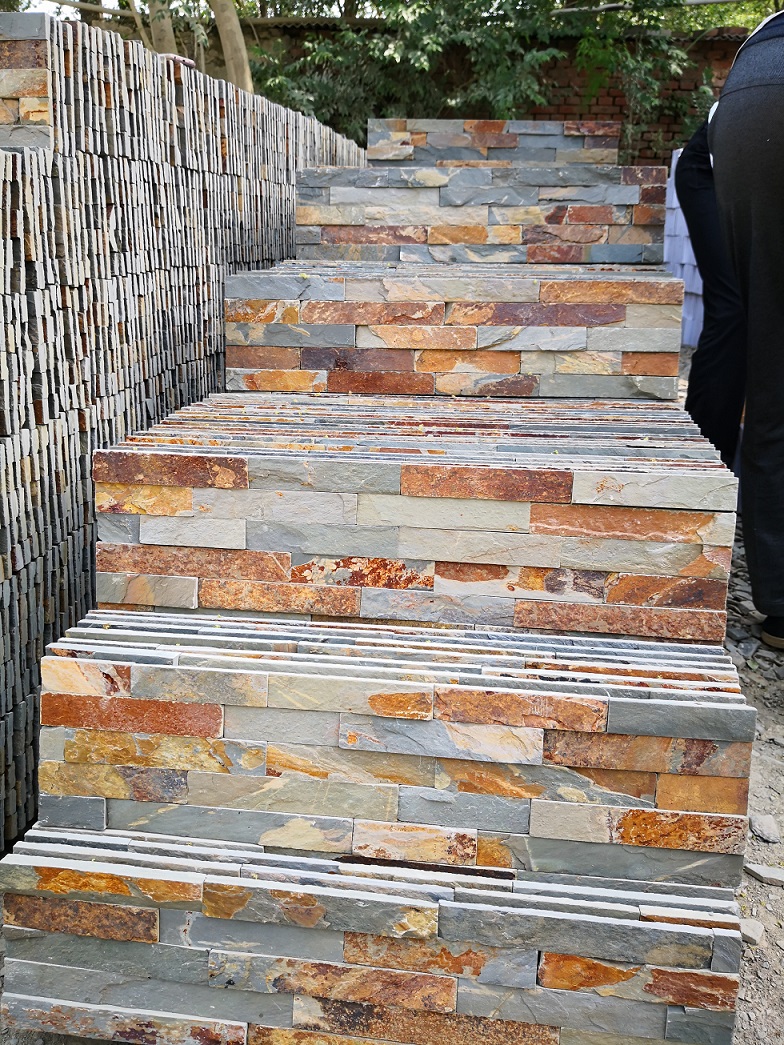
Elevate Your Projects with Premium Stacked Stone Ledger Panels
Exclusivity Terms: Locking Down Geographical and Product Line Rights
Exclusivity terms restrict manufacturers from producing or selling similar products within specified territories and timeframes, often extending beyond contract duration to prevent competition, while allowing carve-outs for performance failures.
Understanding Exclusivity Scope and Duration
Exclusivity scope in OEM/ODM contracts usually covers products that are identical or substantially similar to those provided under the agreement, preventing manufacturers from making or selling such goods to third parties. This definition may also extend to named competitors and, in some cases, entire product categories, giving broader protection to the buyer.
The duration typically matches the contract term but may include extensions beyond the termination date designed to block the manufacturer from launching competing products immediately after the relationship ends. These extensions are common to safeguard post-contract market stability for the buyer.
Drafting the scope of exclusivity requires precision. Overly broad definitions risk being legally unenforceable and can disrupt normal business operations, while scopes that are too narrow may fail to protect the brand owner’s market share and intellectual property fully.
Geographical Restrictions and Manufacturer Carve-Outs
Exclusivity clauses often confine the manufacturer to selling to the buyer only in agreed territories or within defined timeframes. These territorial limits prevent sales into markets where the buyer holds strategic interest or distribution networks.
Clauses may require written consent from the buyer before any deviation from these geographical rules, ensuring control over market access. Exceptions, known as carve-outs, allow the buyer to source products from alternative manufacturers if the original manufacturer fails to meet contractual obligations or if the agreement is terminated without cause.
Breaches of exclusivity terms are typically linked to the penalties outlined in NDA provisions, which may include restrictions on producing for competitors within specified markets and capped indemnity limits, such as not exceeding 10% of the original purchase price to address intellectual property infringement remedies.
Technical Guide: Integrating QC Report Standards into the Contract
Integrating QC report standards involves specifying international certifications like ISO 9001 and ISO/IEC 17025 in contracts, detailing report content such as lot IDs and test results, and setting requirements for sampling plans and corrective actions to provide enforceable quality assurance.
Key Quality Control Standards and Certifications
Including specific QC standards directly in your OEM/ODM contracts ensures both clarity and enforceability. ISO 9001 should be a baseline requirement for any manufacturer’s quality management system, providing assurance that processes align with recognized global quality practices.
Sampling plans using ISO 2859-1 or ANSI/ASQ Z1.4 define how inspection lots are accepted or rejected based on defect levels. By specifying General Inspection Level II and acceptable quality levels between 1.0 and 2.5 for major defects, you establish a concrete performance threshold.
For external testing, mandate ISO/IEC 17025 accreditation for any third-party laboratory to ensure competence in both testing and calibration. This makes lab data admissible for compliance checks.
Government contract frameworks, such as FAR Part 46, can be used as models for writing quality assurance clauses. These frameworks prescribe inspection and testing requirements, specify when and where quality assurance occurs, and define record-keeping obligations for defects and observations.
Contractual Requirements for QC Report Content and Traceability
QC reports must become contractual deliverables, not informal attachments. At minimum, your contract should require basic identification data for each report: lot or batch ID, PO number, date, and inspector identification.
Reports should include certified quantitative chemical and mechanical test results for any materials used, alongside original certificates from the material producer. These records substantiate compliance with material specifications.
All measured Critical-to-Quality characteristics, the acceptance criteria, sampling plan, and pass/fail disposition must be presented clearly. These values establish whether the product meets agreed tolerances or triggers nonconforming material procedures.
Require multiple copies of Material Review reports and Nonconforming Material Reports (NMRs) with documented corrective and preventive actions (CAPA) when defects are found. For instance, some industry contracts specify three copies sent to the buyer’s Quality Engineering team and one included in shipping with the affected material.
Suppliers must maintain corrective action records with quantitative defect data accessible to buyers. Each shipment should include signed and dated test results listing part number, lot/date code, tests conducted, and results. Structuring this into your contract converts QC data into auditable, enforceable proof of compliance.
Negotiating MOQ and Lead Time for Custom Orders
MOQ and lead times depend mainly on production setup costs, material availability, and product complexity. Negotiations often involve annual volume commitments, design simplification, and penalty clauses for delays.
Factors Affecting MOQ and Lead Time in Custom Orders
Line setup costs are one of the primary reasons factories impose specific MOQ thresholds. In many OEM/ODM projects, opening a new style or color often requires 500–1,000 units to justify the tooling, workforce allocation, and production changeover.
Material procurement cycles directly shape the lead time. When raw materials or trims have long supply chains, mass production windows can vary from 40 to 75 days. Seasonal events or suppliers with extended processing times can add delays.
Product complexity, from intricate design elements to the use of specialty materials, typically adds one to four weeks to production. Specialized assembly, unique components, or non-standard trims all extend completion timelines.
Once patterns, trims, and supplier relationships have stabilized, factories can lower MOQ requirements to about 300–500 units per style/color. Mature setups also tighten lead-time windows, often to between 40 and 55 days.
Negotiation Strategies and Performance Metrics
Annual purchase commitments with staggered deliveries help reduce per-shipment MOQ while allowing the factory to keep production lines running at optimal efficiency. This method benefits brands needing frequent restocks without overstocking warehouses.
Simplified designs and standardized materials enable the use of existing inventory, cutting production times by one to two weeks. This approach works well in categories with pre-qualified trims or fabrics readily available in stock.
Including contractual delay penalties—around 0.5–1.0% of purchase order value per late week, capped at 5%—creates a tangible incentive for punctual delivery. This ensures accountability without breaching typical OEM norms.
Embedding measurable on-time delivery KPIs in agreements makes it easier to negotiate future reductions in MOQ or faster lead times. Vendors that consistently hit performance targets are more likely to accommodate special requests.
Dispute Resolution Mechanism: Choosing the Arbitration Venue
Selecting the arbitration venue involves choosing a neutral seat of arbitration in a jurisdiction favorable for enforcing awards, often aligned with the New York Convention, and specifying a multi-step dispute mechanism (negotiation, mediation, arbitration) to manage cost and maintain business relationships.
Key Considerations in Selecting the Arbitration Venue
The seat of arbitration serves as the legal home for the proceedings, determining which courts have supervisory authority and the framework for award enforcement. This choice directly impacts the ease of enforcing arbitral awards, especially in cross-border disputes within OEM/ODM manufacturing agreements.
When choosing a venue, it is essential to consider whether the jurisdiction is a member of the New York Convention. Signatory states generally provide streamlined recognition and enforcement of foreign awards, while non-signatories, such as Taiwan, can present procedural complexities.
Many manufacturing contracts incorporate multi-tier dispute mechanisms starting with negotiation, followed by mediation, and concluding with binding arbitration. This model balances cost with the preservation of business relationships by resolving conflicts at the earliest stage possible.
It is critical to understand that choice of law clauses establish the applicable substantive legal rules, while forum or seat selection clauses establish where disputes will be heard. Both clauses work together to minimize uncertainty and avoid jurisdictional conflicts.
Practical Applications: Jurisdiction-Specific Arbitration Venues
In contracts involving Taiwanese manufacturers, the lack of New York Convention membership means foreign awards are more challenging to enforce. Selecting Taiwan itself as the seat of arbitration transforms the award into a domestic one, making enforcement more practical and predictable.
For disputes involving Vietnamese manufacturers, the Vietnam International Arbitration Centre (VIAC) is often stipulated as the seat and institution. VIAC awards can be enforced through Vietnamese courts, with defined and limited grounds for refusal, providing clarity for cross-border contract enforcement.
Aligning the seat of arbitration with the governing law helps ensure compatibility between procedural and substantive rules. Without this alignment, parties risk conflicting interpretations and enforcement difficulties.
In both jurisdictions, including a stepped dispute resolution clause helps maintain commercial partnerships and reduces the financial burden by prioritizing amicable resolution before escalating to binding arbitration.
Final Thoughts
Securing exclusivity and intellectual property in OEM and ODM contracts for private label stone designs requires precise language, clear ownership definitions, and enforceable operational controls. By breaking down tooling agreements, geographical restrictions, quality control standards, and dispute resolution processes, brands can shield their designs from unauthorized use while ensuring streamlined production timelines and consistent product standards.
Taking the time to integrate these elements into contracts not only protects product integrity but also strengthens long-term supplier relationships. A well-structured agreement serves as both a safeguard and a performance roadmap, allowing your business to expand confidently into new markets without risking dilution of brand value or loss of proprietary technologies.
Frequently Asked Questions
What are the most crucial IP protection clauses in a stacked stone OEM contract?
Critical IP protection clauses include exclusive ownership of designs, molds, tooling, trademarks, and trade dress, restrictions preventing the factory from reusing or selling designs to others, clear separation of background IP from project deliverables, strict confidentiality with enforceable remedies, and post-termination non-use provisions.
Does paying for a custom mold grant me full ownership of it?
No, paying for a custom mold does not automatically grant full ownership. Ownership must be explicitly stated in a written contract or mold ownership agreement because factories often claim rights to mold designs or related IP despite payment.
How is the ‘exclusive sales territory’ defined to prevent grey market transactions?
Exclusive sales territories are precisely delimited geographic regions defined by named countries, states, or postal codes where only the appointed party may market and sell. Contracts include prohibitions on out-of-territory sales and orders suspected for resale outside the exclusive area, supported by audit and reporting clauses.
Which country’s arbitration body should be specified in an OEM contract signed in Asia?
Singapore is recommended as the arbitration seat with the Singapore International Arbitration Centre (SIAC) as the administering body because of its neutrality, efficiency, and strong enforceability under the New York Convention across Asian jurisdictions.
What recourse do I have if the factory leaks my proprietary custom design?
You can enforce contract and IP remedies such as NDAs, clear IP ownership clauses, confidentiality and non-use clauses, liquidated damages, and injunctive relief provisions. These allow immediate action to stop infringement, claim penalties, terminate relationships, and transfer tooling rights.
How much higher is the typical MOQ for customized products compared to standard stock?
OEM orders usually have higher minimum order quantities than standard stock, but there is no specific numeric industry standard or multiplier available.
SEO
Title: Decoding OEM/ODM Contracts: Securing Exclusivity and IP for Your Private Label Stone Designs
Description: OEM vs ODM contracts detail IP ownership, exclusivity, tooling, and dispute resolution for private label stacked stone manufacturers.
URL: oem-vs-odm-contracts-ip-exclusivity-stone-brands
Keywords: OEM vs ODM contracts
