


Identifying critical stone veneer installation mistakes is the first checkpoint professionals and homeowners must lock down before mixing a single bag of mortar. If you are staring at a pallet of stacked stone veneer, the anxiety is real. You have seen photos of perfect accent walls online, but you might be terrified of making common stacked stone installation problems that turn a weekend project into a costly structural redo. The fear is not just about an amateur finish—it is about the stone falling off the wall or severe moisture damage showing up a year later.
Here is the pragmatic truth: most DIY stone veneer mistakes to avoid are not about a lack of talent; they are about poor surface preparation and incorrect material selection. A single error can easily cost you $500 to $1,000 in structural repairs, whereas proper substrate prep typically costs under $50 in materials. The engineering reality is simple: stone veneer is not a standalone decorative finish. It is a comprehensive cladding system that relies entirely on your backup wall framework and moisture barriers. If you skip the foundational steps, no amount of careful panel alignment will save your wall from failure.
Key Takeaways: Quick Installation Summary
- The 6 Critical Flaws: Long-term durability fails due to poor surface prep, inadequate moisture management, weak mortar, zero layout planning, skipped sealing, and local code violations.
- The Financial Impact: Grabbing un-modified mortar or omitting window flashing triggers $500–$1,000 in retrofits. Doing it right costs under $50.
- The Substrate Rule: Natural stone is a heavy cladding, not wallpaper. Success depends entirely on the mechanical bond capacity of your hidden substrate.
1. Wall Substrate Prep: How to Prepare Your Surface for Stone Veneer
Skipping proper surface preparation is the number one engineered cause of veneer failure. Treating stone panels as a standalone finish that can be stuck anywhere is a recipe for disaster. I have seen countless online videos where someone slaps stacked stone directly onto painted drywall using construction adhesive. It looks acceptable for a month. Then, during the first warm, humid season, the paint film fails, the drywall paper delaminates under the heavy vertical load, and your entire investment hits the floor.
Your substrate must be completely clean, structurally sound, and mechanically receptive to a cementitious bond. Here is the short list of surfaces that will absolutely fail without modification: painted drywall, untreated plywood, bare OSB, and slick concrete that hasn’t been roughened or cleared of curing compounds. The stone is only as strong as the layer behind it. To secure this layer, you must match your wall type to the correct assembly:
- For Interior Drywall Environments: You must install a solid cement backer board (such as HardieBacker or Durock) over the framing studs or existing drywall. Fasten with structural screws every 8 inches in the field and every 6 inches along the perimeter edges. No exceptions.
- For Exterior Sheathing Environments: You require a certified weather-resistant barrier (WRB) over the sheathing, followed by a drainage plane framework, and then the cement board substrate to support the exterior cladding weight.
To verify your wall condition, use the 30-Second Tape Test. Press a piece of high-tack clear packing tape or duct tape firmly onto your prepared cement board or wall surface, then rip it off. If the tape pulls up loose dust, powdery paint residue, or degraded fibers, your surface is not ready. The mortar will fail to create a permanent mechanical lock. Fix the substrate before mixing your batch.
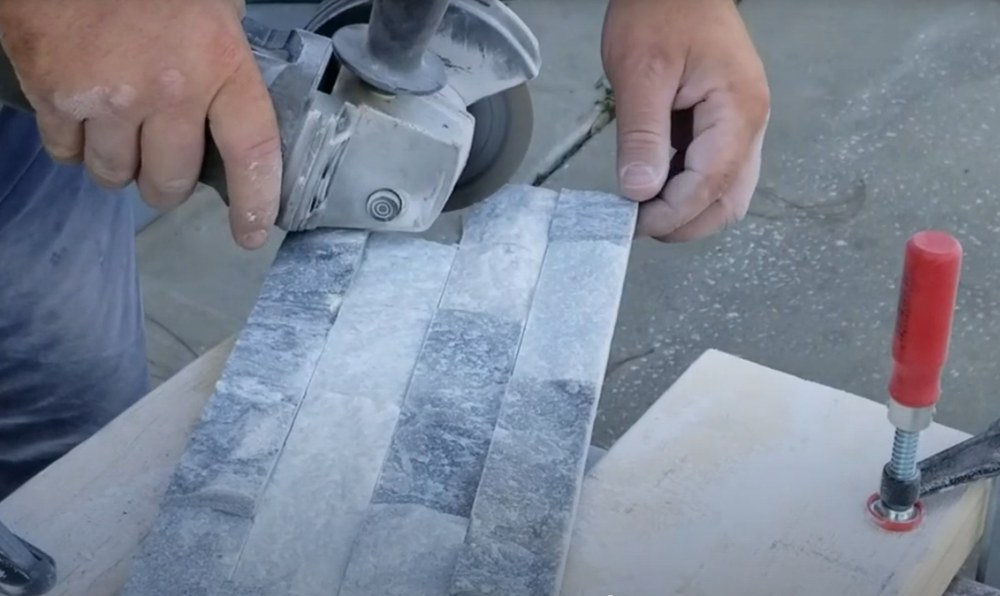
2. Moisture Control Behind Stone Veneer: Waterproofing and Drainage Planes
Over 70% of all documented stone veneer failures are directly moisture-related. While most DIY articles obsess over panel fit and aesthetics, they completely ignore what happens behind the stone on a rainy or humid day. Even if your pre-set panels are perfectly flush, the entire system will detach if water becomes trapped within the wall cavity.
When completing exterior applications, you must enforce a multi-layered moisture defense system:
- Apply a High-Quality WRB: Install a certified weather-resistant barrier directly over your plywood or OSB sheathing.
- Create a Dedicated Drainage Plane: Incorporate a minimum 1/4-inch air gap framework to allow infiltrating water to weep out safely. This single step reduces moisture failure rates by over 70%.
- Integrate Heavy-Duty Flashing: Install flashing around critical break points like windows, doors, and base transitions to shed water outward. Waterproofing behind stone veneer is not an optional luxury; it dictates whether your wall survives for decades or rots your framing in two seasons.
3. Mortar Selection: Why Polymer-Modified Thinset Beats Type S Mortar
Many DIYers grab standard Type S brick mortar or generic tile mastic because it is inexpensive or readily available on the local hardware store shelf. This choice is a massive mistake. Standard Type S mortar achieves only about 200 psi of compressive bond strength, which is entirely insufficient for resisting gravity on heavy, vertical stone panels. In contrast, premium polymer-modified thinset mortar, explicitly designed for vertical masonry installations, achieves over 500 psi of compressive strength—yielding more than double the holding power.
To ensure the adhesive bond line achieves maximum performance, execute the mixing and material specs exactly:
- The Consistency Target: Blend the polymer-modified thinset to a firm, peanut-butter consistency. If the mix is too wet, the heavy stone ledger panels will slide down the wall; if it is too dry, the cement crystals cannot hydrate properly to form a bond.
- The Performance Baseline: For the best mortar for stone veneer vertical installation, always spec a specialized polymer thinset. Advanced formulas like our ProThin polymer mortar test at a commanding 550 psi bond strength, completely eliminating the common DIY fear of stone slippage during curing.
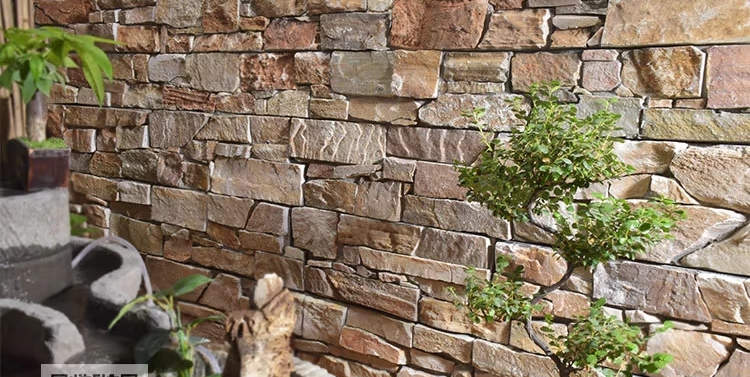
4. Layout and Joint Planning: Avoiding the Stacked Stone Zipper Effect
Poor layout planning creates uneven joints, obvious repeating patterns, and the dreaded “zipper effect” at external corners. You have likely seen this flaw on poorly executed jobs—a glaring, perfectly straight vertical seam running up the corner profile where the panels fail to weave together. It instantly screams amateur workmanship.
To achieve a flawless, seamless masonry aesthetic, build your layout around these core layout parameters:
- Always Dry-Lay First: Arrange your stone panels on the floor to mix different pallets and map out patterns before applying any mortar to the wall.
- Stagger All Vertical Joints: Stagger seams across adjacent rows, ensuring you never create “cross joints” where four panel corners meet at a single intersection.
- Utilize Pre-Mitered Corner Panels: These specialty units reduce on-site cutting time by 40% and completely eliminate the zipper effect when staggered correctly.
- Maintain Joint Consistency: For grouted veneers, keep a tight joint width between 3/8 inch and 1/2 inch. Inconsistent spacing ruins shadow lines and increases water infiltration risk. Always start your installation from the lowest corner and work your way upward and outward to maintain proper stacked stone corner alignment.
5. Sealing and Post-Installation Clean: Protecting the Finished Cladding
During installation, accidental mortar smears are bound to happen. If left unattended, residual mortar haze permanently stains the natural face, while unsealed veneer absorbs environmental moisture like a dry sponge. Clean any stray mortar off the face using a clean, stiff-bristled brush and clean water as soon as the mortar achieves its initial set. Never use aggressive muriatic acid solutions on natural stone veneer panels, as acid will permanently etch and discolor the mineral surface.
Once the physical installation is complete, follow this post-treatment timeline:
- Allow Full Cure: Let the complete installation cure fully undisturbed for 24 to 48 hours.
- Apply a Breathable Penetrating Sealer: Avoid cheap, glossy topical film sealers that create a plastic look and trap internal vapor behind the stone face. A high-quality penetrating sealer works at a molecular level, allowing vapor to escape outward while blocking external liquid water from entering.
- Monitor and Re-Apply: Check the surface for signs of efflorescence (white, powdery salt deposits) after 7 days, and plan to re-seal your exterior applications every 2 to 3 years to maintain long-term durability.
6. Ignoring Building Codes: Compliance and Grade Clearance Flaws
The final critical mistake is overlooking local building regulations and universal code compliances. Many installers assume that because veneer is thin, it doesn’t fall under strict structural mandates. This misunderstanding can stall inspections or force total teardowns. According to international building standards and ASTM C1780 guidelines, adhered stone veneers must adhere to rigorous weight ceilings (typically capping out at 15 lbs/sq ft including the mortar assembly) and clearance rules.
Pay specific attention to the strict clearance mandates enforced by local building codes:
- Unpaved Grade Clearance: Code dictates that you must preserve a minimum 2-inch clearance between the bottom edge of the stone cladding and unpaved earth grade.
- Paved Surface Clearance: You must maintain a 1/2-inch clearance above finished paving like concrete patios, walkways, or interior finished flooring. If you run the stone panels all the way down into the dirt, moisture will wick vertically into the stone structure. When freezing winter temperatures arrive, that trapped water expands, blowing the lower stones completely off the wall and compromising the structural backup system.
Conclusion
A professional-grade stacked stone wall is entirely within your reach, provided you value structural preparation as much as final cosmetics. By selecting a high-bond polymer thinset, incorporating proper drainage planes, and respecting local building codes, you eliminate the risks of stone slippage and moisture degradation. Do not cut corners on what sits behind the stone—protect your investment from the substrate up.
