


Sourcing exterior cladding for Swiss alpine projects requires a balance between aesthetic prestige and the technical ability to survive extreme thermal stress. In high-altitude environments, water trapped within stone expands by approximately 9% during freezing, an internal pressure that can quickly destroy porous materials. For procurement teams and architects, identifying stacked stone manufacturers in Switzerland that offer high-density materials like Valser Quartzite or Gneiss is a prerequisite for ensuring long-term structural integrity and SIA standard compliance.
This guide analyzes the performance metrics of alpine-grade stone, the logistical trade-offs between local quarry sourcing and high-volume factory importing, and the rise of thin stone veneers that weigh as little as 8–13 lbs per square foot. We examine how modern mechanical anchorage systems and low-porosity slate panels are shaping 2026 architectural trends, providing a clear path for stabilizing project budgets without compromising the rugged durability required for the Grisons or Valais regions.
Top 10 Stacked Stone Suppliers in Switzerland (Market Review)
Quick Comparison: Top Picks
| Manufacturer / Brand | Location | Core Strength | Verdict |
|---|---|---|---|
| Top Source Stone | China (Global Shipping) | Natural Stacked Stone Panels & Marble Ledger | Best for factory-direct pricing, high-density alpine quality, and high-precision technical customization. |
| Realstone SA | Lausanne, Switzerland | Natural Stone Facing & Architectural Wall Cladding | Premier Swiss choice for local alpine expertise, regional quarrying, and high environmental standards. |
| SABAG | Biel/Bienne, Switzerland | Calibrated Ceramic & Natural Stone Facings | Top-tier distribution logistics and high inventory availability for multi-story construction projects. |
| Richner (BRH-Gruppe) | Aarau, Switzerland | Porcelain Stoneware & Modular Stone Cladding | Excellent for professional architectural specifiers and high-end European brand selection. |
| Stoneshop.ch | Switzerland | Loose Ledger Stones & Natural Brick Slips | Best for local contractors needing quick online configuration access and regional stock pipelines. |
| HGC Cooperative | Zurich, Switzerland | SIA-Compliant Facing Stones & Build Systems | A highly reliable B2B cooperative partner for integrated structural stone building envelopes. |
| Bieri Kristallgranit | Engadin, Switzerland | Alpine Quartzite & Sawn Gneiss Cladding Slices | Top local choice for luxury chalet projects requiring unique, high-compressive Alpine materials. |
| Creabeton SA | Sursee, Switzerland | High-Density Cement-Backed Stone Composite Systems | Best for structural slope protection, retaining walls, and rigid solid-backed installations. |
| Fixit AG | Donat, Switzerland | facade Carrier Plasters & Stone Cladding Adhesives | The industry benchmark for technical mortar substrates and high-altitude thermal insulation layers. |
| Bärlocher Steinbruch | St. Gallen, Switzerland | Calibrated Gneiss Wall Panels & Sawn Liners | Excellent source for authentic, low-porosity Swiss Gneiss textures matching public codes. |
Top Source Stone
Top Source Stone operates as a direct manufacturer that maintains strict oversight of the entire production cycle, from the initial quarrying phase to the final crating of finished goods. This vertical integration allows them to provide high-precision ledger panels specifically engineered for both residential facades and commercial developments. By handling the raw materials internally, they ensure that the natural stone maintain consistent quality and structural integrity across large-scale projects.
The production facility utilizes advanced interlocking systems to simplify the installation process for professionals, reducing labor time while increasing the durability of the wall cladding. Their focus on factory-level control helps international buyers reduce procurement risks by eliminating middleman markups and ensuring that every batch meets specific architectural tolerances. The combination of local execution in China and specialized logistics allows them to serve demanding markets like Switzerland and North America with reliable heavy-duty packaging.
At a Glance:
- 📍 Location: China (Global Shipping to Switzerland)
- 🏭 Core Strength: Natural Stacked Stone Panels, Flat Series, Rough Series, Pencil Series, Marble Ledger Panels
- 🌍 Key Markets: Global B2B, Switzerland, North America, Europe
Why We Picked Them:
| ✅ The Wins | ⚠️ Trade-offs |
|---|---|
|
|
Realstone SA
Realstone SA operates as a premier Swiss authority in the natural stone sector, focusing on the procurement and processing of high-end materials for architectural applications. Their team manages a curated selection of regional and international stone types, ensuring that every slab meets rigorous aesthetic and structural requirements. By maintaining local expertise and physical showrooms, they provide a hands-on experience that reduces the risks associated with raw material selection, offering clients direct oversight over the final visual outcome of their projects.
The company maintains tight factory control throughout the fabrication process to deliver precision in natural stone facing, wall cladding, and paving. This localized execution strategy ensures that technical specifications for the DACH region are met with Swiss precision, minimizing logistical complications. Their focus on high environmental standards and sourcing transparency allows architects and developers to integrate premium stone elements into both interior and exterior designs with confidence in the material’s durability and origin.
At a Glance:
- 📍 Location: Lausanne, Switzerland
- 🏭 Core Strength: Natural Stone Facing, Wall Cladding, Paving panels
- 🌍 Key Markets: Switzerland, DACH Region, Premium Alpine Chalets
Why We Picked Them:
| ✅ The Wins | ⚠️ Trade-offs |
|---|---|
|
|
SABAG
SABAG operates as a cornerstone of the Swiss construction supply chain, focusing on high-quality surfacing materials for both interior and exterior applications. By managing a vast inventory of ceramic tiles and natural stone strips, the company serves as a vital bridge between material production and local architectural needs. Their business model emphasizes local execution, ensuring that builders and homeowners have direct access to physical showrooms and inventory across various Swiss regions, which reduces the logistical uncertainty often found in international sourcing.
Control over the supply chain allows the brand to maintain consistent quality standards across their wall panels and stone collections. This infrastructure helps mitigate risks for project managers by providing predictable lead times and verified material durability suitable for the Swiss climate. Instead of navigating fragmented suppliers, professionals rely on their extensive branch network to coordinate large-scale deliveries, benefiting from a system designed to handle the specific regulatory and aesthetic demands of the domestic market.
At a Glance:
- 📍 Location: Biel/Bienne, Switzerland (Branches Nationwide)
- 🏭 Core Strength: Calibrated Stone Carriers, Natural Facing Strips, Technical Surfacing
- 🌍 Key Markets: Large-Scale Swiss Construction Industry, General Contractors
Why We Picked Them:
| ✅ The Wins | ⚠️ Trade-offs |
|---|---|
|
|
Richner (BRH-Gruppe)
Richner operates as a specialized Swiss partner focusing on the curation and distribution of premium tiles and natural stones. The company bridges the gap between raw material sourcing and architectural application, ensuring that builders and designers have access to high-quality surfaces. By maintaining a strong presence in the Swiss local market, they provide direct oversight and quality control, which significantly reduces the risks typically associated with sourcing heavy materials for luxury construction projects.
Their service model emphasizes professional consultation to help clients translate design visions into achievable physical spaces. They balance aesthetic inspiration with practical execution, managing the complexities of interior slabs and stone cladding through deep industry expertise. This localized approach allows for better logistics management and factory-level standards, catering specifically to the high expectations of the Swiss building sector.
At a Glance:
- 📍 Location: Aarau, Switzerland
- 🏭 Core Strength: Modular Stone Cladding, Porcelain Stoneware, Interior Facade Slabs
- 🌍 Key Markets: Architectural Specifiers, Luxury Commercial Real Estate
Why We Picked Them:
| ✅ The Wins | ⚠️ Trade-offs |
|---|---|
|
|
Stoneshop.ch
Stoneshop.ch operates as a specialized Swiss distributor that brings the efficiency of e-commerce to the heavy masonry industry. By focusing on an online-first model, they bridge the gap between regional inventory and local demand, offering a streamlined path for sourcing ledger stones and brick slips. This digital approach ensures that Swiss contractors and DIY enthusiasts can browse specific textures and stone types without the logistical friction typically associated with traditional stone yards.
The company maintains high standards of local execution by managing a steady inventory of natural stone panels ready for quick dispatch within Switzerland. This model significantly reduces the risks of color inconsistency and shipping delays that often plague international stone imports. Their focus on the local market allows them to provide predictable lead times and reliable product quality for interior and exterior walling projects across the region.
At a Glance:
- 📍 Location: Switzerland (Digital Fulfillment Matrix)
- 🏭 Core Strength: Natural Ledger Stones, Calibrated Facing Modules, Thin Brick Slips
- 🌍 Key Markets: Small-Scale Swiss Contractors, Independent Landscape Builders
Why We Picked Them:
| ✅ The Wins | ⚠️ Trade-offs |
|---|---|
|
|
HGC (Handelsgenossenschaft des schweizerischen Baumeisterverbands)
HGC operates as a specialized cooperative dedicated to the Swiss construction sector, focusing on providing high-quality building materials directly to professional contractors. The organization maintains tight factory control over its supply chain to ensure that every natural stone slab and facing stone meets the rigorous technical standards required for Alpine architecture. By centralizing the procurement process for Swiss builders, HGC simplifies local execution and provides a reliable pipeline of raw materials for large-scale structural projects.
This supplier minimizes owner and contractor risk by offering integrated building solutions that cover everything from heavy masonry to decorative finishes. Their inventory specifically caters to the region’s unique demands, emphasizing durability in fluctuating climates. Because the cooperative manages high volumes, they provide Swiss developers with consistent pricing and logistical support, making them a foundational partner for urban development and residential masonry across Switzerland.
At a Glance:
- 📍 Location: Zurich, Switzerland
- 🏭 Core Strength: SIA-Compliant Facing Stones, Natural Building Slabs, Structural Framing Blocks
- 🌍 Key Markets: Professional Swiss Contractors, Large Estate Material Specifiers
Why We Picked Them:
| ✅ The Wins | ⚠️ Trade-offs |
|---|---|
|
|
Bieri Kristallgranit
Bieri Kristallgranit stands as a primary source for high-end Swiss Alpine stone, catering to architects and developers who prioritize regional authenticity. By maintaining direct oversight of the material selection from the Alps, this supplier ensures that every slab meets specific aesthetic standards for luxury residential use. Their operation centers on providing rare textures that distinguish high-profile projects from standard commercial developments, bridging the gap between raw geological sourcing and refined architectural application.
The company manages the entire logistical chain from local extraction to the final delivery of wall systems and cladding, which reduces the risks typically found in international stone procurement. Their factory control allows for precise fabrication of Alpine Quartzite and Granite, ensuring that complex architectural specifications are met without compromising the stone’s natural integrity. This local execution model provides a layer of quality assurance that supports sophisticated designs, particularly when blending imported specialties with their signature regional materials.
At a Glance:
- 📍 Location: Engadin, Switzerland
- 🏭 Core Strength: Authentic Alpine Quartzite, Heavy Granite Cladding, Deep-Foliation Wall Slices
- 🌍 Key Markets: Elite Swiss Chalets, High-Tier Landscape Foundations
Why We Picked Them:
| ✅ The Wins | ⚠️ Trade-offs |
|---|---|
|
|
Creabeton SA
Creabeton SA operates as a heavy-weight force in the Swiss technical building materials industry, focusing intensely on high-density cement-bonded and composite wall panelization networks. They serve large infrastructure programs and multi-family framing sectors requiring rigid load distribution. By processing specialized aggregates inside fully automated Swiss factories, they ensure that each backing board layer provides extreme out-of-plane shear resistance, mitigating the cumulative lateral pressures common in high-altitude terrain profiles.
Their operational framework reduces construction delays through high-uniform module sizing, enabling field crews to skip complex hand-dressing stone phases entirely. Their products feature optimized moisture control metrics that survive severe snow melt pressures without aggregate delamination. This industrialized execution gives architects access to highly systematic structural panels that fully comply with structural safety protocols across Switzerland’s mountain kantons.
At a Glance:
- 📍 Location: Sursee, Switzerland
- 🏭 Core Strength: Solid cement-backed facade platforms, retaining structural walls, engineered stone composite panels
- 🌍 Key Markets: Cantonal infrastructure builders, heavy-load multi-residential envelopes
Why We Picked Them:
| ✅ The Wins | ⚠️ Trade-offs |
|---|---|
|
|
Fixit AG
Fixit AG functions as a critical backbone for Swiss masonry engineering, manufacturing the specialized polymer-modified mortars, aggregates, and exterior carrier plasters required to anchor thin stone facings safely. Sourcing and formulating inside high-precision regional chemical complexes, they protect building envelopes against ice-jacking risks by ensuring unyielding moisture repellency. Their systems form a continuous microstructure with cement-backed stone units, avoiding common interface delamination traps.
The company mitigates construction failure risks by providing extensive field-level testing data covering tensile bond parameters down to extreme alpine minimums. Architects look to their coordinated sub-plaster configurations to maintain optimal back-ventilation behind heavy stone skins. This professional engineering focus ensures that multi-story facades resist thermal shock stresses across variable alpineCantons over multiple decades.
At a Glance:
- 📍 Location: Donat, Switzerland (Cantonal Production Sites)
- 🏭 Core Strength: High-performance masonry mortars, stone cladding carriers, insulated thermal plasters
- 🌍 Key Markets: High-altitude alpine developments, rigid building envelope systems
Why We Picked Them:
| ✅ The Wins | ⚠️ Trade-offs |
|---|---|
|
|
Bärlocher Steinbruch
Bärlocher Steinbruch operates as a foundational source for authentic regional stones within northeastern Switzerland. By overseeing their own geological extraction zones, they deliver direct quality screening over every stone slab and thin wall panel. Their automated diamond sawing setups calibrate individual block thickness perfectly, providing masons with flat contact surfaces that severely reduce layout adjustments on high-exposure public works.
The quarry mitigates building facade risks by providing comprehensive petrographic testing histories. Their high-density Gneiss variations provide superb protection against water absorption, blocking frost heave fractures in severe mountain territories. This deep localized focus on structural masonry durability makes them an essential choice for institutional developers seeking long-term historical continuity and strict building compliance records.
At a Glance:
- 📍 Location: St. Gallen, Switzerland
- 🏭 Core Strength: Calibrated Swiss Gneiss cladding panels, sawn linear veneers, authentic sandstone blocks
- 🌍 Key Markets: Swiss cantonal developments, regional public monuments, premium mountain real estate
Why We Picked Them:
| ✅ The Wins | ⚠️ Trade-offs |
|---|---|
|
|
Steinkontor
Steinkontor operates as a specialized consultancy and supplier catering to the rigorous demands of the Swiss architectural landscape. The team focuses on sourcing and delivering high-performance natural stone, specifically tailored for sophisticated exterior facades and detailed interior accents. By maintaining direct factory control, they ensure that every slab meets the technical specifications required for local execution in Switzerland, where precision and durability are non-negotiable standards.
The company effectively reduces project risk for architecture and design firms by bridging the gap between raw material extraction and final installation. Their service model emphasizes technical project support, guiding clients through the selection of materials that balance modern aesthetics with functional longevity. This hands-on approach to supply chain management allows for a seamless transition from initial design concepts to the finished building skin, ensuring that aesthetic vision aligns with structural reality.
At a Glance:
- 📍 Location: Switzerland (Project-Based Logistics Hubs)
- 🏭 Core Strength: Technical Design Facades, Premium Stone Systems, Complex Project Sourcing
- 🌍 Key Markets: Swiss Architecture Studios, Specialized Design-Build Houses
Why We Picked Them:
| ✅ The Wins | ⚠️ Trade-offs |
|---|---|
|
|
Alpine Freeze-Thaw Resistance: Why Material Density Matters for Swiss Chalets
Material density serves as a primary safeguard against the aggressive freeze-thaw cycles found in Alpine environments. By selecting low-porosity stones like Valser Quartzite or Gneiss, architects prevent water absorption and the subsequent internal pressure caused by ice expansion, ensuring the structural and aesthetic integrity of Swiss chalet façades.
Natural Stone Density and Porosity in Sub-Zero Climates
The performance of exterior cladding in the Swiss Alps depends heavily on how a material manages moisture. Low-porosity stones are naturally more resilient in these conditions because they limit the volume of water that can enter the stone’s internal structure. In contrast, porous materials allow water to seep deep into the substrate, where it remains trapped before temperatures drop below freezing.
Internal cracking and surface spalling occur when this trapped moisture expands by approximately 9% during the freezing process. This physical expansion exerts immense pressure on the stone’s mineral bonds. For procurement teams, material density acts as a critical filter; high-density options like quartzite and slate offer the necessary resistance to withstand these repeated cycles without degrading or losing their structural bond to the building envelope.
Strategic Material Selection for High-Altitude Swiss Exteriors
Selecting dense natural stone veneer allows for a sophisticated aesthetic that meets the technical demands of high-altitude construction. Because these veneers are thinner than traditional full-bed stone, they significantly reduce the dead load on chalet façades. This reduction in weight is advantageous for thermal efficiency, as it allows for more flexible insulation layers within the wall assembly without overstressing the mechanical anchors or the primary structure.
The longevity of retaining walls, steps, and pathways in snow-prone regions is tied directly to the stone’s density. Modern architectural standards emphasize the use of mechanical anchorage systems in alpine zones to manage the combined forces of stone weight and snow accumulation. Materials like Ticino Gneiss or Valser Quartzite are frequently specified for these roles due to their high compressive strength and ability to remain stable under the heavy snow loads and fluctuating moisture levels typical of Swiss winters.
Sourcing Dilemma: Swiss Local Quarry Costs vs. Direct Global Factory Importing
Procurement for Swiss construction projects requires balancing the architectural prestige and logistical oversight of local quarries, such as those producing Valser Quartzite or Ticino Gneiss, against the significant financial incentives of direct global factory importing. While local sourcing minimizes carbon footprints and ensures material consistency, global factory models leverage scale to provide high-density alternatives and prefabricated systems that lower onsite labor costs.
Swiss Local Quarry Economics and Regional Material Character
Local Swiss quarries provide high consistency in finish and architectural grading for natural stone blocks and cut surfaces. Sourcing from within Switzerland offers technical advantages in logistics through shorter transport distances and tighter quality oversight during the extraction and refinement phases. Labor and extraction costs reflect high regional overheads despite the reduction in carbon footprint compared to long-distance shipping. Iconic materials like Valser Quartzite from Graubünden or dark Gneiss from the Ticino region remain the benchmark for high-end residential and hospitality projects where local provenance is a key design requirement.
Global Factory Importing and Large Scale Financial Incentives
Direct importing from global stone producers leverages factory-scale supply, particularly from concentrated manufacturing hubs in global industrial zones. Landed-cost benefits depend on large-scale demand where price sensitivity outweighs the logistical proximity of local quarries. These global networks provide access to diverse materials including Granite, Quartzite, and Marble at factory-direct pricing, which results in significant savings for high-volume construction projects. Swiss distributors increasingly integrate these imported materials to complement local stocks, offering a broader palette of colors and textures that meet Swiss performance and fire safety standards.
Strategic Selection Based on Installation Efficiency and Project Scale
High-density Alpine alternatives provide a middle ground by offering factory-direct price points without sacrificing the durability required for Swiss climates. Prefabricated interlocking panel systems from global factories reduce onsite labor costs and installation time compared to traditional full-thickness local stone. In harsh alpine environments, the selection process focuses on material density and low porosity to withstand freeze-thaw cycles. Evaluating the trade-off between the prestige of local provenance and the scalability of global manufacturing is essential for project profitability, especially when considering the weight reduction and structural efficiency offered by modern thin stone veneers.
Premium Stacked Stone Built for Architectural Excellence
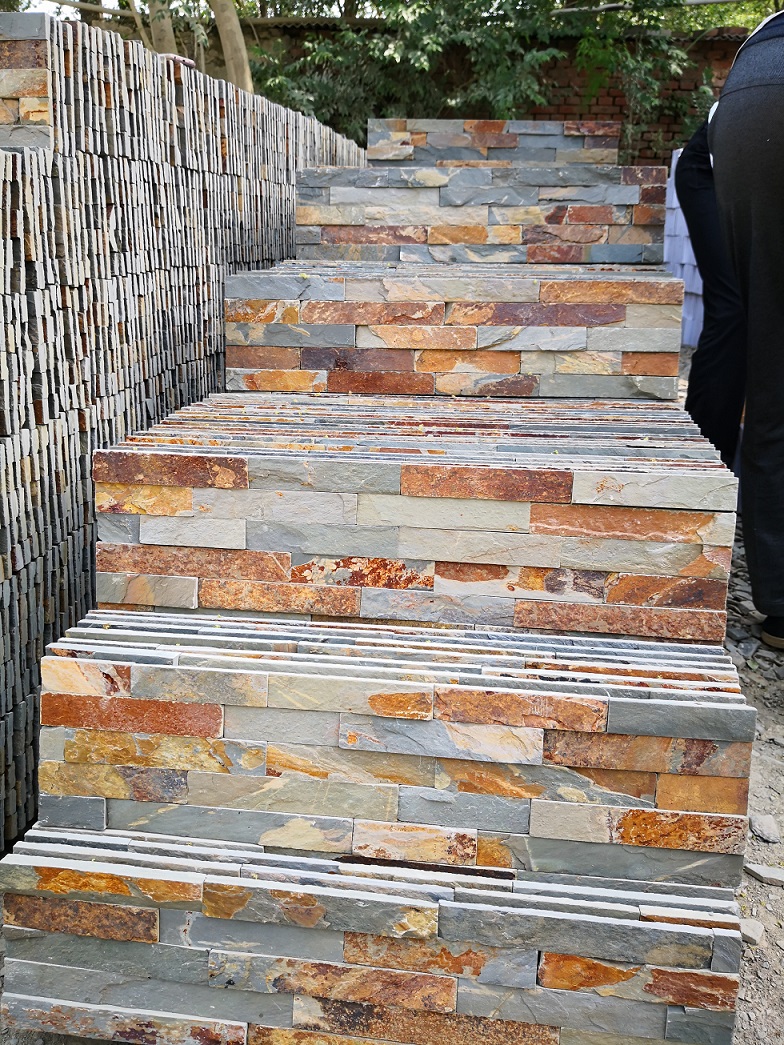
Modern Swiss Architecture Trends: The Rise of Dark Quartzite and Slate Panels
Contemporary Swiss facades increasingly utilize high-density dark quartzite and re-engineered slate panels to achieve a monolithic, minimalist aesthetic. By combining iconic regional materials like Valser Quartzite with global sourcing for cost-effective modular systems, architects can specify durable, low-porosity cladding that withstands extreme alpine freeze-thaw cycles while meeting modern building envelope performance requirements.
Iconic Alpine Materials: Valser Quartzite and Ticino Gneiss
Valser Quartzite from Graubünden serves as a benchmark for contemporary Swiss facades, known for its fine-grained blue-grey to dark grey tones and high compressive strength. This material remains a preferred choice for architects seeking high density and low porosity, which are essential for long-term durability in cold climates. Technical procurement filters for exterior cladding often prioritize such dense stones to ensure they absorb minimal water, preventing cracks during the expansion of trapped moisture during winter cycles.
Ticino Gneiss and quartzites from the Cresciano and Lodrino quarries provide anthracite hues and pronounced foliation, ideal for linear, stratified facade expressions. These southern Swiss stones are frequently specified for saw-cut facade panels and split-face wall cladding. Their natural mineral composition allows for thin, high-performance veneers that reduce the total dead load on the building structure compared to full-bed masonry, making them suitable for architectural projects focusing on efficiency.
Low porosity and high density make these regional stones suitable for large-format ventilated panels and rainscreen cladding. Mechanical anchorage systems, including undercut anchors and support rails, enable these stones to be used safely at high altitudes. These systems ensure that the cladding weight and environmental loads are transferred to the primary structure, maintaining integrity under severe alpine weather conditions and significant snow accumulation.
Engineered Dark Slate and Minimalist Curtain Wall Systems
Template Swiss roofing slate is being re-engineered into calibrated facade panels to achieve a monolithic, minimalist aesthetic. By processing slate into precise, thin formats, designers can create seamless building envelopes that match the visual weight of stone with the practical benefits of modern curtain-wall tech. The flexural strength and natural cleavage of alpine slate allow for thin, overlapping panel systems that meet the rigorous technical demands of the Swiss building envelope.
Slate’s low water absorption ensures stability in diverse Swiss climates, from urban centers to high-altitude developments. Unlike porous materials that may degrade over time, high-quality slate maintains its structural and aesthetic properties even when exposed to repeated freeze-thaw cycles. This stability makes it a reliable material for retrofit facade systems and contemporary residential projects seeking a dark, homogeneous exterior finish.
Global Material Integration for Expanded Design Palettes
Swiss distributors complement local quarry outputs with dark quartzites and slates sourced from Italy, Spain, and South American formations. This integration allows designers to access a broader range of textures and dark color palettes while ensuring materials align with Swiss fire safety and performance standards. Global sourcing provides options for specific finishes or larger quantities that may not be immediately available from regional alpine quarries alone.
Modular stacked-stone veneers and large-format panels provide a cost-effective solution for large-scale commercial facades and luxury residential developments. High-density alternatives to traditional stone through direct factory pricing help stabilize project budgets. These systems utilize thin natural stone facings that significantly reduce material mass without compromising the visual impact of a solid stone wall, allowing for faster installation and more efficient logistical planning.
Imported materials must still be evaluated within the context of Swiss SIA standards, which regulate structural design, moisture control, and energy performance. While global factory stones offer consistency and cost benefits, architects and engineers must document their integration into the overall facade assembly to ensure compliance with local building codes and technical approvals, particularly for projects at high elevations.
Topsource Stone: The High-Density Alpine Alternative with Direct Factory Pricing
Topsource Stone provides Swiss architects and developers with high-density natural stone systems engineered for extreme alpine durability. By utilizing a direct factory procurement model, the company eliminates intermediary markups to stabilize budgets for large-scale cladding projects while ensuring compliance with stringent performance requirements for freeze-thaw resistance.
High-Density Material Performance for Extreme Alpine Climates
Success in Swiss alpine construction depends on selecting materials with low porosity and high compressive strength. Natural stone exposed to high-altitude environments must survive repeated freeze-thaw cycles where trapped moisture expands within the stone’s pores. We prioritize dense quartzite and slate variants that absorb minimal water, significantly reducing the risk of structural cracking or surface spalling over decades of winter exposure.
Our fabrication process incorporates advanced resin bonding technology for panelized systems. This ensures that the integrity of the stacked stone remains uncompromised despite severe temperature fluctuations common in the Grisons or Valais regions. By engineering the stone to exceed standard density benchmarks, we provide a reliable alternative to traditional local quarry materials while maintaining the classic mountain aesthetic required for modern chalet architecture.
Direct Factory Procurement and Cost Stabilization for Architectural Projects
The procurement landscape for contemporary architectural projects demands price stability in an era of fluctuating logistics costs. We address this by removing the distributor layer and shipping directly from the manufacturing unit to the site. This vertical integration allows for predictable pricing models on large-format cladding and modular stacked-stone systems, giving procurement managers the ability to lock in budgets early in the design phase.
Quality assurance is centralized at the point of production to avoid costly site-side replacements. Every order undergoes a three-stage inspection protocol: immediately after precision cutting, following panel assembly, and prior to final crating. This rigorous oversight ensures that the stone arriving at the construction site meets the exact dimensions and tonal consistency specified by the design studio, preventing project delays and labor overruns.
Custom Fabrication and OEM Logistics for Swiss Architecture
Swiss chalets and commercial facades often require specialized geometry to achieve a monolithic, grout-free appearance. We manufacture Z-shaped interlocking panel systems that mask joints and simplify installation on vertical surfaces. These customized stone specifications are tailored for B2B partners who need specific thicknesses or reinforced backing for ventilated rainscreen systems, ensuring the material integrates perfectly with modern Swiss building envelopes.
Logistics for mountain-side delivery present unique challenges involving narrow access roads and remote locations. To mitigate risk, we utilize reinforced, fumigated crates designed to withstand multiple handling stages during sea and land transit. Our global logistics network supports strategic delivery schedules, ensuring that facade materials arrive in sequence with the construction timeline, safely packaged for the final ascent to high-altitude job sites.
Frequently Asked Questions About Swiss Stone Sourcing
What is the standard lead time for stacked stone delivery in Switzerland?
Typical lead times for premium stone delivery in the Swiss market range from 2–6 weeks for standard inventory and 6–12 weeks for custom or project-specific orders. This timeframe accounts for production scheduling, quality control, and freight planning rather than a rigid legal standard. For budget and schedule control, many buyers assume a 3–4 week window for standard materials to ensure site readiness.
How does stone cladding handle high-altitude snow loads in alpine regions?
Stone cladding is not a load-bearing element for snow; instead, it is engineered to transfer its own weight and wind/snow pressures to the building’s primary structure via mechanical anchors or subframes. In harsh alpine climates, lightweight stone veneers—often 60–70% lighter than solid stone—are preferred to reduce dead loads. These systems utilize corrosion-resistant fixing rails and drainage cavities to manage meltwater and freeze-thaw cycles effectively.
Are global factory-sourced stones compliant with Swiss SIA standards?
SIA standards (such as SIA 260-269 and SIA 272/273) regulate overall building performance and structural safety rather than specific stone brand properties. Factory-produced stone is not automatically compliant; its use must be evaluated within the context of the total construction system. Architects must ensure that the chosen stone, whether local or imported, meets the required Swiss technical norms for moisture resistance, durability, and fire protection as part of the wall assembly.
Does natural stacked stone require structural reinforcement or footings?
Modern stacked stone panels typically weigh between 8–13 lbs per square foot, which allows for installation on most structurally sound surfaces without additional footings or brick ledges. While traditional full-thickness stone requires significant structural support, these thinner panels are designed for efficiency, though installation on interior drywall still requires a cement board substrate for adequate bond strength.
How do manufacturers ensure color consistency in large-scale Swiss projects?
Leading manufacturers maintain color harmony by controlling the process from their own quarries and grading stones before production. For major architectural projects, production teams ensure that the entire order originates from the same stone batch or ‘lot’ to minimize natural variance and provide a cohesive aesthetic across large exterior facades or interior feature walls.
Final Thoughts
Building in the Swiss Alps requires a strict focus on material resilience and thermal performance. Architects must prioritize high-density, low-porosity stones like quartzite and gneiss to manage the intense freeze-thaw cycles that define the region. While local quarries offer regional prestige, the integration of direct factory-sourced systems provides a practical path to scaling these high-performance materials for large-scale developments without compromising structural integrity.
Success hinges on choosing the right balance between traditional aesthetics and modern installation efficiency. By leveraging thin stone veneers and mechanical anchorage, project teams can reduce fæade weight and improve insulation flexibility. Whether sourcing from historic Swiss quarries or global specialists like Topsource Stone, the goal remains the same: creating durable, monolithic architecture that honors the Alpine landscape while utilizing the most efficient procurement logistics available today.
