


International stone importers often struggle with sea freight costs that consume up to 30% of their total landed value, largely because traditional heavy slabs hit container weight limits while internal volume remains half-empty. Switching to a mesh backed stone panel system addresses this inefficiency by shifting logistics from weight-limited to volume-limited models. This transition allows distributors to pack more sellable product into every shipment without exceeding payload capacities.
We examine the top suppliers helping B2B buyers increase container yield by 20–25% through optimized packaging geometry and thin-cut engineering. This analysis covers how 8–12 mm panels reduce stone mass by up to 90% compared to full-depth masonry, the impact of modular ledger units on reducing residential installation labor by 30%, and the specific procurement strategies needed to maintain margins in price-sensitive retail markets.
10 Top-Tier Mesh Backed Stone Panel Suppliers Worldwide
Quick Comparison: Top Picks
| Manufacturer / Brand | Location | Core Strength | Verdict |
|---|---|---|---|
| TopSource Stone | China (Global Shipping) | Mesh Backed Stone Panels, Ledger Stone, L-shaped Corners | Best for B2B partners seeking factory-direct pricing, maximized margins, and high-precision OEM/ODM customization. |
| ErthCoverings | Toronto, Canada | Premium Natural Stone Interlocking Mesh Sheets | The premier Canadian home-grown choice for elite alpine residential and modern interior feature walls. |
| MSI Surfaces (M S International) | Orange, California, USA | Mesh-backed stacked stone panels and mosaics | Best for North American retailers needing massive SKU variety and immediate regional container-fill logistics. |
| Centura Tile & Stone | Montreal, Canada | Calibrated Thin Stone Z-Facings & Mesh Mats | Excellent wide-scale North American distributor providing fully compliant, multi-branch commercial pipelines. |
| Lithostone Stone Panels | Melbourne, Australia | Mesh-backed natural stone veneer, lightweight cladding | Ideal for high-end Australian projects requiring specialized fiberglass/metal mesh structural bonding. |
| Stone Panels Inc. | Dallas, Texas, USA | Lightweight stone composite panels, honeycomb systems | The top choice for large-scale commercial skyscrapers and high-performance exterior facade engineering. |
| Norstone | Sydney, Australia | Modular stone veneer, mesh-backed cladding | Premium global brand best suited for high-end hospitality projects with exceptionally tight joint tolerances. |
| Realstone Systems | Milan, Michigan, USA | Mesh-backed wall panels, natural stone veneers | Excellent for professional designers looking for trending color palettes and optimized freight packaging metrics. |
| Ledger Panel by Arizona Tile | Tempe, Arizona, USA | Mesh-backed ledger stone, modular cladding | A highly reliable regional leader for quick-install residential renovations in the Western US. |
| StoneLink Veneer Systems | Ontario, Canada | Mesh-backed stone veneer, lightweight cladding | Top recommendation for cold-weather handling due to highly consistent baseline system geometries. |
TopSource Stone
TopSource Stone operates as a vertically integrated manufacturer, maintaining direct control over the stone supply chain by managing their own quarries. This internal oversight allows them to supply high-performance mesh-backed ledger stone panels that meet strict architectural standards. By utilizing advanced infrared cutting technology during production, they ensure that each panel fits seamlessly into precision interlocking systems, which significantly reduces the labor and time required for onsite installation.
As a dedicated B2B partner, the company focuses on risk reduction and local execution for global distributors. They implement a rigorous three-stage quality control protocol to verify the integrity of every shipment before it leaves the factory. Beyond standard manufacturing, they provide extensive OEM and ODM customization options, including tailored packaging and specific stone dimensions, to help international businesses scale their brand presence with consistent product quality.
At a Glance:
- 📍 Location: China (Global Shipping Hub)
- 🏭 Core Strength: Mesh Backed Stone Panels, Ledger Stone (Flat, Rough, Pencil, and Marble Series), L-shaped Corner Pieces
- 🌍 Key Markets: Global B2B, North America, Europe, Australia, Corporate Wholesalers
Why We Picked Them:
| ✅ The Wins | ⚠️ Trade-offs |
|---|---|
|
|
ErthCoverings
ErthCoverings represents a technical benchmark for natural stone veneers within the Canadian interior design and commercial contracting markets. Operating out of their central hubs, they specialize in bonding individually cut, real quarry stone slivers onto high-flexibility backing nets. Their production focus avoids the artificial visual patterns of manufactured alternatives, emphasizing natural mineral configurations that cast dynamic shadow lines across feature wall elevations.
Their technical parameters prioritize tight dimensional tolerances, utilizing advanced processing machinery to ensure each interlocking mat aligns perfectly with adjoining units. This precise setup removes the prolonged dry-fitting steps that inflate job-site installation budgets. Favored heavily by Canadian luxury estate builders, ErthCoverings ensures consistent material thickness, cutting down downstream installation failures across high-exposure interior walls and fireplace voids.
At a Glance:
- 📍 Location: Toronto, Ontario, Canada
- 🏭 Core Strength: Premium mesh-backed natural stone mats, loose random ashlar veneers, precision-sawn ledger strips
- 🌍 Key Markets: High-end Canadian residential, boutique hospitality, premium corporate interior features
Why We Picked Them:
| ✅ The Wins | ⚠️ Trade-offs |
|---|---|
|
|
MSI Surfaces (M S International)
MSI Surfaces operates as a cornerstone of the North American stone and tile market, focusing on high-volume distribution for commercial and residential applications. The company maintains a massive inventory of mesh-backed stacked stone panels, designed specifically for rapid installation and structural consistency. By positioning itself as a primary supplier for retail chains and large-scale developers, they bridge the gap between global stone quarries and immediate local project needs.
Operations center on a sophisticated logistical network that handles vast SKU varieties, ensuring that inventory remains available for immediate dispatch from their California-based hubs. The business model emphasizes retail-ready packaging, which reduces the handling required by the end buyer and minimizes transit damage. While they function as a distributor rather than a primary manufacturer, their grip on the supply chain allows them to offer a breadth of stone mosaics and wall claddings that few direct factories can match in terms of instant availability.
At a Glance:
- 📍 Location: Orange, California, USA
- 🏭 Core Strength: Mesh‑backed stacked stone wall panels, mesh‑mounted stone mosaics
- 🌍 Key Markets: United States, Canada residential housing and facade sectors
Why We Picked Them:
| ✅ The Wins | ⚠️ Trade-offs |
|---|---|
|
|
Centura Tile & Stone
Centura Tile & Stone operates as an unshakeable cornerstone of the North American finishing market, directing distribution centers that have supplied the country’s construction sector for decades. Their portfolio features extensive lines of thin natural stone components mounted tightly to reinforced backing nets. Centura prioritizes complete compliance with local building standards, ensuring all product series meet rigorous fire and structural deflection metrics.
Their logistics infrastructure is highly optimized for localized B2B distribution, providing secure material shipments to both western and eastern Canadian points. Their product packaging features fully certified English and French instructions, completely meeting the bilingual criteria necessary for large-scale institutional projects in Quebec and across federal frameworks. This localized oversight reduces project risks, offering procurement directors stable material flow and responsive field representation.
At a Glance:
- 📍 Location: Montreal, Quebec, Canada (Nationwide Distribution Hubs)
- 🏭 Core Strength: Calibrated mesh stone facings, thin random ashlar grids, technical tile matrices
- 🌍 Key Markets: Federal infrastructure bids, multi-provincial corporate fit-outs, commercial housing projects
Why We Picked Them:
| ✅ The Wins | ⚠️ Trade-offs |
|---|---|
|
|
Lithostone Stone Panels
Lithostone Stone Panels provides specialized cladding solutions focused on high-end residential and commercial projects. They supply lightweight natural stone veneer panels that utilize a sophisticated bonding process involving fiberglass or metal mesh backings. This structural reinforcement allows for the beauty of authentic stone without the excessive weight or fragility typically associated with full-thickness slabs. By operating with local factory control in Melbourne, they ensure that each panel meets strict Australian standards for durability and aesthetic consistency.
The company maintains rigorous calibration for all their stone products to ensure a uniform thickness across every piece. This precision simplifies the installation process for retail builders and B2B contractors, significantly reducing the risks of uneven surfaces or layout errors during execution. Their approach minimizes onsite labor and material waste, providing a streamlined path for architects and designers to integrate high-quality stone finishes into complex facades and interior features.
At a Glance:
- 📍 Location: Melbourne, Australia
- 🏭 Core Strength: Mesh‑backed natural stone veneer panels, lightweight cladding panels, calibrated stone tiles
- 🌍 Key Markets: Australia, New Zealand, Oceanic commercial facades
Why We Picked Them:
| ✅ The Wins | ⚠️ Trade-offs |
|---|---|
|
|
Stone Panels Inc.
Stone Panels Inc. specializes in engineering lightweight stone solutions that address the heavy structural demands of modern architecture. Their team utilizes a proprietary process to bond natural stone veneers to aluminum honeycomb or mesh backings, creating a material that retains the aesthetic of solid stone while significantly reducing total building weight. This approach allows developers to execute large-scale commercial facades and high-traffic interior designs without the massive structural reinforcements typically required for traditional masonry.
By maintaining strict factory control at their Dallas facility, the company ensures every panel meets rigorous safety standards for skyscraper applications. Their systems reduce risk during the installation phase, as the lighter panels are safer to handle and faster to mount than thick stone slabs. This focus on local execution and advanced reinforcement technology provides architects with a reliable way to incorporate natural materials into complex, high-rise projects across North America and the Middle East.
At a Glance:
- 📍 Location: Dallas, Texas, USA
- 🏭 Core Strength: Lightweight stone composite panels, façade cladding systems, high-altitude wall modules
- 🌍 Key Markets: North America, Middle East, Euro commercial tower complexes
Why We Picked Them:
| ✅ The Wins | ⚠️ Trade-offs |
|---|---|
|
|
Norstone
Norstone operates as a specialist in the natural stone cladding sector, bridging the gap between raw quarry materials and high-end architectural finishes. By focusing on modular stone systems, the brand provides a standardized solution for complex masonry work, ensuring that every panel meets strict dimensional requirements. Their engineering process prioritizes factory control, which results in stone veneers that fit together with significantly higher precision than traditional loose stone installations. This approach effectively reduces the risks associated with onsite masonry errors and ensures a consistent visual outcome across large-scale facades.
The technical execution of their mesh-backed formats serves as a major efficiency driver for both residential and commercial contractors. These systems are designed to lower the specialized skill requirements typically needed for premium stonework, allowing for faster localized execution without sacrificing the aesthetic quality of the project. By maintaining a global distribution network, Norstone ensures that their specific product standards and tight joint tolerances remain consistent whether the material is specified in Sydney, London, or New York. This global oversight provides developers with a predictable framework for sourcing stone while maintaining the luxury appeal of natural textures.
At a Glance:
- 📍 Location: Sydney, Australia (Global Subsidiary Network)
- 🏭 Core Strength: Modular stone veneer panels, mesh‑backed cladding panels, interlocking corner units
- 🌍 Key Markets: Global High-End Residential, Upscale Hospitality, Premium Corporate Feature Interiors
Why We Picked Them:
| ✅ The Wins | ⚠️ Trade-offs |
|---|---|
|
|
Realstone Systems
Realstone Systems operates with a focus on delivering high-end mesh-backed wall panels and natural stone veneers that cater specifically to the design community. By maintaining strict factory control over their production lines, they ensure that each stone panel meets repeatable size specifications. This precision allows the brand to offer local execution for North American importers who require consistent quality for large-scale interior and exterior cladding projects.
The company mitigates logistical risk for its partners by optimizing crate and container sizing, which streamlines inventory management and reduces shipping damage. Their product development team emphasizes designer-centric color palettes, ensuring that their stone selections remain relevant to current architectural trends. This approach combines aesthetic leadership with operational efficiency, making them a significant player for firms seeking reliable decorative stone solutions.
At a Glance:
- 📍 Location: Milan, Michigan, USA
- 🏭 Core Strength: Mesh‑backed wall panels, natural stone veneers, modular interior design facings
- 🌍 Key Markets: United States, Canada architectural supply channels
Why We Picked Them:
| ✅ The Wins | ⚠️ Trade-offs |
|---|---|
|
|
Ledger Panel by Arizona Tile
Arizona Tile operates as a prominent regional supplier throughout the Western United States, bridging the gap between international stone quarries and local residential projects. By importing mesh-mounted ledger stone modules, the company provides homeowners and contractors with a streamlined method for creating textured accent walls and fireplace surrounds. Their inventory strategy centers on curated aesthetics that align with modern architectural trends in the Southwest, ensuring that the natural stone products they stock meet specific design expectations for the American home.
Local execution remains the cornerstone of their service model. By maintaining significant physical inventory within their regional hubs, they reduce the logistical risks typically associated with sourcing heavy natural stone from overseas. This factory-to-warehouse control allows for faster lead times compared to national retailers that might not stock specialty cladding items on-site. The modular design of their stone panels further mitigates installation errors, providing a consistent interlocking system that simplifies what was once a labor-intensive masonry process.
At a Glance:
- 📍 Location: Tempe, Arizona, USA
- 🏭 Core Strength: Mesh‑backed ledger stone panels, modular stone cladding sheets, tile substrates
- 🌍 Key Markets: Western and Southwestern United States contractor networks
Why We Picked Them:
| ✅ The Wins | ⚠️ Trade-offs |
|---|---|
|
|
StoneLink (Mesh‑Backed Veneer Systems)
StoneLink operates out of Ontario, focusing on a specific engineering challenge within the stone cladding industry. By utilizing mesh-backed veneer systems, the company addresses the physical strain and logistical difficulties typically associated with heavy masonry. This design allows for a significant reduction in handling weight, which streamlines the installation process for both residential and commercial projects. Their factory-controlled assembly ensures that each panel maintains structural integrity while remaining thin and light enough for efficient transport across Canadian and Northern U.S. markets.
The brand minimizes project risk by offering a fully integrated cladding solution rather than just standalone panels. Their product catalog features matching trim and corner pieces, which ensures visual consistency across the entire facade. This system-based approach allows contractors to execute complex designs with higher precision, as the secondary components match the main panels in color and texture. By maintaining local production in Canada, they provide regional clients with better lead times and closer quality oversight compared to broad international sourcing options.
At a Glance:
- 📍 Location: Ontario, Canada
- 🏭 Core Strength: Mesh‑backed stone veneer panels, lightweight cladding, integrated corner pieces
- 🌍 Key Markets: Canada, Northern United States commercial retrofit zones
Why We Picked Them:
| ✅ The Wins | ⚠️ Trade-offs |
|---|---|
|
|
Maximizing Container Yield: Loading 20-25% More Square Meters Per Shipment
By transitioning from traditional 20–30 mm stone slabs to 8–12 mm mesh-backed panels, importers can increase saleable area per container by 20–25%. This gain is achieved by shifting from weight-limited to volume-limited logistics, allowing for higher stack heights and optimized pallet geometry that minimizes dead space during transit.
Transitioning from Weight-Limited to Volume-Limited Logistics
Traditional 20-30 mm stone tiles often hit maximum payload tonnage before the container is physically full, leaving wasted vertical space. Because sea containers reach weight limits quickly with dense, thick stone, the upper half of the container often remains empty. Thin mesh-backed panels, typically ranging from 8–12 mm, significantly reduce the mass per square meter, which allows the container to fill by height and footprint rather than weight capacity alone.
Optimization of internal volume and packaging geometry enables high-density loading for both 20-foot and 40-foot shipments. When the weight per square meter drops, the logistics regime shifts to a volume-limited model. This transition is essential for maximizing the utility of the freight spend, as it ensures every cubic meter of the container is occupied by sellable product rather than air.
Achieving the 20–25% Square Meter Gain Through Packaging Geometry
Standardizing pallet dimensions to match container footprints minimizes dead space and avoids voids between crates. For stone products, any gap between pallets represents a loss in efficiency. Modular mesh-backed veneers allow for tighter nesting and increased stack height without sacrificing pallet stability. Because the modules are calibrated and uniform, they can be stacked in more layers per crate, effectively increasing the density of the load.
Combining improved material yield—where 35–50% of raw quarry rubble is converted into usable volume—with thinner module construction drives the total saleable area per shipment into the 20-25% improvement band. This specific gain is a result of nesting optimization and the reduction of packaging waste. By using standardized pack patterns, suppliers ensure that the maximum number of square meters is loaded before reaching the internal height limits of the container.
Economic Impact on Landed Cost and Inventory Flow
Higher container yield reduces the allocated freight cost per square meter, directly improving margins for B2B distributors. Since sea freight is a fixed cost per container, spreading that expense over a larger volume of square meters lowers the landed cost significantly. Volume importers can decrease total annual container counts and associated port handling and trucking fees by maximizing density, leading to a leaner supply chain.
Small showroom owners can import a broader range of textures and colors within a single budget due to the increased sellable area per load. Instead of being restricted by the heavy weight of traditional slabs, they can mix and match various mesh-backed styles without worrying about hitting weight limits prematurely. This flexibility improves inventory turnover and allows retailers to respond faster to market trends while maintaining lower overhead costs per square meter.
Interior Efficiency: Why Lightweight Mesh Backed Systems Slash Residential Install Times
Mesh-backed stone systems accelerate residential interior projects by reducing cladding weight by 80–90%, allowing for adhesive-only mounting that bypasses structural upgrades. These modular units eliminate multiple wall assembly layers and specialized metal anchors, cutting labor costs by up to 30% compared to traditional full-depth stone masonry.
Weight Reduction and Manual Handling Speed
Lightweight mesh-backed systems transform the logistics of interior stone applications by reducing stone cladding weight from standard 15–30 lb/ft² ranges to approximately 1.2–1.6 lb/ft². This 80–90% reduction in mass allows installers to handle panels that are five times lighter than traditional solid slabs, which significantly minimizes worker fatigue during long shifts.
Manual wall coverage rates increase steadily on residential job sites because crews move fewer total kilograms per square meter. The ability to position large-format modules without mechanical lifting assistance ensures that feature walls and fireplace surrounds progress much faster than projects relying on heavy, full-bed masonry.
Streamlined Substrate Preparation and Layer Elimination
Thin stone veneer eliminates the need for expensive structural reinforcement or the heavy-duty cement backer board upgrades typically required for 50–80 kg/m² ledger panels. Because the dead load is drastically lower, contractors can often utilize standard residential framing without fear of deflection or bond failure over time.
In many approved non-shear wall applications, direct-to-stud panel systems allow teams to skip traditional structural sheathing layers entirely. Removing these intermediary steps, along with the associated curing times for thick-set mortars and extra fastening stages, reduces residential labor costs by 20–30% while maintaining a high-end finish.
Adhesive-Only Mounting and Component Modularization
Mesh-backed panels support modern adhesive-only installation techniques, which removes the requirement for wire lath, rainscreens, or thick mortar beds in dry interior environments. This cleaner workflow reduces on-site mixing cycles and surface preparation time, allowing for a faster transition from substrate to finished surface.
Pre-assembled modular ledger units cover significantly more surface area per piece compared to loose stone. The Z-shape interlocking format ensures that joints remain tight and professional without the time-intensive layout and cutting associated with individual stone placement. This modularity is particularly effective for complex interior geometries like accent walls and hospitality feature spaces.
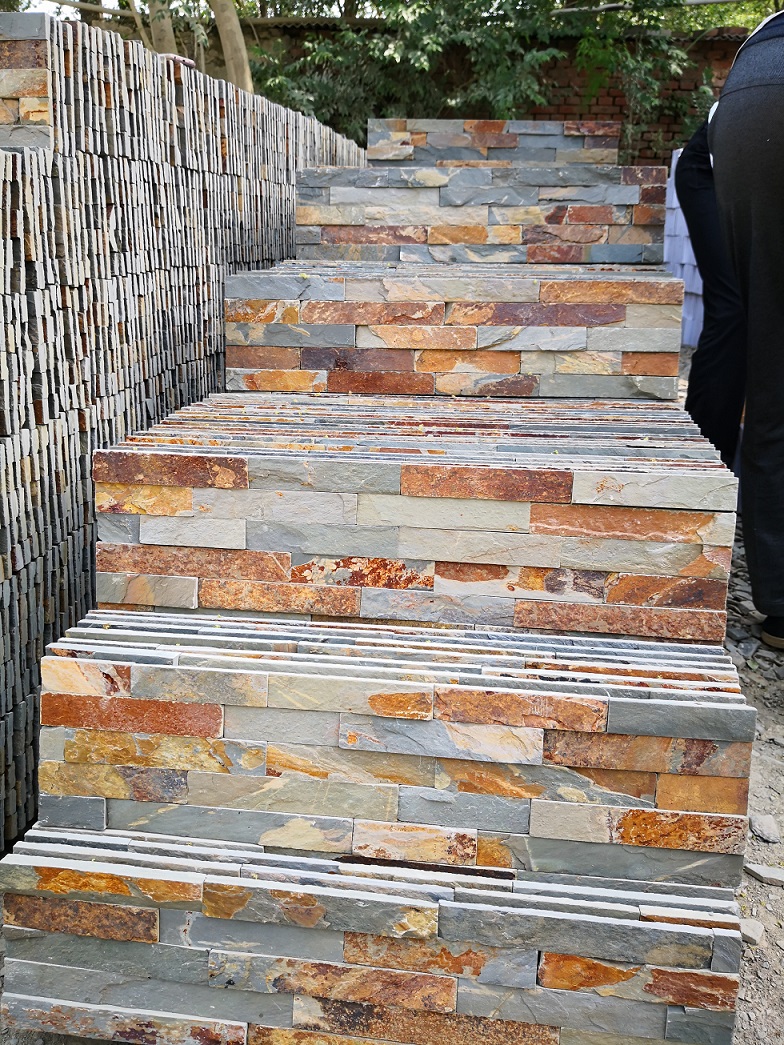
Premium Stacked Stone Tailored for Architectural Excellence
Balanced Sourcing: When to Choose Mesh Over Parent for Price-Sensitive Markets
Mesh-backed stone panels offer a strategic alternative to full-thickness parent slabs by reducing raw material volume by up to 70% and increasing container yield by 40-70%. This format enables importers to target retail price points between $15 and $35 per square foot while cutting sea freight costs per unit by nearly half, making it the preferred choice for vertical interior applications and budget-sensitive trend markets.
Material Cost Reductions and Price Point Positioning
Mesh-backed panels utilize thin-cut stone veneers, typically ranging from 3mm to 10mm, which are laminated to a supportive backing. This construction reduces the stone volume per square meter by approximately 50–70% compared to traditional 18–20 mm parent slabs. Consequently, the FOB material cost often drops to 30–60% of full-thickness stone. These savings allow retailers to position genuine stone surfaces within the $15–$35 per square foot price bank, effectively competing with high-end faux panels and laminates in the market.
For showroom owners, this format facilitates entry into the “trend wall” category. By marketing these as modular feature wall solutions rather than structural slabs, businesses can capture a broader demographic that prioritizes the aesthetic of natural stone but operates within stricter budgetary constraints. The reduced material intensity ensures that even premium species remain accessible for decorative residential applications like fireplace surrounds and accent headers.
Logistics Thresholds and Container Yield Optimization
Technical logistics data suggests that the transition to a mesh format becomes financially necessary when sea freight represents more than 20–30% of the total landed cost. Because these panels are significantly thinner and lighter, containers shift from being weight-limited to volume-limited. This shift improves container yield by 40–70% in terms of total square meters shipped per 20-foot equivalent unit (TEU). By optimizing pallet geometry and reducing void space, importers can effectively cut their freight expenditure per unit by up to 50% on long-haul shipping lanes.
In high-volume B2B operations, these logistics savings often outweigh the incremental costs associated with lamination and panel fabrication. Standardizing on container-optimized panel sizes allows for more predictable inventory forecasting and higher turnover rates. When the logistics savings per square meter exceed the processing premium, the mesh-backed format provides a clear competitive edge in landed cost over raw parent slabs.
Application Suitability and Installed Labor Savings
The primary utility of mesh-backed systems lies in interior vertical applications where structural thickness is not a requirement. These lightweight formats reduce the dead load on wall substrates significantly, often qualifying for direct-to-stud installation or requiring only standard cement backer boards rather than heavy-duty reinforcement. These simplified substrate requirements can reduce installation labor costs by 20–30%, targeting a total installed range of $9–$18 per square foot for residential projects.
While mesh-backed panels excel in feature walls and light commercial interiors, parent slabs remain the standard for high-impact zones. Kitchen worktops, heavy-traffic flooring, and areas requiring long-term refinishability demand the structural rigidity and abrasion resistance of full-thickness stone. Strategic sourcing involves applying the mesh format to decorative surfaces while retaining parent slabs for high-performance surfaces where lifecycle KPIs and impact resistance are the primary technical drivers.
Topsource Stone: High-Density Natural Stone Mesh Panels Engineered for Maximum Inventory Flow
High-density stone mesh panels maximize shipping yield by utilizing thin-cut natural stone profiles (5/8 to 1 inch) bonded to modular backings, allowing for a 20–25% increase in square meterage per container compared to traditional thick ledger stone. These systems transition shipping constraints from weight-limited to volume-limited, effectively lowering the landed freight cost per unit for high-volume B2B importers.
Modular Construction and High-Density Geometry
TopSource Stone mesh panels utilize thin-cut natural stone between 5/8 and 1 inch thick, bonded to durable mesh backings for genuine aesthetics with reduced bulk. This engineering approach preserves the authentic texture of split-face or stacked stone while removing the excessive weight and depth of full-bed veneers.
Precision machining creates high-density panel geometry that minimizes void space in cartons, allowing for significantly tighter stacking than traditional thick ledger stone. By standardizing the thickness, these panels eliminate the irregular protrusions that typically create dead air space in crates, leading to higher product density per cubic meter of warehouse or container space.
Standard 6×24 inch modular formats streamline individual piece handling, making these units ideal for both automated retail displays and high-volume B2B inventory programs. The repeatable sizing ensures that stock counts and layout planning remain predictable, reducing the risk of installation errors and simplifying the sales process for retail showroom staff.
Logistics Optimization and Global Freight Efficiency
Strategic loading and container-optimized panel lines allow importers to ship more square meters per TEU, directly lowering the sea freight cost per unit. In a typical shipment, these thinned-down panels can improve container yield by 40–70% in terms of surface area for the same freight bill, as the reduction in mass allows the container to reach its volumetric capacity without exceeding weight limits.
Standardized thickness and modular sizing improve inventory flow per pallet, supporting distributors who consolidate mixed SKUs in shared warehouse spaces. This consistency allows for uniform pallet stacking and more stable internal logistics, as warehouse teams can rely on fixed box dimensions regardless of the specific stone color or texture being handled.
Multi-stage quality control—including checks after cutting, assembly, and before packing—ensures that high-density shipments arrive without displacement risks common in international transit. Each panel is cured under pressure to bond the stone securely to the fiberglass mesh, preventing the detachment of individual stone strips caused by container vibration or rough handling at ports.
Technical Substrate and Structural Stability Requirements
High-density stone panels require structural-grade substrates like 1/2-inch cement backer board, concrete, or brick to support the dead load of natural stone. Despite their reduced thickness, these panels still exert significant vertical pressure; therefore, they should not be installed over standard gypsum board or drywall in commercial or exterior applications.
Panels utilize high-strength epoxy resin adhesives formulated for natural stone to ensure permanent bonding between the stone pieces and the mesh backing. This industrial-grade adhesive creates a mechanical interlock through the open weave of the fiberglass, providing better tensile strength than traditional hand-assembled loose stone systems.
While the natural stone is weather-resistant and UV-stable, external applications require moisture barriers as the mesh-backed system is not a standalone waterproof layer. In exterior façades, contractors must apply a secondary drainage plane or waterproof membrane behind the cement board to protect the building envelope from moisture penetration at the joints.
Frequently Asked Questions
Are mesh-backed stone panels durable enough for interior commercial displays?
Yes, their durability matches the underlying natural stone, typically lasting 50-100+ years. Since panels are composed of real stone strips bonded with industrial epoxy, they withstand high-traffic commercial environments. However, due to their weight (50-80 kg/m²), they must be installed on structural substrates like concrete or cement backer board rather than standard drywall.
How do factories secure individual stones to the mesh to prevent shipping detachment?
Factories use industrial epoxy or hot-melt adhesives applied via notched trowels to create a 0.5 mm film. The assembly then undergoes vacuum bagging or hydraulic cold pressing to eliminate air bubbles. Additionally, using fiberglass mesh with an open weave (160-300 g/m²) creates a mechanical interlock that ensures stones remain bonded during high-vibration sea freight.
What measures are taken to prevent stone panels from loosening during transit?
Beyond adhesive bonding, stones are kiln-dried to under 1% moisture before assembly to ensure optimal glue wetting. Finished panels are packed in ISPM-15 fumigated wooden crates with protective interleaving materials and secured using wire-rope lashing within the container to minimize mechanical shock.
Does the mesh-backed system act as a waterproof barrier for exterior walls?
No. While the natural stone itself is waterproof, the panel system is not a moisture barrier. Exterior or wet-area installations require a separate professional moisture barrier and proper flashing systems behind the panels to protect the structure.
Can mesh-backed stone panels be used for fireplace surrounds?
Natural stone is inherently non-combustible, making these panels an excellent choice for fireplace surrounds. Installers should always verify local building codes and ensure the specific adhesive used by the manufacturer meets heat-resistance requirements for the application.
Final Thoughts
Optimizing landed costs requires a shift toward materials that maximize container density without sacrificing the aesthetic value of natural stone. Mesh-backed systems solve the traditional logistics bottleneck by allowing B2B importers to ship significantly more surface area within a single freight bill. This logistics efficiency, combined with reduced labor demands during installation, provides a measurable competitive edge in high-volume markets.
By selecting suppliers that prioritize modular geometry and thin-cut engineering, distributors can lower their overhead while offering versatile solutions for residential and commercial interiors. These systems bridge the gap between premium natural aesthetics and strict budgetary requirements, ensuring that genuine stone remains a viable and profitable option for modern construction projects.
