


Inconsistent factory cuts often triple on-site labor costs because masonry teams must manually correct gaps and geometric drift in stone cladding. For B2B wholesalers and project managers, these visible grout lines and staggered edges do more than hurt aesthetics; they risk occupancy certificate delays and costly project remediation. Finding an interlocking geometry exporter that prioritizes digital calibration is the only way to ensure seamless transitions across large-scale facades.
This guide evaluates the top suppliers utilizing infrared cutting systems and CNC machining to hold ±0.025–0.05 mm tolerances on mating surfaces. We analyze how digital thread solutions and AP242 protocols prevent data siloing during production, ensuring that every unit in a 100+ container shipment maintains a consistent Ra 0.8–1.6 µm surface finish for truly flush joints.
10 Leading Natural Stone Panel Exporters Ranked by Geometric Precision
Quick Comparison: Top Picks
| Manufacturer | Location | Core Strength | Verdict |
|---|---|---|---|
| TopSource Stone | China (Global Shipping) | Interlocking Ledger Stone, Stacked Stone Panels | Best for factory-direct precision-cut ledger panels and seamless DIY-friendly installation. |
| Levantina | Novelda, Spain | Calibrated façade cladding modules | Top choice for high-volume automated dimensional inspection and tight thickness tolerances. |
| Antolini | Veronese area, Italy | Exotic slabs and book-matched luxury cladding | The ultimate premium reference for luxury residential and book-matched aesthetic perfection. |
| Polycor | Quebec City, Canada | Granite, limestone, and marble calibrated tiles | Ideal for North American institutional projects requiring industrial-grade geometric consistency. |
| CUPA Stone | Spain / France | Stonepanel® natural stone cladding panels | European pioneer in integrated structural backing and precision interlocking wall systems. |
| Grassi Pietre | Vicenza, Italy | Custom limestone and architectural cladding panels | Excellent for precision-milled European stone elements with minimal crate-to-crate variability. |
| Nhat Huy Group | Hanoi, Vietnam | Granite and marble tiles; cut-to-size panels | Cost-effective alternative for bulk containers with reliable industrial processing lines. |
| Tureks (Marble Systems) | Afyon, Turkey | Calibrated travertine and marble wall cladding | Leading Turkish exporter offering high-precision automated tile lines for global cladding contracts. |
| Stone Group International | Thessaloniki, Greece | Greek white marble panels and cut-to-size cladding | Premier European producer with digital slab classification for large-scale architectural consistency. |
| Dimpomar | Vila Viçosa, Portugal | Calibrated Portuguese limestone and marble panels | Top choice for multi-container European stone exports with high-tolerance CNC fabrication. |
TopSource Stone
TopSource Stone operates as a vertically integrated manufacturer, maintaining strict factory control by managing the entire supply chain from their own stone quarries to the final assembly line. This direct ownership allows them to oversee raw material selection and apply advanced infrared cutting technology to ensure each panel meets architectural standards. Their specialized focus on interlocking ledger stone panels allows contractors and designers to achieve a seamless, mortar-less finish that reduces labor costs while maintaining a high-end aesthetic.
By eliminating intermediaries, the company provides direct risk reduction for global buyers who require consistent dimensions and color matching across large-scale projects. Their facility utilizes high-strength epoxy bonding to ensure structural durability, making their stacked stone panels suitable for both interior accents and demanding exterior claddings. This manufacturing setup supports local execution for international distributors by offering reliable lead times and specialized packaging designed to withstand the rigors of global shipping.
At a Glance:
- 📍 Location: China (Global Shipping)
- 🏭 Core Strength: Interlocking Ledger Stone, Stacked Stone Panels (Flat, Rough, Pencil, and Marble Series), L-shaped Corners.
- 🌍 Key Markets: North America, Europe, Global Distributors, Contractors, and Architectural Designers.
Why We Picked Them:
| ✅ The Wins | ⚠️ Trade-offs |
|---|---|
|
|
Levantina
Levantina operates as a primary force in the natural stone industry, maintaining high levels of factory control through their automated processing centers in Spain. The company focuses on the technical demands of large-scale architecture, specifically providing calibrated cladding panels where thickness precision is non-negotiable. By integrating automated cutting and dimensional inspection systems directly into the production line, the facility ensures that every slab meets the exact specifications required for complicated structural assemblies.
The firm reduces project risk for international buyers by specializing in high-volume export batches that remain consistent across massive surface areas. Their local execution in Novelda allows for rigorous oversight of granite, marble, and limestone extraction and finishing. This centralized manufacturing approach guarantees that façade modules fit perfectly upon arrival at the job site, minimizing the need for on-site adjustments and ensuring the structural integrity of architectural envelopes in diverse global markets.
At a Glance:
- 📍 Location: Novelda, Spain
- 🏭 Core Strength: Granite, marble, limestone, and calibrated façade cladding modules.
- 🌍 Key Markets: Europe, Middle East, and Asia-Pacific large-scale architectural projects.
Why We Picked Them:
| ✅ The Wins | ⚠️ Trade-offs |
|---|---|
|
|
Antolini
Antolini operates at the pinnacle of the Italian stone industry, maintaining strict factory control over every slab that leaves their Veronese facility. By integrating precision resin treatments with advanced calibration technology, they ensure that natural stone meets the rigorous technical demands of modern architecture. Their focus on panel flatness and edge squareness reduces the risks typically associated with large-format stone installations, providing a level of reliability that simplifies local execution for installers.
The company specializes in exotic materials where visual symmetry is paramount. Their systematic approach to book-matching allows designers to achieve seamless transitions across expansive surfaces, backed by a production process that eliminates dimensional variances. This dedication to geometric consistency helps project managers avoid costly delays during the cladding phase, making them a preferred partner for luxury residential and hospitality developments that require zero-tolerance finishing.
At a Glance:
- 📍 Location: Veronese area, Italy
- 🏭 Core Strength: Exotic stone slabs, cut-to-size panels, and book-matched luxury cladding.
- 🌍 Key Markets: Global premium hospitality and luxury residential markets.
Why We Picked Them:
| ✅ The Wins | ⚠️ Trade-offs |
|---|---|
|
|
Polycor
Polycor operates as a vertically integrated stone producer, managing the entire supply chain from North American quarries to the final fabrication of finished panels. This structure allows for rigorous factory control over natural stone extraction and processing, ensuring that institutional and civic projects receive material with precise technical specifications. By maintaining local execution across their Quebec and US-based facilities, they reduce the risks associated with overseas shipping and fragmented supply chains, providing a reliable stream of granite, limestone, and marble.
The group specializes in delivering repeatable thickness and size tolerances, which are critical for modern engineering requirements like ventilated façade systems. Their industrial approach removes the guesswork from natural stone application, offering calibrated tiles and building components that meet the geometric demands of large-scale commercial architecture. This focus on consistency helps project managers and architects minimize on-site adjustments and ensures that every stone slab aligns with the structural needs of high-traffic institutional environments.
At a Glance:
- 📍 Location: Quebec City, Canada
- 🏭 Core Strength: Granite, limestone, and marble calibrated tiles and building stone.
- 🌍 Key Markets: North American institutional, commercial, and civic architecture.
Why We Picked Them:
| ✅ The Wins | ⚠️ Trade-offs |
|---|---|
|
|
CUPA Stone
CUPA Stone operates as a primary European producer of architectural wall cladding, prioritizing factory precision and mechanical structural safety. Through their patented Stonepanel® system, the manufacturer embeds real natural stone pieces into a pre-assembled cement base reinforced with fiberglass or stainless steel anchors. This specialized engineering eliminates field layout errors, providing project managers with a reliable interlocking panel system that guarantees fast, gap-free installation across expansive facades.
The company mitigates installation risks for European and international distributors by enforcing rigorous dimensional calibration during panel assembly. Their localized quarries in Spain and France allow for direct factory oversight, ensuring that every interlocking Z-shaped or rectangular section aligns perfectly with adjacent modules. By combining natural aesthetic variety with industrial-grade panel tolerances, CUPA Stone provides a dependable solution for large-scale commercial and residential building envelopes.
At a Glance:
- 📍 Location: Spain / France
- 🏭 Core Strength: Stonepanel® pre-assembled interlocking natural stone cladding, slate, and quartzite wall panels.
- 🌍 Key Markets: European, British, and international commercial and residential construction sectors.
Why We Picked Them:
| ✅ The Wins | ⚠️ Trade-offs |
|---|---|
|
|
Grassi Pietre
Grassi Pietre operates as a specialized Italian producer specializing in Vicenza limestone and custom architectural wall systems. By integrating advanced 5-axis CNC machining centers into their fabrication plant, they ensure that every cut-to-size panel and cladding module maintains sub-millimeter edge tolerances. This factory-level precision allows architects to design zero-gapping exterior facades and interior wall features that assemble seamlessly on-site without manual trimming.
The firm reduces logistical and structural risk for international procurement teams by applying strict quality logging to all outgoing crates. Their local execution in Italy oversees every step from quarry block extraction to surface calibration and edge chamfering. This disciplined approach guarantees that large-scale project consignments arrive with uniform panel thickness, enabling contractors to execute flush, continuous stone installations on tight project schedules.
At a Glance:
- 📍 Location: Vicenza, Italy
- 🏭 Core Strength: Vicenza limestone panels, CNC-milled wall cladding, and custom architectural modules.
- 🌍 Key Markets: European, North American, and Middle Eastern luxury architectural developments.
Why We Picked Them:
| ✅ The Wins | ⚠️ Trade-offs |
|---|---|
|
|
Nhat Huy Group
Nhat Huy Group operates as a specialized manufacturing conglomerate in Vietnam, focusing on the large-scale production of natural stone and surfacing materials. By maintaining direct factory control over their industrial processing lines, they ensure that bulk orders meet specific calibration standards. This local execution allows them to manage tight production schedules for granite and marble tiles, making them a primary choice for distributors who require steady supply chains from Southeast Asia.
The company limits risk for international buyers by providing a cost-effective alternative to Western suppliers without sacrificing the reliability of the stone’s geometry. Their facility setups prioritize high output and consistent thickness across thousands of square meters, which is essential for large cladding projects or inventory stocking. Wholesale importers benefit from their established export infrastructure in Hanoi, which simplifies the logistics of moving heavy containerized stone products to global markets.
At a Glance:
- 📍 Location: Hanoi, Vietnam
- 🏭 Core Strength: Granite and marble tiles and cut-to-size cladding panels.
- 🌍 Key Markets: Asia-Pacific, Europe, and Middle East wholesale importers.
Why We Picked Them:
| ✅ The Wins | ⚠️ Trade-offs |
|---|---|
|
|
Tureks (Marble Systems)
Tureks (Marble Systems) operates as one of Turkey’s premier stone exporters, managing extensive quarry operations and advanced processing facilities in Afyon. The company specializes in precision-milled marble, travertine, and limestone wall cladding, maintaining strict factory calibration across high-volume international orders. By leveraging automated Pedrini tile lines and automated surface finishing, they deliver uniform panel thickness and squareness, mitigating the risks of joint misalignments on site.
With 95% of its output dedicated to export markets across North America and Europe, the group offers robust logistics support and strict quality control. Their ability to process over 900 types of natural stone ensures that B2B wholesalers receive repeatable, factory-inspected cladding modules that fit seamlessly into architectural projects without manual field adjustments.
At a Glance:
- 📍 Location: Afyon, Turkey
- 🏭 Core Strength: Calibrated travertine and marble tiles, interlocking wall cladding panels.
- 🌍 Key Markets: North America, Europe, Middle East, and global architectural distributors.
Why We Picked Them:
| ✅ The Wins | ⚠️ Trade-offs |
|---|---|
|
|
Stone Group International
Stone Group International operates as a vertically integrated Greek marble giant, controlling 9 quarries and 5 state-of-the-art factories in Thessaloniki and Drama. The group specializes in high-precision processing of world-renowned Greek white marbles like Thassos and Volakas, delivering calibrated tiles and cut-to-size wall cladding for luxury commercial developments. Their automated optical sorting and digital slab classification systems ensure that large-scale orders maintain strict color and thickness uniformity.
Exporting to over 80 countries, the company minimizes risk for global developers by employing Total Quality Management (TQM) protocols across every container. Their high-capacity manufacturing infrastructure allows them to fulfill multi-container architectural orders with tight geometric tolerances, ensuring flush joint installation on high-profile hotel and corporate building facades.
At a Glance:
- 📍 Location: Thessaloniki, Greece
- 🏭 Core Strength: Greek white marble panels, calibrated tiles, cut-to-size wall cladding.
- 🌍 Key Markets: Europe, North America, Middle East, and Asia-Pacific luxury construction.
Why We Picked Them:
| ✅ The Wins | ⚠️ Trade-offs |
|---|---|
|
|
Dimpomar
Dimpomar operates as a leading Portuguese natural stone transformer with over 45 years of international export experience. Based in Vila Viçosa, the company specializes in Moca Cream limestone and Rosa Aurora marble, supplying precision cut-to-size cladding and calibrated wall panels for global architectural projects. Their 10,000 m² production facility utilizes heavy gangsaws and multi-blade wire systems to maintain strict thickness tolerances on bulk shipments.
Exporting over 500 containers annually to more than 40 countries, Dimpomar reduces project risks by offering specialized lightweight honeycomb-backed stone panels alongside solid calibrated units. Their rigorous quality control ensures that panels fit cleanly without lippage, offering project managers a reliable European supply route for large-scale exterior and interior stone cladding.
At a Glance:
- 📍 Location: Vila Viçosa, Portugal
- 🏭 Core Strength: Moca Cream limestone, Rosa Aurora marble, calibrated wall tiles, honeycomb panels.
- 🌍 Key Markets: Middle East, Europe, North America, and Far East architectural markets.
Why We Picked Them:
| ✅ The Wins | ⚠️ Trade-offs |
|---|---|
|
|
The Alignment Nightmare: How Uncalibrated Factory Cuts Cause Disastrous On-Site Gaps
Uncalibrated factory cuts introduce geometric drift and thickness variances that compromise structural cladding integrity, tripling on-site labor costs through manual corrections. Implementing digital thread solutions via AP242 protocols and CNC standards ensures zero-tolerance calibration, maintaining panel-to-panel consistency across high-volume container shipments.
The Hidden Costs of Geometric Drift in High-Volume Shipments
Uncalibrated cuts lead to cumulative alignment errors that force installers to trim individual panels on-site. This requirement for field adjustment often triples labor time, as specialists must manually correct factory errors to ensure assembly. When precision deficits occur in factory-calibrated 6” x 24” panels, the resulting visible grout lines ruin the seamless aesthetic intended for modern architectural designs.
Geometric inconsistencies across 2026 project schedules pose significant regulatory risks. These deviations can delay occupancy certificates because structural cladding may face rejection during official quality inspections. By maintaining strict control over geometric drift, project managers prevent these cascading delays and the associated financial penalties.
Identifying Failure Points in Manual Stone Fabrication Workflows
Legacy bridge saws lacking infrared guidance frequently produce stone panels with a 1-2mm variance. While small, this deviation creates “stair-stepping” effects on large-scale facades, where the eye catches the staggered edges of supposedly flush surfaces. Secondary bonding failures also emerge from uncalibrated epoxy application, leading stone strips to detach from mesh backing when subjected to standard thermal expansion cycles.
Production monitoring is critical for specialized components like L-shaped corner units. Poorly matched units from unmonitored lines create jagged vertical seams that require expensive onsite masonry correction. Without automated verification, these failure points remain hidden until the final installation stage, where remediation is most costly.
Digital Thread Solutions: Transitioning to AP242 and CNC Standards
Implementing the AP242 protocol ensures that Geometric Dimensioning and Tolerancing (GD&T) data remains attached to the 3D model throughout the manufacturing process. This integration prevents the “data siloing” that often results in fabrication errors. Moving beyond legacy IGES surface-only files to solid geometry exchange prevents the delivery of “unstitched” panels that fail to interlock properly on-site.
Advanced infrared cutting systems provide the zero-tolerance calibration necessary for large-scale operations. These systems ensure that thickness remains consistent within a 0.75” to 1.75” range across orders exceeding 100 containers. This digital oversight guarantees that every panel in a multi-container lot meets the same rigorous specifications, regardless of its production timestamp.
CNC Precision and Calibration: The Secrets Behind Flawless Seamless Interlocking Walls
Flawless stone interlocking systems rely on CNC machining held to ±0.025–0.05 mm on mating surfaces, using ISO 2768-m standards for general geometry and H7/h6 fit classes for joint clearance. Achieving Ra 0.8–1.6 µm surface roughness ensures seams remain invisible under varied lighting, while strict workholding protocols limit fixture error to 20–33% of the total tolerance budget.
Dimensional Tolerances and ISO 2768 Standards for Stone Geometry
Standardized manufacturing for architectural stone panels utilizes ISO 2768-m to manage linear dimensions. For components up to 30 mm, this framework maintains a default tolerance of ±0.05 mm, ensuring that even high-volume runs of wall panels retain repeatable alignment. While non-mating faces or the hidden backs of panels can tolerate looser commercial limits, the functional interfaces require much more stringent control.
Precision limits for interlocking tongues and grooves are typically tightened to ±0.025–0.05 mm. By isolating these critical features from the general geometry of the stone, fabricators focus machining energy where it most impacts the final assembly. For ultra-premium architectural projects, Functional datum faces may see tolerances as tight as ±0.005–0.010 mm. This level of precision eliminates visible gapping across horizontal or vertical runs, allowing the stone to appear as a monolithic surface.
Workholding Accuracy and Calibration to Minimize Tolerance Stack-Up
Maintaining accuracy across a production batch of stone requires sophisticated workholding protocols. In modern 2026 stone production lines, fixtures are designed to consume only 20–33% of the total tolerance budget. This prevents cumulative errors from dominating the alignment of the wall panels. Documenting fixture repeatability is essential; verifying the Total Indicator Reading (TIR) on datum surfaces ensures that movement during high-volume CNC cycles stays within a narrow 25–75 µm range.
Physical geometry management also plays a role in preventing distortion. Tall or thin stone features must adhere to a height-to-thickness ratio of 4:1 or lower. Exceeding this ratio increases the risk of vibration-induced chipping and geometric deviation during the milling process. By controlling these physical parameters alongside machine calibration, wholesalers can guarantee that every panel in a container will mate perfectly with those from another batch without on-site grinding.
Surface Finish and Mating Surface Engineering for Flush Joints
The visibility of a seam is often a function of edge quality rather than just dimensional size. Targeting surface roughness values of Ra 0.8–1.6 µm on visible mating edges produces a clean interface that absorbs site lighting without creating sharp shadow lines. For the 2026 premium marble and quartz series, finishing levels are often pushed down to Ra 0.4 µm. This micro-level smoothness is what allows interlocking modules to achieve a truly flush, seamless appearance.
Engineers apply H7/h6 fit classes to these modules to manage clearance and thermal expansion. This engineering approach ensures that while the panels fit tightly enough to appear continuous, there is sufficient tolerance for ambient temperature shifts. Specifying tight, symmetric tolerances on the interlocking features—while allowing slightly looser limits on relief pockets—optimizes production speed without sacrificing the architectural integrity of the finished wall system.
Elevate Your Projects with Premium Natural Stacked Stone
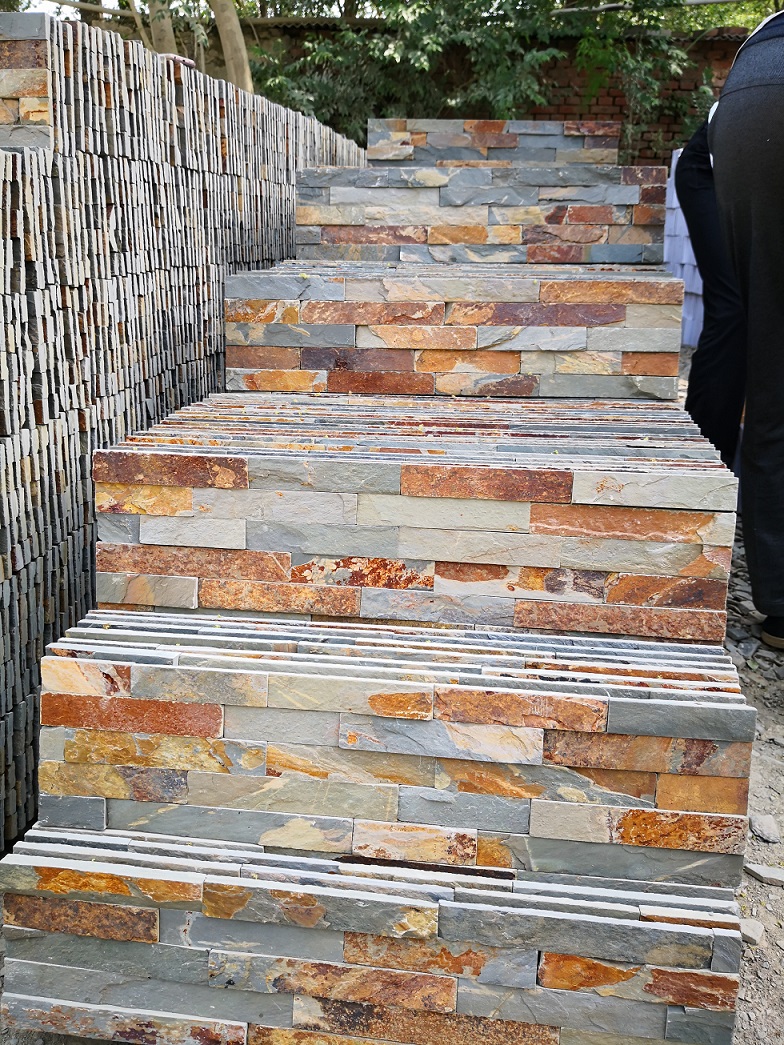
Quality Assurance logs: Ensuring Consistent Thickness and Perfect Fit Across 100+ Containers
Automated quality control systems maintain geometric integrity across large-scale export lots by logging nominal thickness data and verifying interlocking patterns through virtual fit simulations. These auditable digital records ensure that every panel within a 100+ container shipment adheres to strict tolerance bands of ±0.5–1.0 mm, reducing installation failures and lippage on site.
Inbound Thickness Profiling and Digital Caliper Logging
Precision starts at the receiving dock where calibrated digital gauges record the nominal thickness of every crate in a shipment lot. In a typical 2026 production run, units are measured against allowable tolerance bands of ±0.5–1.0 mm. These measurements are not just checked; they are stored as NDJSON records that capture the mean thickness and standard deviation for each specific slab position. This creates an independently auditable numerical profile that identifies trends before material enters inventory. By capping out-of-tolerance rates at less than 2-3%, QA teams flag problematic crates for secondary review, preventing the distribution of uneven panels that cause visible steps during installation.
Virtual Fit Simulations and Geometric Topology Validation
Modern fabrication workflows utilize automated topology checks to confirm that every edge and joint matches the declared interlocking pattern. The system enforces strict clearances ranging from 0.5 mm to 1.5 mm to accommodate thermal expansion while maintaining a tight visual aesthetic. Before physical packing begins, geometry engines run virtual assembly builds for each container to detect potential collisions or excessive gaps. Digital error layers track feature failures and rule violations, allowing technicians to systematically remove pieces that compromise floor or wall alignment. This digital gate ensures that high-volume orders for enterprise-scale projects arrive with guaranteed compatibility.
Statistical Sampling Plans and Signed Compliance Audits
To manage the scale of 100+ container orders, QA protocols employ AQL-based sampling fractions, typically inspecting 5–10% of crates to verify consistency across the entire lot. This statistical approach provides a scientific basis for quality guarantees without the logistical burden of manual 100% inspection. The resulting event logs are exported via paginated APIs as signed, tamper-evident records, which are essential for wholesalers and third-party auditors. Furthermore, field incident logs allow for a closed-loop quality system; installer feedback is correlated back to specific production batches and original measurements. This data helps refine thickness controls and production settings for future manufacturing cycles.
Topsource Stone: Zero-Tolerance Geometrically Calibrated Interlocking Systems Shipped Globally
We implement infrared cutting precision and high-strength epoxy bonding to produce natural stone interlocking panels with ±1 mm thickness tolerances. Our logistics protocols manage annual volumes exceeding 220 containers, utilizing zero-shift securing techniques and automated topology checks to ensure seamless mechanical fits for global architectural projects.
Infrared Cutting Precision for Seamless Z-Shape Panels
Advanced infrared cutting equipment ensures exact dimensional accuracy for interlocking surfaces, maintaining the geometric integrity required for complex wall systems. This precision-engineered Z-shape design eliminates visible grout lines by creating a tight mechanical fit between adjacent modules. By adhering to a strict three-stage quality check performed after cutting, assembly, and before final export packaging, we verify that every panel meets the specified architectural tolerances.
Standard CNC machining for these stone interfaces typically holds ±0.13 mm on standard features, while critical mating faces can be tightened further to ensure a flush finish. Using ISO 2768-m as a baseline, we control linear dimensions to prevent gapping across large-scale installations. This technical rigor ensures that the interlocking tongues and grooves align without field modification, saving significant labor costs during onsite assembly.
Material Stability and High-Strength Epoxy Bonding
Specialized stone-specific epoxy resins create a permanent bond between natural slivers and the panel substrate, providing the structural foundation for the interlocking system. We maintain thermal and pressure-controlled bonding environments to prevent stone detachment during extreme weather shifts. This process is critical for maintaining a calibrated thickness range from 0.75” to 1.75”, which ensures structural integrity across Slate, Quartzite, and Marble series.
To prevent deflection and machining instability, we observe height-to-thickness ratios below 4:1 for all standing features. This design rule prevents vibration damage during the fabrication of interlocking lips which could otherwise compromise the seamless appearance of the wall. Automated calibration continuously measures surface flatness, rejecting any units that exceed the 1.0 mm variance threshold before they reach the assembly line.
Export Logistics and Strategic Container Loading
Reinforced corrugated cartons and fumigated wooden crates protect geometric edges during global transit schedules. Our logistics protocols are designed to handle annual volumes exceeding 220 containers using zero-shift securing techniques that prevent internal crate movement. Direct-from-quarry sourcing provides total control over color consistency, which is vital for high-volume commercial architectural projects where batch uniformity is a primary requirement.
Before loading, every container undergoes a virtual fit simulation in a geometry engine to confirm that panels and spacers fit without collision. QA teams record measurements for each lot, creating a numeric quality dossier that accompanies the shipment. This data-driven approach allows wholesalers to track the QA history of every container, ensuring that large-scale deliveries for multi-site projects maintain consistent dimensional standards from the first crate to the last.
Frequently Asked Questions
What is the maximum thickness variation allowed in a bulk shipment of stone panels?
Reputable factories maintain a tolerance of ±1 mm from the nominal thickness, ensuring the total panel-to-panel spread does not exceed 2 mm within a single 2026 shipment lot. This precision is necessary to prevent visible lippage and joint alignment failures on large-format interlocking walls.
How does automated calibration protect B2B wholesalers from client returns?
Automated systems use sensor-driven rules to reject pieces exceeding 0.5–1.0 mm variance before packing. This process reduces labor costs from $10–15 per manual return down to approximately $2, while ensuring 65–75% of units achieve straight-through processing without human intervention.
What quality control steps do interlocking panels undergo prior to loading?
Panels pass through a multi-stage verification including pre-production material checks, startup geometry calibration (measuring width, thickness, and diagonals), and core bonding tests. Final export checks verify length tolerances of ±2–3 mm and diagonal accuracy to ensure seamless field alignment.
Are interlocking stone panels suitable for fireplace surrounds?
Natural stone is inherently non-combustible, making these panels an excellent choice for fireplace applications. Because they are lightweight (8-13 lbs/sqft), they typically require no additional structural reinforcement or footings compared to traditional full-thickness masonry.
How is color consistency maintained for large-scale international projects?
Consistency is managed by sourcing material from the same quarry lot and grading stone prior to production. For high-volume 2026 exports, batches are tracked via unique stack labels and production logs to ensure harmonious tones across multiple containers.
Final Thoughts
Achieving a high-end architectural finish with natural stone depends entirely on the precision of the factory cut. When geometry is calibrated to sub-millimeter tolerances, on-site labor shifts from corrective masonry to efficient assembly. Selecting an exporter that prioritizes digital thread solutions and CNC standards ensures that the interlocking Z-shape panels function as intended, creating surfaces that appear monolithic and professionally executed regardless of project scale.
For wholesalers and project managers, the move toward automated quality logging and ISO-standardized tolerances represents a significant reduction in financial risk. By eliminating the cumulative errors of geometric drift before the stone ever leaves the factory, stakeholders protect their installation schedules and avoid the costs associated with material rejection. Investing in technically verified stone systems is the most reliable way to deliver consistent quality across high-volume, international shipments.
