
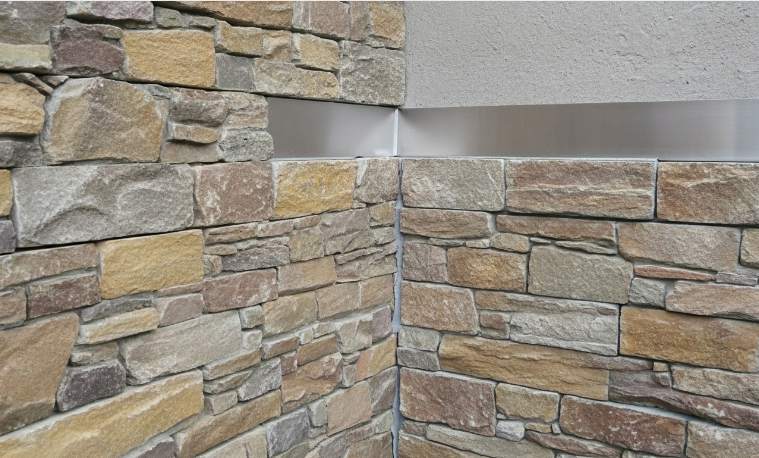
Ineffective waterproofing systems are a primary cause of structural rot claims and expensive callbacks in modern stone veneer projects. A beautiful stone facade can conceal a rotting wall assembly, where trapped moisture degrades the substrate long before any visible signs appear. The problem is rarely the stone itself, but a failure in the weather-resistive barrier (WRB) that allows water intrusion without a path to dry, leading to warranty issues and irreversible structural damage.
This guide provides a clear technical breakdown for specifying a durable WRB behind exterior stone. We will compare the performance of liquid-applied membranes against traditional sheet-wrapped barriers, explaining how each system manages moisture differently. We will also cover the crucial role of vapor permeability for الكسوة الحجرية, detail proper flashing for vulnerable transitions like windows and doors, and provide a contractor’s checklist to prevent rot and ensure a long-lasting installation.
The Role of the WRB in an Exterior Stone Cladding System
A properly integrated Water-Resistant Barrier (WRB) is the non-negotiable final defense that protects a building’s structural sheathing from both liquid water intrusion and trapped vapor.
Protecting the Wall Assembly from Water Intrusion
The Water-Resistant Barrier operates as the final line of defense in any stone-clad wall assembly. Natural stone panel systems are not fully waterproof, so the WRB is designed to intercept moisture that inevitably penetrates the gaps between individual panels. It prevents this water from reaching and degrading the structural sheathing, like plywood or OSB. By creating a distinct separation between a wet cladding and a dry structure, the WRB also breaks the capillary action that can draw moisture into the wall cavity, effectively stopping water before it can cause structural damage.
Integrating the WRB within a Continuous Drainage Plane
A WRB is installed directly over the wall’s substrate as a continuous, sealed layer. It functions as part of a complete moisture management system, not as a standalone product. Above the WRB, a drainage mat with vertical channels directs any captured water downward toward weep screeds at the wall’s base, where it can safely exit. For this system to work, installers must seal all seams in a shingle-lap fashion, with upper layers overlapping lower layers by at least two inches horizontally and six inches vertically. This method applies to all corners, window openings, and penetrations to ensure a complete, uninterrupted drainage path.
Balancing Water Resistance with Vapor Permeability
Modern WRBs are engineered from advanced polymer materials to achieve a critical balance: they must resist liquid water while allowing water vapor to escape. This “breathability” is measured in perms, and for الكسوة الحجرية systems, a moderate permeability of 10–20 perms is ideal. This rating is high enough to let trapped moisture vapor within the wall cavity dry to the exterior, which is essential for preventing mold and rot. The barrier allows the wall assembly to breathe and manage humidity changes across seasons, ensuring long-term structural integrity.

Liquid-Applied Membranes vs. Sheet-Wrapped Barriers
The choice between a seamless liquid membrane and a factory-controlled sheet barrier determines your project’s primary vulnerability: applicator skill versus seam integrity.
Application Method and Substrate Readiness
Liquid-applied membranes require a clean, dry, and properly prepared substrate before application. They are installed monolithically using a sprayer, roller, or trowel to create a single, fully bonded layer directly on the sheathing. This process effectively turns the substrate itself into the barrier. Sheet-wrapped barriers follow a different methodology. Installers mechanically fasten these pre-fabricated sheets over the sheathing, requiring precise, shingle-lap installation where upper layers overlap lower layers to direct any water flow downwards and away from the structure.
Performance at Seams, Corners, and Penetrations
A liquid-applied system forms a seamless, joint-free membrane that fully conforms to the wall. This is a significant advantage for buildings with complex architectural shapes or numerous penetrations, as it eliminates the weak points associated with tapes and seams. Sheet-wrapped systems, by nature, depend on the installer’s skill to manage seams. The system’s long-term performance relies on the integrity of these lapping techniques and the specialized tapes used to seal every joint, corner, and fastener penetration against water intrusion.
Vapor Permeability and Air Barrier Continuity
For stone-clad walls, the water-resistant barrier (WRB) must allow the structure to breathe. Both liquid and sheet systems can be specified to achieve the required vapor permeability, which is typically between 10 to 20 perms. This ensures that any trapped moisture can escape as vapor, preventing rot and mold. Liquid-applied systems often provide a secondary benefit by creating a totally integrated and continuous air barrier as part of the application. This superior air tightness can measurably improve the building’s overall thermal efficiency and reduce energy costs.

Integration with Drainage Mats and Stone Panel Anchors
Both systems must work with the components installed over them, primarily the drainage mat and cladding anchors. The vertical channels of a drainage mat function equally well over either a sheet or a liquid WRB. The critical difference emerges when mounting anchors for heavy stone panels like our Z-Panel system. Each fastener pierces a sheet membrane, creating a puncture that requires careful sealing. In contrast, anchors are mounted over a fully cured liquid membrane. Sealing over this robust, adhered surface provides a more reliable water seal than attempting to gasket a fastener puncture point.
Job Site Durability and Construction Sequencing
Job site conditions often dictate product performance. Sheet goods can be left exposed for extended periods before cladding is installed, making them highly susceptible to wind damage, tears from other trades, or UV degradation. A rip in the sheet compromises the entire system. A cured liquid-applied membrane, being fully bonded to the substrate, offers far greater resistance to this type of incidental damage during a chaotic construction schedule. This ensures the integrity of the water barrier remains intact right up to the point of cladding installation.
Premium Stacked Stone for Faster Installs

Why Vapor Permeability (Perm Rating) is Crucial for Stone
A correct perm rating allows the wall assembly to dry out from within, preventing the structural rot, mold, and corrosion that trapped moisture inevitably causes behind الكسوة الحجرية.
Mitigating Moisture Entrapment in the Wall Assembly
Moisture will always find a way behind الكسوة الحجرية. The perm rating of the underlying water-resistant barrier (WRB) is the final defense for managing this intrusion. It allows water vapor that bypasses the stone panels and their joints to escape, rather than becoming trapped within the structural wall cavity. This ability for the assembly to dry effectively is critical for safeguarding the building’s integrity. Without adequate vapor transmission, trapped moisture leads directly to mold growth, salt efflorescence, and the corrosion of metal structural components and fasteners.
Balancing Water Resistance with Structural Breathability
A material’s perm rating quantifies its ability to allow water vapor to pass through it. In technical terms, it measures the grains of water vapor passing through one square foot of material per hour at a specific pressure differential. For the WRBs used behind stone panel systems, the industry standard specifies a rating between 10 and 20 perms. This range is specifically engineered to achieve a critical balance: it’s impermeable enough to block liquid water intrusion but permeable enough to allow trapped water vapor from inside the wall assembly to escape.
Integrating Permeability with a Complete Drainage System
Vapor permeability is a material property, not a complete solution. It functions as one part of a comprehensive wall drainage system. A permeable WRB works directly with a drainage mat, which provides vertical channels for both moisture drainage and air movement, creating an essential air gap. This system is completed by weep screeds installed at the base of the wall. These screeds provide a clear exit point for draining water and an entry point for circulating air, which accelerates the drying process for the entire assembly.
Detailing Flashing Around Windows, Doors, and Transitions
Proper flashing is not about stopping water; it’s about managing it. This detail directs moisture away from a building’s most vulnerable points, preventing expensive structural rot before it starts.
Integrating the Water-Resistant Barrier (WRB) at Openings
To create a functional drainage plane, you must install the water-resistant barrier over the wall substrate in a shingle-lap fashion. Start at the bottom of the wall and work your way up, ensuring upper layers overlap lower layers by a minimum of 2 inches horizontally and 6 inches vertically. This configuration uses gravity to direct all moisture downward and out. For complete protection, continuously wrap the WRB into all window and door rough openings. This step covers the structural framing, providing a final line of defense against any water that might get behind the primary flashing or cladding.
Applying Gaskets and Sealants for Redundant Protection
Sealants and gaskets create a crucial secondary defense system. Use a high-performance silicone or polyurethane sealant to create a durable, waterproof seal at all seams and interface points. Apply a continuous bead of sealant around window flanges, door frames, and any mounting hardware that penetrates the WRB. This redundant system ensures that even if moisture bypasses the mechanical flashing, it cannot reach the sheathing or structural cavity. Modern liquid-applied flashing systems are particularly effective, as they create a monolithic barrier that self-gaskets around fasteners and eliminates weak points found in traditional taped seams.
Establishing a Clear Drainage Path at Sills and Headers
A wall system must provide a clear exit path for any water it intercepts. Install a properly sloped sill flashing that extends over the WRB and the face of the الكسوة الحجرية below it. This slope actively guides water out and away from the wall assembly. Above the opening, integrate head flashing by lapping it underneath the WRB. This detail deflects water away from the top of the window or door frame. These flashing components work directly with the wall’s drainage mat, channeling any intercepted water efficiently down to the weep screeds where it can exit the system.

Preventing Structural Rot: A Contractor’s Checklist
Rot prevention relies on a complete wall assembly that actively drains water and allows drying, not on the الكسوة الحجرية alone.
Structural rot starts when moisture gets trapped behind a stone facade and saturates the wall sheathing. Since stone panels and mortar are not a complete water barrier, preventing this requires a systematic inspection of the entire moisture management system. This checklist focuses on the three critical areas behind the cladding: the water-resistant barrier, the drainage plane, and the material specifications.
Confirming a Continuous Water-Resistant Barrier (WRB) Layer
The WRB is the final defense against water that penetrates the الكسوة الحجرية. Its job is to intercept this moisture before it reaches the structural wall cavity. A correctly installed WRB performs two functions. First, it breaks capillary action, stopping water from wicking into the wall assembly. Second, it manages vapor transmission. A barrier must be breathable enough to let trapped water vapor escape, preventing the high moisture content (above 20%) that breeds mold and rot. Industry best practice for stone veneer systems in varied climates specifies a WRB with a vapor permeability rating between 10–20 perms.
Auditing the Wall Assembly for Drainage and Airflow
A functional wall assembly is designed to manage the water that gets past the stone. It doesn’t try to block it; it gives it a path to escape. This requires verifying three integrated components are in place and working together.
- Shingle-Lapped WRB: Check that the WRB is installed shingle-lap fashion directly over the substrate. Upper layers must overlap lower layers, with a minimum 6-inch vertical overlap and 2 to 4-inch horizontal overlap. All seams, corners, and penetrations must be properly taped or sealed.
- Drainage Mat: A drainage mat with built-in vertical channels should be installed over the WRB. This creates a dedicated air gap that directs water downward and helps the entire assembly dry out after rain.
- Weep Screeds: Verify that weep screeds are installed at the base of the wall. These openings are critical for allowing collected moisture to exit the wall system and for promoting air circulation within the drainage cavity.
Specifying Appropriate Materials and Sealants
Material selection directly impacts the wall’s longevity, especially in harsh conditions. For the WRB, use polymer-based sheets or liquid-applied membranes that provide a consistent perm rating (10–20 perms) for balanced protection and breathability. Around all mounting hardware, windows, and other wall penetrations, use high-performance silicone or polyurethane sealants to create a redundant waterproof seal. For projects in coastal areas or the GCC region, all components—from the stone panels and flashing to the sealants—must be rated for high humidity and salinity resistance to prevent premature corrosion and failure.
Conclusion
Selecting the right Water-Resistive Barrier is fundamental to the longevity of any exterior stone cladding system. The choice between liquid-applied membranes and sheet goods, along with an appropriate vapor permeability rating, protects the substrate from moisture intrusion. Correctly detailed flashing around openings and transitions completes this defense, preventing structural rot and ensuring the wall’s long-term performance.
To see how our engineered stone panel systems integrate with these best practices, review our technical specifications and installation guides. Our team is available to provide B2B partners with detailed product data and samples for project evaluation.
أسئلة مكررة
Do I need a vapor barrier behind stone veneer?
Yes, though the more accurate term is a Water-Resistant Barrier (WRB). The WRB is the critical moisture defense layer installed behind stone veneer to protect the building’s structure from water intrusion. It serves as the final line of defense, intercepting any moisture that passes through gaps in the stone and preventing it from reaching the wall cavity.
Is stacked stone waterproof for outdoor use?
No, stacked stone veneer itself is not waterproof and is not designed to be the primary weather barrier. A complete wall assembly relies on a Water-Resistant Barrier (WRB) installed behind the stone. The WRB is what intercepts moisture that inevitably penetrates through the numerous gaps between individual stones, protecting the underlying structure.
What is the best waterproofing for exterior stone?
The most effective waterproofing is a complete system, not just a single product. This system’s key component is a Water-Resistant Barrier (WRB) installed over the wall’s sheathing. This is paired with a drainage mat to create a channel for water to flow downward and weep screeds at the base of the wall to let water escape, ensuring moisture is managed away from the structure.
How to prevent rot in a stone-clad wall?
To prevent rot, you must manage moisture effectively behind the stone. The best practice is to install a complete system featuring a Water-Resistant Barrier (WRB) to block water from reaching the structural sheathing. This should be combined with a drainage mat with vertical channels to guide water down and weep screeds at the base to allow moisture to exit, preventing it from getting trapped.
Do I need flashing at the bottom of my stone wall?
Yes, a component that allows water to escape is essential. The system requires weep screeds at the base of the wall, which function as a specialized flashing. These are critical for the drainage system, allowing water that has been collected by the Water-Resistant Barrier (WRB) and guided down the drainage mat to safely exit the wall assembly.
