
Stone grouting on ledger panels often creates moisture-trapping liabilities and labor inefficiencies that erode B2B project margins. While traditional masonry uses mortar to hide defects, achieving a professional interior dry-stack look requires high-precision manufacturing to prevent visible vertical seams and substrate exposure.
We utilize CNC diamond-blade precision and Z-shape interlocking geometry to ensure a mechanical, gap-free fit. By maintaining 95% hue uniformity and providing pre-fabricated L-corners, our systems allow contractors to deliver a seamless architectural finish while significantly reducing on-site installation hours.
What is the “Dry Stack” Look in Interior Design?
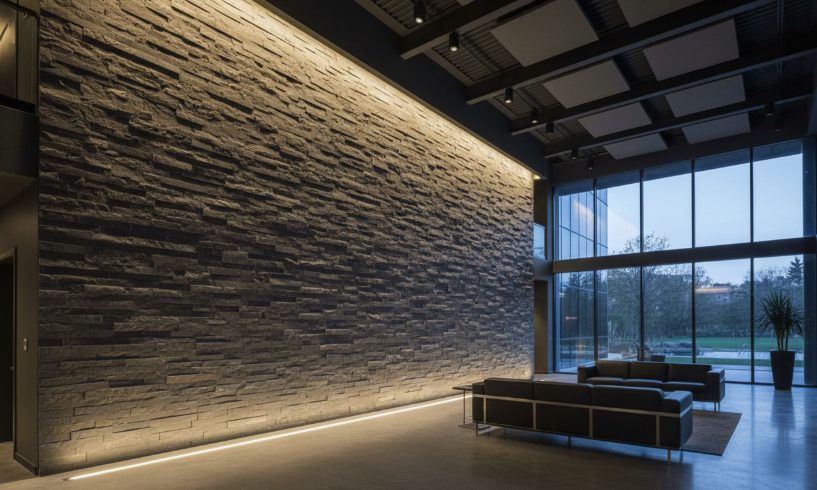
Dry stack is an architectural style where stones are installed flush without visible mortar, creating a seamless, organic surface that highlights natural textures.
The Aesthetic of Seamless Mortarless Masonry
The dry stack look removes the distraction of grout lines, focusing entirely on the stone’s raw character. Architects use this style to replicate the appearance of traditional fieldstone walls, where stones were historically stacked by hand using only gravity and friction. In modern interiors, this translates to a clean, continuous surface that feels both ancient and contemporary.
- Continuous Surfaces: Eliminating grout lines creates a unified finish that expands the perceived scale of a room.
- 3D Shadow Play: Varied stone depths and rugged “split-face” textures create deep shadows under targeted lighting.
- Design Versatility: The look adapts to rugged mountain lodges or sleek, minimalist commercial lobbies depending on the stone selection.
- Natural Variety: Without mortar to break up the pattern, the authentic color shifts in the stone become the primary visual feature.
CNC Diamond-Blade Precision for Interlocking Panels
Achieving a tight, gap-free dry stack look at scale requires more than just manual sorting. Top Source Stone utilizes advanced manufacturing to ensure these panels fit together with mechanical precision. We focus on engineering the edges so that the installation substrate remains completely hidden, even on large-format feature walls.
- Interlocking Geometry: Our Z-Shape and S-Shape panels use a male-female connection system that camouflages vertical joints.
- CNC Precision: We use CNC diamond-blade edges to ensure every panel meets with a tight, professional fit that eliminates “stepped” gaps.
- Hue Uniformity: Sourcing from the same quarry vein per order ensures 95% color consistency across the entire dry stack installation.
- L-Corner Solutions: Pre-fabricated 90-degree corners maintain the mortarless aesthetic around wall transitions without requiring complex on-site mitering.
Why Traditional Grout is Rarely Used for Ledger Panels?
Ledger panels use a dry-stack design to prevent moisture buildup and substrate rot while maintaining a seamless, natural aesthetic through precision CNC-cut interlocking joints.
Moisture Trapping and Structural Integrity Risks
Traditional grout creates a liability for ledger stone by holding water behind the panels. In exterior applications, this trapped moisture cannot drain or dry properly, which leads to mold growth and eventual rot in the wall substrate. Moving to a dry-stack system allows the assembly to breathe naturally.
- Efflorescence Prevention: Eliminating grout stops the white salty residue that often surfaces during moisture cycles in mortared walls.
- Structural Movement: Dry-stacked stone accommodates micro-shifts in a building’s structure, whereas rigid grout joints often crack and allow further water infiltration.
- Substrate Longevity: Avoiding grout protects wood and metal framing from the localized humidity that causes structural decay.
Z-Shape Interlocking and CNC Diamond-Blade Precision
Factory engineering has replaced the need for manual grouting. Top-Quellstein utilizes CNC diamond-blade edges to achieve a tight, modular fit. This precision ensures that individual panels sit flush against one another, creating the appearance of a solid stone wall without visible gaps or the mess of mortar application.
- Interlocking System: Our Z-Shape and S-Shape designs use a “male-female” connection that completely camouflages vertical joints and hides the installation surface.
- Seamless Technology: Precision-cut natural stone provides a continuous architectural finish that looks like hand-laid fieldstone.
- Cost Efficiency: Eliminating the grouting phase reduces on-site labor hours and prevents the common “stepped” look found in lower-quality stone panels.
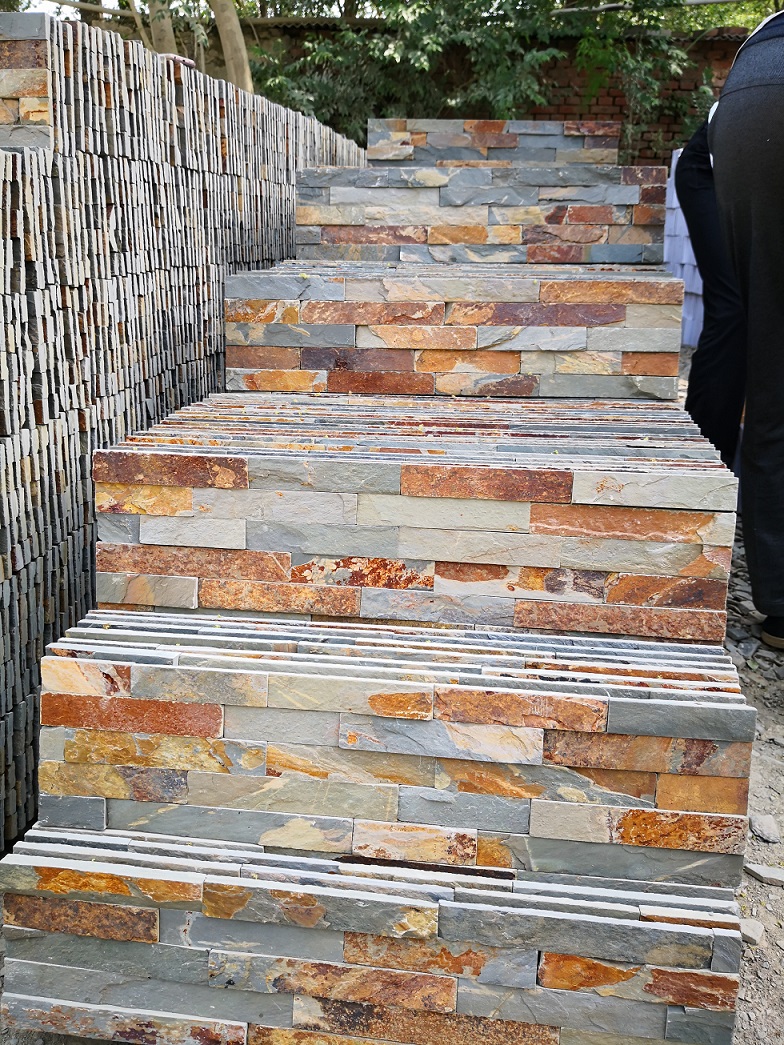
- Standardized Sizing: Panels are manufactured in 6″ x24″ or 6″ x22″ formats with thickness ranging from 1cm to 3.5cm for a varied, natural depth.
Boost Profits With Premium Ledger Panels
How Z-Shape Interlocking Design Eliminates Grout Lines?
Z-shape interlocking panels use geometric male-female connections and CNC-precision edges to create a seamless, grout-free stone surface that hides vertical joints and installation substrates.
| Feature | Z-Shape Interlocking | Traditional Straight-Edge |
|---|---|---|
| Connection Type | Male-Female Modular System | Standard Butt-Joint |
| Joint Visibility | Camouflaged / Invisible | Highly Visible Vertical Seams |
| Grout Requirement | None (Dry-Stack Look) | Often Required for Seams |
| Edge Precision | CNC Diamond-Blade Finish | Standard Manual/Machine Cut |
The Male-Female Interlocking Mechanism
Standard rectangle panels often leave visible vertical lines that break the visual flow of a stone wall. Z-shape engineering solves this by using staggered geometric profiles that join adjacent panels on all sides. This male-female connection system forces the panels to overlap, which naturally conceals the point of contact between modular units.
This design enables a true dry-stack aesthetic. By eliminating the space typically reserved for mortar beads or grout lines, the installation achieves a rustic, organic look where the stones appear stacked by hand. The interlocking edges also serve a functional role by hiding the installation substrate, ensuring no wall backing or adhesive is visible through the joints.
- Geometric Z-profiles: Overlapping edges join panels to eliminate vertical seam lines.
- Dry-stacking: Precision fit removes the need for traditional grout spacing.
- Substrate Concealment: The interlocking structure creates a continuous stone barrier over the adhesive layer.
CNC Diamond-Blade Precision for Seamless Finishing
Manufacturing quality dictates how well these panels actually interlock. We use CNC diamond-blade edges to ensure every panel meets strict dimensional tolerances. This high level of precision prevents “stepped” gaps—a common issue in lower-grade stone where panels do not sit flush, creating shadows that expose the joints.
Visual continuity also relies on color consistency. Sourcing natural stone from the same quarry vein per batch ensures 95% hue uniformity. When combined with precision cutting, the transitions between Z-shape panels become virtually indistinguishable, providing a professional architectural finish that mimics a single, monolithic stone wall.
- CNC Precision: Diamond-blade cutting ensures gap-free fits for large-scale projects.
- Quarry Consistency: Sourcing from the same vein prevents patchy color breaks across the interlocking system.
- Structural Integrity: Tight-fitting panels reduce the risk of water infiltration or pest nesting in interior and exterior applications.

When is Grouting Necessary for Interior Stone Walls?
Grouting is mandatory for high-moisture zones and fireplace mantels. For interior feature walls, our Z-shape interlocking panels achieve a seamless dry-stack look without any mortar joints.
Functional Grouting for Fireplaces and High-Moisture Zones
While modern design favors the grout-free look, technical requirements override aesthetics in specific zones. Masons must use grout in high-moisture areas, such as stone rangehoods or backsplash zones near sinks, to block dust and grease from reaching the substrate. Unfilled gaps in these environments often lead to mold accumulation or pest infiltration over time.
Fireplace installations also demand specific grouting techniques to meet masonry safety standards. Grout joints provide the necessary buffer for setting heavy stone mantels and structural components, ensuring the weight distributes evenly across the stone veneer. For solid masonry walls with interior voids, we recommend grouting to reinforce structural integrity and prevent water ingress in older builds.
- Substrate Protection: Grout fills joints between stone units to stop moisture and debris from penetrating the wall backing.
- Masonry Standards: Fireplaces and rangehoods require grout to ensure proper setting of heavy mantels.
- Structural Reinforcement: Grout fills interior voids in solid masonry to maintain wall stability.
Eliminating Grout via Z-Shape Interlocking Technology
Precision engineering has largely removed the need for grouting in standard interior feature walls. We utilize CNC diamond-blade cutting to produce Z-shape and S-shape panels with a male-female interlocking system. This geometry hides vertical joints and camouflages the installation substrate, creating a continuous “dry-stack” appearance that replicates traditional fieldstone without the mess of mortar.
This technology significantly reduces on-site labor costs for dealers and contractors. By using our matching L-corners for 90-degree transitions, installers avoid the need for complex miter cuts or mitered grout joints. The result is a professional, seamless finish that stays tight over time, regardless of structural movement that typically causes traditional grout lines to crack.
- CNC Precision: Diamond-blade edges create tight, interlocking connections that hide vertical joints.
- Male-Female Interlock: Z-shape and S-shape designs eliminate visible “stepped” gaps between panels.
- Pre-fabricated Corners: Matching L-corners remove the need for mitered grout joints at wall transitions.
- Material Standards: Applicable to both Slate (HS: 6803.00.90) and Quartzite (HS: 6802.93.11) ledgestone.
Preventing Dust and Pest Issues in Groutless Stone Walls
Modern interlocking panels and precision-cut edges create seamless surfaces, eliminating the deep crevices where dust collects and insects nest.
Structural Sealing and Substrate Protection
Protecting the wall cavity starts with the foundation of the installation. Eliminating gaps behind the stone prevents opportunistic pests from finding a foothold or entry point into the building structure.
- Substrate: Mount stone panels over solid cement board rather than drywall to block pest access to wall cavities.
- Sealing: Apply a pH-neutral natural stone sealer to fill microscopic pores and reduce dust adhesion.
- Bonding: Use high-strength epoxy resin during manufacturing to keep individual stones permanently attached.
We use industrial-grade resin to ensure zero delamination over time. This prevents the small fractures that typically allow dust to settle into the panel’s interior structure.
CNC Precision and the Seamless Z-Shape Interlock
Tight tolerances in manufacturing remove the physical space required for debris buildup. When panels fit together with mechanical precision, the “dry stack” look remains hygienic and easy to maintain.
- Cutting Precision: CNC diamond-blade edges provide a consistent fit that minimizes space between panels.
- Interlock Design: Z-Shape and S-Shape panels use a male-female connection system to hide vertical joints.
- Seamless Technology: Precision engineering eliminates “stepped” gaps that usually create horizontal ridges for dust collection.
These interlocking systems camouflage the substrate entirely. By removing the ledge-like gaps found in traditional loose-stone stacking, the wall surface stays flush, making routine cleaning with a soft brush or vacuum attachment highly effective.
Häufig gestellte Fragen
Do I need to apply grout to natural stacked stone panels?
Most ledger panels feature a Z-shape interlocking design for a grout-free, dry-stack appearance. While grouting remains optional for interior accent walls, we recommend it for exterior projects to prevent moisture from reaching the substrate.
How do I prevent visible gaps between stone panels during installation?
Visible gaps typically stem from uneven wall surfaces or inconsistent panel edges. Using CNC diamond-blade precision panels ensures tight joints. We recommend checking that the installation surface is perfectly plumb and level before applying the 6″ x24″ units.
Is groutless natural stone safe for a kitchen backsplash?
Natural stone is heat-resistant and safe for backsplashes, but materials like quartzite and slate are porous. To prevent stains from cooking oils and food splatters in a groutless setup, apply a high-quality stone sealer immediately after installation.
What is the best method for cleaning a groutless stone wall?
Use a soft-bristle brush and a pH-neutral cleaner to remove dust and debris from the natural cleft surface. Avoid acidic substances like vinegar or lemon juice, as these chemicals can damage the mineral structure and finish of the stone.
How does natural stacked stone compare to faux groutless alternatives?
Real stone provides superior UV stability and structural integrity. Unlike concrete-based imitations that may fade or crack, natural quartzite and slate maintain their color and texture indefinitely, offering better long-term value for commercial and residential properties.
Final Thoughts
Inferior panels create “stepped” gaps and patchy color breaks that erode client trust and inflate on-site labor costs. Top Source Stone utilizes CNC diamond-blade precision and same-vein sourcing to maintain 95% hue uniformity across every large-scale installation. This engineered approach protects your margins by eliminating the need for complex manual sorting or costly project callbacks.
Request a sample kit or initiate a 300-square-meter trial order to test our interlocking tolerances and natural finish firsthand. We provide private label solutions and visual pre-shipment verification to ensure your inventory meets exact architectural specifications before it leaves our factory. Contact our sales department today to discuss container pricing and territory opportunities for your market.
