
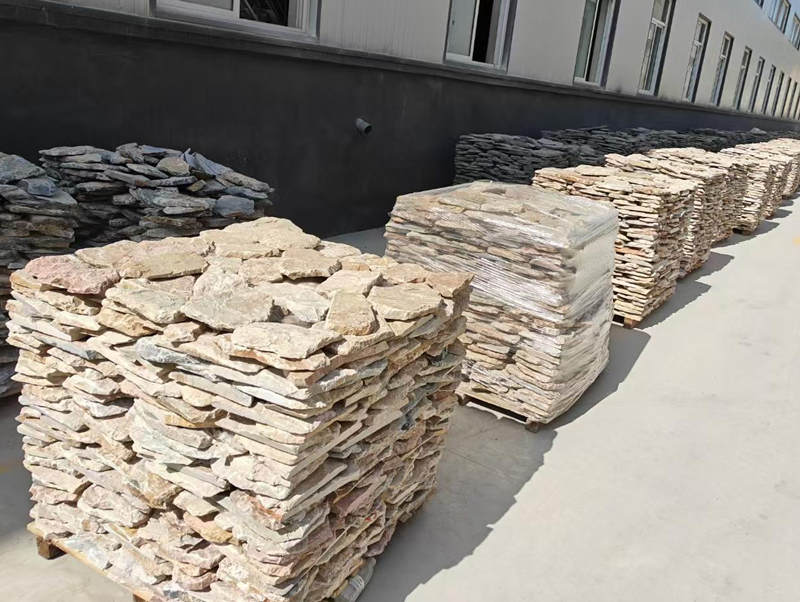
Deciding between fieldstone vs ledgestone often dictates the project timeline and labor overhead of a commercial build or residential development. Selecting the wrong architectural profile leads to unexpected masonry costs, slowed installation cycles, and potential aesthetic misalignment that can diminish the property’s market value. A mismatch between the stone’s physical geometry and the building’s structural lines creates a permanent design error that is both expensive and difficult to rectify once the mortar sets.
This guide establishes a technical standard for evaluating stone veneer profiles based on installation mechanics and architectural compatibility. We analyze the installation speeds of dry-stacking versus wide mortar joints, compare linear ledgestone against organic fieldstone shapes, and provide a framework for blending both profiles into a cohesive transitional facade. These specifications serve as a roadmap for choosing the profile that aligns with your specific structural requirements and project budget.
Defining the Linear Profile of Ledgestone
Ledgestone utilizes tight, rectangular geometry to create a sophisticated horizontal rhythm that bridges the gap between traditional masonry and 2026 architectural minimalism.
Rectangular Precision and Horizontal Definition
Ledgestone is defined by its stacked, rectangular shapes that emphasize clean lines and a strong horizontal orientation. Unlike irregular fieldstone, this profile features individual stones with uniform heights but varying lengths, creating a rhythmic and structured appearance on the wall. This linear focus makes it a primary choice for designers looking to elongate a facade or provide a grounded, stable visual base for modern residential structures.
Current 2026 market trends favor the “Pencil Series” variation, which incorporates 10 to 12 rows of thin, linear strips. This specific cut provides a highly detailed surface that captures light across multiple planes, offering a dynamic alternative to flat siding materials. Because Top Source Stone manages the quarry-to-project consistency, these individual pieces maintain a cohesive color narrative even within the tight geometric constraints of the ledgestone profile.
Dimensional Texture and Shadow Play
The profile depth of ledgestone varies significantly between series, allowing for precise control over the visual weight and shadow effects of a feature wall. The Flat Series focuses on a refined, low-profile look with depths ranging from 0.75” to 1.25”, ideal for interior accents where space is at a premium. In contrast, the Rough Series introduces thickness up to 1.75”, creating dramatic shadows that emphasize the natural split-face texture of the quartzite or slate.
- Natural split faces ensure that the organic character of the stone remains visible despite the industrial precision of the rectangular cut.
- Varying thickness creates “shadow lines” that change throughout the day, providing a living aesthetic for exterior facades.
- High-density material integrity prevents moisture absorption in deep-textured crevices, ensuring long-term color fastness.
Seamless Interlocking Design for Contemporary Facades
While traditional masonry often relies on visible grout to bridge gaps, modern ledgestone systems prioritize a dry-stack appearance. Top Source Stone utilizes advanced infrared cutting equipment to ensure every piece features a precision-sawn back. This 100% sawn-back finish creates a flat bonding surface that increases adhesion and simplifies the installation of individual loose stones into a tight, seamless configuration.
By eliminating visible mortar joints, the installer emphasizes the stone’s natural geometry rather than the grid of the mason. This technical approach is particularly effective for 2026 commercial projects and residential feature walls where a continuous, monolithic stone look is required. The result is a bespoke random-lay pattern that avoids the repetitive “stair-stepping” often seen in low-quality pre-glued panels.
Would you like me to detail the specific installation requirements for the Rough Series ledgestone versus the Flat Series?
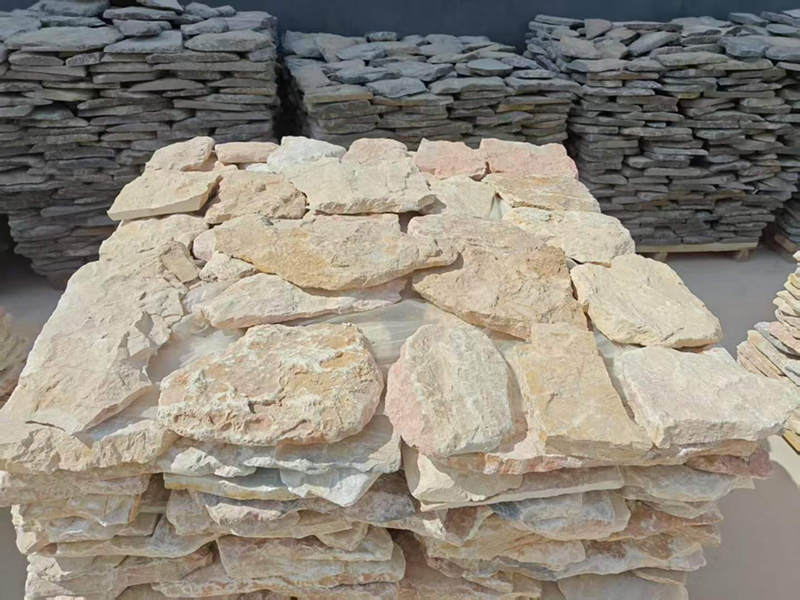
Defining the Organic, Random Shapes of Fieldstone Veneer
Fieldstone veneer provides a high-dimensional, authentic masonry aesthetic by utilizing irregular, hand-sorted stones that mirror the raw state of earth-recovered materials.
Irregular Sizing and Form
Fieldstone veneer avoids the rigid, linear constraints of ledgestone by maintaining its natural, varied dimensions. These stones reflect their agricultural heritage, originating from materials historically cleared from fields during plowing. Because the pieces are not forced into uniform rectangular shapes, they provide a balanced surface distribution where stones often appear as wide as they are tall. This random sizing ensures a bespoke appearance that cannot be replicated by standardized panels.
- Stones vary significantly in dimensions to avoid the repetitive patterns found in manufactured products.
- A wide-to-tall proportion allows for even weight and visual distribution across large elevations.
- The raw form honors traditional masonry roots, providing an unrefined, powerful structural look.
Organic and Handcrafted Appearance
The random arrangement of fieldstone creates high-dimensional surfaces characterized by deep textures and dramatic shadows. This profile suits large-scale architectural projects like full exterior facades or expansive landscape walls where the randomness can spread naturally without looking cramped. By utilizing 100% natural stone, such as high-density quartzite or granite, the installation gains a rugged character that fits mountain, rustic, or historical colonial styles perfectly.
- Deep textures create a robust, rugged character that changes visually with shifting sunlight.
- Ideal for substantial areas where a “bespoke random-lay pattern” prevents visual fatigue.
- Natural mineral composition ensures zero-repeat variation across thousands of square feet.
Installation Dynamics for Random Shapes
Installing organic fieldstone requires a departure from the tight, dry-stacked look of linear systems. Masons typically use wider mortar joints, often around 1/2-inch, to bridge the gaps between irregular edges and accommodate the unique geometry of each piece. Top Source Stone optimizes this process by providing an individually sawn-back finish on every loose stone. This precision-cut back ensures a flat bonding surface, which significantly improves adhesion and reduces on-site labor requirements compared to traditional, uncut fieldstone.
- Wider mortar joints provide essential weather sealing and accommodate the varied stone shapes.
- Sawn-back processing reduces on-site labor costs by up to 30% while maintaining a “full-depth visual integrity.”
- Climate-tested durability ensures the stone retains its color and structural integrity through intense freeze-thaw cycles.
Boost Profitability with
Premium Stacked Stone
Secure factory-direct pricing on durable, interlocking panels that significantly reduce labor costs and installation time. Our rigorous quality control and direct quarry ownership ensure a consistent supply for your high-volume commercial and residential projects.

Installation Speed: Dry-Stacking vs Wide Mortar Joints
In 2026, the choice between dry-stacking and mortar joints serves as a strategic pivot between maximizing immediate labor efficiency and ensuring long-term structural resilience against shifting climate patterns.
Dry-Stacking Systems for Rapid Installation
The 2026 construction market prioritizes high-efficiency workflows to combat rising labor costs. Modern installation favors “loose stone” individual pieces with a 100% sawn-back finish. This precision-cut back creates a flat bonding surface that increases adhesion speed and reduces on-site masonry labor by up to 30%. Because the stones fit tightly together without the need for mortar lines, installers bypass the time-consuming grouting and joint-striking phases.
| Installation Metric | Dry-Stack (Bespoke Random-Lay) | Wide Mortar Joint (Traditional) |
|---|---|---|
| Installation Speed | High (Eliminates joint finishing) | Moderate (Requires pointing/grouting) |
| Labor Cost Factor | Reduced by ~30% via Sawn-Back | Standard Masonry Rates |
| Weather Resistance | Requires secondary drainage plane | Superior freeze-thaw protection |
Top Source Stone provides individually sieved stones that support a bespoke random-lay pattern. This approach avoids the repetitive, artificial “panelized” look and allows for a massive, full-depth visual integrity. Since the veneer is strictly maintained at 25–40mm thickness, it remains lightweight enough for modern wall substrates without requiring expensive concrete footings, further accelerating the pre-construction phase.
Structural Integrity and Weather Sealing
Mortar joints remain the technical standard for exterior facades exposed to 2026’s increasingly frequent extreme weather cycles. A standard 1/2-inch mortar joint acts as a sacrificial barrier, absorbing the stresses of thermal expansion and contraction. This jointing technique creates a robust waterproof seal that prevents moisture from reaching the substrate, which is essential for projects in regions with high freeze-thaw exposure.
- High-density quartzite and granite materials offer lifetime color fastness and resist moisture penetration.
- Wide joints accommodate the organic irregularity of fieldstone, ensuring a balanced distribution across large surface areas.
- Climate-tested durability ensures the stone retains structural integrity under heavy UV and rain exposure.
Economic Impact on Construction Timelines
Selecting an installation method directly dictates project profitability. For commercial developments and large-scale residential siding, dry-stacking thin stone veneer allows teams to cover more square footage per shift. This speed mitigates the risk of project delays and helps contractors manage tight 2026 delivery schedules. While the initial material cost of natural stone veneer sits between $13 and $22 per square foot, the reduction in specialized masonry hours makes the dry-stack system a pragmatic financial choice.
Conversely, mortared fieldstone installations prioritize long-term maintenance savings. While the initial labor investment is higher, the sealed joints prevent water-related damage that often leads to costly repairs. Wholesalers and dealers should advise clients to choose based on the specific architectural demand—ledgestone for precision accent work and fieldstone for expansive, durable heritage exteriors.
Would you like me to generate a technical comparison table for the different core inventory materials like Ice White Quartzite and Blue Diamond Ledgestone?
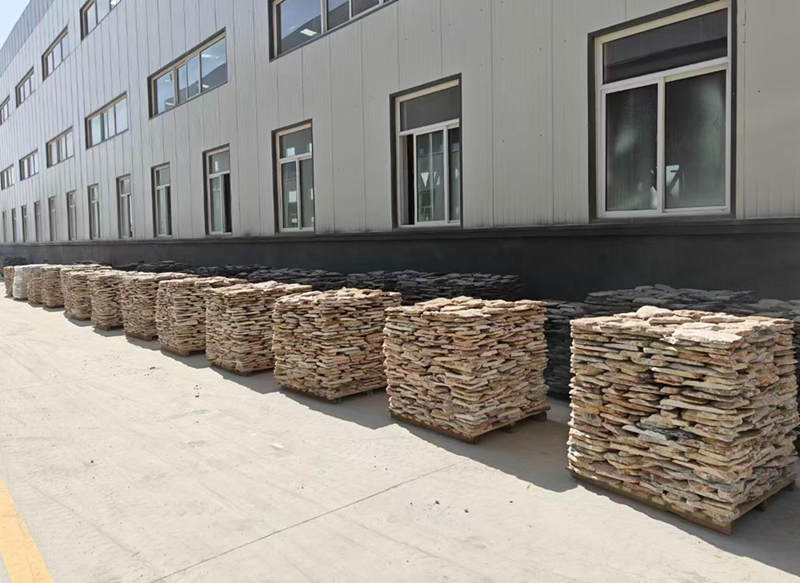
Matching Stone Profiles to Your Home’s Architecture
Selecting the right stone profile serves as the foundational decision that dictates whether a structure feels integrated with its environment or visually disjointed from its architectural intent.
Modern and Contemporary Minimalist Designs
Architects favor clean lines and linear patterns to complement the sharp geometry of modern residential structures. The Flat Series or Pencil Series provide the necessary horizontal orientation to emphasize wide, low-slung architectural profiles. Using monochromatic palettes like Arctic White or Slate Grey reduces visual clutter, allowing the texture of the natural stone to speak without overwhelming the facade.
Dry-stacking these profiles creates a seamless, grout-free appearance that aligns with 2026 trends for high-end, sophisticated surfaces. This method eliminates visible mortar lines, focusing the eye entirely on the “Zero-Repeat Natural Variation” of the individual stones.
| Architecture Style | Recommended Profile | Key Installation Feature |
|---|---|---|
| Modern/Minimalist | Ledgestone (Linear) | Dry-Stack (Tight Joint) |
| Rustic/Mountain | Fieldstone (Irregular) | Wide Mortar Joint (1/2″) |
| Transitional | Hybrid Blend | Sawn-Back Precision Fit |
Rustic, Mountain, and Traditional Estates
For homes that aim to blend into natural landscapes or evoke a sense of history, high-texture profiles are essential. The Rough Series offers the deep shadows and varied stone depths required for large-scale features like massive hearths or exterior turrets. Natural quartzite and slate provide organic color variations that mimic the look of traditional full-thickness masonry without the structural weight.
- Fieldstone shapes work best for these styles to create a rugged, hand-hewn aesthetic that feels grounded and permanent.
- Using L-shaped “Authentic Masonry Corner Wraps” ensures the corners look like solid structural blocks rather than thin decorative slices.
- Wider mortar joints help accommodate the irregular sizing of loose fieldstone, providing an unearthed, stacked aesthetic.
Transitional and Luxury Interior Accents
Integrating stone profiles into interior spaces requires a balance between architectural scale and tactile refinement. The Marble Series adds a layer of luxury to bathroom feature walls and foyers, bridging the gap between raw natural materials and polished interior finishes. We maintain thickness strictly at 25–40mm to ensure the stone adds character to a room without encroaching significantly on the living square footage.
Designers now utilize 3D visualization tools to see how directional lighting interacts with the stone profile before the final installation. High-density quartzite integrity offers lifetime color fastness, making it a superior choice for high-traffic interior feature walls where moisture or UV exposure through large windows might affect lesser materials.
Would you like me to generate a specific technical comparison between dry-stacking and mortared joints for your next project proposal?
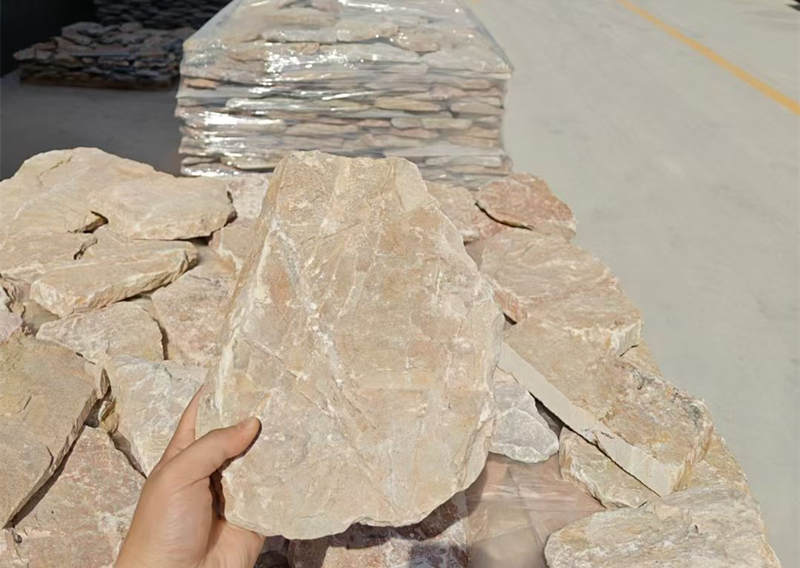
Blending Both Profiles for a Custom Transitional Facade
Transitional stone design utilizes the structural discipline of ledgestone to anchor the organic, irregular textures of fieldstone veneer.
Bridging Contemporary and Classical Aesthetics
Designers mix ledgestone and fieldstone to create a transitional aesthetic that balances geometric precision with natural variety. We combine the horizontal rigor of linear profiles with the rugged, unearthed shapes of fieldstone to soften modern exteriors. This hybrid approach adds architectural weight to mountain retreats while breaking up the monotonous surfaces often found in contemporary residential builds.
- Pair the horizontal precision of Pencil or Flat Series with the irregular silhouettes of natural fieldstone.
- Use this blending technique to add structure to rustic designs or organic warmth to minimalist structures.
- Maintain a unified color palette across both stone profiles to ensure a cohesive visual flow.
Strategic Ratio and Placement for Visual Balance
Achieving a custom look requires intentional ratios between linear and random shapes to prevent a cluttered facade. We recommend a 70/30 split where one profile establishes the dominant texture while the other serves as a secondary focal point. Placing heavier, more textured stones at the foundation creates a grounded appearance that mimics traditional structural masonry.
| Profile Selection | Visual Geometry | Design Function |
|---|---|---|
| Linear Ledgestone | Horizontal & Rectangular | Accents entryways and creates clean borders. |
| Organic Fieldstone | Random & Irregular | Provides main field texture and rustic authenticity. |
| Transitional Blend | Balanced Hybrid | Bridges the gap between modern and heritage styles. |
- Apply linear ledgestone around window trims to highlight structural openings with sharp lines.
- Concentrate larger fieldstone pieces on expansive wall sections to allow the organic shapes to spread naturally.
- Utilize darker mortar for sharper definition or buff mortar for a softer, aged transition.
Technical Integration and Installation Efficiency
Mixing profiles requires rigorous planning regarding stone thickness and bonding to ensure a secure installation. We select stones with a consistent depth range, typically between 25mm and 40mm, to prevent lippage between different styles. Top Source Stone provides 100% sawn-back loose stone which offers a flat bonding surface, making it easier for installers to transition between ledgestone and fieldstone pieces on a single substrate.
- Use high-strength epoxy adhesives to secure diverse stone types to a unified cement board.
- Incorporate L-shaped corner pieces for both profiles to maintain professional edges.
- Ensure consistent mortar joint widths across both profiles for a unified finished surface.
Conclusion
Choosing between the linear precision of ledgestone and the organic texture of fieldstone depends on the architectural goals and installation requirements of your project. Utilizing individually sawn-back loose stone ensures superior adhesion and a bespoke random-lay pattern that avoids the repetitive look of pre-glued panels. Proper selection and hand-laid installation maintain full-depth visual integrity, providing a natural aesthetic that withstands diverse environmental conditions.
Review your current project specifications to determine which natural stone profile best complements your design. You can also contact Top Source Stone to request a technical catalog or a sample of our high-density quartzite and sandstone veneers.
Frequently Asked Questions
What is the difference between ledgestone and fieldstone?
Ledgestone is defined by a linear profile consisting of rectangular stones stacked to create pronounced horizontal definition, often used in contemporary or transitional designs. In contrast, fieldstone features irregular, rounded, or jagged shapes that mimic stones gathered from the earth’s surface, providing a more random, organic, and traditional aesthetic.
Which is cheaper to install: ledgestone or fieldstone?
Ledgestone is generally cheaper and faster to install, especially when using panelized stone veneer systems that interlock easily. Fieldstone installation is typically more labor-intensive and costly because the installer must hand-select and fit irregular shapes together like a puzzle to maintain consistent mortar joints.
Does fieldstone require grout?
Yes, traditional fieldstone typically requires grout or mortar to fill the irregular gaps between the rounded stones. While some thin-veneer fieldstones can be “dry-stacked,” the standard aesthetic for fieldstone involves a visible mortar joint to provide structural stability and the classic “old-world” look.
Can you mix ledgestone and fieldstone veneer?
Absolutely. Mixing ledgestone and fieldstone creates a “mosaic” or “mountain blend” look that adds significant texture and visual interest. By combining the horizontal structure of ledgestone with the organic shapes of fieldstone, designers can achieve a custom, rugged appearance that looks highly authentic.
What style of house uses fieldstone exterior?
Fieldstone is most commonly used on traditional architectural styles, including Craftsman, Colonial, French Country, and rustic Farmhouse designs. Its natural, unrefined appearance is ideal for homes looking to blend into rural or wooded landscapes or to evoke a sense of historical permanence.
