
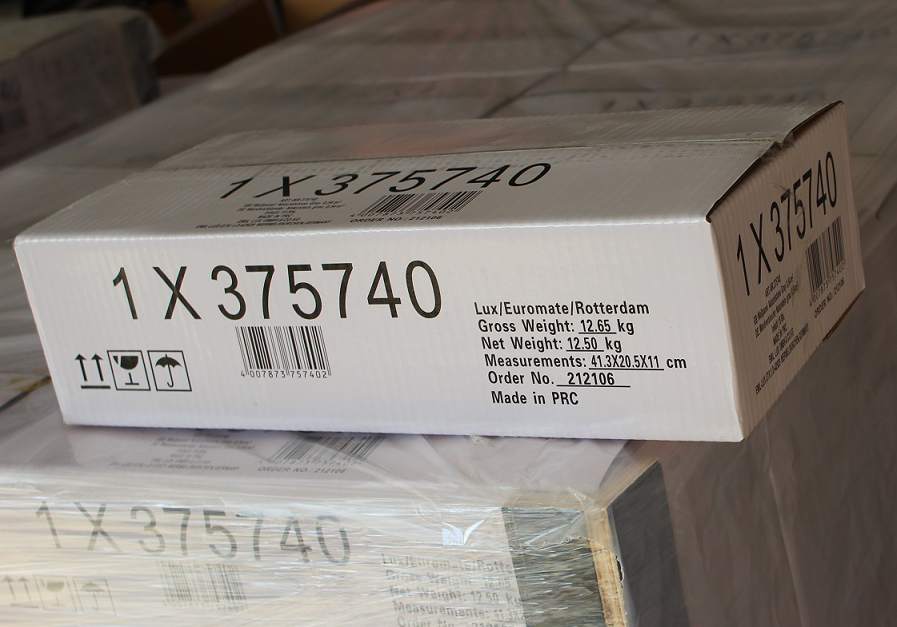
Bulk Sourcing Profits in the natural stone industry depend on aggressive landed-cost reduction and eliminating the 8% to 15% holding cost tax. Importers often see their margins eroded by the high surcharges and handling risks inherent in LCL shipments, where frequent reloading leads to stone breakage.
We optimize these margins by utilizing full 20GP containers and ensuring same-batch quarry consistency. By hitting the 17.5-ton USA port limit with CNC diamond-blade precision panels, we provide 95% hue uniformity and use 5-ply reinforced cartons to secure zero-loss delivery.
The Economics of Scale: Why Full Containers Boost Your Margin?
Full 20GP containers spread fixed logistics costs across maximum volume, cutting landed costs per square meter and boosting retail margins by 15% to 25% compared to LCL shipments.
Operational Efficiency and Fixed Cost Amortization
Shipping companies lower per-unit transport costs by spreading capital expenses, fuel, and crew resources across larger cargo volumes. Larger vessels in 2026 shipping lanes consume significantly less fuel per container moved. By sourcing full containers, you also eliminate the high surcharges and handling risks common with Less than Container Load (LCL) shipments, where frequent reloading often leads to stone breakage.
Top Source Stone 20GP Loading and Weight Optimization
Maximizing a 20GP container requires balancing volume and weight limits perfectly. We focus on hitting the maximum allowable weight to ensure your freight spend covers the most material possible. This strategy prevents “paying for air” and directly protects your bottom line.
- Pallet Capacity: 25 to 30 pallets per 20GP container.
- Max Coverage: 750 – 860 m² for standard panels or 480 – 540 m² for rough stacked stone.
- Weight Limits: Navigation of strict 17.5-ton USA port standards versus 26.5-ton heavy-weight approvals to avoid overweight penalties.
- Protective Packaging: Use of reinforced 5-ply export grade cartons and fumigation-free plywood crates for zero-loss delivery.
We use CNC diamond-blade precision to ensure the stone fits tightly within these crates. This prevents shifting during transit, which is a major cause of margin loss in bulk stone imports. By optimizing the weight and utilizing high-density packing, we help you achieve the lowest possible landed cost per square meter.

Balancing Inventory Holding Costs vs. Bulk Discount Gains
Profits grow when volume discounts outweigh the 8-15% carrying costs. High turnover for core models avoids stagnant capital and excessive storage overhead.
Managing Carrying Costs in Stone Distribution
Wholesale holding costs typically average between 8% and 15% annually. These expenses include warehouse lease rates, insurance premiums, and the invisible cost of capital. When cash stays locked in slow-moving slabs, a distributor loses the ability to pivot toward new series or fund marketing initiatives.
Monitoring turnover rates prevents bulk orders from becoming stagnant liabilities. We focus on ensuring that inventory levels align with actual demand. If a stone variety sits in the yard for multiple years, the accumulated storage expenses eventually wipe out any initial purchasing savings.
Maximizing 20GP Container Loading and Weight Efficiency
Logistics efficiency directly dictates the final margin on natural stone. To achieve the lowest possible freight cost per unit, wholesalers must optimize container utilization while respecting strict port regulations.
- 20GP Capacity: 750 to 860 square meters for standard panels (6″ x 24″).
- USA Weight Limit: 17.5-ton strict limit for port clearance.
- Heavy-Weight Standard: 24 to 26.5 tons (requires specific destination port approval).
- Inventory Focus: “The Big 10” models like Alaska Gray or Glacier White for rapid turnover.
Sticking to the 17.5-ton limit for North American shipments avoids expensive transloading delays and destination penalties. By focusing bulk orders on high-volume models, such as Alaska Gray, importers maintain the flow required to justify large-scale purchasing without risking capital on unproven textures.
Premium Natural Stone for Architectural Projects

How to Negotiate Better Terms with Direct Stone Manufacturers?
In 2026, winning negotiations hinge on 20GP container commitments and pre-shipment visual proof. Securing factory-direct pricing requires aligning your volume with production momentum and demanding strict territory protection.
| Negotiation Pillar | Strategic Leverage Point |
|---|---|
| Logistics Efficiency | Standardizing on 20GP container loads (25-30 pallets). |
| Inventory Selection | Focusing procurement on “The Big 10” best-selling colors. |
| Kwaliteitscontrole | CNC diamond-blade precision and same-batch quarry consistency. |
| Financial Security | Pre-shipment video verification before the 70% balance payment. |
Strategic Leverage through Volume and Inventory Synchronization
Factories operate best when production lines stay hot. If you align your orders with their existing workflows, you move from a standard client to a priority partner. This approach lowers unit costs because the manufacturer avoids the downtime associated with resetting machinery for custom, low-volume requests.
- Consolidate orders: Always target full 20GP container loads to access the lowest pricing tiers and maximize shipping margins.
- Prioritize “The Big 10”: Focus on stocking colors like Alaska Gray and Glacier White to benefit from the factory’s constant production momentum.
- Purchase Forecasting: Propose a long-term inventory schedule to lock in fixed 2026 pricing and hedge against market fluctuations.
- Bundle Materials: Mix Slate and Quartzite panels within a single shipment to hit volume discount thresholds without overstocking a single SKU.
Securing Profits through Pre-Shipment Visual Verification
The biggest threat to a B2B buyer’s margin is material inconsistency discovered after arrival. Effective negotiation must include technical benchmarks that hold the manufacturer accountable before the goods leave the port. This shift in protocol ensures that factory-direct savings aren’t lost to site-work adjustments or customer claims.
- Video Verification: Require HD video proof of finished crates to confirm 95% hue uniformity and “Same-Batch Quarry Consistency” before releasing final funds.
- Precision Standards: Set strict CNC diamond-blade requirements for Z-shape panels to ensure the “male-female” connection fits without visible gaps.
- Packaging Integrity: Mandate the use of 5-ply reinforced export cartons and plywood crates as a prerequisite for final payment.
- Territory Exclusivity: Secure “Profit Protection” by ensuring the manufacturer strictly avoids D2C sales in your designated trade area.
Identifying “Hidden Margins” in Quality Consistency and Claims
Hidden quality leaks drain 8% to 14% of gross revenue. Distributors protect 2026 margins by enforcing same-batch quarry sourcing and pre-shipment visual proof to eliminate rework.
The Financial Impact of Undetected Quality Defects
Quality failures act as a silent tax on stone distribution. When a defect reaches a project site, the financial damage multiplies far beyond the material value. You are no longer just replacing a stone panel; you are paying for double freight, expensive contractor rework loops, and the potential loss of a long-term client relationship.
Traditional accounting often misses these “hidden factory” costs. While your books show the cost of goods, they rarely isolate the 20% to 40% drain on your operational capacity caused by handling claims, sorting through bad inventory, or managing downtime. Shifting to advanced metrics provides a clearer picture of your actual profitability.
- Rolled Throughput Yield (RTY): Measures the percentage of units that pass every process step without rework, exposing waste traditional systems overlook.
- Operational Capacity Drain: Inconsistent sizing or thickness forces installers into modifications, slowing down project timelines and triggering penalty clauses.
- Warranty Multiplier: A single failed crate at the job site can cost four times its original value once logistics and labor are factored in.
Same-Batch Quarry Consistency and Visual Verification
Natural stone variation is expected, but “patchy” walls lead to immediate rejections. We solve this by sourcing material strictly from the same quarry vein for every order. This ensures the hue uniformity remains at 95%, allowing for a cohesive architectural finish that satisfies high-end project standards.
Precision at the factory level eliminates the need for on-site adjustments. By using CNC diamond-blade cutting, we maintain strict 6″ x 24″ dimensions. This accuracy ensures that Z-shape interlocking systems fit tightly, concealing the installation substrate and removing visible gaps.
- Hue Uniformity: 95% consistency achieved by same-batch vein sourcing.
- Pre-Shipment Visual Verification: High-definition photos and videos of finished crates provided before balance payment to guarantee “What You See Is What You Get.”
- CNC Precision: Consistent 6″ x 24″ (150x600mm) sizing for seamless male-female connections.
- Z-Shape Interlocking: Modular design engineered to camouflage vertical joints and eliminate “stepped” gaps.
We protect your cash flow through transparency. Instead of relying on a random sample sent months ago, you receive digital proof of the actual batch sitting in our warehouse. This step secures your net margins by ensuring only project-ready material leaves the port.

Creating a Private Label Line to Protect Your Retail Prices
Private labeling eliminates direct price comparisons, letting retailers set value-based prices. By using exclusive branding, dealers bypass manufacturer price constraints and secure regional territory profit margins.
Establishing Pricing Independence Through Tiered Brand Architecture
Retailers often get trapped in a race to the bottom when selling national stone brands. When a customer can find the exact same product name at three different shops, price becomes the only lever. Private labeling breaks this cycle by removing the ability for customers to cross-shop by name. You control the narrative and the perceived value of the stone.
- Three-Tier Structure: Organizes inventory into Value, Mainstream, and Premium tiers to capture different budget segments without diluting your high-end reputation.
- MAP Flexibility: Operates outside of Manufacturer-Advised Pricing (MAP) constraints, giving you the freedom to set discounts or promotional cycles based on your specific inventory needs.
- Exclusive Naming: Uses unique product identifiers so competitors cannot benchmark your prices against their own inventory.
- Dynamic Adjustments: Allows for localized price changes based on regional demand patterns and specific transaction data.
This independence allows you to transition from cost-plus pricing to value-based pricing. Instead of defending a markup, you are selling an exclusive architectural solution that isn’t available anywhere else in your territory.
Securing Market Territory with Custom Packaging and OEM Services
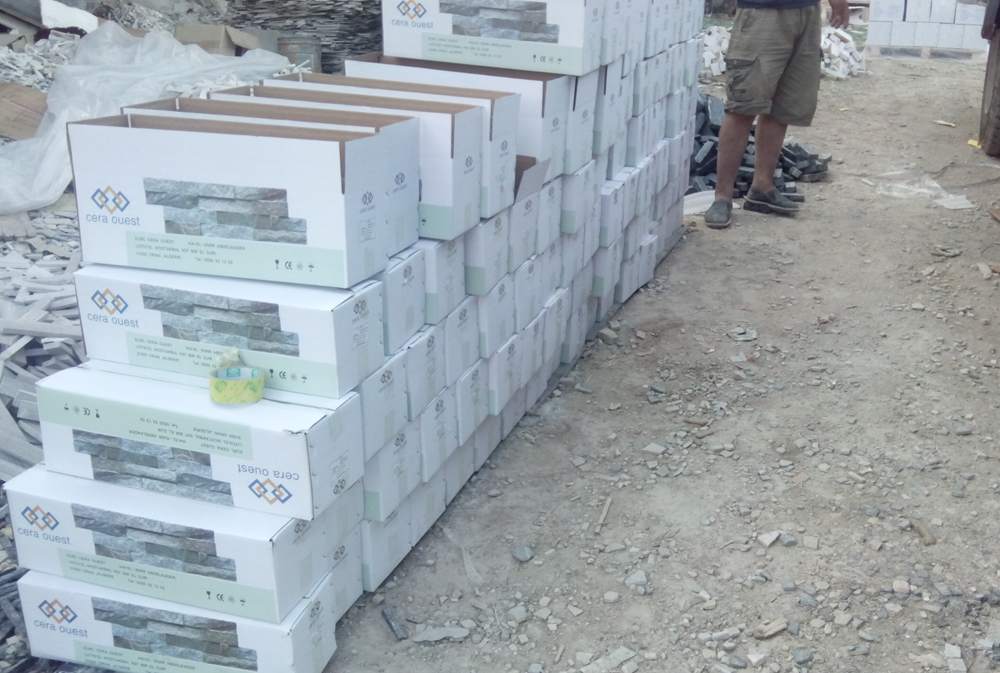
A private label strategy is only as strong as the supply chain supporting it. Moving to an OEM model means you are no longer just a middleman; you are a brand owner. This requires professional-grade presentation and a commitment to quality consistency that national brands often struggle to maintain at the local level.
- 300-Square-Meter MOQ: Provides a manageable entry point for launching exclusive regional stone collections under your own brand.
- Reinforced Custom Packaging: Utilizes 5-ply export-grade cartons with your specific dealer logo and branding to build local equity during every delivery.
- Same-Batch Consistency: Ensures all panels are sourced from the same quarry vein per order, maintaining a 95% hue uniformity that protects your reputation for high-end quality.
- Strict Profit Protection: We avoid direct-to-consumer (D2C) sales entirely to ensure your territory and margins remain protected from factory-direct competition.
By controlling the packaging and the sourcing batch, you reduce the risk of color-matching claims, which are a major drain on margins. You also establish a professional presence on job sites, where your branded cartons act as a silent salesperson for future referrals.
Veelgestelde vragen
How can I secure the best wholesale pricing for natural stacked stone?
Secure the best rates by leveraging volume discounts, bundling matching L-corners with panel orders, and timing purchases during off-peak seasons. Working directly with a quarry source like Top Source Stone eliminates middleman markups and ensures you receive direct-from-factory pricing based on current material costs.
What are the typical profit margins for natural stone veneer distributors in 2026?
Profitability remains strong as natural stone projects often yield over 150% ROI for end-users. B2B distributors who source directly from the manufacturer can capture gross margins ranging from 40% to 80% by capturing the hidden margins usually lost to supply chain intermediaries.
Why is sourcing stacked stone directly from China more cost-effective for bulk orders?
China offers an integrated supply chain that covers everything from quarry extraction to CNC diamond-blade precision cutting. Lower labor costs and specific export tax incentives allow factories to pass significant savings to international buyers, especially for high-demand colors in the Big 10 inventory series.
How should I negotiate logistics and payment terms with a stone manufacturer?
Prioritize volume-based discounts and clear shipping terms like FOB or CIF. Protect your cash flow by requesting 30/70 payment terms and insist on pre-shipment visual verification, such as high-definition photos or videos of the finished crates, to ensure the batch matches your quality standards.
How much can I save by transitioning to full container bulk purchasing?
Bulk purchasing typically reduces costs by 5% to 20% compared to smaller orders. Loading a full 20GP container with 25-30 pallets allows you to move up to 860 square meters of stone at once, which maximizes shipping efficiency and lowers the landed cost per unit.
Final Thoughts
Choosing the lowest quote often results in a 14% margin drain due to material inconsistency and expensive job-site rejections. Our same-batch quarry sourcing and CNC precision eliminate these hidden costs, ensuring your 20GP shipments arrive project-ready with 95% hue uniformity. Real profit comes from balancing container weight limits with high-turnover models like Alaska Gray to maximize your ROI per square meter.
Start with a 300-square-meter trial order to verify our interlocking fit and color consistency firsthand. You can also discuss private label packaging to remove direct price comparisons and secure exclusive territory margins. Reach out to our team to request HD video proof of our current inventory and lock in your 2026 production slot.
