
Stone Resale Value sourcing determines whether a stone upgrade is captured in comparables or lost to the appraisal gap; poor provenance, visible seams, or substandard installation can shave roughly 8–10% off expected sale proceeds on patios and generate warranty claims that erode dealer margin.
This analysis benchmarks suppliers against Same‑Batch Quarry Consistency and ASTM-grade freeze‑thaw resistance. We evaluate Direct Quarry Source control, CNC diamond‑blade precision for Z‑Shape/S‑Shape interlocks, and MOQ/lead-time (trial 300 m²) so dealers protect margin and resale recovery.
The Appraisal Gap: How Real Estate Experts Value Natural Stone
Appraisal gap is the difference between owner spend and appraised value; same-batch sourcing, proven durability, and pro-grade installation narrow that gap.
| Appraisal criterion | How Topbron steen specs address it |
|---|---|
| Authenticity & provenance | Direct Quarry Source; 100% natuursteen (slate, quartzite, sandstone, granite, marble) with documented batch sourcing. |
| Visual uniformity | Same-Batch Quarry Consistency—hue uniformity ~95% within a batch; matching L-corners and panel sizes reduce on-site variance. |
| Duurzaamheid & performance | ASTM-grade freeze-thaw resistance, inherent UV stability, high salinity/humidity resistance—specs appraisers respect. |
| Installation quality | Interlocking Z/S-Shape panels with CNC diamond-blade precision hide vertical joints and simplify a seamless finish. |
| Commercial reliability | Pre-shipment visual verification, clear HS codes (Slate: 6803.00.90; Quartzite: 6802.93.11), MOQ and lead-time transparency for project planners and appraisers. |
What the appraisal gap means for natural stone
Appraisal gap: owners or designers spend on stone features but appraisals record less value in comparables and adjustments. Appraisers weigh material authenticity, long-term durability, maintenance demands, curb appeal, and how the upgrade fits neighborhood norms.
- Definition: the shortfall between owner/designer investment in stone and the value appraisers record in comparables and adjustments.
- Key appraisal factors: material authenticity, durability, maintenance needs, curb appeal, and alignment with neighborhood expectations.
- Numeric evidence: natuursteen patios often add ~8–10% to property value; stone countertops can recoup large portions of cost (industry examples cite up to 200% ROI on counters); hardscaping projects show 20–30% returns.
- Why gaps happen: inconsistent finishes, visible seams, patchy color, poor installation, or use of faux materials that buyers view as lower value.
- Market trend: many buyers now expect natural stone finishes even in mid-priced homes, which changes how appraisers weight these upgrades.
For dealers and specifiers, that means your product and the installation story must answer appraisers’ questions: provenance, durability testing, and on-site workmanship. If you can show consistent batches, documented specs, and professional installation details, appraisers will more readily accept higher adjustments.
Same-Batch Quarry Consistency: a product spec that closes the gap
Appraisers penalize patchy walls and poor seams. A clear product spec that ties quarry batch, durability, and installation features to the installed result removes ambiguity and raises perceived value.
- Same-Batch Quarry Consistency: Topbron steen sources from the same quarry vein per order; hue uniformity ≈95% within a single batch, which prevents the ‘patchy’ appearance that lowers appraised adjustments.
- Direct Quarry Source & QC: factory ownership of the quarry plus multi-stage inspections and Pre-Shipment Visual Verification improves predictability—appraisers value verifiable supply chains.
- Durability specs appraisers look for: ASTM-grade freeze-thaw resistance, inherent UV stability (no fading), and high salinity/humidity resistance—useful for northern climates and GCC/coastal projects.
- Installation-ready features: Z-Shape and S-Shape interlocking panels with CNC diamond-blade precision hide vertical joints and substrate, producing the seamless finish appraisers recognize as high-end.
- Project-ready components: matching L-corners and standard panel sizes (6″ x 24″, 6″ x 22″) create clean wrap-around details and reduce on-site variation.
- Weight & installation: standard flat panels weigh ~8–12 lbs/sqft (30–40 kg/m²), avoiding heavy structural upgrades while keeping real-stone integrity.
- Commercial assurances: clear HS codes (Slate 6803.00.90; Quartzite 6802.93.11), MOQ strategy (trial/private-label orders from 300 m²), lead times (In-stock 10–15 days; production 20–25 days), and crate/pallet packing details support reliable delivery and help appraisers accept claimed upgrades.
When you present an appraisal packet, include batch documentation, lab or ASTM references for freeze-thaw and UV stability, photos of matching L-corners and interlocking joints, plus pre-shipment verification. Appraisers don’t like surprises; give them predictable materials and clear installation evidence and the appraisal gap closes fast.

First Impressions: Curb Appeal ROI of Real vs. Faux Materials
Manufactured stone veneer often returns a higher percentage of cost; natural stone delivers stronger long-term durability and buyer confidence.
Measuring curb appeal and ROI: what drives buyer perception
For sellers, builders, and dealers, curb-appeal ROI equals estimated resale recovery divided by project cost. Appraisers and buyers look at durable materials, visible finish quality, and local comparables when assigning value.
- How ROI is calculated: Compare total installed cost to estimated resale recovery using local comps and industry valuation reports.
- Manufactured veneer performance: Recent reports show manufactured stone veneer posting ~153% ROI (example average project cost $11,287 and estimated resale recovery $17,291).
- Exterior vs. interior upgrades: Exterior, curb-focused work routinely outperforms many interior projects; hardscape and landscape often approach near‑full cost recovery.
- Natural stone gains: Natural stone patios commonly add about 8–10% to property value and score high with buyers for upscale appearance and low maintenance.
- Perception drivers that matter: Seamless finish, authentic texture, consistent color across large façades, and professional detailing (corners, joints, mortar lines) increase perceived quality and resale appeal.
For dealers and builders this means your specification and installation quality directly affect how much of the upgrade cost will be recoverable at sale. Buyers and appraisers reward visible workmanship and material authenticity.
Seamless interlocking panels and same-batch consistency: product specs that protect ROI
Specific product features cut labor, reduce callbacks, and keep a wall reading as premium—three outcomes that protect margin and resale recovery for B2B partners and their customers.
- Seamless Technology (Z-Shape / S-Shape): Male-female interlocks conceal vertical joints, create a continuous visual plane, and lower finishing labor and touch-ups on site.
- CNC diamond-blade precision: Tight tolerances keep panel edges consistent, shorten alignment time, and reduce visible gaps that can undermine curb appeal.
- Same-Batch Quarry Consistency (Hue Uniformity ~95%): Sourcing panels from the same quarry vein minimizes patchy color shifts so large façades read as intentional and premium to buyers.
- Matching L-Corners & pre-fab panels: Factory-made L-corners provide a wrap-around finish without complex on-site cutting, lowering labor hours and transition mismatch risk.
- Panel dimensions & thickness: Standard rectangle panels (6″ x 24″ or 6″ x 22″) with thickness from 1cm–2.5cm, up to 3.5cm for premium rough panels, simplify layout planning and estimating.
- Lightweight specs: Flat panels weigh roughly 30–40 kg/m² (about 8–12 lbs/sq.ft), often removing the need for heavy footings and cutting structural costs and install time compared with full‑thickness stone.
- Duurzaamheid & climate resistance: Natural stone offers UV stability and freeze‑thaw resistance, reducing long-term fading, cracking, and maintenance callbacks—important for protecting long-term resale value.
- Supply & quality controls for dealers: Direct Quarry Source sourcing, Hue Uniformity, CNC edges, and matching L‑corners form a “project-ready full solution” that limits on-site surprises and protects dealer margins.
Put simply: specs that speed install and guarantee a seamless, consistent appearance reduce total project cost and preserve buyer perception. For B2B partners, that means higher margin protection, fewer warranty calls, and stronger resale recovery for clients.
Premium Stacked Stone, Faster Install ROI
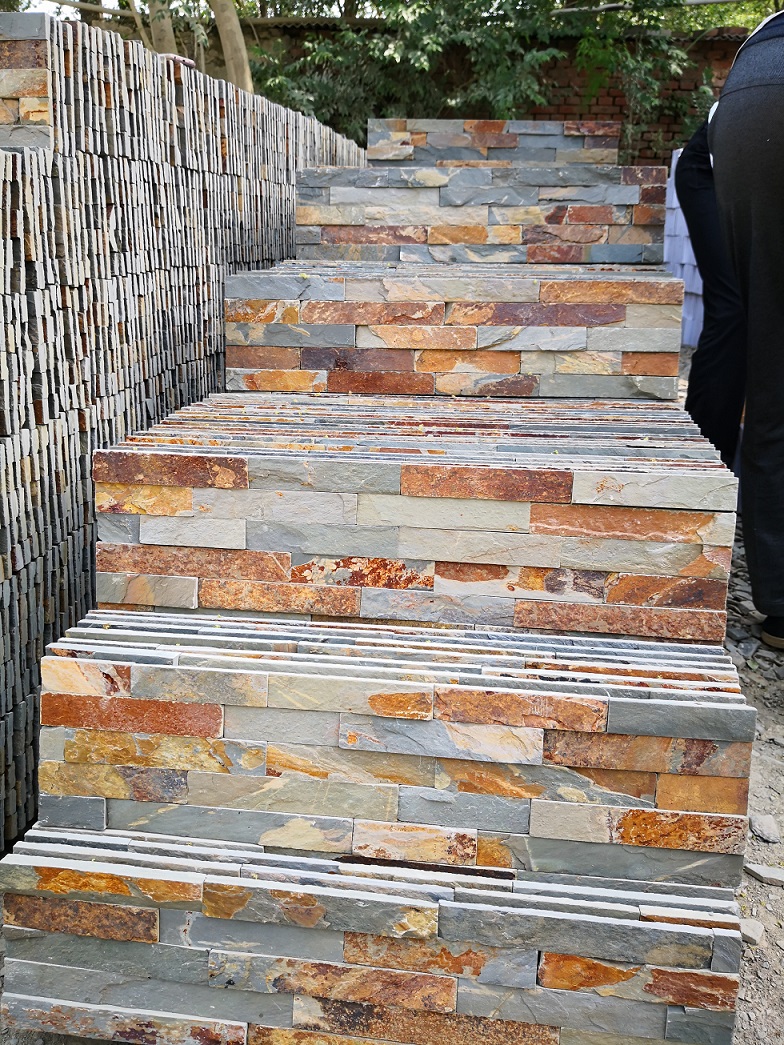
Does “Cultured Stone” Hurt or Help Your Home’s Resale Value?
Cultured stone typically raises resale value through stronger curb appeal and fast payback, but the real gain depends on product quality, installation, and local buyer expectations.
How cultured stone influences buyer perception and market value
Buyers respond to stone finishes the way they respond to clear, professional upgrades: they notice them first and they list better. A well-executed stone veneer accent—entry, lower façade, or fireplace—shortens time on market and expands the pool of interested buyers.
- Reported ROI: Recent industry data shows manufactured stone veneer delivering about a 153% return; typical project cost ≈ $11,287, average resale value ≈ $17,291 (≈ $6,000 net gain).
- Cost-effectiveness: Lighter-weight veneer reduces labor and transport costs versus full-thickness stone, improving payback and making the look affordable for more listings.
- Market recognition: Stone veneer consistently ranks among top exterior improvements in national surveys, which sets buyer expectations that add measurable value.
One important caveat: upscale buyers in luxury neighborhoods may still prefer full-thickness natural stone. Match the material choice to comparable sales in the neighborhood; if luxury buyers expect real stone, veneer can look like a compromise.
Product and installation features that determine resale impact
Resale benefit isn’t automatic. Specific product specs and installation practices drive whether the upgrade adds value or creates future liability. Below are the features that buyers, appraisers, and inspectors notice first.
- Interlocking panels (Z‑Shape / S‑Shape): Our interlocking designs use male‑female connections and “Seamless Technology” to hide vertical joints and substrate, producing a cleaner, higher‑end finish buyers equate with quality.
- Matching L‑corners: Pre‑fabricated 90° corners preserve wrap‑around texture and color, avoiding visible transitions that lower perceived quality on facades and fireplaces.
- Panel size & cutting precision: Standard panels are 6″ x 24″ (150 x 600 mm). CNC diamond‑blade edges ensure tight fits on site and a professional appearance that buyers expect.
- Weight advantage: Flat panels weigh about 30–40 kg/m² (≈ 8–12 lbs/sq.ft). Reduced weight lowers structural requirements and installation labor, which improves project feasibility and margins.
- Material control: We source from the same quarry vein to achieve ~95% hue uniformity per batch—large, consistent panels prevent patchy walls that quickly degrade perceived value.
- Durability claims: Natural stone panels offer inherent UV stability and freeze‑thaw resistance, so finished exteriors hold appearance longer and attract buyers looking for low‑maintenance homes.
- Moisture management: Panel systems are not waterproof barriers. Installers must add proper drainage planes, WRB, flashing, and recommend sealing where appropriate to protect the substrate and resale value.
- Quality assurance: Factory practices like pre‑shipment visual verification, 5‑ply reinforced export cartons, and matched corner pieces reduce on‑site surprises and protect dealer margins.
For dealers and wholesalers: emphasize those specs to builders and installers. Buyers reward consistent color, tight joints, and low‑maintenance claims. Poor detailing—missing WRB, visible seams, or mismatched corners—turns a high‑ROI upgrade into a deferred repair cost that damages resale value.

Why Professional Developers Choose Natural Stone for High-End Listings
Natural stone signals luxury, supports higher pricing and faster sales, and—when specified with same‑batch sourcing and interlocking panels—preserves long‑term resale value.
Luxury buyer expectations and measurable resale benefits
Developers pick natuursteen because buyers in high-end markets expect it. That expectation converts into measurable benefits: higher offers, shorter marketing windows, and stronger listing engagement.
- Luxury cue: Buyers expect real stone on fireplaces, kitchen islands, entry columns and premium façades—it’s a basic spec in many upscale builds.
- ROI on interiors: Stone upgrades in kitchens and baths commonly recoup 60–80% of cost at resale; select high‑end remodels can exceed 100%.
- Hardscape impact: Natural stone patios and hardscaping can add roughly 8–10% to property value and widen buyer appeal.
- Faster sales: Stone attracts discerning buyers and supports premium pricing, which shortens time on market and boosts margin.
- Bespoke appeal: Natural variation gives each home a distinct look buyers prize when they want differentiation and longevity.
Bottom line: in luxury segments stone isn’t decorative leftover—it’s a market expectation that protects price and velocity.
Product specifications that protect value: interlocking panels, same‑batch consistency, and durability
Translating market benefits into predictable outcomes means specifying the right product details. Developers choose specs that control appearance, speed installation, and reduce long‑term risk.
- Material: 100% natural stone — slate, quartzite, sandstone, granite, marble — for UV stability and long‑term color retention.
- Same‑Batch Quarry Consistency: Source each order from the same quarry vein to achieve ~95% hue uniformity and avoid patchy elevations.
- Interlocking panels: Z‑Shape and S‑Shape interlocks with CNC diamond‑blade precision create a male‑female fit that camouflages vertical joints and speeds install.
- Matching L‑Corners & prefabs: Pre‑fabricated L‑corners and project‑ready panels deliver wrap‑around continuity and cut on‑site labor and visible seams.
- Panel sizes: Standard rectangles 6″ x 24″ (150 x 600 mm) and 6″ x 22″ (150 x 550 mm).
- Thickness: Standard 1–2.5 cm; premium/rough up to 3.5 cm.
- Gewicht: Flat panels ≈ 30–40 kg/m² (8–12 lbs/sq.ft); rough panels ≈ 55 kg/m² — light enough to avoid heavy structural footing in many installs.
- Duurzaamheid: Freeze‑thaw resistant with high salinity and humidity resistance for varied climates, protecting long‑term asset integrity.
- Commercial terms developers expect: B2B factory model, MOQ ≈ 300 m² (trial/private label), lead times 10–15 days (stock) or 20–25 days (production), plus pre‑shipment visual verification to match expectations.
Specify these items up front and you cut aesthetic risk, reduce costly rework, and protect resale value across the project lifecycle.

Long-Term Asset Protection: Durability and Market Perception
Durable natural stacked stone cuts repair costs, speeds sales, and preserves resale price through weather resistance, low maintenance, and premium visual consistency.
Durability and Market Signals: How Stone Improves Resale Outcomes
Buyers and appraisers treat genuine stone as a low‑risk, long‑life material. That perception converts to measurable returns and faster closings when installations show consistent quality and proven durability.
- Countertop ROI: Granite and quartzite countertops typically recoup 60–80% of installed cost at resale.
- Veneer performance: Stone veneer upgrades often return >90% of investment and can exceed 100% in many markets.
- Property value impact: Natural stone patios and exterior stonework can add roughly 8–10% to property value.
- Sales velocity: Homes with genuine stone finishes sell faster and often command modest price premiums (studies note ~1.1% higher sale price and shorter days on market).
- Durability drivers: Stone resists UV fade, heat, moisture and freeze–thaw cycles, cutting repair frequency and long‑term maintenance spend.
- Buyer perception: Stone signals permanence and quality—especially in higher‑end neighborhoods where buyers expect premium materials.
Product Specs That Protect Value: Same-Batch Consistency, Interlock Design and Weather Resistance
Top Source Stone builds measurable resale protection into the product. The specs below explain which features reduce risk, speed installation, and preserve curb appeal across large elevations.
- Same‑Batch Quarry Consistency: Sourced from the same quarry vein to deliver ~95% hue uniformity per batch, preventing patchy appearance on large walls.
- Seamless Technology (Z‑Shape / S‑Shape): Male/female interlock camouflages vertical joints and substrate for a continuous, high‑end finish that maintains perceived value.
- CNC diamond‑blade precision: Tight tolerances ensure panels fit cleanly on site, lowering visible gaps, rework and touch‑up costs.
- Matching L‑Corners & pre‑fabricated panels: Fabriek corners provide wrap‑around continuity at transitions, shorten install time and prevent mismatched corners that hurt curb appeal.
- Material performance specs: 100% natural stone options (quartzite, slate, sandstone, granite, marble) with inherent UV stability and an explicit “freeze–thaw resistant” rating for cold climates.
- Panel dimensions & build: Standard panels 6″ x 24″ (150 x 600 mm) or 6″ x 22″ (150 x 550 mm); thickness 1–2.5 cm (up to 3.5 cm for rough/premium); typical flat panel weight ~30–40 kg/m²; rough panels ~55 kg/m²—balancing authentic stone presence with manageable structural load.
- Supply & quality controls: Direct Quarry Source model, multi‑stage inspections and pre‑shipment visual verification (photos/videos of finished crates) protect buyers from surprises and preserve consistent aesthetic value.
- HS Codes & logistics (for importers): Quartzite 6802.93.11, Slate 6803.00.90—useful when planning customs and total landed cost for resale projects.
For dealers and wholesalers: these specs reduce call‑backs, speed field installs, and protect your margins by minimizing on‑site correction and preserving the premium appearance buyers pay for.
Final Thoughts
While generic options cut upfront cost, they expose you to appraisal gaps, visible seams and higher callback liability that eat margin and damage dealer trust. Top Source Stone’s Direct Quarry Source, Same‑Batch Quarry Consistency (~95% hue uniformity), ASTM‑grade freeze‑thaw durability and interlocking Z/S panels with CNC diamond‑blade precision minimize those risks and protect resale adjustments and your reputation.
Don’t guess on finish—verify it. We recommend starting with a Sample Kit or a 300 m² trial/private‑label order, request pre‑shipment visual verification, and book a brief call with our engineering team to lock specs, lead times and pricing.
Veelgestelde vragen
Does stone veneer increase home value?
Yes. Stone veneer consistently boosts curb appeal and often delivers one of the strongest returns among exterior upgrades. Studies report manufactured stone veneer returning well over the initial cost in many markets, thanks to a high perceived upgrade at a relatively moderate installed cost. Its quick installation and versatile use—facades, fireplaces, accent walls—help projects show value fast.
Is natural stone worth the extra cost?
It can be, depending on your market and goals. Natural stone tends to perform best in higher-end or luxury markets where buyers value authenticity and longevity, and features like patios or high-quality hardscaping often add noticeable resale premium. But natural stone requires higher upfront investment and more maintenance, so match the material to buyer expectations and focus upgrades on high-impact areas for the best return.
How much value does a stone fireplace add?
A quality stone fireplace can boost resale value and listing appeal, often adding a noticeable percentage to a home’s perceived worth and helping it sell faster in the right markets. The actual uplift varies by location and property type; impact is highest where fireplaces remain a sought-after feature. Use natural stone for a focal-point that signals craftsmanship, but scale and style should match the home to avoid looking out of place.
Do buyers prefer natural or manufactured stone?
Many buyers prefer natural stone for its authenticity and long-term prestige, while others accept manufactured stone when budget and maintenance are priorities. Natural stone reads as premium and can edge resale value higher in luxury or design-driven markets; manufactured stone offers consistent appearance, lower cost and broader design flexibility. Ultimately, buyer preference depends on the target market and the overall quality of the installation.
