

Corner Unit Cost directly impacts project margins as L-shaped units raise material waste and installation time, inflating labor expenses. Underestimating these costs leads to budget overruns and compromised profitability in commercial masonry projects.
This analysis benchmarks Top Source Stone’s Direct Quarry Source stacked stone with matching L-corners, CNC diamond-blade precision, and same-batch quarry consistency. We review labor cost variables and MOQ strategies to help estimators and foremen optimize supply and installation budgets.
Why are L-shaped corner units more expensive per linear foot?
L-shaped corner units cost more per linear foot due to their complex geometry, extra materials for proper fit, specialized hardware, and increased installation and finishing requirements.
Design Complexity and Additional Material Requirements
L-shaped units need custom-cut components because their angled design differs from standard straight panels. This customization increases manufacturing complexity and material waste. They also require extra filler materials and structural elements on both sides to ensure proper alignment in corners.
Impact of Matching L-Corner Panels and Installation Factors
Górny kamień źródłowy offers matching L-shaped corner panels that synchronize color and texture with flat panels, simplifying installation. Using prefab L-corner units reduces onsite labor but demands precision manufacturing, which raises costs. These corner units often include specialized fittings and advanced hardware to maximize functionality in tight spaces. Additionally, the angled footprint reduces storage efficiency and increases the need for larger countertop slabs, further driving up expenses.
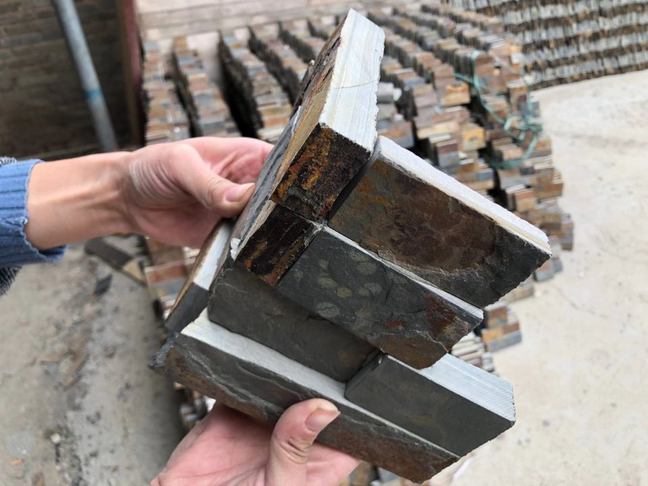
Calculating the labor cost of hand-mitering stone on site
Hand-mitering stone demands skilled labor, unpredictable stone behavior, and precise angle control, driving labor costs up significantly.
| Cost Factor | Description | Impact on Labor Cost |
|---|---|---|
| Stone Brittleness | Stone fractures unpredictably, especially at corners where stress concentrates. | Increases labor time due to cautious, slow cutting. |
| Angle Precision | Cutting two intersecting angles correctly demands experience and steady control. | Requires skilled technicians, raising hourly labor rates. |
| Wsparcie & Stability | Supporting stone slabs at corners is difficult, risking shifts and breaks during cutting. | Leads to slower work and potential rework, increasing labor hours. |
| Tool Skill Requirements | Tools vary—hammers enable faster work but demand greater skill; chisels give precision but slow pace. | Determines labor mix and length of work shifts needed. |
Understanding labor rate components
Stone hand-mitering involves experienced technicians and helpers paid at distinct hourly rates that vary by region. Skilled stone workers earn about $25 to $40 per hour, while general labor rates fluctuate from $10 to $20 per hour. Urban areas can push wages 20 to 30 percent higher than rural regions.
How to calculate labor cost for hand-mitering stone
- Fixed hourly rates: Determine rates based on skill levels and local wage data.
- Total hours estimation: Assess the number of hours required for cutting miters on the specific stone project.
- Hourly multiplication: Multiply total hours by corresponding hourly rates for technicians and helpers.
- Adjustments: Add overhead costs and regional wage differences to get a complete labor cost.
Precise timing data for hand-mitering hasn’t been standardized. Establishing production speeds or multipliers requires tracking actual job performance or consulting industry-specific benchmarks.
Premium Stacked Stone for Contractors

Material waste comparison: Standard panels vs. Corner units
Standard panels generate less material waste than corner units due to uniform shapes and cutting optimization; corner units require complex cuts that increase waste.
Understanding Material Waste in Stacked Stone Panels
Standard panels come in rectangular and interlocking shapes designed for efficient layout. Their uniform size helps minimize offcuts during installation. On the other hand, corner units are L-shaped, which increases cutting complexity and often results in more unused material. Material waste mainly results from cutting margins needed for fitting tolerances and from mismatches between panel shapes and wall dimensions. Also, sourcing panels from the same quarry vein helps reduce waste linked to color mismatches during installation.
Material Efficiency with Matching L-Corners and Interlocking Systems
Top Source Stone addresses material waste by offering matching L-shaped corner units that ensure consistent color and texture, cutting down the need for on-site adjustments. Their interlocking Z-Shape and S-Shape panels use CNC diamond-blade precision to achieve tight, consistent fits between panels and corners, reducing scrap. Using pre-made corner units removes the need for hand mitering and custom cuts, which further lowers material waste. Consistent quarry sourcing also maintains batch uniformity, minimizing discarded mismatched stone pieces.
Speed of install: How corners save 30% on labor time
Pre-fabricated corner units eliminate field cutting and fitting, cutting installation labor roughly 30% and ensuring consistent color and texture for easier alignment.
How Pre-Fabricated Corners Simplify the Installation Process
Using pre-made L-shaped corners removes the need for complex hand-cutting and on-site fitting. Each corner arrives factory-made with precise 90-degree angles, speeding up assembly. Installers save significant time by avoiding adjustments when panels meet at wall transitions. This also reduces the dependence on specialized cutting tools and highly skilled labor at the installation site.
Top Source Stone’s Matching L-Corners: Specifications That Enhance Speed
Top Source Stone provides matching L-corners for every model, sourced from the same quarry batch to guarantee exact color and texture consistency. These pre-fabricated corners ensure a seamless wrap-around finish with no need for additional trimming or patching onsite. The panels feature CNC diamond-blade precision edges that create a tight male-female interlocking connection. This precision lowers installation complexity and minimizes errors, which cuts down rework and related labor hours.
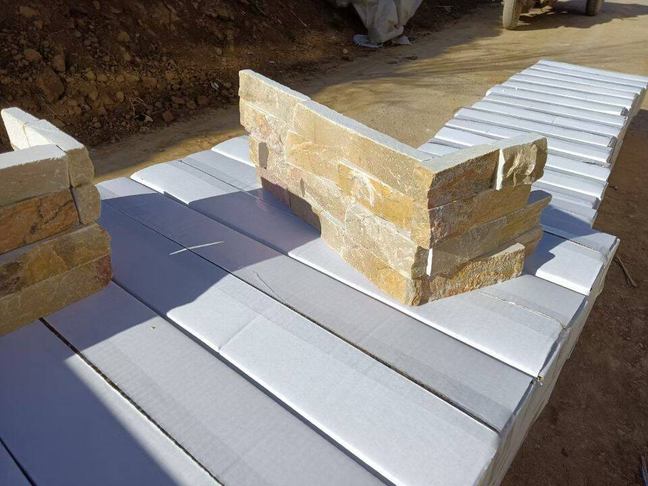
When to invest in prefab corners for commercial projects
Prefab corners fit projects needing faster installs, consistent finishes, lower labor, and less waste in commercial builds.
Benefits of Prefab Corners in Commercial Construction
Prefab corners cut down on-site labor by removing the need for complex hand-mitering and fitting. Factory-controlled production ensures consistent color and texture, which boosts visual uniformity around wall edges. Installation speed can improve by roughly 30%, which supports tighter project deadlines. Material waste goes down compared to field-cut corners, reducing overall costs. Precisely made and durable corners from controlled manufacturing last longer, ensuring quality finishes.
Matching L-Shaped Corners: Specifications and Performance
Pre-fabricated 90-degree L-shaped corners guarantee exact texture and color matching with the main panels. CNC diamond-blade precision cutting delivers tight, interlocking edges that hide joints effectively. Corners come from the same quarry vein batches to keep hue uniformity and avoid patchiness. These natural stone corners resist freeze-thaw cycles, UV exposure, and humidity, ideal for commercial environments. Using prefab corners reduces on-site adjustments, improving quality control and lowering installation errors.
Często zadawane pytania
Are corner pieces required for stacked stone installation?
No, corner pieces are not strictly required, but they make achieving a professional look easier and reduce labor. Outside corners especially benefit from prefabricated two-part finger-jointed corner systems that are quick to install without special skills.
Are stone corner units worth the extra cost?
Prefabricated stone corner units often justify their higher material cost by cutting installation labor by up to 50%. The labor savings, simpler installation, and consistent appearance usually provide a strong return on investment in both residential and commercial projects.
How do I calculate linear feet for stone corners?
Measure the height of each outside 90-degree corner and add the totals together. Account for coverage per linear foot and add 10-15% extra for waste and cuts to determine how many boxes or panels to order.
How do corner-forming machines improve production efficiency?
Corner-forming machines drastically reduce the time required to form each corner, eliminating multiple manual steps and rework. They help operators process more parts per shift and achieve consistent precision, which shortens production cycles and increases throughput.
Why is hand-cutting stone corners difficult?
Hand-cutting stone corners is challenging due to the stone’s brittle nature, unpredictable fracture patterns, and the need for precise angle control. Corners require careful support and skilled tool use to avoid breaking or uneven edges.
Final Thoughts
While generic corner solutions reduce upfront expenses, Top Source Stone’s same-batch quarry consistency and CNC diamond-blade precision ensure seamless fits and color uniformity that protect your brand reputation and reduce costly rework. Investing in our premium prefab L-corners cuts on-site labor by up to 30%, lowers material waste, and guarantees a durable, professional finish that keeps commercial clients returning. Quality inventory like ours safeguards your margins and builds long-term dealer trust in competitive markets.
Don’t settle for guesswork—start with a sample kit to verify how our natural stacked stone corners perform on your projects. Reach out to our team to explore private label options and OEM access tailored to your commercial needs. Elevate your offerings with a solution engineered for architecture and built to last.
