
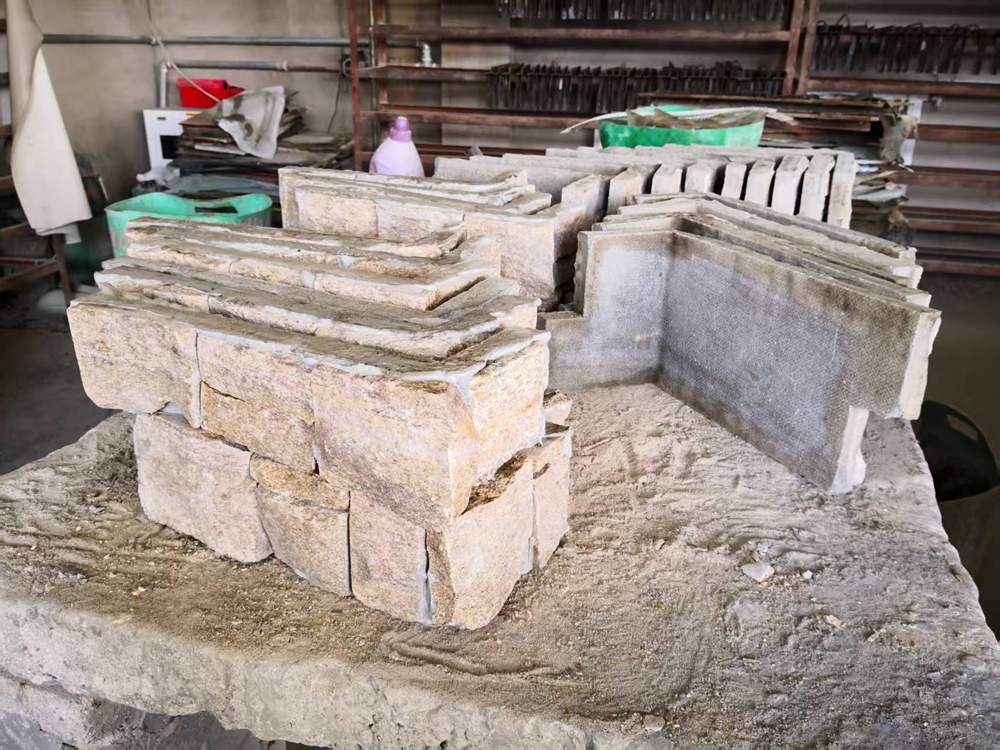
Precision Z-Panel Corners eliminate the margin-eroding labor hours required for manual on-site miter cuts. Field-fabricated corners frequently result in visible vertical gaps and structural stress points, leading to client disputes and expensive rework for contractors.
Top Source Stone employs CNC diamond-blade precision and batch-specific selection to ensure 95 percent hue uniformity across wall transitions. These units match our standard 2-3.5cm thickness profile, providing a seamless interlocking blueprint that doubles installation speed while removing the need for specialized equipment.
The Challenge of the 90-Degree Turn in Modular Masonry
Pre-fabricated L-shaped units eliminate structural stress and visible gaps at 90-degree corners, replacing complex on-site miter cuts with a seamless, factory-precision architectural finish.
Structural Stress and Joint Alignment in Right-Angle Masonry
Masonry corners naturally concentrate stress. When okładzina kamienna meets at a sharp 90-degree angle, internal compressive forces can cause the material to shift or deform. This often results in out-of-plane instability, which compromises the structural integrity of load-bearing applications.
Installers using standard rectangular units frequently encounter these technical hurdles:
- Tolerance Variations: Minor size differences between units create visible “stepped” gaps at the corner.
- Load Distribution: Maintaining proper brick bonding without specialized corner pieces makes it difficult to distribute weight evenly.
- Material Deformation: High-pressure points at right angles increase the risk of stone cracking over time.
Eliminating On-Site Miter Cuts with Pre-fabricated L-Corners
Top Source Stone manufactures matching L-Corners for every stone model in our catalog. These units remove the need for on-site miter cutting, which typically requires expensive wet saws and high-skill labor. By using factory-engineered corners, wholesalers and contractors can reduce installation time by 50% while avoiding the “zipper effect” caused by visible vertical seams.
Our manufacturing standards for L-Corners include:
- CNC Precision: We use diamond-blade edges to ensure a consistent fit and sharp, clean vertical lines.
- Batch-Specific Selection: We source stone from the same quarry vein per order to guarantee 95% hue uniformity across the transition.
- Seamless Technology: The interlocking structure conceals the installation substrate and prevents the patchy look of manual field cuts.
- Direct Logistics: We ship factory-ready corners alongside standard Z-panels to protect dealer margins and simplify project scaling.
These pre-fabricated units solve the aesthetic and structural failures inherent in traditional corner masonry. They provide a stable, interlocking blueprint that maintains color synchronization and textural depth across every wall transition.

What are Prefabricated L-Shaped Z-Corners?
Prefabricated L-shaped Z-corners are factory-assembled masonry units designed for 90-degree transitions, providing a seamless natural stone finish while eliminating on-site miter cutting.
Geometric Design and Structural Function
Standard flat panels often fail at the edges. Without a dedicated corner unit, installers struggle with the “zipper effect,” where vertical joints stack visibly and weaken the aesthetic. These pre-engineered L-shaped returns solve this by wrapping the stone around the 90-degree corner as a single, solid unit. This geometric design stabilizes the peripheral wall outline and ensures the interlocking Z-shape profile continues uninterrupted across every wall transition.
- Joint Camouflage: A “male-female” interlocking connection hides seams at the corner transition.
- Labor Efficiency: These units reduce on-site installation time by 50 percent compared to traditional hand-mitered masonry.
- Structural Alignment: The factory-set 90-degree angle prevents the misalignment and structural stress common in manual stone stacking.
CNC Diamond Precision and Material Synchronization
Top Source Stone implements strict manufacturing standards to prevent the “patchwork” look often seen in low-tier modular stone. Because we use batch-specific selection, every corner unit comes from the same quarry vein as the flat panels. This ensures 95% hue uniformity across the entire project. We use CNC diamond-blade edging to maintain consistent thickness, which allows the panels to fit tightly against the substrate without gaps.
- Standard Formats: Available in 20x55cm and 15.2x61cm dimensions to match our standard Z-panel systems.
- Thickness Calibration: Precision cutting ensures 2-3.5cm consistency for a flush, professional architectural finish.
- Thermal Resistance: We bond the stone to the cement backing using high-strength epoxy resin, making the units thermal expansion resistant in climates ranging from -30°C to +50°C.
Premium Stacked Stone for Architectural Needs
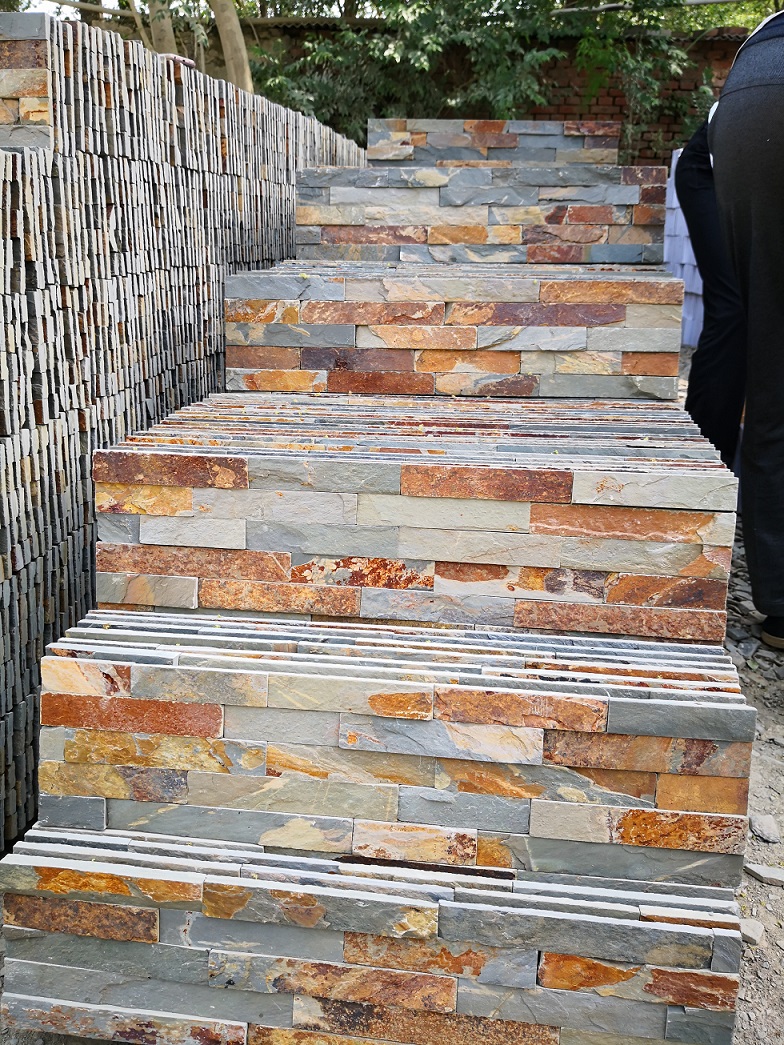
Miter Cutting on Site vs. Factory Corners: A Cost Comparison
Manual mitering offers flexibility but drains labor margins. Factory L-corners provide CNC precision and 50% faster installation, making them the standard for 2026 architectural efficiency.
| Cost Factor | On-Site Miter Cutting | Factory L-Corners |
|---|---|---|
| Installation Speed | Slow; involves double-cutting and trimming | Fast; ready for immediate placement |
| Labor Skill Level | Master stonemason required | Standard installation crew |
| Equipment Overhead | Wet saws and diamond-blade rigs | Zero specialized cutting tools |
| Material Waste | High (risk of breakage/wrong cuts) | Minimal to zero |
| Aesthetic Finish | Variable; dependent on installer | Consistent; CNC-matched batches |
Labor Intensity and Equipment Overhead in Manual Mitering
Field mitering forces installers to perform complex back-cuts using wet saws and diamond blades. This isn’t just a slow process; it requires highly skilled masons who command premium wages, which directly eats into the B2B project margin. Maintenance for these rigs also adds hidden costs that many contractors fail to account for during the bidding phase.
- Skilled Labor: Installers must execute precise 45-degree back-cuts on the textured stone face to ensure the edges meet flush.
- Equipment Maintenance: Continuous use of diamond-tipped blades on natural slate or quartzite requires frequent replacements and calibration of cutting benches.
- Production Delays: Manually cutting every corner unit slows down production rates, making it difficult to maintain modular installation workflows on large-scale commercial sites.
Maximizing B2B Margins with CNC-Precision L-Corners
Top Source Stone factory-engineered L-corners utilize CNC diamond-precision edging to create a seamless 90-degree fit. By removing the variable of on-site human error, contractors can guarantee a consistent finish across thousands of square meters. These units serve as the structural anchor for the Z-panel system, ensuring the interlocking pattern remains tight and professional.
- Immediate Installation: Pre-fabricated corners arrive ready to bond, allowing crews to bypass the cutting station and focus on wall coverage.
- Hue Uniformity: Our batch-specific selection protocol ensures that L-corners maintain a 95% color match with standard interlocking panels, preventing a patchy or “zipper” effect.
- Project Scaling: Using factory corners allows firms to meet aggressive 2026 project deadlines by doubling the daily square-meter output per installer.

How to Alternate Corner Direction for Maximum Realism?
Alternating long and short legs of L-corners creates a broken bond pattern, eliminating vertical seams and replicating authentic hand-laid masonry for high-end B2B projects.
The Staggered Joint Method for External Angles
Installers must avoid the “ladder effect,” where vertical joints stack directly on top of each other. This mistake signals a modular, fake installation. To achieve a professional finish, you rotate each L-shaped corner piece 180 degrees between courses. This simple rotation forces the eye to follow the natural stone texture instead of a repetitive seam line.
- Orientation: Alternate the long and short returns on every row.
- Visual Flow: Creates a broken bond pattern that mimics traditional dry-stack masonry.
- Layout Baseline: Set the corner first to establish the starting point for the rest of the Z-shaped panels.
- Seam Concealment: Breaks the vertical trajectory of joints to ensure they remain invisible from a distance.
Synchronizing Texture with Pre-Fabricated L-Corners
Top Source Stone manufactures matching 90-degree corners to eliminate the need for on-site miter cutting. Using factory-precision corners ensures the natural split-face finish remains intact around the bend. We provide these components to ensure the corner transition merges seamlessly into the main wall run without the sharp, artificial edges caused by hand-sawing.
- Material Sourcing: Corners are pulled from the same quarry vein as flat panels for 95% color uniformity.
- Thickness Profile: Available in 2-3.5cm or 3-4cm consistency to maintain a flush wall profile.
- Connection Type: Utilize Z-shape interlocking edges to lock the corner return into the standard panel run.
- Precision: CNC-diamond edges allow for a tight fit, keeping seams under 2mm for architectural grading.
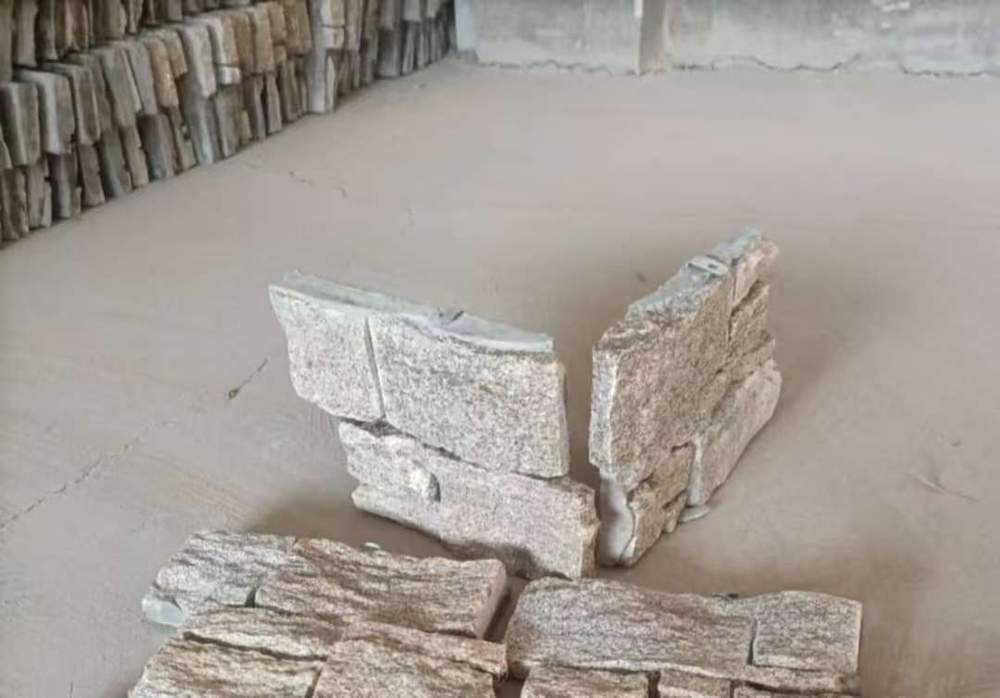
Detailing Window Returns and Door Frames with Z-Panels
Detail window and door returns using pre-fabricated L-shaped corners and CNC-precision edges to ensure seamless texture wrapping and a structural fit against the frame.
Managing Depth and Continuity at Architectural Openings
Transitioning from an exterior facade into a recessed window or door opening often exposes the panel substrate. To maintain a professional dry-stack aesthetic, the stone must wrap deep into the return without revealing the cement backing or creating artificial “stepped” gaps. This requires precise planning of the panel layout so the interlocking Z-shape pattern continues naturally around the 90-degree corner.
Return depths vary based on the window or door installation. Installers must adjust the stone placement to ensure the panel edge does not interfere with moving parts, drainage weep holes, or hardware. A weather-tight seal is critical here; we recommend leaving a 5mm gap between the CNC-cut stone edge and the frame for a high-grade sealant bead.
- Aesthetic Continuity: Aligning stone courses on the return to match the main wall height exactly.
- Structural Clearance: Trimming panels to allow for frame flashing and thermal expansion.
- Sealant Channels: Creating a clean termination point for waterproof caulking against the jamb.
Utilizing CNC-Precision L-Corners for Seamless Returns
Field-mitering natural stone on-site often leads to jagged edges and visible vertical seams. Top Source Stone eliminates this issue with factory-made, 90-degree L-Corners. These units sync perfectly with the color and texture of our flat Z-Panels because we source them from the same quarry vein per batch. This synchronization ensures the corner looks like a solid, hand-carved block of stone rather than a thin veneer.
We use CNC-diamond precision edging to provide clean, straight lines where the stone meets the door frame. This precision allows for a tighter fit, reducing the amount of visible grout or sealant needed. The interlocking design of the L-Corner wraps the texture around the opening, hiding the joint and speeding up installation by approximately 50% compared to hand-cutting every return piece.
- L-Corner Synchronization: Pre-fabricated units provide 100% color and texture matching for every window edge.
- CNC-Diamond Edging: Computer-controlled cuts create a flush, professional finish against aluminum or wood frames.
- Modular Interlock: The “male-female” connection system removes the “zipper effect” often seen in low-quality cladding.
- Labor Efficiency: Pre-made corners allow installers to maintain high production rates on complex commercial facades.
Często zadawane pytania
How should I install Z-shape stone corners for a seamless finish?
Install panels from the bottom up on a clean concrete or cement board substrate. Apply a notched layer of high-strength stone adhesive to both the wall and the panel back. Always alternate the orientation of the L-shaped corner pieces by switching long and short legs to stagger joints and prevent vertical stacking. For installations exceeding 3 meters in height, secure the panels using the integrated stainless steel clips and mechanical fasteners.
Are specific corner pieces required for external 90-degree turns?
Using factory-prefabricated L-shaped corners is the industry standard for a professional finish. These pieces utilize a male-female interlocking system that camouflages joints and maintains color consistency through batch-specific quarry selection. While you can miter standard panels, pre-made corners reduce on-site labor by approximately 50% and ensure the structural integrity of the corner transition.
What is the best method for wrapping structural pillars with Z-panels?
Apply adhesive in a zigzag pattern across the panel back and inside the interlocking fingers. Press the panel firmly against the pillar and secure it through the built-in metal clips into the substrate using screws. Tap each piece with a rubber mallet to ensure a solid bond and a minimum 5mm adhesive bed, which compensates for natural stone variations and ensures the column remains level.
Is it possible to miter cut these panels on-site instead of using corner pieces?
You can miter Z-shape panels by cutting 45-degree angles with a diamond-blade wet saw. This technique is useful for custom angles or when pre-made corners are unavailable for specific stone types. However, it requires higher precision and more time than using L-shaped pieces. If mitering, bond the edges with a stone-grade epoxy to ensure the joint remains tight during thermal expansion.
How do I maintain and protect the stone edges after installation?
Smooth any cut edges with a hand grinder or stone trimmer to remove sharp points. Once the installation is dry, apply a breathable stone sealant to protect against moisture and stains. For exterior walls, use a high-UV resistance sealer to maintain the deep charcoal or warm amber tones of natural slate and quartzite, reapplying according to the manufacturer’s specification.
Final Thoughts
Choosing factory-prefabricated L-corners eliminates the high labor overhead and aesthetic risks associated with on-site miter cutting. Our CNC-diamond precision edges and batch-specific sourcing ensure a 95% hue match that manual field cuts cannot replicate. Protecting your project margins depends on removing the technical variables that lead to “zipper effect” failures and costly installation delays.
Verify the fitment and finish of our interlocking Z-panel system by requesting a professional sample kit. We support dealers and wholesalers with 300-square-meter trial orders and private label packaging to help you scale local inventory. Contact our team today to discuss your project specifications or to receive a landed cost estimate for your next container.
