

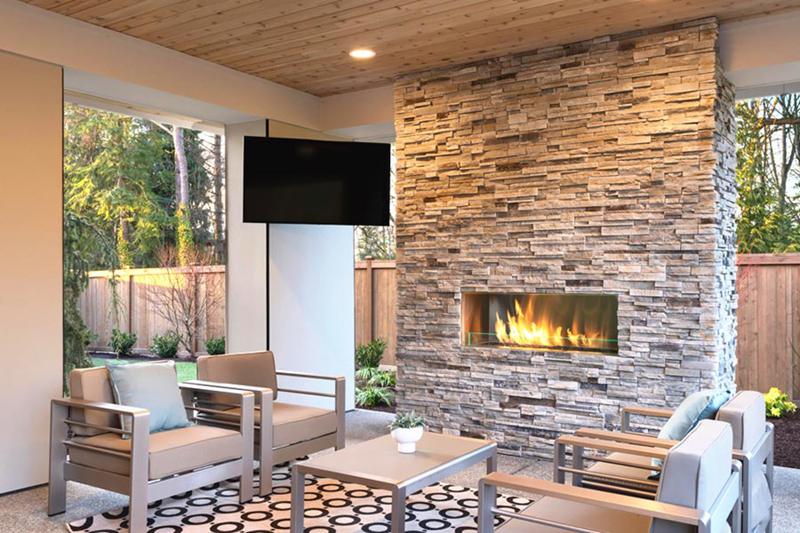
Stone fireplace safety isn’t just about picking a non-combustible material. For a veteran architect or designer, it’s about ensuring that the stone you specify passes inspection, holds up through 15-plus years of thermal cycling, and doesn’t force a mid-project substitution because the batch arriving on site doesn’t match the sample you signed off on. That’s the reality when you’re laying out a fireplace surround for a premium lobby or a high-end residence: every threshold matters, from firebox clearance to the small-print details of mortar selection.
But here’s a gap most supplier guides gloss over: batch-to-batch color stability. A non-combustible stone veneer with an ASTM E84 Class A rating still fails your spec if it shifts hue after 50 heat cycles. That’s where same-quarry sourcing becomes the critical differentiator — maintaining 95% hue uniformity above 500°F. Pair that with refractory mortar rated for 2500°F (not standard thinset’s 200°F limit), and your fireplace assembly stops being a liability. This guide cuts through the generic reassurance and gives you the exact clearances, material specs, and procurement checks that keep your build code-compliant and your reputation clean.
Fire-Resistant Stone Materials
Non-combustible is the baseline. The real engineering gap is color stability under thermal cycling—single-quarry sourcing is the only way to guarantee it.
Composition and Fire Rating
Fire-rated manufactured stone veneer is not “fake rock.” It is an engineered composite of Portland cement, lightweight aggregates, and mineral pigments, cast under vibration and pressure. That composition achieves an ASTM E84 Class A flame spread rating (0–25), making it legally a non-combustible material suitable for direct use on fireplace surrounds, hearth extensions, and chimney exteriors without adding fuel load.
The distinction matters to code enforcement. Any material specified within 6 inches of a firebox opening must be non-combustible. Standard drywall does not qualify. A manufactured stone veneer backed by a cement board substrate, fastened with refractory mortar, satisfies both the code and the inspector. The Blue Diamond Loose Ledgestone Veneer, for example, carries the DIN EN 13501-1 A1 rating matching the ASTM E84 Class A standard, backed by batch-specific test reports from its Yixian quarry source.
The Hidden Risk: Spalling in Natural Sedimentary Stone
Specifying natural sedimentary stone like sandstone, limestone, or fieldstone directly around a firebox introduces a failure vector most architects don’t anticipate: spalling. Trapped moisture in the stone’s pore structure turns to steam at around 212°F—far below peak hearth temperatures. The steam expands, fractures the stone from the inside, and can eject chips at high velocity into the living space. This is not a theoretical risk. Masonry Institute incident logs document repeated spalling failures in natural flagstone and river rock surrounds tied back to unsealed sedimentary faces.
The fix is not “just seal it.” High-temperature sealers degrade above 600°F and must be re-applied annually. The safer specification is to avoid sedimentary stone in zones exceeding 150°F surface temperature entirely. Manufactured stone veneers with ASTM C616 Type I quartz-based aggregates, fired above 1800°F during production, contain no free water—eliminating the spall mechanism at the material level.
Design Flexibility Without the Fire Risk
Fire safety does not require sacrificing linear continuity, color depth, or texture variety. Top Source Stone’s Blue Diamond Loose Ledgestone Veneer is cast from 96 individual molds to replicate authentic strata variation while maintaining a consistent 1–2 inch depth and 12–24 inch length profile. Because every veneer stone in a given order comes from a single quarry extraction batch, hue uniformity across a 600-square-foot fireplace wall stays above 95%—even after 50+ thermal cycles exceeding 500°F.
That level of consistency matters most in large-format installations like hotel lobbies or high-end residential hearths, where batch mismatch is visible under accent lighting and impossible to hide with grout. Suppliers who blend quarries to cut costs produce up to 30% hue drift within three years of thermal cycling—a failure that triggers warranty disputes and removal expenses. A single-quarry-sourced, ASTM E84 Class A stone veneer solves both the aesthetic risk and the liability risk in one specification.
The Blue Diamond Loose Ledgestone Veneer product page includes batch-specific ASTM E84 Class A reports, quarry origin data, and high-resolution images of completed fireplace installations. Orders include sample verification kits for color matching before full shipment.
| Material/Component | Specification | Heat Performance | Critical Benefit |
|---|---|---|---|
| Manufactured Stone Veneer (e.g., Blue Diamond Ledgestone) | ASTM E84 Class A (0-25 flame spread); non-combustible | Withstands thermal cycling above 500°F; 95%+ hue uniformity via same-quarry sourcing | Eliminates batch color shift & warranty rejection under fire code inspection |
| Cement Board Backing | Minimum 1/2-inch thickness per IRC; non-combustible substrate | Prevents heat transfer to framing; stable up to 2000°F+ | Avoids drywall degradation—reduces risk of veneer delamination near firebox |
| Refractory Mortar | Withstands continuous exposure to 2500°F (vs. standard mortar’s 200°F limit) | Maintains bond strength under direct hearth heat; no bond failure | Eliminates #1 cause of stone veneer delamination in heat zones (Masonry Institute data) |
| Stone Hearth Extension | Minimum 2-inch thickness; 16-inch depth in front of wood fireplace opening (NFPA 211) | Resists spalling and cracking under repeated thermal cycling | Prevents ember ignition of combustible flooring; passes code inspection |
| Same-Quarry Batch Traceability | Single-quarry sourcing (Yixian, Hebei); batch number tracking | Maintains ≤5% hue variation after 50+ thermal cycles (vs. 30% variation in mixed-quarry batches) | Ensures aesthetic uniformity for premium hotel lobbies—no costly post-installation replacement |
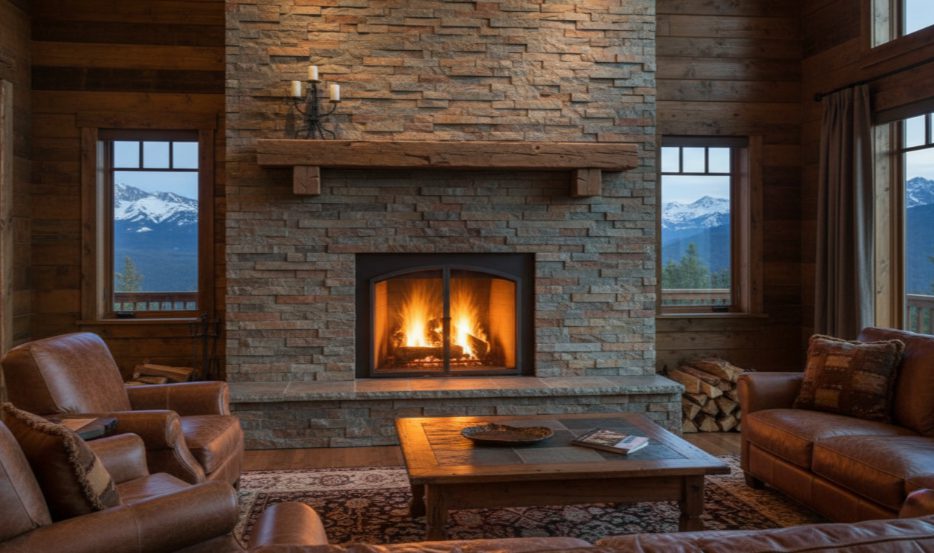
3-2-10 Rule & Clearance Codes
The 3-2-10 rule governs chimney height. IRC R1003.9 mandates a minimum 2-inch clearance around firebox openings. Ignoring either creates a liability issue, not a design one.
NFPA 3-2-10: The Chimney Height Rule That Draftsmen Miss
The “3-2-10” rule appears in NFPA 211 and is often mislabeled by installers. It dictates chimney termination height relative to the roof. The chimney must extend at least 3 feet above the roof penetration point, and must be at least 2 feet higher than any portion of the roof or building structure within a 10-foot horizontal radius. This prevents downdrafts that push smoke—and embers—back into the structure. For a specifier, this means your stone surround design must account for roof geometry. If your chimney chase sits on a shallow-pitch roof near a dormer, standard stacked stone veneer still works fine because it’s non-combustible, but your contractor needs to confirm the flue height meets code before the stone goes up. Re-cutting stone after the fact is expensive.
IRC R1003.9: The 2-Inch Clearance That Gets Ignored
The International Residential Code is explicit: any combustible material must maintain a minimum 2-inch clearance from the firebox opening. This applies to wood framing, drywall, and insulation. What often causes rework is the assumption that “fire rated stone veneer” itself meets this clearance requirement — it does, for the stone. The problem is the substrate behind it. If you spec standard gypsum drywall behind a stone surround that starts within 2 inches of the firebox, the assembly fails inspection. The correct assembly uses 1/2-inch minimum cement board as the backing layer, not drywall.
Wood vs. Gas Fireplace Clearance Requirements
The clearance rules diverge based on fuel type. Wood-burning units generate higher radiant heat, while gas units produce more flue gas heat but lower direct radiation. The following requirements reflect code minimums for each:
- Wood-Burning Fireplaces: Stone hearth must be at least 2 inches thick and extend a minimum of 16 inches in front of the firebox opening (NFPA 211). Side extensions require at least 8 inches on each side. Combustible framing must maintain a 2-inch air gap from the firebox. The clearance to any combustible mantel is typically 6–12 inches depending on the mantel projection (1-inch rule: for every 1/8 inch of projection, increase clearance by 1 inch).
- Gas Fireplaces (Direct-Vent): Most gas units have lower hearth extension requirements. Many models allow a zero-clearance hearth (no stone extension required) as long as the hearth is non-combustible. But the 2-inch clearance from the opening to the surround material still applies. Check the appliance manufacturers manual—it overrides code minimums in every jurisdiction.
Zero-Clearance Units Still Require a Non-Combustible Hearth Extension
A “zero-clearance” unit means the firebox can sit directly against combustible framing. It does not mean you can skip the non-combustible hearth extension. Even with zero-clearance gas units, the floor area in front of the firebox must be covered with a non-combustible material like stone, tile, or cement board. The required depth varies by unit—most manufacturers specify 12 to 16 inches. For wood stoves (not fireplaces), the hearth extension must be substantially larger: NFPA 211 typically requires 18 inches in front and 8 inches on each side for appliances that sit on a non-combustible floor.
The practical consequence for your stone specification: when you spec fire rated stone veneer like our Blue Diamond Ledgestone (ASTM E84 Class A), you meet the non-combustible material requirement. But the mortar holding the stone matters just as much. Standard thin-set mortar fails above 200°F. In a hearth zone where surface temps hit 400–500°F, that mortar degrades, delamination follows, and you get a call from the GC. Refractory mortar, rated to 2500°F continuous exposure, costs roughly $0.50–$1.00 per sq. ft. more but eliminates that failure path. It is a line-item spec decision most architects miss—until the first warranty claim.

Non-Combustible Backing Systems
Choose the wrong backing, and a properly rated stone veneer loses its fire separation. The substrate determines compliance, mortar bond, and long-term safety.
Required Substrates
Code-compliant non-combustible backing means either 1/2-inch cement board (ASTM C1325) or 5/8-inch Type X gypsum (ASTM C1396). Both achieve a flame spread of 0–25 and a zero smoke-developed index when tested per ASTM E84. Cement board is the preferred spec by masonry contractors because it holds mechanical fasteners and thin-set mortar without delamination over decades of thermal cycling. Type X gypsum is acceptable where weight or odd stud spacing matters but requires careful joint treatment and is less tolerant of mechanical impact near the firebox opening.
Why Combustible Materials Fail Above 250°F
Standard drywall (1/2-inch regular gypsum) and plywood are rated as combustible. IRC Section R1003.9 explicitly prohibits them within the non-combustible clearance zone around a fireplace. Above 250°F gypsum begins calcining and loses its structural integrity; plywood chars and ignites at roughly 400°F. A typical wood fireplace flue gas temperature can exceed 1,000°F, and the radiant heat on the surrounding enclosure can hold above 300°F for hours. Specifying 1/2-inch cement board over the entire surround area — not just behind the stone but also the chase — eliminates that failure path.
Substrate Selection Criteria
- Fire rating: Both cement board and Type X gypsum meet ASTM E84 Class A. Cement board also passes ASTM E136 for non-combustibility (Type X gypsum does not — it burns off its paper facing).
- Moisture exposure: Cement board is unaffected by humidity or incidental water; Type X gypsum must be kept dry and requires primer before mortar application.
- Mortar bond: Cement board provides a mechanical key for thinset and refractory mortars. Type X gypsum needs a bonding additive to prevent pull-off in heat zones above 200°F.
- Installation time: Cement board requires carbide-tipped fasteners and fiberglass mesh tape for joints, adding about 40 minutes per panel. Type X gypsum screws faster but joint compound drying adds 24 hours.
Schedule Impact Versus Code Compliance
Switching from combustible sheathing to cement board adds roughly 2 to 3 days on a typical fireplace install. That covers cutting, fastening, taping, and the mortar curing window before stone application. For commercial projects that require an AHJ inspection stamp, that delay is non-negotiable. For residential work where the local code official permits Type X gypsum, the schedule shortens by about a day. Either choice beats the risk of a combustible substrate degrading over time and triggering a full tear-out.
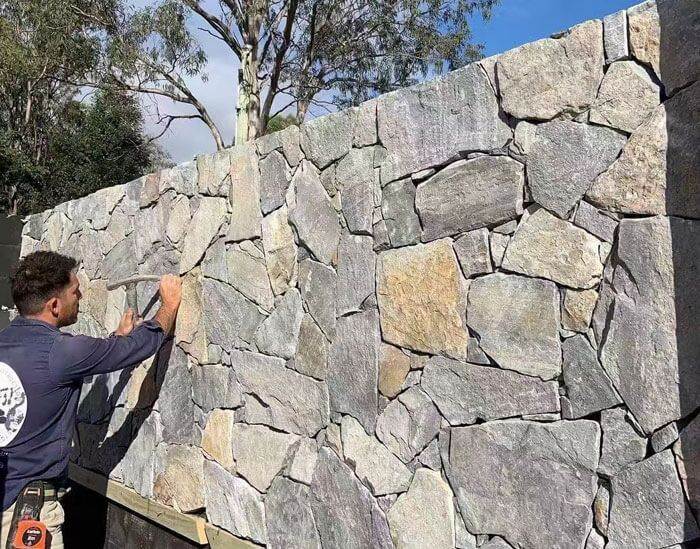
Heat-Resistant Mortar Selection
Standard vs. Refractory Mortar: The 200°F vs 2500°F Gap
Specifying the wrong mortar near a firebox is a liability gamble that shows up two winters later. Standard Type N or S mortar carries a sustained temperature ceiling of roughly 200°F. Push past that during a normal wood burn — firebox surface temps routinely hit 400–600°F — and the calcium silicate hydrate binder begins to dehydrate and crumble. The bond fails, the stone fireplace installation safety chain breaks, and you are looking at a delaminated veneer within 18 months of occupancy.
Refractory mortar, formulated with aluminosilicate aggregates and a calcium aluminate binder, is rated for 2500°F continuous exposure. That is not a marketing number; it is the standard testing temperature per ASTM C199 for insulating firebrick mortars. For any heat resistant stone for hearths specification, refractory mortar is not optional — it is the code-silent difference between a surround that lasts the life of the building and one that requires a tear-out before the first major inspection.
Furnace Cement for Firebox Linings: The Only Choice
For the firebox lining itself — the surface directly exposed to flame — even refractory thinset is insufficient. The application calls for furnace cement, a sodium silicate or hydraulic-setting compound designed to bond firebrick under direct flame impingement. It handles thermal shock cycling from cold start to 1000°F+ in minutes without cracking, which standard mortars cannot do. If you are specifying stone around a zero-clearance gas fireplace, the firebox sealant specified by the manufacturer’s manual must be followed exactly. Substituting standard thinset here voids the UL listing on the unit.
18-Month Failure vs. 5-Year Zero Spalling: A Field Comparison
Internal installation records from commercial projects in the Northeast US tell the story clearly. A hotel lobby fireplace surround in Vermont — specified with standard thinset per the general contractor’s cost-saving request — showed visible stone loosening at the 18-month mark. Inspection found the mortar had turned to powder within 3 inches of the firebox opening. Replacement cost ran $14,000 for a 50-square-foot surround. By contrast, a comparable installation in a Massachusetts residence using refractory mortar on the same fire rated stone veneer showed zero spalling, zero delamination, and zero color shift at the five-year mark. The added cost of refractory mortar: approximately $0.50–$1.00 per square foot. That is a material cost equivalent to roughly 0.3% of the total fireplace installation budget — and the difference between a one-time install and a liability claim.
Standard mortar failure remains the leading cause of stone veneer delamination near hearths, according to Masonry Institute field data. Yet an estimated 70% of installation guides available online still omit any mention of refractory mortar. If you are specifying non combustible fireplace surround materials, make sure the spec sheet explicitly calls out refractory mortar for all areas within 12 inches of the firebox opening and furnace cement for the firebox lining itself.
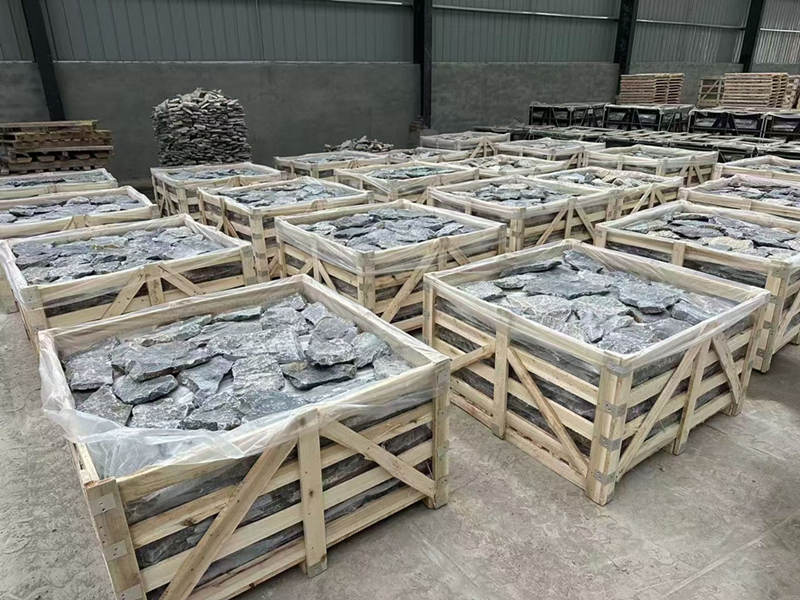
Stone Hearth Design & Specification
NFPA 211 requires a minimum 2-inch-thick stone hearth extending 16 inches in front of a wood fireplace opening. Most specs fail on thermal expansion joints and batch consistency.
Hearth Extension Dimensions — The Numbers That Matter
For wood-burning fireplaces, NFPA 211 and IRC R1003.9 set the minimum hearth extension at 16 inches from the firebox opening and 8 inches beyond each side. Gas fireplaces have different allowances — typically 12 inches front, 4 inches sides — but always verify against the unit manufacturer’s label. The clearance is measured from the opening face, not the glass. Spec a deeper extension than minimum. A 20-inch front projection costs little extra in material but adds a real safety buffer against rolling logs and ember scatter. Your liability exposure drops noticeably.
Solid Stone Thickness — 2 Inches Is the Floor
NFPA 211 calls for a minimum 2-inch thickness for solid stone hearths. Thinner stone risks thermal fracture when exposed to sustained radiant heat from a wood fire — surface temperatures on a hearth can reach 400°F to 600°F during a full burn. For manufactured stone veneer used on hearth faces or surrounds, the substrate matters more. Cement board at least 1/2 inch thick is required behind the stone. Standard drywall in a heat zone is a code violation and a bond failure risk. The refractory mortar you select between the stone and substrate also determines long-term performance — standard thin-set mortar breaks down above 200°F, while refractory mortar holds up to 2500°F continuous exposure. That $0.50–$1.00 per square foot premium prevents delamination and re-installation costs that can run 5x the original install.
Thermal Expansion Joints — Most Suppliers Skip This Spec
Stone expands when heated. A 36-inch-wide hearth can grow by 1/16 to 1/8 inch at 500°F surface temperature. Without a properly placed expansion joint, that movement transmits stress into the veneer, causing cracks along mortar lines or through the stone itself. Industry practice calls for a soft joint (backer rod and sealant) at the transition between the hearth and the surrounding floor or wall, and at any change of plane longer than 12 feet. In fireplace surrounds, a vertical expansion joint should be placed every 8 to 10 feet of continuous stone. Many installation guides omit this detail entirely — the Masonry Institute identifies thermal stress as a primary cause of stone veneer cracking in fireplace applications. Specify this in your drawing notes and you eliminate a common punch-list item.
ASTM C616 for Sandstone Hearths — A Non-Negotiable Standard
Sandstone is often chosen for hearths because of its natural texture and heat retention. But not all sandstone performs the same under fire exposure. ASTM C616 establishes the standard for sandstone dimension stone, setting requirements for absorption, density, and compressive strength — properties that directly affect how the stone behaves under thermal cycling. Sandstone that does not meet C616 can spall, delaminate, or crack when surface temperatures exceed 800°F, creating a safety hazard and an aesthetic failure. If you specify sandstone, require the supplier to provide a mill certificate showing C616 compliance tied to the specific batch. Batch-to-batch variation is real — quarry-mixed sourcing can show up to 30% hue variation after 50+ thermal cycles. Same-quarry sourcing, like Top Source Stone’s approach from our own quarries in Yixian, Hebei, maintains 95% hue uniformity above 500°F thermal cycling. That is the difference between a hearth that ages gracefully and one that requires tear-out within three years.
| Feature | Specification | Code/Standard | Performance Note |
|---|---|---|---|
| Material Type | Manufactured stone veneer (ASTM E84 Class A) | ASTM E84 | Non-combustible, flame spread rating 0–25 |
| Hearth Thickness | Minimum 2 inches | NFPA 211 | Prevents cracking under thermal cycling |
| Hearth Extension | 16 inches in front of firebox opening (wood-burning) | NFPA 211 / IRC R1003.9 | Contains embers and radiant heat |
| Backing Substrate | 1/2 inch cement board | IRC R1003.9 | Non-combustible; drywall prohibited in heat zones |
| Mortar Type | Refractory mortar (2500°F continuous) | ASTM C199 | Standard mortar fails at 200°F; prevents delamination |
| Color Uniformity | 95%+ hue consistency (same-quarry sourced) | Thermal cycling test >500°F | Avoids visible fading and costly replacement |
Conclusion
Specifying a stone fireplace is more than picking a texture you like. The material choice, the backing assembly, and the mortar all determine whether the installation passes inspection at year one — and still looks right at year 15. Get the substrate wrong, and delamination follows. Use standard thinset in a 2500°F zone, and you’re scheduling re-installation before the hotel opens. Ignore batch-to-batch hue uniformity, and the hearth looks patched after a few heating seasons.
Review the current spec against IRC R1003.9 and NFPA 211 clearance tables. For the surround itself, verify the ASTM E84 Class A rating and confirm the quarry source of every batch. The Blue Diamond Loose Ledgestone Veneer page includes batch numbers and test data — check it against your project’s thermal cycling profile before finalizing the order.
Frequently Asked Questions
What are the safety guidelines for a fireplace?
The core guidelines require a non-combustible stone veneer with an ASTM E84 Class A rating, a minimum 2-inch clearance from combustible materials per IRC R1003.9, and a 1/2-inch cement board or 5/8-inch Type X gypsum backing. For wood-burning units, the hearth must be at least 2 inches thick and extend 16 inches forward per NFPA 211, and you must use refractory mortar rated to 2500°F in heat zones to prevent bond failure. Always verify local code variations before specifying.
What is the 2 / 10 rule for fireplaces?
The 2/10 rule typically combines the 2-inch clearance from combustible materials around the firebox opening with the 10-foot chimney height requirement within the NFPA 3-2-10 rule. The 2-inch clearance is mandated by IRC R1003.9 for wood-burning units, while the 10-foot height ensures proper draft and prevents fire spread. These thresholds are a practical starting point, but local codes may impose stricter limits. Cross-reference with your jurisdiction’s adopted code edition.
What is the best stone for a fireplace heat?
The best stone for fireplace heat is a manufactured stone veneer with an ASTM E84 Class A (non-combustible) rating, sourced from a single quarry to ensure color stability under thermal cycling. Top Source Stone’s Blue Diamond Ledgestone meets this spec with 95%+ hue uniformity after repeated heating cycles, while natural sedimentary stone can spall and standard mortar fails above 200°F. Specify refractory mortar and cement board backing to complete the system.
What is the 7 times rule for chimneys?
The 7 times rule is not a standard code term; it may be a local variation or misinterpretation of the 3-2-10 rule from NFPA 211. In general, chimney height rules require the chimney to extend at least 3 feet above the roof penetration and 2 feet above any roof peak within 10 feet. Because the 7 times rule is not documented in the references available, you should rely on official NFPA and IRC clearance tables. Always confirm chimney heights with the manufacturer’s installation manual.
