


Negotiating Multi-SKU Stacked Stone Orders: How Distributors Reach Pallet-Level MOQs Without Losing Factory-Direct Economics
Short answer: a one-container-per-color MOQ is a production-run floor, not a law. A real stacked stone manufacturer will build you a catalog of eight to ten colors inside a single mixed container, because mixing amortizes the setup cost that makes a small run expensive. Pallet-level MOQs for a brand-new custom color are a different story: they are usually priced as a trial run, not factory-direct, and the honest path is a mixed container of your whole catalog for the first order, then single-SKU replenishment once a color proves itself. What you give up when you push MOQ down is a small price premium, a longer lead time on the smallest colors, and more responsibility for batch continuity across a mixed load. The negotiation that works specifies container count, pallet count and SKU mix in the same sentence, and asks the factory to quote the three together.
Most distributors adding stacked stone veneer to a regional catalog hit the same wall. Every color you want to stock comes back priced as if you must buy an entire container of it, which turns a reasonable ten-SKU launch into a capital trap. The factories are not being unreasonable; a single-color production run carries setup and changeover cost, and one container is the smallest batch that spreads it acceptably. The problem is that the default quote optimizes the factory’s line, not your sell-through. This article is the negotiation method for a distributor: how to get a real manufacturer to build a mixed-SKU program, what pallet-level MOQ actually costs you, and how to keep the small colors from becoming the margin leak that ends the category.
Understand What the Container Minimum Is Really For
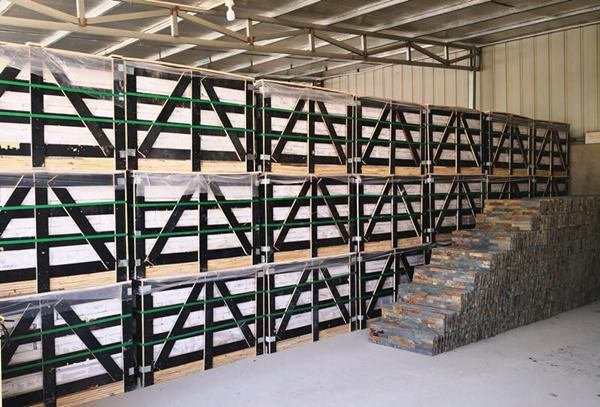
The container-per-color figure exists because natural stone is cut, split, backed and packed by color and batch. When a line stops for one color and restarts for the next, someone pays for the downtime, the re-calibration and the leftover partial pallets. A full container is the unit at which that cost stops mattering, so factories quote it as a clean default. Read correctly, the MOQ is not a minimum you must buy; it is the quantity at which the factory can give you its best price. That reframing is the whole negotiation. You are not arguing that the factory is wrong; you are asking it to solve the changeover cost for you by grouping SKUs instead of forcing each to stand alone.
The production-cycle logic behind this is covered in our lead-time and MOQ production-cycle guide, which works through how custom orders and seasonal peaks stretch delivery. The difference here is that a catalog launch multiplies the SKU count instead of the size of one SKU, and the answer is not a bigger order but a smarter container.
Build the First Order as One Mixed Container, Not Ten Small Ones
The realistic multi-SKU structure is a single mixed container holding eight to ten colors, each at two to four pallets. This is the arrangement most Chinese veneer factories will accept without drama because it fills the box, spreads the setup across SKUs, and lets you launch the catalog with a balanced quantity of every item. To make it work, the SKU list, the pallet allocation per SKU, and the container plan go into the same request. A quote for “ten colors, mixed container, two to four pallets each” is a specific, buildable order; a request for “ten colors at pallet quantity, each as its own run” is the one that triggers the container-per-color answer.
Packing and cube math start to matter here in a way they do not on a single-color load. A mixed container means multiple batch labels, multiple carton types, and a loading plan that keeps like colors together so the receiving warehouse can split the box. Our 20-foot container load-optimization guide walks through payload and cube so a mixed-SKU container arrives complete rather than short. Lock the packing dimensions with the factory before the first order so your store racks and the batch split are planned, not discovered at the door.
What a Pallet-Level MOQ Genuinely Costs You
When you push below the mixed-container floor to a true pallet quantity on a single color, three things move against you, and the negotiation is only smart if you can see all three. First, price. A pallet of a brand-new color is a trial run, and a factory that quotes it at factory-direct container pricing is either padding elsewhere or planning to fold it into another customer’s run later; the honest trial price carries a premium, and that premium is the cost of not guessing whether the SKU sells. Second, lead time. Small colors queue behind full runs, so the pallet quantity you asked for arrives slower and often on a different vessel than the rest of the program. Third, continuity. The smallest colors are the ones most likely to change quarry lot or disappear between seasons, which is exactly the risk a catalog cannot absorb once a color is on a customer’s approved list.
None of that means pallet-level MOQ is impossible. It means the right ask is pallet-level quantity at a stated trial price with a stated re-order date, so the factory can schedule the small color into a batch it is already running and you are not paying for a dedicated setup. Pair the first-order sample system with the launch so each SKU has an approved range of tone and thickness before it enters replenishment; our guide to the B2B wholesale sample program covers how to lock approved ranges against a live batch.
Convert the MOQ into a Replenishment Agreement, Not a One-Time Concession
The mistake that re-creates the problem in month six is winning a mixed first order and then negotiating every replenishment from scratch. The colors that sell turn into single-SKU container buys, which is fine, but the slow colors turn back into the pallet MOQ fight, and this time you need them in stock because a customer has approved them. Build the catalog order around a standing structure: fast SKUs reorder at container, slow SKUs reorder into a shared mixed container at a planned cadence, and the factory knows both in advance so it can plan the changeover windows instead of reacting to spot requests.
Put the SKU mix, the reorder cadence and the price tiers for each in the same document, and let price move by quantity band rather than by the size of each individual conversation. The natural-stone trade association publishes technical guidance on product consistency and batch handling that your specification can reference when you need a neutral standard behind the tone-and-thickness limits, available at naturalstoneinstitute.org. That external anchor is what lets a distributor insist on continuity across a mixed program without turning every reorder into a subjective argument.
Protect Against the Real Failure Mode, a Half-Live Catalog
The worst outcome of a ten-SKU launch is not the MOQ; it is discovering a year later that three colors were never truly manufactured, only sampled, and cannot be re-ordered. A mixed container makes this easy to miss because the small SKUs look like the big ones at delivery. Require, in the order, a batch record per SKU that names the lot, so when you reorder a slow color six months later you can ask for the same lot or the approved range against it. Treat the container plan and the batch plan as one deliverable.
Ask each prospective factory the same three questions before committing: can you build a mixed container to this SKU and pallet list, at what price bands, and can you commit the same lots on reorder. A manufacturer answers with numbers and a loading plan; a trading company answers with a sample and a promise. That distinction is developed in our guide to choosing between a manufacturer and a trading company, and it is the same test that protects a multi-SKU program from quietly becoming ten half-colors on a shelf.
Conclusion: Negotiate the Container, Then Negotiate the Cadence
The path from container-per-color to a live ten-SKU catalog is a mixed first order, an honest pallet-level trial price on the colors you have not proven, and a standing replenishment structure so the slow SKUs never force the MOQ argument again. What you trade is a modest premium and more batch-tracking work, not the factory-direct price you are trying to protect, and the distributor who names SKU count, pallet allocation and reorder cadence in one document reaches pallet-level quantity with a manufacturer’s real economics instead of a sample-room illusion. The catalog problem is solvable in the first conversation, but only if you bring the container plan to it.
Frequently Asked Questions
Will a real manufacturer mix SKUs in one container?
Most genuine veneer factories will, because a mixed container amortizes the setup cost that makes single-SKU minimums expensive. The realistic first order is one container split across your catalog at a few pallets per color, not one container per color.
Why does a pallet quantity cost more than my container price divided down?
Because a small color is a dedicated setup, not a fraction of a big one. The premium is the changeover cost. The way to reduce it is to schedule the small color into a shared container or a batch the factory is already running, with the re-order planned in advance.
How do I keep slow SKUs from disappearing after launch?
Require a per-SKU batch record at the first order, tie reorders to that lot or its approved range, and build a standing reorder cadence so the factory plans the small colors instead of treating each as a spot request.
