


Fire Pits, Pool Decks and Natural Stone: Specifying Flagstone for Heat and Wet-Deck Safety
Short answer: two different physics decide whether flagstone around a fire pit or a pool deck is a good install or a callback job. At the fire pit the risk is thermal shock in porous stone, so the spec is about water absorption, bedding-plane cracks and distance, with dense stone, sealed or capped, set behind a heat-resistant ring rather than ordinary patio sandstone run flush to the bowl. At the pool deck the risk is slip performance when wet, so the spec is about surface finish, wet-test numbers and sealer choice, with cleft or thermal textures and no smooth-sawn faces, because a film-forming sealer on a barefoot deck is a hazard. Neither risk is solved by the word “natural”: specify the measurable property, not the marketing name, and put the number in the contract.
Contractors get the same two conversations every season. A homeowner wants the patio’s sandstone carried right up to the fire bowl because it looks continuous, and a pool-deck client wants a sleek honed surface because it photographs beautifully, right where bare feet and chlorine live. Both are reasonable wishes and both fail in specific, predictable ways. This article gives the specification logic that keeps the look and removes the failure: what heat actually does to stone, what water and chemistry do underfoot, and the numbers a contractor can require from a supplier so the job stays out of the callback pile.
Fire Pits: The Risk Is Water and Shock, Not Maximum Heat
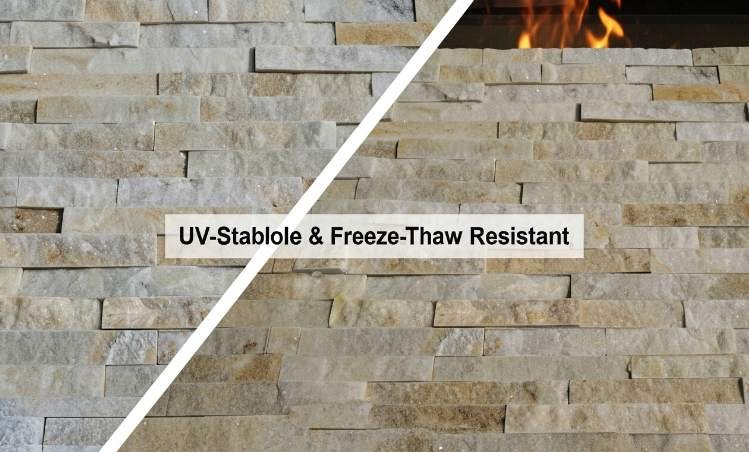
Natural stone does not burn, and the pit itself will not ignite the paving. The damage mechanism is narrower. A stone with moisture in its pores, or loaded with trapped water from rain or a wet base, heated unevenly from one side develops a steep temperature gradient, and the expansion mismatch drives spalling, where faces pop off, or opens hidden cracks along the bedding planes of a cleft product. Sandstone is the classic failure because its porosity varies piece to piece within one pallet, and a piece that survived the patio will not survive sitting twenty centimetres from a flame. Dense, low-absorption stones, the quartzites and granites at the top of the range, tolerate radiant heat far better because less water lives inside them to flash to steam.
The practical spec has three parts. First, distance and a buffer zone: keep the porous field stone away from direct flame exposure and put a ring of the densest, thickest pieces, or a purpose-made heat-resistant surround, between the bowl and the paving; the gap is a design feature, not a defect. Second, stone qualification: require the supplier’s water-absorption data for the actual batch, not the product family; absorption is the number that predicts thermal-shock risk, and the test method behind it, ASTM C97, is explained in our guide to ASTM C97 water absorption for natural stone. Third, moisture control at the edges: a pit ring that lets rain and splash pool under the stones keeps the pores loaded and hands the thermal shock back every season, which is why the pit detail belongs in the same drainage conversation as the whole patio surface.
Grease, Cleaning and the Fire-Pit Detail That Fails First
The outdoor-kitchen side of the same job fails for a second, quieter reason: grease and cleaning chemistry. Sandstone and other porous stones stain permanently where oil or fat sits, and a degreasing wash that lifts a stain can lift the sealer unevenly and leave a blotch that reads as damage. If the grill line is going to get cooked on, specify a dense, low-porosity stone there, sealed with a penetrating impregnator that leaves no surface film, and write the cleaning rule into the handover: pH-neutral cleaner, no acid, no steam, no pressure washer. The same sealer logic that protects a restaurant feature wall protects the grill island, and our sealing guide for stacked stone covers how to check whether the sealer is still doing its job before the stone, not after.
One more callback source at fire pits deserves naming: thermal staining of light stone around the ring, where smoke and soot bond into a cleft face. Clients accept this as patina when they expected it and as neglect when they did not. Put a one-line note in the proposal that the ring area will weather differently from the field, with a photo example if the supplier has one. A written expectation at signing costs nothing; the same sentence delivered after a complaint arrives costs a free repair.
Pool Decks: Specify Wet Friction, Not a Color
Pool-deck slip risk is measured, not felt, and the contractor who does not carry a number into the spec is the contractor who gets argued with after an accident. The industry method is the dynamic coefficient of friction (DCOF) test under wet, level conditions, developed through tile-industry research and now the reference point for evaluating surfaces that will be walked on wet. Smooth-sawn and honed bluestone faces, polished finishes and film-forming sealers all drag a wet DCOF down, sometimes below the thresholds that manufacturers and safety bodies consider acceptable for level wet areas, while natural-cleft, thermal and flamed textures generally hold friction far better. The specification is simple in statement and honest to require: the delivered product, in its actual finish, must meet the wet DCOF target the project sets, demonstrated by the supplier’s test data for that finish, not a general claim about stone.
Two details multiply or dissolve the test result. Texture direction matters: a cleft face is slip-resistant when the roughness reads across the footfall, so laying a cleft surface with its natural grain toward a splash line can create a plane that sheds friction, and the crew should see the mock-up inspected wet before the full field runs. And the sealer matters: a penetrating impregnator reduces water uptake without a surface film, while a glossy topical sealer turns a textured deck back into a skating surface the day it is applied. If a pool deck gets sealed at all, the spec should name a breathable penetrating product tested for wet-area use, and the mock-up should be walked wet before approval, because the only honest slip test is a shoe on the real surface in the real conditions.
Chemistry is the third pool-deck variable, and it mostly attacks the joints and the sealer, not the stone. Chlorinated splash-out and saltwater systems break down joint sand and some jointing compounds long before they etch a dense stone, which is why the pool-side spec should carry the same joint-material discipline the patio uses, and why the water-feature durability logic in our guide to stone for pools and waterfalls starts with drainage and chemistry, not appearance. Efflorescence around pools is a moisture-transport symptom and the same cure, break the water path, applies.
Write the Numbers Into the Contract, Not the Catalog
Both answers above end in the same place: a specification line that says a measurable thing. For the pit zone, the line names the stone’s absorption class or requires C97 data for the batch, defines the ring detail and the minimum distance, and excludes porous field stone from direct flame exposure. For the deck, the line names the finish, the wet-DCOF target and the data source, and permits only penetrating sealers with a wet mock-up inspection. Suppliers answer numbers; they argue about adjectives. When a product sheet says “perfect for pool surrounds” with no finish and no test, that is a sentence you can politely replace with your own spec, before the first pallet is bedded.
For the broader question of which stone types hold up where the whole family lives, from pool coping to fire ring, the industry’s own technical literature on outdoor stone performance remains the best reference, and the Natural Stone Institute publishes guidance and standards for exterior paving selection that designers and contractors both recognize: naturalstoneinstitute.org. Pair that with your two data points, absorption and wet friction, and every heat-and-water conversation at the kitchen island becomes a two-line decision with a supplier signature on it.
Conclusion: Two Numbers, Two Zones, Zero Callbacks
A fire pit damages stone through trapped water and shock, so the spec is porosity plus distance plus a dense ring, verified by absorption data on the delivered batch. A pool deck endangers feet through finish and sealer, so the spec is texture, a wet friction target and penetrating products only, verified by a mock-up walked wet before approval. Neither zone forgives a look-alike substitution, and neither is a reason to give up the look: bluestone can be pool-safe and sandstone can sit near a pit, as long as the specification names the property that makes the difference. The contractors who repeat this detail successfully are not the ones with luckier stone; they are the ones whose quotes contain the absorption class and the friction target, so the safe version was the only version anybody agreed to buy.
Frequently Asked Questions
Can patio sandstone be used around a fire pit?
Only outside the direct-heat zone and when its absorption data supports the climate it will live in. Dense pieces, sealed, placed behind a heat-resistant ring, behave; porous pieces set flush to the flame are the callback.
Does sealing a pool deck make it slippery?
A film-forming topical sealer can. A penetrating impregnator that leaves no surface film generally preserves the texture’s friction, and the wet mock-up walk is the check that settles it before the field runs.
Is there a standard for wet slip resistance I can cite?
Yes, the dynamic coefficient of friction (DCOF) wet test is the industry method used to evaluate level surfaces walked on wet. Require your supplier’s data for the exact finish, and set the project target in the specification.
