

Qualifying a Cement-Backed Z-Panel Supplier: How Distributors Separate Real Factories from Resellers
Short answer: a cement-backed Z-panel is a manufactured system, not a slab, so qualifying its supplier means proving control of the backer, the bonding line, the cure and the test data, not just the stone. A real Z-panel factory can show the casting bed, the reinforcement, the curing schedule and a bond-strength record for the exact panel you are buying; a reseller can show a catalog and a sample. On a video tour, ask to see the wet end, the cure area and the packing line in one continuous take, because a trading company filming a showroom cannot produce the plant without a cut. Protect the pilot with a small mixed order, a named adhesive system, a bond test on production samples, and installation data sheets you can hand a contractor, before you put modular cladding into a national catalog.
Z-panels and modular stone cladding are the fastest-growing category many distributors want to add, because the product installs quicker than loose veneer and reads as premium. It is also the category with the most resellers, because the panels are easy to photograph and hard to make well. Buying the wrong side of that line means your customers get delaminating panels on a real project and your catalog carries a liability you never manufactured. This article is the purchasing-side qualification method: what questions separate the system manufacturer from the consolidator, what production capability to verify on a remote tour, and how to structure a pilot order that tests the system before it is on a building.
Treat It as a System Manufacturer, Not a Stone Supplier
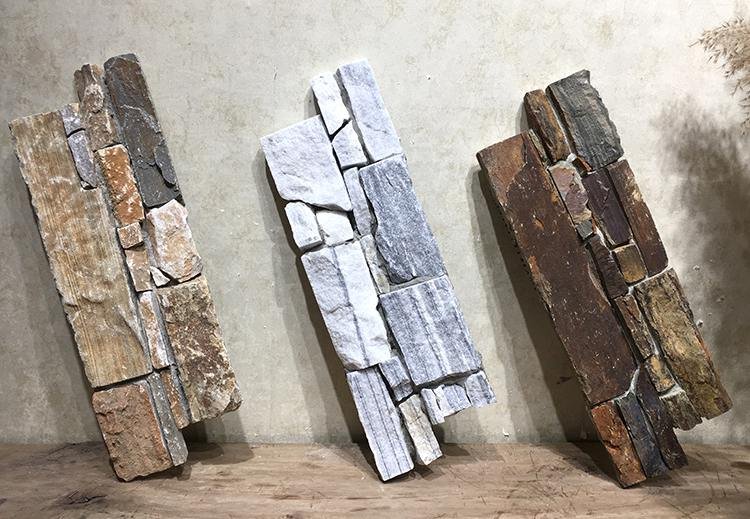
With loose stone or thin ledger panels, the supplier’s job ends fairly close to the quarry and the splitter. With cement-backed Z-panels, most of the product’s behavior is determined after the stone: the mortar backing formulation, the reinforcement, the bond between stone and backer, the cure that reaches usable strength, and the geometry of the interlock. A company that buys cut stone from workshops, casts backs in a rented shed and brands the result can show you excellent stone. The system, meaning the bond and the durability, is where it has no control. So the first framing in qualification is that you are assessing a manufactured assembly whose failure mode, delamination, lives entirely in the part the factory owns.
The engineering reason a cement-backed bond matters is set out in our cement-backed stone structural engineering guide: mineral-to-mineral bonding, crack control and durability are what a real backer provides, and a reseller’s thin or poorly cured backing is where those advantages quietly disappear. You cannot judge that from a stone face; you judge it from the plant and the paperwork.
The Questions That Separate Factories from Intermediaries
Ask for specifics a reseller cannot produce without owning the process. What is the backing mix and does it use a named reinforcement? What is the cure time and how is it verified, by age, by strength test, or by a schedule? Which adhesive system does the manufacturer certify the panel with, and can they state coverage and open time? Who controls the batch record for both the stone and the backing? A factory answers in process terms; an intermediary answers in product-name terms or offers to “check with the plant.” Either way you learn what you are buying.
The same qualification discipline that proves a stone manufacturer is the genuine producer applies a layer deeper to a system maker, and our guide to distinguishing a real manufacturer from a trading company covers the legal-entity and registration checks. For Z-panels add the system-specific test: ask whether the company will put its name on a bond-strength report. A manufacturer will discuss test numbers; a reseller redirects to a generic data sheet.
Verifying Production Capability on a Video Tour
You will not fly to the plant for a pilot order, so the remote tour has to substitute for one. Request a single continuous video walk of the line, stone intake to packing, rather than a set of clips that can be filmed on different days at different places. You are watching for three things. The wet end: a casting bed with mortar mixing, reinforcement laying and panel forming is unmistakable and cannot be faked with stock photos. The cure area: racks of panels curing to a schedule, not a corner of stacked finished goods. The packing line: crates built to a loading plan that ties back to the batch record. A trading company that films a showroom and a container yard will resist a live continuous walk, or will grant it of a place that is clearly a repacking depot.
Pair the tour with an independent pre-shipment inspection on the pilot so someone on the ground verifies the plant exists as shown and the panels are cured and packed as claimed. Our remote pre-shipment inspection guide describes how that check is run and what red flags to send the inspector for, which for a Z-panel includes backer thickness, cure age and the bond on a pulled sample. The inspection converts a good video into a verified load.
Structuring a Pilot That Tests the System, Not Just the Look
A pilot order should be small, mixed and instrumented. Order a few pallets across two or three colors, on one named adhesive system, with production samples sent ahead so you can run a bond-strength check before the field install. Build one test wall at your own facility or a trusted contractor’s, install it to the manufacturer’s data sheet, and observe the joints and the bond after a wet-dry cycle, because delamination is a time-and-moisture failure that a fresh install hides. Put the manufacturer’s installation requirements into the pilot as a written condition, so if a contractor follows the sheet and something lifts, the failure is on the system, not on you.
For exterior or freeze-thaw markets, a pilot panel should come with durability data for the finished product, not just the stone. The testing logic for weathering a stone facing is in our guide to freeze-thaw testing for stone veneer, and the standards-setting body that publishes the tile-and-stone installation specifications your Z-panel system must be installed to, the Ceramic and Tile Industry Reference Standards community represented by the Ceramic Tile Council of North America and its CMHA counterpart, is the reference a specifier will expect you to cite.
The Adhesive System Is a Separate Supplier, and Both Have to Qualify
Z-panels are installed with a named adhesive, and the factory’s certification of the system is only as honest as its weakest documented link. If the panel maker tells you to use a specific polymer-modified mortar and that mortar comes from a third manufacturer, you are qualifying two suppliers, not one, and a delamination claim between them is the argument you inherit. So bring the adhesive into the pilot with the same rigor: obtain its data sheet, its open time and coverage requirements, and confirmation from the panel maker that the pairing is tested rather than assumed. When the panel supplier cannot name a tested adhesive system, that answers your qualification question before the plant tour does. Distributors who skip this step discover, usually on a commercial job, that the two data sheets do not talk to each other, and the warranty sits in the gap between them.
Before the Catalog Goes National
The commercial risk of a modular line is that it fails at scale in ways a single wall never shows. So before you list Z-panels across a distribution region, require the three documents a catalog program needs: a bond and durability test report naming the delivered product, a manufacturer’s installation system with a named adhesive, and a batch-traceability commitment so a future color re-order matches the tested system. A supplier that holds all three can enter your national line on a real warranty basis; one that holds only a sample and a price belongs in a spot container, not in a catalog your customers will recommend.
Conclusion: Qualify the Backer, Then Trust the Line
A Z-panel is bought on the part you cannot see in the showroom, the bond and the cure, so qualifying the supplier means proving control of the backing process, verifying the plant with a continuous tour and an independent inspection, and running a pilot that tests durability rather than appearance. The distributors who get burned by modular cladding are the ones who judged it like stone, on color and price; the ones who succeed treat it like a manufactured system, ask for bond data and cure records, and hold the installation specification as a condition of the order. Add the line on the manufacturer’s documents and it scales cleanly; add it on a reseller’s sample and the first delaminating wall lands on your warranty.
Frequently Asked Questions
How do I tell a Z-panel factory from a reseller remotely?
Ask for a single continuous video walk from stone intake to packing and for a bond-strength report naming the delivered product. A real manufacturer produces the wet end, the cure area and test numbers; a reseller offers a showroom tour and a generic data sheet.
What should a pilot Z-panel order include?
Two or three colors, a few pallets, one named adhesive system, production samples for a bond check, and one test wall installed to the manufacturer’s data sheet and observed after a wet-dry cycle before the product goes into your catalog.
Do Z-panels need durability data beyond the stone?
Yes, for exterior and freeze-thaw markets the finished panel, backer and bond included, should carry weathering data, not just the facing stone. Ask for reports tied to the delivered product and cite the installation standards your region’s specifiers expect.
