Blog

Since 2005, Top Source Stone has been a trusted stacked stone, ledgestone, and cladding manufacturer, serving over 500 distributors across 20+ countries. Led by founder Coco, we empower your business with durable, customizable stone products. Explore our story, meet our team, or contact us to start a partnership today.

Thin Stone Veneer
Coco Yang

Overgrouting Fieldstone Veneer: Achieving the European Farmhouse Look

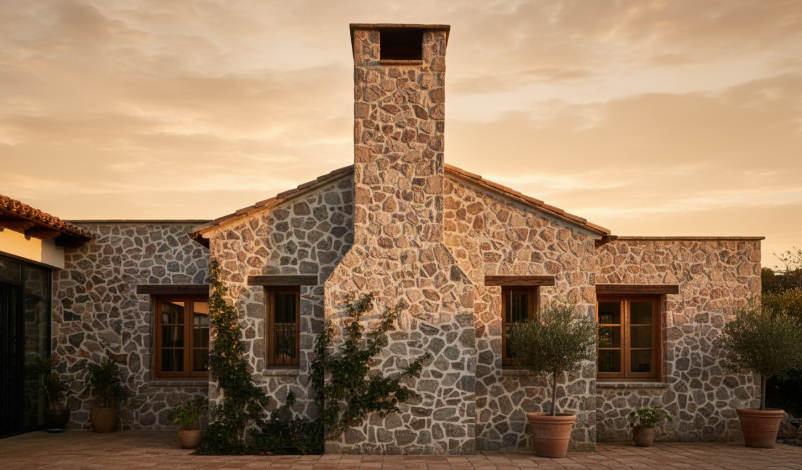
The final texture of a fieldstone facade is defined by the precision of the grouting and brushing process. This technical guide explores the transition from standard raked joints to the European German Smear technique, emphasizing the role of mortar in creating a monolithic, old-world aesthetic. By mastering the timing of the “thumb-print hard” set and utilizing specific brushing techniques, masonry teams can reveal the natural mineral beauty of 25–40mm sawn-back veneer while ensuring a moisture-resistant, high-performance bond. These finishing styles allow architects to replicate 18th-century masonry with 2026 building-envelope integrity.

Read More »
Thin Stone Veneer
Coco Yang

How to Install Fieldstone Veneer: The Irregular Puzzle Technique

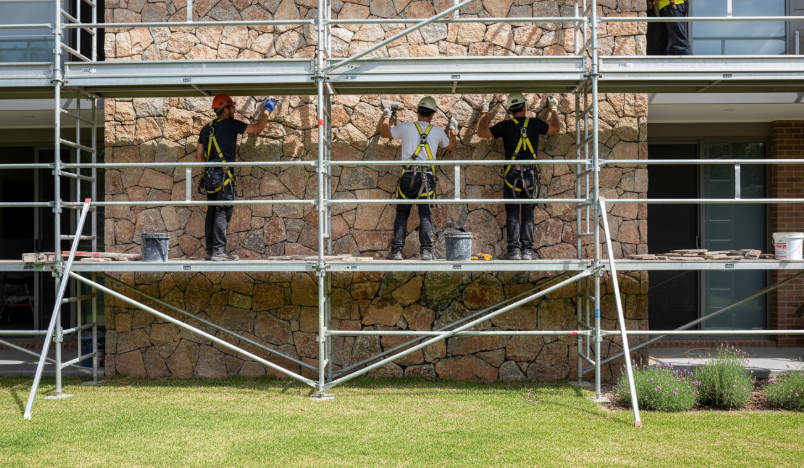
Perfecting the installation of irregular fieldstone veneer requires a systematic “puzzle technique” to ensure both structural stability and a high-end, bespoke aesthetic. This technical guide outlines the standard operating procedures for the 3-point rule, the 70/30 boulder-to-filler ratio, and advanced back-buttering methods for 100% sawn-back stone. By mastering these masonry workflows, contractors can eliminate repetitive patterns, prevent structural shifts, and reduce on-site labor costs by up to 30% while achieving a full-depth, natural masonry finish.

Read More »
Thin Stone Veneer
Coco Yang

5 Common Thin Stone Veneer Installation Mistakes (And How to Avoid Them)

This technical diagnostic identifies the five most critical failure points in thin stone veneer installation, ranging from improper vapor barrier placement to premature scratch coat loading. It provides a data-driven framework for managing the 65kg/m² dead load of natural stone through precise polymer-modified mortar chemistry and the Saturated Surface Dry (SSD) preparation standard. By prioritizing structural bonding and moisture management, this guide assists B2B contractors in eliminating delamination risks and protecting long-term project profitability against harsh environmental stresses.

Read More »
Thin Stone Veneer
Coco Yang

Dry Stack Thin Stone Veneer: Tips for a Groutable-Free Look

This technical guide establishes a professional workflow for dry stack (mortarless) stone veneer installation, prioritizing structural integrity and aesthetic precision. It details the advantages of using 100% precision sawn-back loose stones over repetitive panel systems to achieve a bespoke, random-lay finish. By analyzing shadow line management, mortar squeeze-out control, and substrate camouflage, the guide provides contractors and architects with a standard operating procedure (SOP) to deliver high-end, lightweight masonry that meets 2026 construction standards for durability and moisture management.

Read More »
Thin Stone Veneer
Coco Yang

How Much Does Thin Stone Veneer Cost? A Project Pricing Guide

This 2026 financial guide provides a comprehensive cost-benefit analysis of natural thin stone veneer for large-scale masonry projects. It evaluates the shift toward price parity between authentic mineral surfaces and manufactured alternatives, emphasizing how long-term colorfastness and asset valuation outweigh initial expenditures. By detailing factory-direct procurement strategies and the 30% labor savings offered by 100% sawn-back technology, the guide serves as a technical roadmap for B2B stakeholders aiming to optimize project margins and maximize property ROI.

Read More »
Thin Stone Veneer
Coco Yang

How Thick is Thin Stone Veneer? Weight and Structural Specs

This technical guide analyzes the critical weight and thickness standards for natural thin stone veneer, focusing on the 15 lbs/sq ft regulatory threshold. It explains how Top Source Stone’s 25–40mm sawn-back profile eliminates the need for expensive foundation ledges and structural reinforcements, offering a 75% weight reduction compared to full-bed stone. Designed for architects and structural engineers, the article provides the necessary data for exterior facade load calculations and 2026 building code compliance in seismic and high-rise applications.
Read More »
Step-by-step installation of natural thin stone veneer on a wall
Thin Stone Veneer
Coco Yang

How to Install Natural Thin Stone Veneer: A Step-by-Step Guide

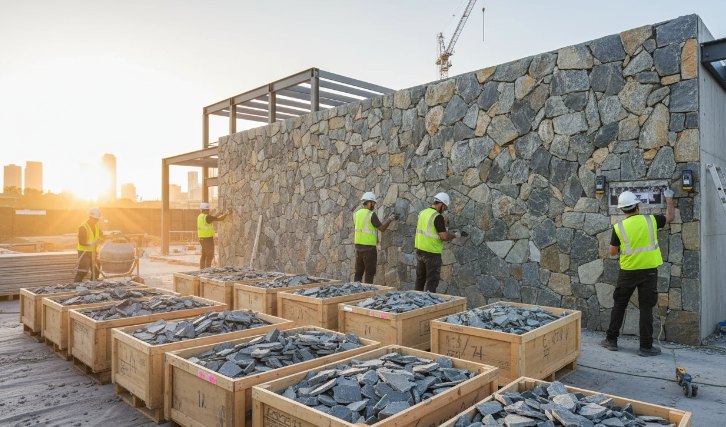
This technical manual provides a step-by-step Standard Operating Procedure (SOP) for installing natural thin stone veneer, focusing on structural longevity and moisture management. Covering essential stages from dual-layer vapor barrier installation to polymer-modified mortar mixing and back-buttering techniques, the guide emphasizes industry standards for 2026 commercial masonry. It details how to achieve a fail-safe mechanical bond for high-density stones like quartzite and granite, ensuring zero-delamination and professional-grade visual integrity for high-end B2B projects.

Read More »
Textured gray ledgestone panels for interior and exterior wall cladding
Thin Stone Veneer
Coco Yang

Ledgestone Thin Veneer: Modern Linear Textures and Individual Strips

This technical white paper examines the structural and aesthetic superiority of loose-strip ledgestone veneer over pre-glued panels. It details the engineering advantages of 100% natural sawn-back stone, focusing on weight reduction, moisture management, and the elimination of visible seams. With deep dives into mineral selections (Quartzite, Slate, Granite) and precise installation specs (25-40mm thickness), this guide provides architects and B2B distributors with the standards necessary for durable, high-relief commercial and luxury residential facades.

Read More »
Thin Stone Veneer
Coco Yang

How to Install Stone Veneer on Curved Walls and Columns

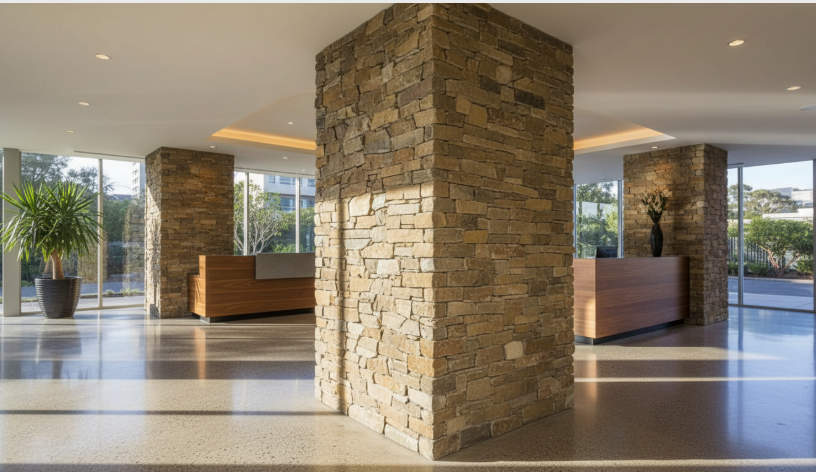
This 2026 technical report establishes a comprehensive framework for installing stone veneer on radius and curved walls, benchmarking the geometric “faceting effect” against the structural requirements of convex and concave planes. It explores the mechanical necessity of vertical panel orientation for tight radii and details the use of chord-length calculations to mitigate “cone effect” drift in tall vertical climbs. Designed for commercial contractors, the guide outlines diamond-abrasive honing and miter-trimming techniques required to ensure a seamless, bespoke random-lay finish on high-impact columns and arched facades.

Read More »

Ask For A Quick Quote

We appreciate that you’ve taken the time to write to us. We’ll get back to you very soon within 24 hours. Please come back and see us often. You are very important to us. Have a nice day!