
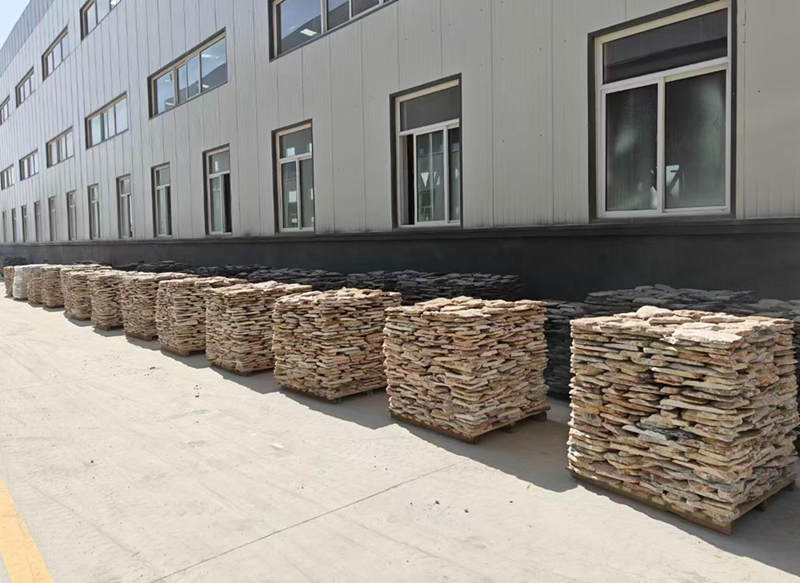
Assessing dry-stacking feasibility serves as the primary safeguard against structural wall failure and the significant liability risks associated with improper stone masonry. While many project owners request the tight-joint aesthetic of fieldstone, applying this technique without a mortar bond often compromises the lateral stability of the entire installation. Ignoring the physical limitations of specific stone shapes leads to shifting veneers, moisture damage, and expensive reconstruction costs that erode project margins.
This guide analyzes the geometric constraints of stacking round or polygonal fieldstone and explains why irregular edges create dangerous pressure points when left ungrouted. We break down the mechanical differences between traditional dry-stacking and modern veneer applications to provide a clear technical standard. Use this framework to evaluate stone profiles and installation methods to ensure every project meets essential safety and durability requirements.
What is Dry-Stack Stone Installation?
Dry-stacking creates a seamless architectural finish by fitting loose stone veneer pieces tightly together, utilizing a sawn-back surface to achieve high-bond adhesion without visible mortar joints.
Dry-stacking relies on a tight-fit method where installers position individual stones to minimize gaps. Unlike traditional masonry that uses thick grout lines to hide imperfections, this technique emphasizes the natural texture and raw edges of the material. While the exterior face shows no mortar, the installation remains structurally sound because every stone features a precision sawn-back. This flat bonding surface allows the mortar to encapsulate the rear of the piece, creating a permanent chemical and mechanical bond to the substrate while maintaining a rustic, non-panelized appearance.
- Eliminates the look of grout lines to provide a rustic and clean texture.
- The face appears mortar-free while the back of each stone is fully encapsulated for substrate bonding.
- Creates a high-value finish that mimics traditional dry-laid walls found in historic masonry.
Structural Interlocking and Alignment Techniques
The stability of a loose stone wall depends on the physical relationship between individual units. High-quality dry-stacking requires breaking joints—staggering vertical seams—so the weight of the wall distributes evenly across the courses. Even when using random-sized veneer, installers use string lines to maintain consistent horizontal alignment. This manual interlocking process creates full-depth visual integrity, making the 25–40mm veneer indistinguishable from traditional structural masonry.
- Relies on a solid, level foundation made of gravel or crushed stone to prevent shifting.
- Uses interlocking patterns and string lines to maintain consistent horizontal alignment.
- Incorporates tie-through stones spaced every two feet to anchor the wall structure internally.
- Requires breaking joints to ensure weight distributes evenly across the wall.
Labor Intensity and Environmental Limitations
This method demands significantly more time and skill than standard grouted joints. Installers must hand-pick and shape stones to ensure they fit together like a puzzle, which increases labor costs but results in a bespoke random-lay pattern. For projects in freeze-thaw climates, moisture management is critical. If water gets trapped in the tight joints, expanding ice can dislodge stones or damage the substrate. In 2026, many regional codes also require geogrid or concrete bond beams in seismic zones to provide the necessary flexibility and tensile strength that dry-stacking lacks on its own.
- Requires extensive hand-fitting and stone shaping, making it the most labor-intensive method.
- Standard applications are generally avoided in freeze-thaw climates due to potential moisture damage.
- Demands additional reinforcement like geogrid or concrete bond beams in seismic regions.
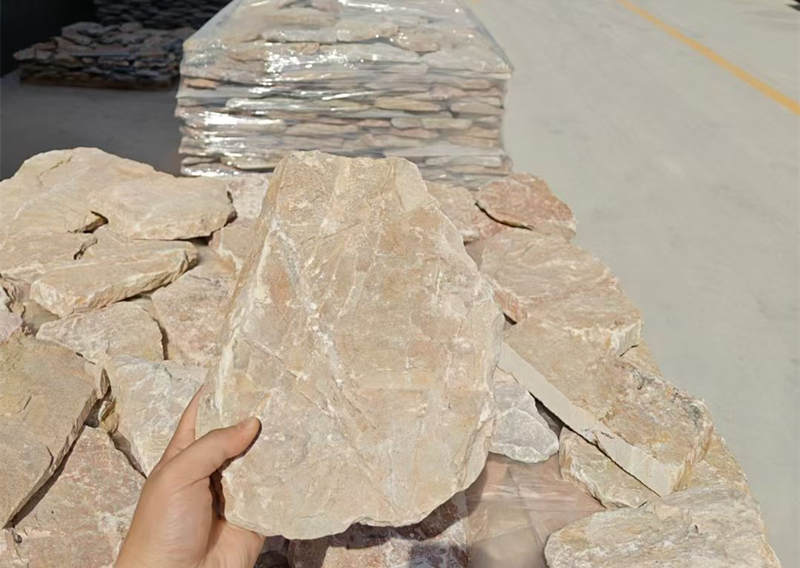
The Geometry Problem: Trying to Stack Round/Polygonal Rocks
Structural stability in dry-stack applications relies entirely on maximizing surface-to-surface friction, a factor often compromised by the erratic geometry of natural river rocks and irregular polygonal stones.
Stability Challenges of Rounded and Smooth Profiles
Spherical or river-washed stones create point-to-point contact rather than the flat surface-to-surface contact required for mechanical locking. This geometric limitation increases the risk of wall shifting under load, as the stones lack the frictional resistance to remain stationary without a mortar bed. In 2026 construction environments, where efficiency and longevity are paramount, using rounded profiles necessitates heavy backfilling and secondary support systems to prevent gravitational collapse.
Installers face significant hurdles when attempting to maintain a plumb vertical line with smooth, irregular rocks. The absence of parallel faces means that every layer of stone introduces new balance variables. Without the aid of modern thin stone veneer techniques, achieving a stable, aesthetic finish with these shapes requires an impractical amount of time and specialized masonry skill, often resulting in increased project costs without a proportional increase in structural integrity.
Frictional Limitations in Polygonal Masonry
Polygonal rocks often feature acute angles that concentrate stress on extremely small surface areas. This concentration leads to stone fracturing under the immense weight of the upper courses, especially in dry-stack scenarios where no grout exists to redistribute the load. Stacking these irregular shapes involves a painstaking process of finding “matching” edges—a task that rarely aligns with the rapid timelines required in commercial B2B projects.
| Stone Profile | Structural Contact Type | Installation Complexity |
|---|---|---|
| Rounded River Rock | Point-to-Point (Unstable) | High (Requires Mortar Bed) |
| Raw Polygonal Stone | Edge-to-Edge (Inconsistent) | Expert (Extensive Fitting) |
| Individually Sawn-Back Veneer | Surface-to-Surface (Maximized) | Low (Rapid Adhesion) |
The absence of the standard 1/2-inch mortar joints leaves polygonal gaps open to the elements. These open joints allow water, debris, and insects to compromise the wall’s internal stability over time. For B2B suppliers, recommending a raw polygonal loose stone for a dry-stack project without addressing these gaps creates a long-term liability, as joint settlement and freeze-thaw cycles can quickly destabilize the entire facade.
Engineering Consistency Through Sawn-Back Geometry
Top Source Stone solves the geometry problem by standardizing the back of every individual thin stone veneer piece. Our factory utilizes high-precision cutting equipment to create a 100% sawn-back finish. This process transforms erratic natural shapes into manageable units with a flat, stable mounting base, ensuring maximum adhesion to the substrate. By providing a uniform 25–40mm thickness, we eliminate the structural risks associated with the uneven depths of raw fieldstone.
- Precision-sawn backs reduce on-site labor costs by up to 30% by removing the need for stone trimming.
- The bespoke random-lay pattern maintains a natural aesthetic while the flat back ensures full-depth visual integrity.
- Individual loose stones allow for tight, mortar-free joints that appear traditional but benefit from modern structural bonding.
Premium Stacked Stone for High-Margin Projects

The Structural Risk of Ungrouted Irregular Edges
Structural data reveals that ungrouted dry-stack systems sacrifice up to 60% of their axial compression strength compared to mortar-reinforced masonry, making precise material selection and back-processing critical for wall longevity.
Ungrouted masonry systems exhibit significantly lower structural capacity than those utilizing mortar reinforcement. Without a bonding agent to fill the gaps between stones, the system relies entirely on the friction and contact points of the individual units. Engineering assessments for 2026 emphasize that high-load walls require precise alignment to prevent structural failure under pressure. Top Source Stone addresses this by providing 100% Sawn-Back thin stone veneer, which creates a flat, reliable bonding surface that maximizes contact even in dry-stack aesthetics.
Reduction in Axial Compression Strength
Laboratory testing indicates that dry-stack systems provide 50-60% less axial compression strength compared to grouted alternatives. This deficit stems from the internal architecture of the wall; the lack of grout creates voids that concentrate stress on specific contact points rather than distributing weight across the entire surface.
- Structural integrity suffers when compressive loads focus on less than 30% of the stone’s surface area.
- Voids between irregular edges act as failure initiation points under vertical load.
- Modern wall substrates require lighter, high-precision materials like our 25–40mm thickness controlled veneer to maintain safety margins.
Geometric Imperfections and Point Loading Risks
Irregular edges create gaps that prevent full surface contact between stacked stones. Surface texture irregularities and varied stone depths cause unstable stacking patterns in traditional dry-stacking. When the weight of the wall rests on a single irregular protrusion, point loading occurs, leading to localized fractures and eventual stone displacement.
Advanced infrared cutting equipment now minimizes these risks by ensuring stones fit together with precision. This technology is a standard feature in our production lines, allowing for a bespoke random-lay pattern that maintains visual authenticity without the structural instability of raw, unprocessed fieldstone. By eliminating protrusions on the back and edges, we ensure that the load is distributed more evenly across the masonry unit.
Joint Settlement and Load Transmission Failure
Natural shifting and environmental factors destabilize walls that lack grout-filled joints or high-strength bonding. Ungrouted irregular edges allow micro-movements that lead to significant joint settlement and wall tilting over time. This is particularly dangerous in regions prone to seismic activity or extreme temperature shifts.
- Inefficient load transmission across uneven surfaces compromises vertical structures during freeze-thaw cycles.
- Joint settlement can trigger a “domino effect” where the failure of one stone destabilizes the courses above it.
- Current building protocols recommend high-strength epoxy resin or specialized adhesives to secure every stone and maintain permanent bond strength.
As a direct quarry source factory, we mitigate these settlement risks by providing climate-tested stones such as high-density quartzite and granite. These materials resist the moisture infiltration that typically accelerates joint failure in ungrouted systems, ensuring the full-depth visual integrity of the project remains intact for decades.
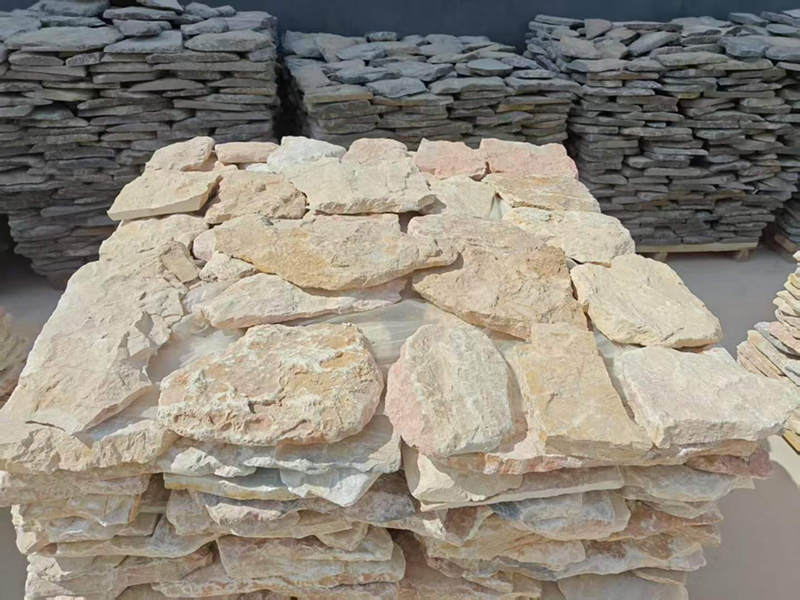
Why Fieldstone Must Have Minimum 1/2-Inch Mortar Joints
The 1/2-inch mortar joint is not an aesthetic suggestion; it is a critical engineering requirement for stabilizing the organic irregularity of natural fieldstone. In the 2026 masonry landscape, this joint acts as a structural shock absorber that manages the weight and movement of individual stones.
-
Compensating for Tolerance Deviations: Unlike precision-cut ledgestone, fieldstone features varied thicknesses and undulating edges. A 1/2-inch joint provides the necessary “volume” to bridge these gaps, ensuring that the mortar can fully encapsulate the stone edges for a high-performance bond.
-
Moisture Management and Freeze-Thaw Resilience: Small, tight gaps in irregular stone act as capillary traps for water. In regions with harsh winter cycles, trapped moisture expands upon freezing, leading to stone “spalling” or complete de-bonding. A wide, well-troweled mortar joint creates a sealed, water-shedding surface that protects the substrate.
-
Load Distribution: The mortar bed allows for the even distribution of compressive forces. Without this 1/2-inch cushion, the sharp “points” of irregular stones create stress concentrations on the stones below, which can lead to hairline fractures across a large-scale commercial facade.
If You Want a Dry-Stack Look, Choose Ledgestone
For projects demanding the sleek, grout-free aesthetic of 2026 architectural minimalism, forcing fieldstone into a dry-stack configuration is a recipe for high labor costs and structural failure. The professional solution is to specify Linear Ledgestone Profiles.
Ledgestone is engineered specifically for the “Dry-Stack Look.” Because these stones feature uniform heights and a strong horizontal orientation, they can be tightly nested with zero visible grout lines. At Top Source Stone, our Pencil Series and Flat Series Ledgestone utilize 100% sawn-back precision, allowing installers to achieve a monolithic, seamless stone surface without the mechanical instability of ungrouted irregular shapes.
By choosing Ledgestone for your dry-stack projects, you gain:
-
30% Faster Installation: Eliminate the time-consuming process of hand-selecting and fitting irregular “puzzle” pieces.
-
Reduced Material Waste: Precision-cut rectangular units ensure high yield and consistent coverage.
-
Modern Aesthetic: Achieve the sophisticated shadow lines and horizontal rhythm that define contemporary luxury design.

Conclusion
Achieving a professional dry-stack look with fieldstone veneer requires a balance between the natural, irregular shapes of the stone and precise installation techniques. Using individually sawn-back loose stone ensures a flat bonding surface while maintaining the authentic visual weight of a traditional masonry wall. This approach provides long-term structural stability and preserves the organic beauty of the material throughout the life of the project.
Review our current inventory of quartzite and sandstone veneers to see how different textures can enhance your next development. You can contact our team for a full technical catalog or to discuss wholesale sourcing requirements for your business.
Frequently Asked Questions
Can you dry stack fieldstone veneer?
Yes, fieldstone veneer can be installed using the dry-stack method to achieve a clean, seamless aesthetic. In this application, the stones are fitted tightly together without visible mortar joints on the face. However, for structural integrity and bonding, the back of each stone is typically encapsulated with mortar to ensure it adheres properly to the substrate.
Does fieldstone require grout?
Fieldstone does not strictly require grout if you are utilizing a dry-stack installation technique. While traditional installations use grout (pointing) to fill the spaces between stones for moisture protection and structural support, a dry-stack look focuses on the natural interlocking of the material. In exterior settings, however, grouting is often recommended to prevent water infiltration in freeze/thaw climates.
Why can’t you stack irregular stones tightly?
Stacking irregular stones tightly is difficult because their natural surfaces have unique shapes, curves, and varying thicknesses that do not provide flat mating surfaces. Achieving a tight fit requires extensive labor-intensive shaping and chiseling (dressing) of each individual stone to minimize gaps. Without this custom fitting, the irregularities naturally create voids between the pieces.
Minimum grout joint width for fieldstone?
The industry standard for a minimum grout joint width for fieldstone veneer is typically 1/2 inch. This width is necessary to allow the mortar to be properly packed into the joints with a tuck-pointing tool, ensuring a weather-tight seal and sufficient surface area for the mortar to bond to the adjacent stones.
Dry stack vs grouted stone walls?
Dry-stack walls focus on the physical interlocking of stones for a seamless, rustic look, but are more labor-intensive and costly to install due to the precise fitting required. Grouted walls use mortar between the stones, which provides a faster installation process and better moisture protection, especially in freeze/thaw environments where water infiltration can cause damage.
