


Accepting a Flagstone Delivery: Thickness Tolerances, Crumbles and the Photos That Win a Claim
Short answer: natural-cleft flagstone is a hand-split product with real thickness spread, so a little variation is normal, but a pallet that varies by the better part of a centimetre or crumbles at the corners is not “natural variation,” it is a quality fault you can reject before installation. Inspect a delivery like a yard that knows stone will come back: check thickness across multiple pieces from several crates with a simple gauge, tap pieces for delamination, count corner breaks against a written acceptance standard, and photograph the problem against a ruler and the crate label while it is still on the pallet. The photos that win a credit show the defect next to the label that ties it to the batch. Keep the bad pieces out of the wall or patio; once laid, a corner that crumbled in transit becomes a callback on your invoice.
Contractors and garden builders who buy irregular stone by the pallet live in fear of the bad delivery: the crate that looks fine on top and hides thin, cracked pieces underneath. The difference between writing it off and getting it replaced is almost always the discipline of the receiving check. This article is that check, written for the buyer who has to install the stone in two days and cannot afford to discover the problem mid-job. It is not about wall veneer, where the panels are inspected flat; ground flagstone has its own failure modes because it gets lifted, split and loaded.
What Thickness Variation Is Normal and What Is a Fault
Natural cleft flagstone splits along bedding planes by hand, so pieces in a batch vary in thickness; that is expected and is the reason paving flags are sold by area with the expectation of a range. A pallet where most pieces sit within a tight band and a few outliers straddle it is a normal pack. A pallet where the spread is wide enough that the mortar bed or setting depth has to change piece to piece, or where thin pieces will fracture under a grab or a foot, is not cosmetic variation; it is a specification problem you can and should push back on. The number that matters is not a universal tolerance but the one you agreed with the supplier, which is why the acceptance band belongs in the purchase order before the first crate is loaded.
For the wall-panel side of the business, dimension checking is formalized as a pre-payment step in our guide to verifying loose ledgestone dimensions before cargo release; the same principle, measure before you commit money, applies harder to ground stone because the stakes include structural settling, not just appearance. The standards body for dimension stone, the Natural Stone Institute, publishes the industry’s understanding of natural variation versus defect and is the reference you cite when a supplier dismisses your concern as “that is just what stone does”; see their resources at naturalstoneinstitute.org.
The Receiving Check That Catches Bad Pallets
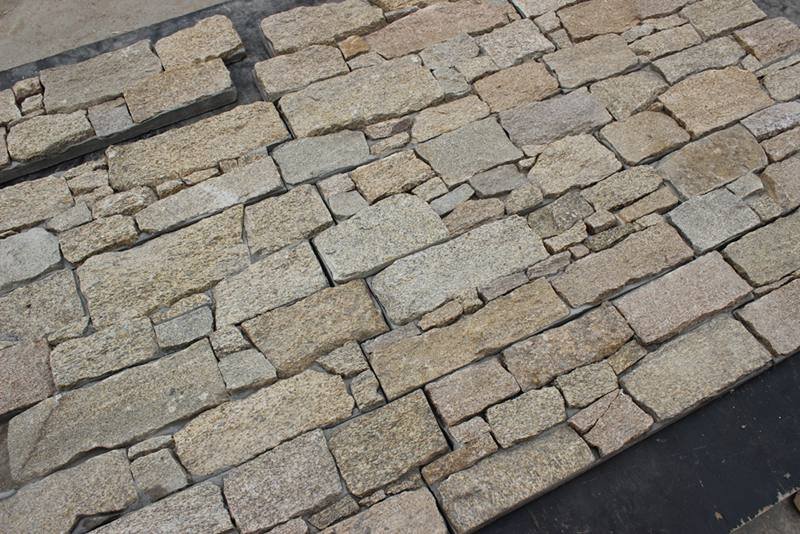
Do it before the crew starts laying, in the order that catches the expensive faults first. Start with thickness: randomly pull pieces from three or more crates, not just the top of one, and measure the thickest and thinnest with a caliper or a simple story stick laid across the edges. Record the range. If a single crate swings across the band you agreed, that crate is suspect. Next, tap each piece lightly for delamination and internal cracks; a dull thud where you expect a ring flags a piece that will split under load. Then count corner and edge breaks against the acceptance standard you set, checking the pieces stacked against the crate walls, which take the transit knocks. Finally, check flatness: lay the best and worst pieces on a known-flat surface and sight for rocking, because wavy stone is what turns a patio into a trip hazard two winters later.
A five-minute gauge and a marked acceptance band on a clipboard is the whole toolset; the discipline is doing it across crates instead of one. The mistake that gets bad pallets installed is inspecting the visible crate on top, approving it, and finding the faults in the bottom of the stack after the crew has already bedded the good-looking pieces.
The Photos That Turn a Complaint into a Credit
A photo of a broken stone proves a stone is broken. A photo of a broken stone sitting against the crate label proves that the broken stone came from this supplier, this batch, this shipment, and that is the difference between a credit and a long email war. Build the photo set around the batch identity: photograph the crate label and any loading reference so the claim ties to the shipment, then photograph each defect type next to a ruler or a coin for scale, then photograph the thickness gauge on a thin piece and the caliper reading showing the spread. Shoot the inside of the crate, not just the loose pieces, so the reviewer sees how the bad stones were packed. Do it on delivery day, while the freight paperwork and the pallet are still on site.
Keep the bad pieces physically. Contractors throw crumbled stones in the skip out of frustration, and that is the single most expensive instinct on a claim, because the supplier asks for proof and you have none. Set rejected pieces on a labelled pallet, photograph them, and do not release them into the job. A written inspection note, the photo packet tied to labels, and retained physical samples make the claim essentially indisputable; an angry phone call without them, is not. The same evidence discipline that protects a buyer at delivery is what protects a factory in reverse at pre-shipment inspection; our remote pre-shipment inspection guide shows how batch records and photos decide a dispute from the other side of the container.
What a Fair Acceptance Standard Looks Like
Write it into the order so the receiving check has something to measure against. A practical standard names a maximum thickness range per crate, a maximum percentage of pieces with corner breaks beyond a stated size, a requirement that no piece delaminates on tap, and a flatness limit expressed in how much rocking is acceptable on a straightedge. It also states the remedy: reject by crate, not by whole shipment, so a good pallet is not held hostage by a bad one, and credit or replace the rejected crates. A supplier who will not agree to an acceptance band before shipping is telling you, again before you spend, how the next difficult delivery will go.
For ground stone specifically, build the standard around traffic, because a patio or path takes foot load and furniture legs that a veneer wall never does. A piece thin enough to fracture when lifted, or a face delaminating under a light tap, is a safety and callbacks problem at delivery, not a cosmetic one at handover, and the receiving check should reject it on the spot. The repair economics of stone that fails in service are different and are covered in our natural stone repair standards guide, but the cheapest repair is the one you never make because the bad crate never left the yard.
Conclusion: Inspect Before Bed, Photograph to the Label
A flagstone delivery is won or lost in the first twenty minutes at the yard. Measure thickness across crates against the band in your purchase order, tap and sight the pieces for the faults that become callbacks under load, and build a photo set that ties every defect to a crate label. Retain the bad pieces, reject by crate, and let the written acceptance standard do the arguing for you. The contractors who eat the cost of bad stone are not the unlucky ones; they are the ones who inspected one crate from the top, approved the pallet on feel, and kept the receipts instead of the samples. Check the pallet like it will come back, because the ones you accept blind are exactly the ones that do.
Frequently Asked Questions
Is thickness variation in natural flagstone normal?
Yes, hand-cleft stone varies by nature. The issue is the size of the spread: a tight band with a few outliers is a normal pack, a wide swing that changes the setting depth or fractures under a grab is a specification fault you can reject.
How many photos do I need for a delivery claim?
Enough that each defect type is tied to the batch: crate-label shots, close-ups of each fault with a ruler for scale, and a gauge or caliper reading. The label-to-defect link is what a supplier cannot dismiss.
Should I install the borderline pieces?
No. Once stone is bedded, a corner that crumbles in transit or a face that delaminates later becomes your repair, not the supplier’s. Set suspect pieces aside with the rest of the retained rejects.
