


Success in B2B Sourcing China for natural thin stone veneer depends entirely on bridging the gap between attractive quarry pricing and the high risk of material variance that can derail large-scale construction timelines. Procurement managers often face the reality of inconsistent thickness and color batches that lead to massive installation delays and budget overruns on-site. When the stone arrives from overseas and fails to meet architectural specifications, the resulting loss in project momentum and capital is often unrecoverable.
This guide establishes a technical framework for importing stone veneer by focusing on direct-from-quarry cost structures and rigorous quality control protocols for color blending and calibration. We break down the logistical requirements for ocean freight, including specific palletizing standards to prevent breakage, alongside a clear analysis of minimum order quantities and lead times. This document serves as your operational standard for building a reliable supply chain that ensures every crate meets the structural and aesthetic demands of your commercial projects.
The Financial Advantage of Sourcing Direct from Quarries
Direct quarry sourcing in 2026 shifts thin stone veneer from a luxury commodity to a high-margin architectural staple by removing multi-tier broker markups and securing geological consistency at the origin.
Eliminating Middleman Markups for Maximum Profitability
Managing the entire supply chain from the raw rock face to final export eliminates the standard 15-30% commissions typically pocketed by stone brokers and trading companies. We operate as a direct source factory, allowing B2B partners to capture these margins. For large-scale commercial facades, reducing the total cost per square foot through origin-point pricing often determines the success of a competitive bid.
- Access wholesale pricing structures that directly improve project bottom lines for distributors.
- Remove intermediary service fees that inflate the landed cost of natural stone materials.
- Secure long-term price stability for multi-phase developments by contracting directly with the quarry owner.
Full Visibility and Control Over Raw Material Quality
Owning the source provides a level of quality assurance that third-party resellers cannot match. We implement a three-stage inspection protocol: immediately after the primary cut, following the sawn-back processing, and during final palletization. Using infrared cutting technology ensures every piece of thin stone veneer maintains the strict 25–40mm thickness required for modern wall substrates without compromising structural integrity.
- Select premium material blocks directly from the same quarry vein to prevent jarring color shifts across large orders.
- Utilize precision-cutting equipment to maintain dimensional accuracy and reduce on-site installation waste.
- Verify mineral density at the source to ensure long-term resistance to moisture and freeze-thaw cycles.
Custom Manufacturing and OEM Branding Opportunities
Direct manufacturing enables specialized flexibility for brand owners and large-scale retailers. We provide OEM services that include custom-printed packaging and proprietary stone formats, helping partners build a distinct market identity. By bypassing third-party inventory, we adjust production schedules to meet specific architectural requirements and 2026 design trends without the delays inherent in fragmented supply chains.
- Adopt private labeling for crates and cartons to enhance brand recognition in local markets.
- Customize veneer dimensions and corner specifications for exclusive product lines.
- Source specialized mineral types for high-volume orders that are not typically available in standard warehouse stock.
Logistical Stability and High-Volume Export Capability
With an export volume exceeding 220 containers annually, our logistics operations are built for global reliability. We utilize reinforced fumigated wooden crates designed to handle the 950kg gross weight per unit during ocean freight. By managing the loading process, we maximize container space and ensure that heavy natural stone is palletized to prevent shifting, which significantly reduces the risk of in-transit breakage.
- Bypass local stock fluctuations by sourcing from a factory with consistent raw material reserves.
- Benefit from ISPM-15 compliant packaging that meets strict import regulations in the USA, Canada, and Australia.
- Optimize per-unit shipping costs through expert container loading techniques tailored for high-density stone.
Quality Control: Consistency in Thickness and Color Blending
Precision sourcing and quarry-level grading eliminate the structural and aesthetic risks common in generic stone veneers, ensuring every square meter meets strict architectural tolerances.
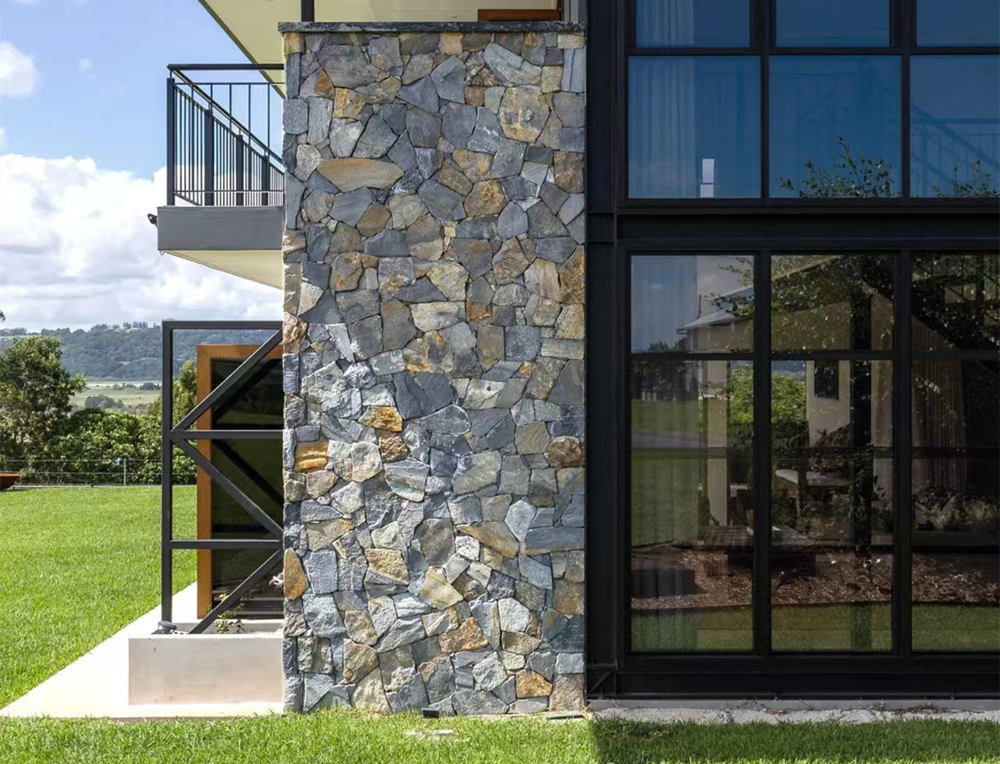
Effective quality control begins at the extraction phase, not the packing table. For B2B importers, the primary risks involve thickness spikes that complicate installation and abrupt color shifts that ruin a building’s facade. By integrating digital measurement tools and quarry-direct batching, we remove the guesswork for wholesalers and contractors.
Precision Thickness Management via Infrared Cutting
Maintaining a uniform thickness range of 25mm to 40mm is mandatory for modern thin stone veneer applications. We utilize advanced infrared cutting equipment to achieve precise dimensional accuracy for every individual stone strip. This precision ensures the stones exhibit a 100% sawn-back finish, providing a flat bonding surface that increases adhesion strength while reducing on-site mortar consumption.
| QC Metric | Standard Trading Grade | Top Source Stone Standard |
|---|---|---|
| Thickness Tolerance | +/- 10mm (Manual Cut) | Strict 25–40mm (Infrared) |
| Backing Finish | Split or Rough Sawn | 100% Sawn-Back (Precision) |
| Installation Prep | High Labor (Sorting/Chipping) | Direct Apply (30% Labor Saving) |
Our three-stage inspection protocol enforces quality immediately after cutting, during sorting, and prior to final palletizing. This consistency allows for a “no-footing” installation, keeping the weight within the thresholds required for modern wall substrates without requiring expensive structural reinforcement.
Color Blending and Batch Synchronization
Natural stone inherent variations remain its greatest asset, yet they must be managed through rigorous sorting to ensure tonal harmony for large-scale projects. As quarry owners, we pre-grade raw materials to ensure that large orders involve stone extracted from the same layer or vein. This “Quarry-to-Project Consistency” prevents the jarring color blocks often seen when suppliers mix material from multiple disparate sources.
- We match physical samples to production lots using a reference set of at least four pieces to define the acceptable range of color and texture.
- Our blending process creates a natural transition of hues, ensuring the bespoke random-lay pattern looks organic rather than patchy.
- The permanent mineral pigments of our quartzite and granite ensure color depth remains stable under intense UV exposure for decades.
High-Strength Bonding and Structural Integrity
Consistency extends beyond aesthetics to the physical performance of the stone. For B2B clients, stability in mineral density is critical for climate-tested durability. We verify the structural integrity of every batch, ensuring the stone resists freeze-thaw cycles and moisture absorption. We strictly manage the 65kg/m² weight standard to provide the “Full-Depth Visual Integrity” of traditional masonry while maintaining the ease of use of a veneer.
By focusing on loose stone (individual pieces) rather than pre-glued panels, we eliminate the risk of panel delamination or “fall-off” caused by failing resin. Every stone is an independent unit, allowing for a hand-laid feature wall that provides a zero-repeat natural variation, ensuring no two projects ever look mirrored or artificial.
Premium Stacked Stone for Architectural Excellence

Packaging and Palletizing Thin Stone for Safe Ocean Freight
Effective B2B stone logistics relies on a multi-layered containment strategy that treats fragile thin veneer as a precision instrument rather than raw bulk material.
Reinforced Multi-Stage Protection for International Transit
Standard export packaging often fails because it ignores the internal friction generated during weeks of ocean vibration. We address this by placing individual thin stone veneer pieces face-to-face with high-density foam inserts or honeycomb spacers. This prevents the natural texture of the quartz or granite from scratching the sawn back of the adjacent piece. Every unit pack is housed in reinforced corrugated cartons that feature custom branding and explicit handling instructions, ensuring that the stone remains protected even if the outer crate is opened for customs inspection.
| Packaging Feature | Standard Export Grade | Top Source Stone Protocol |
|---|---|---|
| Crate Material | Lightweight Softwood | ISPM-15 Fumigated Solid Wood / Plywood |
| Internal Cushioning | Minimal / Loose Paper | High-Density Foam & Honeycomb Spacers |
| Moisture Barrier | None | Shrink-Wrap + Desiccant Packs |
| Pallet Capacity | Variable | Fixed 15m² (950kg Gross Weight) |
Beyond internal padding, we apply heavy-duty edge protectors to every pallet layer. These protectors shield the delicate natural edges of the loose stone from impact damage during forklift maneuvers. By isolating the cargo from the physical shocks of the logistics chain, we keep the breakage rate significantly below the industry standard aql of 4%.
Industrial-Grade Pallets and ISPM-15 Compliance
Structural integrity starts with the pallet base. We use industrial-grade, heat-treated wooden crates that carry the ISPM-15 stamp, which is mandatory for seamless customs clearance in the US, Canada, and Australia. Natural stone is exceptionally heavy, averaging 65kg/m², which means a single 110cm x 110cm pallet often reaches a gross weight of 950kg. Our crates use internal bracing and steel or industrial plastic banding to secure the load, preventing the center of gravity from shifting during rough sea conditions.
- Heat-treated solid wood construction prevents biological contamination and meets global phytosanitary standards.
- Precision palletizing balances the heavy stone load to prevent crate collapse under the pressure of double-stacking.
- Industrial shrink-wrapping creates a barrier against humid sea air, reducing the risk of efflorescence or moisture staining on arrival.
Strategic Container Loading and Space Optimization
We manage the loading of over 220 containers annually, utilizing specialized blocking and bracing techniques. In a 20GP container, we typically load 18 to 26 crates depending on the destination port’s weight limits. For the USA, we strictly observe the 17.5-ton limit for standard inland transport, while other regions may allow for heavy-weight loads up to 26.5 tons. Direct manufacturer oversight during the loading process ensures that crates are positioned to eliminate gaps, using wooden wedges or airbags to prevent load shifting that occurs during vessel pitching.
To provide full transparency, we offer digital traceability for every shipment. We document the entire loading process through photos and video, providing distributors with verification of shipment integrity before the vessel departs the port. This documentation includes clear views of the fumigation stamps, the container seal, and the final braced load, allowing you to prepare your warehouse team for the specific layout of the incoming cargo.

Understanding Minimum Order Quantities (MOQ) and Lead Times
Optimizing B2B procurement requires balancing warehouse inventory levels with factory-direct logistics to minimize landed costs per square meter.
Standard MOQ for Wholesale and B2B Orders
Minimum order quantities at the factory level are designed to maintain production efficiency and ensure stable pricing for distributors. While local retailers often sell in small batches, a direct quarry source like Top Source Stone establishes MOQs that align with international shipping economics. For natural thin stone veneer, the baseline requirement is generally centered on full container loads (FCL) to protect the material during transit and reduce the per-unit freight burden on the buyer.
| Order Type | Standard MOQ | Lead Time (Production) |
|---|---|---|
| Standard Trail Order | 300 Square Meters | 10–15 Days (In-Stock) |
| Custom Private Label | 300 Square Meters | 20–25 Days |
| Full 20GP Container | 18–26 Crates | 20-25 Days |
- Base MOQs typically apply to full container loads to maximize shipping economy and material safety.
- Customized stone formats and unique material finishes require higher minimums due to machine calibration.
- OEM and private label packaging services, including custom-printed boxes, are available for orders meeting volume thresholds.
Production Lead Times and Seasonal Capacity
Our 2026 production schedule uses advanced infrared cutting technology to maintain a 20-25 day cycle for a standard 20GP container. We manage production in stages, focusing first on quarry selection to ensure the entire order originates from the same vein, followed by precision sawn-back processing. Buyers must account for seasonal spikes in the global construction industry which can saturate factory capacity between March and August.
- Standard production cycles for loose stone veneer range from 3 to 5 weeks depending on material availability.
- We recommend project planning 2-3 months in advance to secure specific stone batches during peak seasons.
- Real-time visibility and 3-stage inspections ensure lead times are met without compromising bonding strength.
Logistics Coordination and Global Distribution
Shipping natural stone is a weight-critical operation. Most North American ports enforce a strict 17.5-ton limit for standard inland transport, while other global regions may accept heavy-weight containers up to 26.5 tons. We utilize reinforced plywood or fumigated solid wood crates designed to withstand the rigors of ocean freight, ensuring each 950kg crate remains stable throughout the journey.
- We use reinforced cartons and fumigated wooden crates to prevent displacement during ocean freight.
- Strategic loading techniques maximize container space, reducing per-unit costs for contractors.
- Our logistics department provides regular status updates and high-definition media of finished goods before final balance payment.

Partnering with Top Source Stone for Reliable Global Supply
Supply chain reliability in 2026 depends on direct quarry access and precision secondary processing to eliminate the quality shifts common with middleman trading firms.
End-to-End Manufacturing Control and Quality Assurance
We manage the entire production cycle from the initial quarry block selection to final palletizing. By utilizing advanced infrared cutting equipment, we ensure every piece of our individually sawn-back thin stone veneer maintains a flat bonding surface. This precision reduces on-site labor costs by up to 30% because masons no longer need to manually trim backs to achieve high-strength adhesion. We also utilize high-strength epoxy resin adhesives formulated specifically for natural stone to prevent fallout and ensure a permanent bond even in extreme climates.
Our quality control involves a rigorous three-stage inspection. We verify dimensions and color harmony after the initial cut, check structural integrity after assembly for any mesh-backed options, and perform a final batch review before sealing crates. This process ensures that “Quarry-to-Project Consistency” is not just a slogan but a measurable standard, keeping defect rates well below the industry-standard 4% AQL.
Scalable Logistics and Secure International Packaging
Exporting over 220 containers annually requires specialized logistics and packaging protocols designed for the stresses of ocean freight. We pack our thin stone veneer into reinforced plywood or fumigated solid wood crates compliant with ISPM-15 export standards. Each crate is lined with moisture barriers and desiccant packs to prevent efflorescence or water staining during long sea transits.
- Strategic container loading maximizes space utilization while adhering to strict weight limits, such as the 17.5-ton cap for major USA ports.
- Edge protectors and internal foam cushioning between stone layers minimize localized chipping and transport breakage.
- Proven shipping schedules from Xingang port provide distributors with predictable 20-25 day production lead times.
Comprehensive OEM and Brand Support Services
We empower wholesalers and brand owners to build local market equity through full OEM support. For B2B orders meeting our 300-square-meter minimum, we provide custom-printed packaging with your company logo and specific product codes. This allows partners to maintain brand integrity while benefiting from direct manufacturer pricing and consistent batch grading.
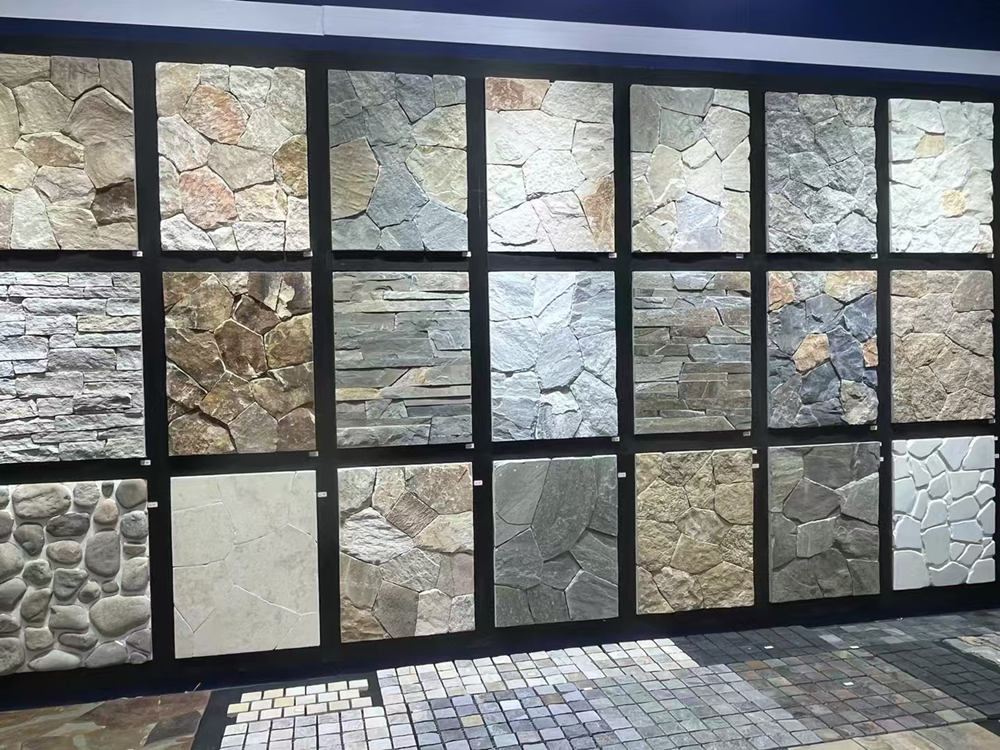
Beyond standard labeling, we offer flexible manufacturing for bespoke dimensions or specialized material formats. Because we control the source quarries for our quartzite, sandstone, and slate ranges, we can lock in material from the same vein for large-scale multi-container projects, ensuring a zero-repeat natural variation that maintains visual harmony across massive architectural surfaces.
Conclusion
Importing loose thin stone veneer direct from the source ensures your projects maintain full-depth visual integrity while benefiting from sawn-back precision and quarry-to-project color consistency. By managing MOQ requirements and international logistics standards through a verified factory partner, distributors can reliably supply high-density quartzite and natural stone that meets the aesthetic demands of premium architecture. These procurement strategies reduce labor costs and guarantee a bespoke, random-lay finish that traditional stone panels cannot replicate.
Review your current inventory needs or project specifications to see how direct sourcing can improve your margins. You can visit topsourcestone.com to request a technical catalog or order a sample crate for your next large-scale development.
Frequently Asked Questions
How to import natural stone veneer from China?
Importing natural stone veneer involves sourcing directly from quarries to eliminate middleman costs and improve profit margins. The process requires identifying a reputable manufacturer, verifying their export licenses, and negotiating terms—usually FOB (Free on Board) or CIF (Cost, Insurance, and Freight). You must manage international logistics, ensure compliance with local building codes, and handle customs clearance including duty payments and ISF filing for ocean freight.
What is the MOQ for bulk thin stone veneer orders?
For bulk orders direct from the source, the Minimum Order Quantity (MOQ) typically ranges from 100 to 300 square meters, or approximately one full 20-foot container load. While higher MOQs are common when dealing directly with quarries to capture volume-based pricing, they provide a significantly lower unit cost compared to sourcing through trading intermediaries.
How is thin stone veneer packaged for shipping?
Thin stone veneer is meticulously packaged to prevent breakage during transit. Standard industry practice involves using strong, fumigated wooden crates or pallets. The stones are often separated by foam or cardboard sheets to prevent scratching, and the entire load is secured with high-tension plastic or steel strapping. Finally, crates are wrapped in waterproof plastic film to protect against humidity and saltwater exposure during sea freight.
Why source natural stone from Top Source Stone?
Sourcing from Top Source Stone allows buyers to interface directly with quarry-based production, significantly lowering unit costs by cutting out trading intermediaries. This direct relationship enables customized specifications, better visibility into raw material quality, and stable long-term contracts. It provides construction and manufacturing supply chains with superior margin control and a reliable volume-based pricing structure.
How to ensure quality control when importing stone?
To manage risk and ensure quality consistency, importers should implement professionalized supplier audits and on-site Quality Assurance (QA). This includes verifying stone color consistency, thickness tolerances, and structural integrity at the quarry level. Requesting pre-shipment inspections and third-party laboratory testing reports for absorption and compression strength are industry-standard practices to maintain high-quality material standards.
