
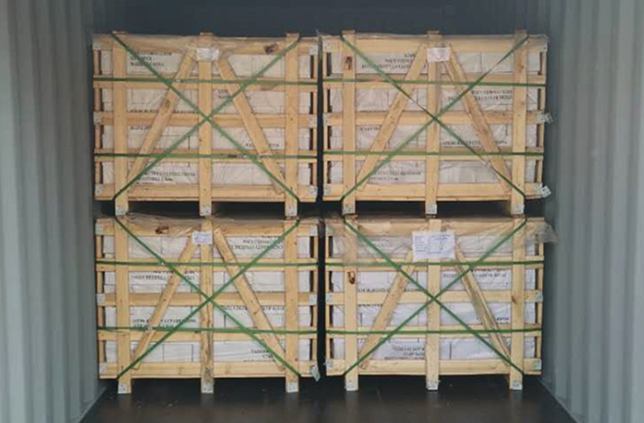
Shipping heavy stacked stone often leads to high freight costs because the material reaches road weight limits long before it fills a container. Using 40ft units for these dense loads often wastes money on the extra weight of the larger steel frame, which can reach over 8,200 lbs. Shifting to 20ft container load optimization for stacked stone allows exporters to focus on weight density rather than volume, securing the payload without paying for redundant space.
This analysis explores how to use 22G1 heavy-tested units to safely reach 27-ton payloads, nearly 28% more than standard US-bound shipments. We look at the technical specs of ISO 668 structural ratings, the impact of the Federal Bridge Formula on axle loads, and specific pallet reinforcement techniques that prevent stone crushing. By understanding these logistics secrets, teams can lower their landed costs per square meter while staying compliant with international safety standards.
Why 20ft is the “Gold Standard” for Dense Stacked Stone
Shippers prioritize 20ft containers because dense stone reaches legal road weight limits (typically 21–24 tons) before exhausting the unit’s volume. Using 40ft containers for the same weight results in wasted space and higher costs. The 20ft format also aligns with 2026 ISO structural ratings and standard port handling equipment.
Weight-to-Volume Efficiency and Payload Optimization
Stacked stone exporters reach maximum legal road weights—approximately 21,000 kg gross for US-bound cargo—while only occupying a small fraction of a container’s total volume. A 20ft container carries a maximum payload of roughly 28,230 kg, which nearly matches the 26,740 kg capacity of a 40ft unit despite the 20ft unit being half the length. This parity exists because the larger container requires more structural steel for its own frame, reducing its net cargo capacity for heavy materials.
Loading approximately 650 m² of stone at a density of 32 kg/m² fills the floor space of a 20ft unit while hitting the 21-ton practical weight ceiling for road transport. Using 40ft containers for these dense materials creates redundant internal length. This unused space increases landed costs per unit of stone without providing any additional cargo capacity or protection.
Structural Engineering and Global Handling Standards
ISO 20ft units feature corner posts rated for 60 tons each, supporting stacks of up to eight fully loaded containers in current port environments. These containers maintain a compact center of gravity, which reduces mechanical strain on forklifts and crane spreader beams during heavy lift operations. Because the weight concentrates over a shorter span, the structural floor of a 20ft unit experiences less deflection compared to a 40ft unit carrying the same heavy load.
Compliance with OSHA 29 CFR 1918.85 requires 5.0m spreader beams, making the 20ft geometry the primary regulatory reference for US port safety. The standard 2.34m internal width allows for precise pallet and crate layouts. These tight configurations prevent cargo shifting during maritime transit, ensuring the stone arrives without chips or structural fractures. These engineering factors solidify the 20ft container as the industry benchmark for heavy, dense construction materials.
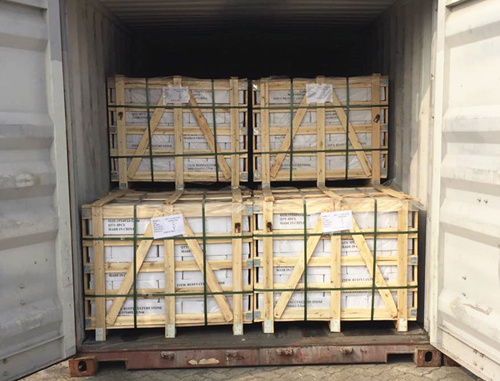
Leveraging 27-Ton Payloads in 22G1 Heavy Tested Units
Standard 20ft 22G1 containers support a maximum gross weight of 30,480 kg. With a typical tare weight of 2,350 kg, these units offer a payload capacity of approximately 28.1 tons. Planning for 27-ton loads provides a safety margin for weight variances and inland road regulations while maximizing shipping efficiency.
| Container Parameter | ISO Technical Standard | Engineering Value |
|---|---|---|
| ISO Size/Type Code | 22G1 (Type Group 22GP) | 20′ x 8’6″ General Purpose |
| Max Gross Weight (MGW) | ISO 668 Heavy-Tested | 30,480 kg |
| Average Tare Weight | Steel Construction | 2,350 kg |
| Maximum Net Payload | Structural Ceiling | 28,130 kg |
Engineering Standards of 22G1 Heavy-Tested Containers
ISO size type 22G1 defines heavy-duty 20ft general purpose steel containers with an 8’6″ height. Major liners like Hapag-Lloyd and Maersk certify these units for a Max Gross Weight (MGW) of 30,480 kg. Steel construction and reinforced flooring allow for the concentrated weight of stacked natural stone. Technical specs for 22GP type group units ensure structural integrity during crane lifts and sea transit.
Structural Limits and Payload Margin for Safe Transport
Empty tare weights for 22G1 units typically range from 2,300 kg to 2,400 kg. Hapag-Lloyd engineering sheets specify a max payload of 28,130 kg for standard 20ft boxes. A 27-ton cargo target remains 1.1 to 1.2 tons below the structural ceiling to account for scale variance. Maintaining this weight buffer prevents panel damage and meets 2026 safety standards for inland axle load limits.
Axle Load Safety & Center of Gravity Management
Carriers manage axle loads and center of gravity to meet 2026 road safety standards. Proper pallet placement prevents the uneven weight distribution responsible for over 50% of US road violations. By centering stone mass and following Federal Bridge Formula limits, shippers protect infrastructure and ensure stable vehicle handling during transit.
Federal Highway Compliance and Axle Limits
The US Federal Highway Administration (FHWA) caps weight at 20,000 pounds for single axles and 34,000 pounds for tandem axles. These regulations work alongside the Federal Bridge Formula, which calculates maximum allowable weights based on the spacing between axles to prevent road and bridge fatigue. Uneven stone distribution causes more than half of all overweight violations in the United States. Logistics teams use certified scales to verify per-leg weight compliance for ocean, road, and rail transport stages.
Container Floor Integrity and Weight Distribution
ISO 1496-1 technical specifications limit forklift axle loads to 5,460 kg for standard container floors with a 142 cm² wheel contact area. Steel-floor containers provide extra durability, accommodating higher axle loads up to 9,200 kg for dense stone materials. Standard 20ft units support floor spread loads of 4.8 tons per meter. Using dunnage or sleds helps distribute this mass evenly and centers the load over truck axles to maintain vehicle stability during sharp turns or sudden braking.
Elevate Your Portfolio with Premium Factory-Direct Stacked Stone
Landed Cost Case Study: 21-Ton vs. 27-Ton Loading
Optimizing 20ft container payloads requires balancing the ISO 30,480 kg maximum gross weight against regional road limits. While US lanes typically cap at 21 metric tons to meet road-legal gross vehicle weight standards, increasing to 27 tons in 22G1 units lowers the per-square-meter freight cost for 2026 high-volume projects.
| Loading Strategy | Cargo Weight | Primary Constraint |
|---|---|---|
| Standard US Import | 21 Metric Tons | Inland Road GVW & Axle Limits |
| Standard EU Import | 24 Metric Tons | European Trucking Regulations |
| Maximized Payload | 27-28 Metric Tons | ISO 668 Container Structural Rating |
Regional Weight Restrictions and Payload Realities
ISO 668 standards rate 20ft containers for a 30,480 kg maximum gross weight. This specification allows a theoretical cargo payload of approximately 28,250 kg. Logistics providers like Freightos and Rockstone cap US-bound stone at 21 metric tons to comply with road-legal gross vehicle weight (GVW) and axle limits. Exceeding these thresholds often triggers heavy fines or requires expensive transloading at the port.
European lanes allow for higher density. Standard operational caps there reach 24 metric tons per container. Transporting a 27-ton load requires 22G1 heavy-tested equipment. These shipments frequently involve special overweight permits or short-haul rail-to-port connections to move the material without violating regional trucking laws.
Impact of Increased Tonnage on Unit Freight Costs
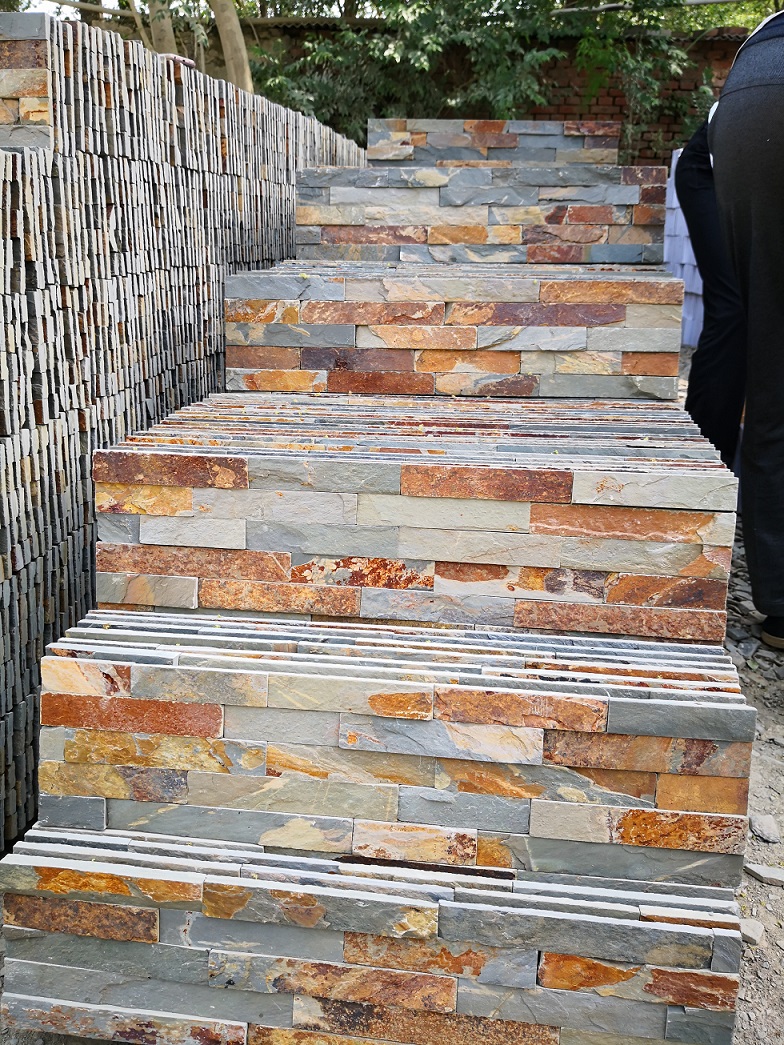
A standard 21-ton load accommodates roughly 656 square meters of stacked stone panels at a weight of 32 kg/m². Maximizing the payload to 27 tons increases the total product volume per shipment by nearly 28%. This approach spreads fixed ocean freight costs over a larger inventory, which reduces the landed cost per square meter.
High-density loading strategies reduce the total number of containers required for large-scale 2026 commercial projects. Fewer containers lead to lower port handling and brokerage fees. Exporters utilize 22G1 units to safely manage the 28,000 kg structural limit when pushing toward the 27-ton mark, ensuring the equipment handles the stress of heavy masonry products during transit.
Preventing Panel Damage: Crushing Resistance & Pallet Reinforcement
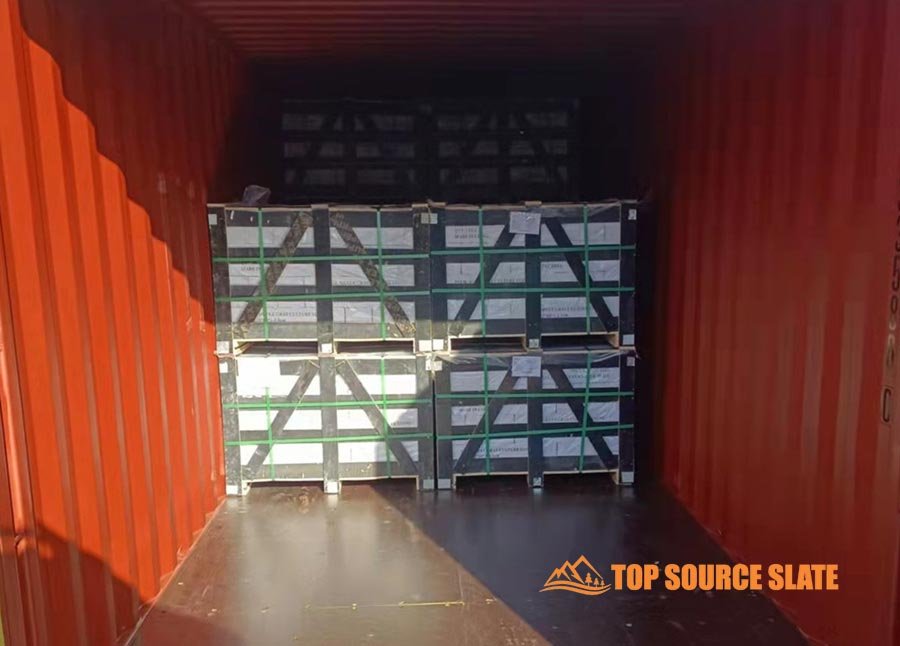
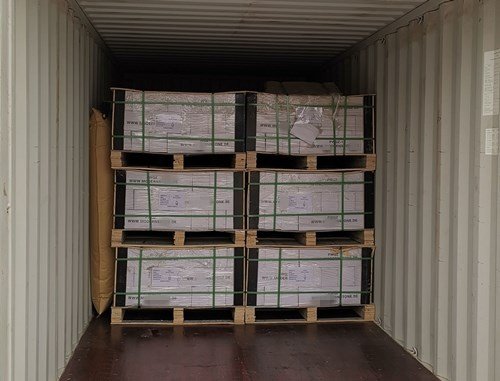
Protecting stone panels involves using 28mm reinforced marine-grade flooring and Vertical Load Bars (VLB) to redistribute weight. These systems support a 28,000 kg payload by creating independent stacking levels, which removes direct pressure from lower stone tiers and prevents crushing during 2026 transit cycles.
Pressure Distribution and Vertical Load Thresholds
Engineers maintain stone slab pressure below 5 PSI to prevent fractures during high-density 20ft container stacking. While standard pallets handle a 1,250 kg working load, the Corten steel container frame supports a total cargo weight of 28,000 kg. This structural integrity ensures the container remains rigid even when loaded to its maximum gross weight of 30,480 kg, preventing deformation that could squeeze the cargo.
Corrugated panels and reinforced corner posts absorb the kinetic energy of rail and road vibrations. Internal lashing rings and tie rails secure the 33.2 cubic meter volume to prevent lateral cargo shifting. These features work together to maintain the alignment of stone stacks, which reduces the risk of edge chipping or surface scratching caused by movement within the container.
Reinforced Flooring and Modular Support Hardware
Containers utilize 28mm marine-grade plywood or treated bamboo flooring to resist moisture-induced warping and heavy-load deformation. This specific thickness provides the necessary resistance to the localized pressure exerted by dense stone pallets. Treating the floor materials for moisture resistance also prevents the degradation of the wood, which ensures the base remains level throughout the shipping duration.
Vertical Load Bars (VLB) create an adjustable secondary stacking base, doubling pallet capacity from 10 to 20 units without compressive failure. This hardware transfers the weight of the upper tier directly to the container frame rather than onto the lower cargo. The multi-step packaging process uses reinforced cartons and fumigated wooden crates to meet 2026 international maritime safety standards. High-strength epoxy resin and Z-shape interlocking designs ensure panels remain bonded and secure under extreme environmental shifts.
Final Thoughts
Choosing 20ft containers over 40ft alternatives aligns shipping capacity with the physical density of stacked stone. Maximizing the cargo weight within 22G1 heavy-tested units reduces the total number of shipments needed for high-volume projects. This strategy lowers the freight cost per square meter while staying within the structural limits of global maritime equipment.
Logistics teams balance regional road regulations with ISO structural ratings to maintain safety and efficiency. Proper weight distribution and reinforced packaging protect the product from transit damage and prevent costly road violations. Adopting these payload standards ensures that heavy masonry shipments arrive intact and stay within budget for 2026 infrastructure demands.
Frequently Asked Questions
Why choose 20ft units over 40ft containers for heavy stone transport?
40ft containers carry higher tare weights—between 3,750 and 8,268 lbs—which lowers the available net payload for dense cargo. 20ft units optimize payload efficiency up to 28,400 kg, so shippers avoid wasting volume on empty space while reaching weight limits faster.
What markings identify a heavy-tested 20ft container?
Check the CSC plate for DNV 2.7-1 or ISO 10855-1 certifications. These specific units support gross weights up to 20,000 kg and include specialized slings for heavy stacking and offshore handling, distinguishing them from standard 22G1 units.
How do logistics teams manage 27-ton payloads without exceeding axle limits?
Loaders distribute weight across 5-axle semi-trucks, keeping tandem drive and trailer axles under 34,000 lbs each. This setup follows the Federal Bridge Formula to ensure compliance and avoid overweight penalties in 2026 shipping lanes.
Which packaging methods stop stone from crushing on the bottom layer?
Install 10 mm thick protective boards and rigid pallet bases to distribute pressure. We limit collar depth to 500 mm per unit load to ensure compressive stress stays within the natural flexural strength limits of the stone.
SEO
Title: Logistics Secrets: Maximizing 20ft Container Payloads for Stacked Stone to Save 20% on Freight
Description: 20ft container load optimization helps stone exporters maximize payloads to 27 tons. These strategies lower landed costs and ensure road safety.
URL: 20ft-container-load-optimization-stacked-stone
Keywords: 20ft container load optimization
