


A failed stacked stone installation does more than damage a project’s aesthetics; it creates serious safety risks and expensive liability issues for commercial contractors. Natural stone panels often weigh between 8 and 13 lbs per square foot, meaning the underlying wall must provide significant structural support. Success depends on a rigorous assessment of structural capacity, moisture levels, and surface cleanliness to ensure the bond stays secure for the life of the building.
This checklist outlines the technical requirements for preparing drywall, concrete, and wood substrates according to 2026 building standards. We analyze critical metrics like the 175 psi tensile strength requirement for masonry and the mandatory 28-day curing period for new concrete. This guide provides specific data on moisture barriers, load-bearing limits for gypsum board, and the mechanical surface profiles (CSP) necessary to prevent delamination in high-traffic or wet environments.
Substrate Assessment: Flatness, Cleanliness, and Suitability
Successful substrate assessment relies on verifying surface cleanliness via ISO 8501-1 standards and ensuring geometric flatness within FF/FL tolerances. Professionals measure chemical purity through the Bresle method and validate concrete readiness using 28-day curing cycles or ASTM F1869 moisture tests to prevent adhesion failure.
| Application Environment | Flatness/Levelness (FF/FL) | Critical Requirements |
|---|---|---|
| Precision Manufacturing | FF 45/FL 35 – FF 60/FL 40 | Vibration control for medical/aerospace equipment |
| Pharmacy & Laboratory | FF 35/FL 30 | Stability for analytical scales and devices |
| Food Production | FF 30/FL 25 | Integration of functional drainage slopes |
| Washdown Areas | FF 25/FL 20 | 1–2% slopes to prevent standing water |
Cleanliness Standards and Contaminant Verification
Surface preparation begins with a visual assessment using ISO 8501-1 to classify rust and corrosion across grades A through D. While visual inspection provides a baseline, technicians must also identify invisible soluble contaminants that compromise stone veneer adhesion. We use the Bresle method (ISO 8502-6) to extract soluble chlorides and apply turbidimetric analysis (ISO 8502-11) to measure water-soluble sulfates. These quantitative tests ensure the substrate meets chemical purity requirements before the application of bonding agents.
Industrial cleaning protocols like SSPC-SP 1 and SSPC-SP 10 allow for a maximum of 33% light staining within a 3.0-inch square area. This threshold balances field efficiency with long-term coating performance. Furthermore, contractors must remove all laitance, dust, and loosely adhering concrete to satisfy SSPC-SP 13/NACE 6 standards. Eliminating these weak surface layers creates a high-integrity mechanical bond between the structural substrate and the decorative stone veneer.
Geometric Flatness and Moisture Compliance
Geometric tolerances dictate the stability of the final installation. Precision manufacturing environments demand high Floor Flatness (FF) and Floor Levelness (FL) ratings to protect sensitive calibration equipment from substrate irregularities. Conversely, food processing facilities prioritize drainage, requiring lower FF/FL values to accommodate 1–2% slopes. Matching these tolerances to the specific operational needs of the facility prevents premature wear and ensures the stone panels sit flush against the wall or floor system.
Moisture management serves as the final validation step for concrete substrates. New concrete requires a mandatory 28-day curing period to reach structural equilibrium. Before installation, we verify moisture levels using ASTM F1869, which requires vapor emissions to remain below 3 lb per 1,000 square feet over a 24-hour period. Using diagnostic tools like the Protimeter allows us to confirm internal moisture content stays below 6%. Maintaining these environmental thresholds prevents hydrostatic pressure from causing delamination or adhesive failure over time.
Concrete & Masonry Prep: Curing, Sealing, and Surface Profiling
Preparation for 2026 stone installations centers on a 28-day curing cycle and achieving specific ICRI Concrete Surface Profile (CSP) levels. Installers must verify the substrate reaches a tensile strength of 175 psi and maintains relative humidity below 80% to prevent bond failure or moisture-related stone delamination.
Curing Timelines and Mechanical Surface Profiling (CSP)
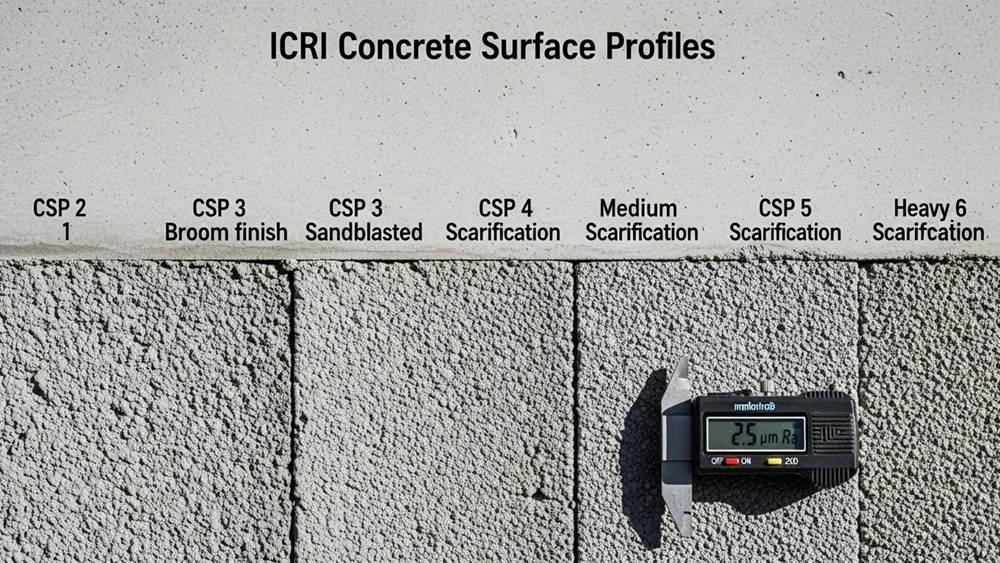
New concrete requires a minimum 28-day curing period before applying stone overlays. This timeframe allows the material to complete necessary shrinkage and hydration cycles, ensuring the substrate remains stable under the weight of the stone. Proper bonding depends on achieving specific textures defined by the International Concrete Repair Institute (ICRI). For light ledger panels, installers target CSP levels 1-3. Grinding or acid etching at a rate of 1 gallon per 50-75 square feet typically creates this fine sandpaper texture.
Heavy stone systems require more aggressive mechanical preparation to reach CSP 4-6. Professionals use shot blasting or scarification to remove up to 0.125 inches of surface laitance per pass, exposing the aggregate for a superior mechanical bond. Before mortar application, masonry surfaces must reach a saturated surface-dry (SSD) condition. Pre-wetting the substrate prevents it from absorbing water out of the thin-set, which would otherwise cause the adhesive to dehydrate and fail prematurely.
Moisture Verification and Substrate Soundness Testing
Confirming the moisture content of the substrate is a critical step in preventing delamination. Installers use probe testing after a 72-hour acclimation period to ensure the concrete’s relative humidity (RH) sits at or below 80%. In addition to moisture checks, the surface must prove its structural integrity through direct tensile strength tests. A substrate suitable for permanent stone application must exceed 175 psi (1.21 MPa). If the surface fails this pull-test, the stone will eventually pull the top layer of concrete away from the wall.
Chemical preparation requires careful neutralization. After etching, technicians scrub the surface to ensure a pH-neutral profile, as leftover acid residues can weaken adhesive bonds over time. Installers also inspect the masonry for existing sealers or non-durable paints. Stacked stone requires an unsealed, porous surface to allow thin-set or epoxy to penetrate. If the substrate is non-porous or contaminated with oils, mechanical abrasion must continue until the surface reaches a state where water easily absorbs into the masonry.
Drywall Load Limits and Mechanical Fastening Requirements
Standard 1/2″ drywall supports 5–10 lbs with basic fasteners but handles up to 50 lbs with specialized anchors. Because stone panels weigh 8–13 lbs/sqft, 2026 building codes mandate structural backing—such as cement board or direct stud attachment—to meet 5 PSF lateral load limits and L/240 deflection requirements.
| Fastening Method | Load Capacity | Structural Application |
|---|---|---|
| Nails or Screws (No Anchor) | 5–10 lbs | Lightweight hanging only |
| Plastic Expansion Anchors | 10–25 lbs | Basic non-structural fixtures |
| Toggle or Molly Bolts | 25–50 lbs | Distributed loads on 1/2″ gypsum |
| Advanced Toggle Systems | Up to 150 lbs | Heavy mirrors or shelving |
| Direct Stud Attachment | 80–100+ lbs | Structural backing for heavy panels |
Weight-Bearing Thresholds for Gypsum Board and Mechanical Anchors
Standard 1/2″ drywall relies on the integrity of its paper facing and gypsum core to hold weight. Concentrated loads exceeding 10 lbs typically cause the core to crumble when using basic nails or screws without additional support. Plastic expansion anchors improve this capacity to 10-25 lbs by creating tension against the inner wall of the hole, but they remain susceptible to pull-out under vibration or shear stress.
Specialized toggle and molly bolts handle significantly higher weights, ranging from 25 to 50 lbs, by spreading the load across a larger surface area on the back of the drywall panel. High-performance toggle systems reach capacities of up to 150 lbs by leveraging the structural tension of the entire assembly. For maximum safety, direct fastening into wood or steel studs increases the load capacity to over 100 lbs per attachment point, providing the necessary stability for permanent installations.
Compliance Standards for Heavy Cladding and Structural Backing
The 2026 International Building Code (IBC) and AISI S220 standards dictate that interior nonstructural walls must resist a minimum 5 PSF lateral live load. Natural stone panels, which weigh between 8 and 13 lbs/sqft, exceed the safe limits of standard gypsum board. Brittle finishes require a deflection limit of L/240 to prevent cracking in the stone or failure of the bond between the material and the substrate.
Installing heavy stone panels requires cement backer boards or reinforced structural backing to ensure long-term stability. Standard drywall cannot provide the moisture resistance or the rigid surface needed for heavy mortars and stone weights. Proper structural attachment also protects internal infrastructure, preventing anchors from penetrating deep enough to damage electrical wiring or plumbing lines. Following these deflection and load requirements mitigates common failure modes like anchor pull-out and substrate warping.
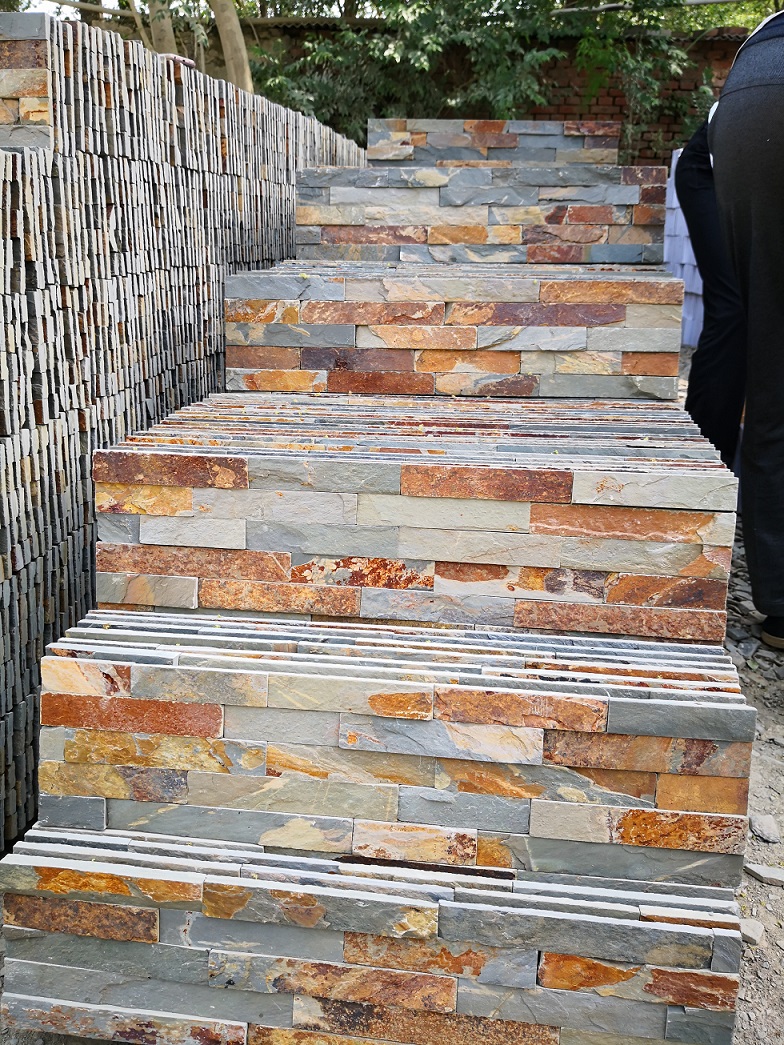
Authentic Natural Stone Panels: Precision-Engineered for Professional Results
Wood Substrates: Moisture Barrier and Backer Board Selection
Successful installation on wood requires substrate moisture content below 12% and the use of high-performance barriers. Professionals use 6-20 mil polyethylene sheets or MgO backer boards like MAXTERRA to block vapor transmission, ensuring the natural stone panels remain bonded without structural warping or mold growth.
Critical Moisture Thresholds and Substrate Stabilization
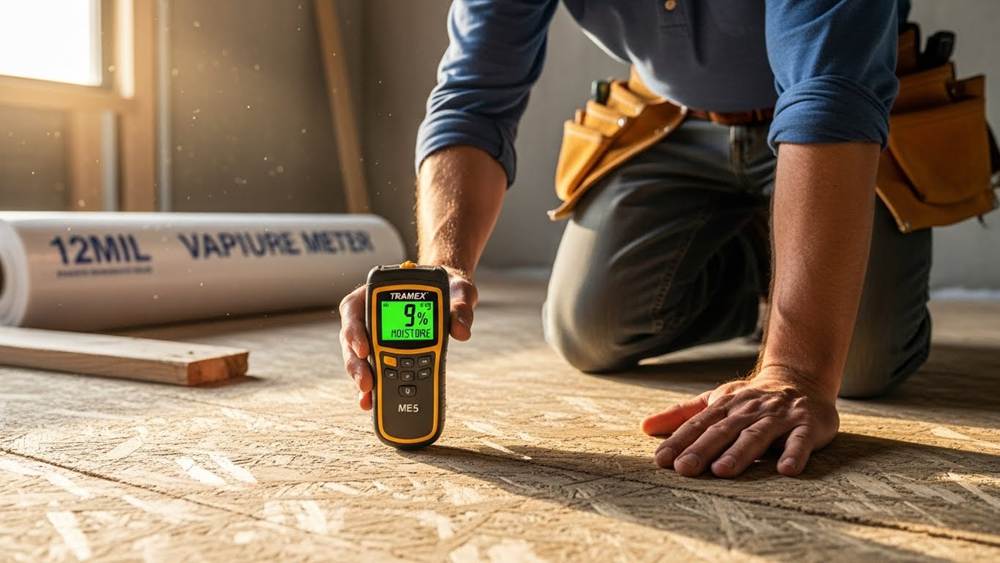
Maintaining moisture content (MC) below 12% for plywood and OSB subfloors prevents warping and cupping that could compromise stone adhesion. While some sheathing standards allow levels up to 19%, keeping moisture at 16% or lower minimizes the risk of structural movement. Hardwood-integrated installations require a tighter equilibrium moisture content of 6-9% to match 2026 indoor climate standards. Installers use pin-type meters from manufacturers like Tramex or Delmhorst to verify substrate readiness before attaching backer boards. Wood undergoes significant dimensional shifts near the fiber saturation point of 30% MC, which can shear stone adhesives and cause delamination.
Vapor Barrier Specifications and Backer Board Integration
Polyethylene vapor barriers require a 6 mil minimum thickness for standard vapor control, while puncture-prone areas like basements or garages need 12-20 mil protection. Magnesium Oxide (MgO) boards like MAXTERRA provide superior mold resistance and structural rigidity compared to traditional OSB or gypsum, often functioning without extra moisture barriers. We follow ASTM F2170 for Relative Humidity (RH) testing and ASTM F1869 to ensure Moisture Vapor Emission Rates (MVER) remain below 3 lbs per 1,000 square feet per day.
Installers overlap polyethylene sheet seams by 6 inches and seal them with waterproof tape to maintain a perm rating below 0.1. In conditioned spaces, wood subfloors may not require a vapor retarder, but high-risk zones demand strict impermeability. Specialized adhesives like Bostik GreenForce offer integrated vapor protection and high-strength bonding, creating a reliable interface between the wood substrate and the stone panel.
Special Prep for Wet Areas and High-Heat Zones (Showers, Fireplaces)
Installations in wet areas require continuous waterproofing membranes and moisture-resistant backer boards to prevent structural damage. For high-heat zones like fireplaces, builders must use non-combustible materials compliant with ASTM E84 and maintain specific clearances, such as 400 mm hearth extensions, to meet 2026 safety protocols.
Moisture Protection for Shower and Wet Zone Substrates
Selecting cement-based or glass-mat gypsum backer boards provides a stable primary substrate for shower walls and steam rooms. Installers apply a continuous liquid-applied or sheet-form waterproofing membrane to create an impenetrable barrier before beginning stone application. This prevents moisture from reaching the wall cavity and compromising the structure. Crews must reinforce all seams, corners, and fastener penetrations with alkali-resistant mesh tape and dedicated sealants. Using high-strength epoxy resin adhesives for stone panels ensures a permanent bond that remains stable under constant humidity and direct water contact.
High-Heat Configuration and Fireplace Safety Standards
Fireplace installations require materials that meet ASTM E84 standards for zero flame spread and smoke development. Technicians must maintain a minimum hearth extension of 400 mm (15¾ in) in front of the fireplace opening and 200 mm (7⅞ in) beyond each side to comply with safety codes. For shielding behind wood or pellet stoves, UL 1618 Standard wall protectors such as PermaBASE cement boards provide the necessary thermal resistance. Recessing polished stone faces at least 1/8 inch from the heat source minimizes direct heat transfer and prevents finish discoloration. Hearth supports must consist of reinforced concrete slabs at least 100 mm thick to support the heavy dead load of stone panels and surrounds safely.

Primer Application and Waterproofing Membrane Necessity
Primers are required for all waterproofing systems and self-adhered membranes to ensure bond strength and seal substrate pores. Installers must apply primer at one gallon per 100 square feet and allow 24 hours of dry time. Waterproofing membranes require a minimum thickness of 80 mils to bridge 1/8-inch cracks effectively.
Adhesion Promotion and Substrate Pore Sealing
Waterproofing applications require primer to establish a secure bond between the substrate and the membrane. While dampproofing might treat primer as optional, waterproofing systems and self-adhered membranes rely on it to prevent delamination. Primers seal substrate pores, which stops moisture from infiltrating beneath the stone panel assembly. This step remains critical for the long-term integrity of the installation.
Environmental conditions dictate the specific primer type. Water-based primers with VOC levels below 100 g/L work best for green concrete or damp environments, including insulated concrete forms. Solvent-based primers provide increased grab strength and faster tack times on standard concrete and concrete masonry units. Installers must verify that the selected primer matches the membrane manufacturer’s compatibility requirements.
Membrane Thickness and Crack Bridging Specifications
Waterproofing membranes must maintain a minimum base thickness of 80 mils when measured over substrate peaks. This thickness allows the system to bridge live structural cracks up to 1/8 inch wide. Testing standards require samples to meet this 80-mil threshold or the specific thickness needed to pass crack bridging tests, whichever is greater. Independent test reports verifying these performance metrics must stay current within a two-year window.
Application rates and environmental factors also influence system success. Asphalt-type primers require an application rate of one gallon per 100 square feet. Surfaces must reach a minimum ambient temperature of 40°F before installation begins. After application, the primer needs at least 24 hours of curing time to dry completely before the membrane is mopped or applied. Skipping this window leads to adhesion failure and compromised moisture resistance.
Final Thoughts
Successful stacked stone installation depends on matching the weight and environmental demands of the stone to the specific properties of the wall. Drywall rarely handles the heavy load of natural stone safely, so cement boards and structural backing remain the standard for long-term stability. Installers must prioritize mechanical bonds by achieving the correct surface profile and ensuring concrete is fully cured and chemically clean before the first panel goes up.
Skipping preparation steps like moisture testing or primer application often leads to delamination and structural failure. Using high-performance vapor barriers on wood and continuous waterproofing in showers protects the substrate from rot and moisture damage over time. Following these technical standards ensures the stone facade remains secure and intact, even when exposed to heat, humidity, or heavy structural loads.
Frequently Asked Questions
Can I install stacked stone directly onto drywall or sheetrock?
Stacked stone veneer should not be installed on drywall. These panels typically weigh 14–15 lbs per square foot, which exceeds the structural capacity of gypsum-based boards. Reliable 2026 installation standards require 1/2-inch cement board or masonry substrates like brick and concrete block to support the weight and lateral pressure.
Does a concrete wall require sealing before stone panel installation?
Concrete walls must remain unsealed before installation to ensure a strong bond. Installers must remove paint, oils, and release agents to expose the bare substrate. Sealing should only occur on the stone surface itself after the installation has cured for at least four weeks.
What is the industry standard for testing substrate flatness?
Professional installers use the ASTM E1155 standard to measure Floor Flatness (FF) and Floor Levelness (FL). Testing should occur within 72 hours of concrete placement. For 2026 projects, surfaces must comply with ANSI A108.02, allowing no more than 1/4-inch variation over a 10-foot span.
Which waterproofing membranes are recommended for wet area installations?
Liquid-applied membranes, specifically polyurethane or acrylic-based systems, provide the best protection for wet areas. These systems must meet AS 4858 or the 2026 ANSI A118.10 L standards. Acrylic systems offer fast curing times, often becoming touch-dry within 30 minutes.
Do wood backer boards need specialized wood adhesives?
Wood backer boards use cement-based flexible tile adhesives rather than wood-specific glues. The adhesive should be applied in a 2–5mm bed to eliminate voids. The primary structural support comes from corrosion-resistant mechanical fasteners installed at 300mm intervals.
Which surface contaminants must be removed before installation?
You must remove all loose paint, rust, mill scale, and poorly adherent primers. High-pressure waterjetting at 10,000 psi (70 MPa) is the preferred method for stripping contaminants and achieving the necessary surface profile for a permanent bond.
