

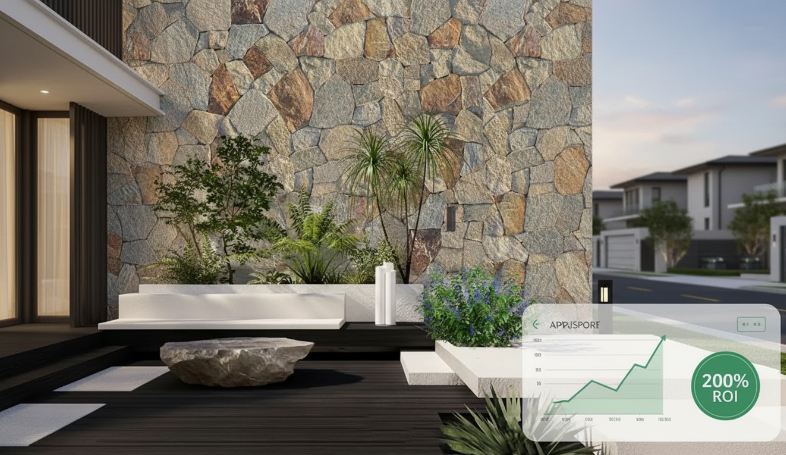
A precise cost analysis serves as the primary safeguard against the budget creep and margin erosion that often destabilize large-scale masonry projects. Inaccurate estimates for exterior cladding frequently lead to mid-cycle funding gaps, which create friction between developers and contractors while stalling project delivery timelines. Aligning material procurement with specific labor requirements ensures that high-end stone finishes remain a financial asset rather than a liability on the balance sheet.
This guide details the technical components of thin stone veneer pricing, covering raw material rates and the necessary overhead for mortar systems, metal lath, and weather barriers. We examine the cost-efficiency of professional masonry teams compared to self-performed installation and provide a framework for calculating long-term appraisal value. These sections offer a technical roadmap for navigating factory-direct sourcing and optimizing wholesale procurement for commercial and residential facades.
Average Cost Per Square Foot for Natural Thin Stone Veneer
In 2026, natural thin stone veneer has reached price parity with high-end manufactured alternatives, offering a permanent color-fast solution that eliminates the long-term replacement costs associated with fading concrete products.
Natural Stone vs. Manufactured Material Expenses
Premium natural stone veneer costs typically range from $4 to $21 per square foot depending on the geological variety and density. Historically, authentic stone commanded a significant premium, but modern precision-cutting technology has compressed this gap. Manufactured or “cultured” stone currently averages $4 to $20 per square foot, making the transition to authentic mineral surfaces a negligible expense for most commercial and high-end residential projects.
| Material Category | Avg. Material Cost (sq.ft.) | Longevity Profile |
|---|---|---|
| Natural Quartzite/Slate | $4.00 – $16.00 | 50+ Years; Zero Color Fade |
| Manufactured (Concrete) | $4.00 – $20.00 | 10–30 Years; Prone to Chipping |
| Premium Marble Veneer | $18.00 – $21.00+ | Lifetime; High Asset Valuation |
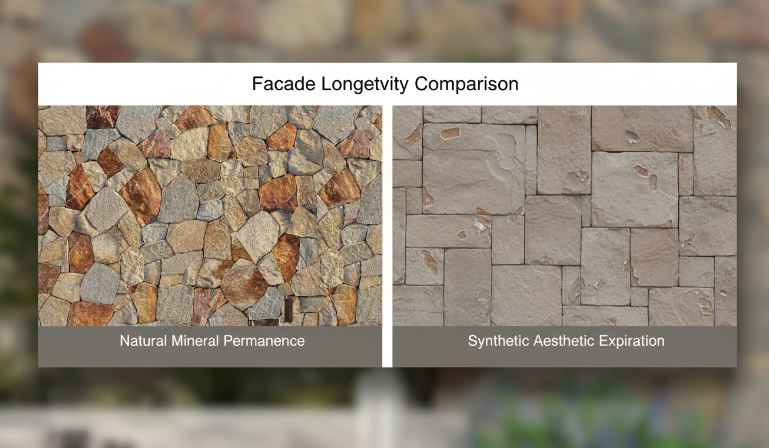
Natural stone maintains its color permanently because the pigmentation is mineral-based and integrated through the entire depth of the stone. Pigmented concrete alternatives rely on surface dyes or mixed-in oxides that often fade under heavy UV exposure, leading to mismatched colors if repairs are needed years later. Choosing authentic stone removes the risk of “aesthetic expiration” and protects the building’s exterior integrity.
Price Variations by Material Type and Series
The geological origin of the stone—slate, quartzite, or marble—dictates the base material cost. Standard slate and quartzite panels occupy the mid-range price points and offer excellent durability for both interior feature walls and exterior cladding. These materials are favored for their high density and resistance to moisture absorption, making them ideal for varied climates.
- Marble series represent the higher end of the pricing spectrum due to the luxury nature of the raw material and the care required during extraction.
- Complex textures that require precise sorting and individual hand-selection carry a slight premium over standard random-lay patterns.
- Sourcing from the same quarry layer per order minimizes color shifts and ensures a cohesive visual across large surface areas.
Wholesale and Volume Discounts for B2B Projects
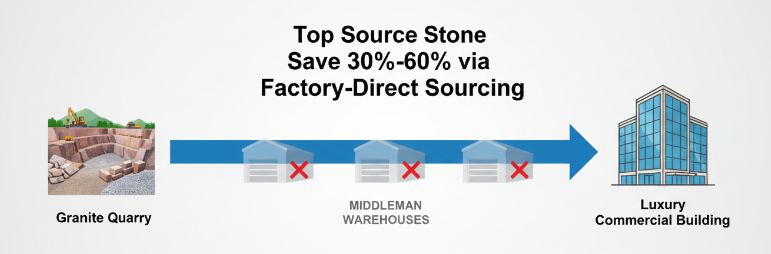
Sourcing directly from a factory-direct manufacturer like Top Source Stone allows contractors and distributors to bypass middleman markups, which typically add 30% to 60% to the retail price. For 2026, bulk purchasing strategies reward high-volume orders with significantly lower per-unit costs, providing a competitive edge for commercial facades and large-scale residential developments.
Logistics management plays a critical role in the total landed cost. Strategic container loading (up to 26 crates per container depending on port limits) helps stabilize shipping expenditures. By utilizing trial orders of 300 square meters, B2B clients can verify quality and color consistency before committing to full-scale project quantities, ensuring the “Quarry-to-Project” consistency remains intact.
Structural Cost Savings from Sawn-Back Veneer
Thin stone veneer provides massive structural savings by staying below the critical weight threshold that requires expensive masonry infrastructure. Weighing approximately 65kg/m² with a thickness strictly maintained at 25–40mm, these stones can be applied to standard wall substrates without the need for brick ledges, wall ties, or reinforced footings.
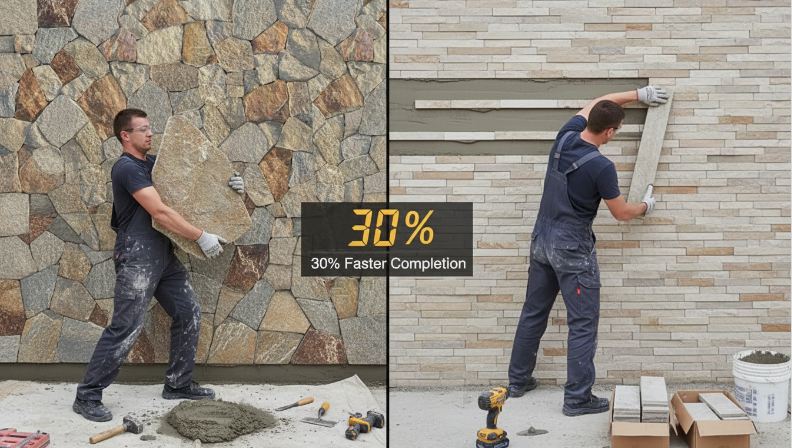
- The 100% sawn-back finish provides a flat bonding surface, reducing mortar waste and on-site labor costs by up to 30%.
- Lightweight properties allow for faster vertical installation, reducing the number of active days on the job site.
- Authentic L-shaped corner wraps create the appearance of full-depth structural blocks without the associated weight and cost of traditional masonry.
Installation Labor Costs: Masonry Contractors vs DIY
Professional masonry labor remains the primary driver of project budgets in 2026, where the 20% to 40% initial savings of a DIY approach are often outweighed by a 50% increase in project duration and the loss of structural warranties.
Professional Masonry Labor Rates in 2026
Current market data shows that skilled masons command between $40 and $100 per hour for standard thin stone veneer installations. Specialized masonry work, including foundation repair and tuckpointing, reaches rates of $70 to $120 per hour as of 2026. This escalation reflects stricter regulatory compliance and the demand for certified technicians capable of handling high-density natural stone materials.
Urban construction hubs maintain a 20% to 30% price premium over rural regions due to higher overhead, logistics management in dense environments, and complex permit requirements. Most commercial and high-end residential developers favor these warranty-backed professional services to ensure long-term structural integrity and maximize property appraisal value.
DIY Installation Economics and Risk Factors
Homeowners often look to self-installation to mitigate upfront project expenditures, effectively eliminating professional labor fees. While this offers immediate budget relief, DIY timelines often extend 50% longer than professional schedules. This delay can interrupt other construction phases and increase the total time a property remains under renovation.
| Labor Category | Hourly Rate (USD) | Project Impact |
|---|---|---|
| Skilled Mason | $40 – $100 | Full structural warranty; rapid completion. |
| Specialized Masonry | $70 – $120 | Required for foundation-tied or heritage work. |
| DIY (Self-Install) | $0 (Labor) | 50% timeline extension; risk of stone displacement. |
Technical errors in stone application frequently lead to moisture intrusion or stone displacement. In many cases, the eventual repair costs for failed DIY projects exceed the initial savings. Professional masons apply precise mortar techniques and weather barriers that are difficult to replicate without specialized training.
Productivity Gains with Individually Sawn-Back Stone
To bridge the gap between labor costs and project speed, industry experts prioritize individually sawn-back loose stone. Unlike traditional heavy stone, Top Source Stone manufactures thin stone veneer with a 100% sawn-back finish. This creates a flat bonding surface that streamlines the hand-laid installation process, reducing on-site labor costs by up to 30% for both contractors and experienced property owners.
- Precision-cut backs eliminate the need for complex substrate adjustments, significantly reducing hours required for stone leveling.
- Lightweight natural stone materials weighing approx. 65kg/m² remove the requirement for expensive structural masonry footings.
- Matching L-shaped corners bypass the need for time-consuming field miter cuts, accelerating the installation of pillars and wall ends while maintaining full-depth visual integrity.
Regional Market Variations and Compliance Costs
Geographic location and evolving building codes directly influence final project quotes. Market trends in 2026 show a significant shift toward eco-friendly masonry techniques, which may require specialized labor certifications. These certifications ensure that the installation meets modern thermal and moisture-management standards.
Standardizing installation with high-density quartzite or granite loose stone cladding helps stabilize labor costs. These materials provide a predictable, repeatable assembly method that avoids the irregularities of unrefined fieldstone. By utilizing a bespoke random-lay pattern with sawn-back pieces, masons can achieve a high-end aesthetic without the erratic labor hours associated with traditional full-bed masonry.
Boost Profitability with Premium Stacked Stone

Material Overhead: Mortar, Metal Lath, and Weather Barriers
While natural stone provides the aesthetic, the structural integrity of a 2026-spec wall depends entirely on the hidden assembly of high-performance bonding agents and moisture-management layers.
Standard masonry practices have evolved to prioritize chemical bonding over simple mechanical friction. We recommend polymer-modified thin-set mortars because they provide superior grab and flexibility for vertical stone applications. These specialized mortars accommodate the weight of natural stone and prevent sagging during the installation process. For projects using Top Source Stone, the precision sawn-back finish on each loose stone ensures a flat bonding surface, allowing the mortar to achieve maximum surface contact and reducing the volume of material needed per square foot.
| System Component | Standard Specification | 2026 Performance Standard |
|---|---|---|
| Bonding Mortar | Type S Masonry Cement | Polymer-Modified Thin-Set |
| Metal Lath | 2.5lb Dimpled Lath | 3.4lb Self-Furring Galvanized |
| Moisture Barrier | Single-Layer Grade D Paper | Dual-Layer WRB + Rainscreen Mesh |
Polymer-Modified Mortars and High-Strength Adhesives
High-strength adhesives used during the preparation of natural stone products ensure long-term stability in extreme climates. These bonding agents must accommodate natural thermal expansion, particularly in exterior projects exposed to high UV or freeze-thaw cycles. Using the correct adhesive profile eliminates the risk of delamination, especially when working with high-density quartzite or granite loose stone.
- Select mortars with high sag resistance to support the weight of hand-laid stone pieces.
- Ensure the mortar chemistry matches the stone density to facilitate a permanent bond.
- Apply mortar to both the substrate and the sawn-back of the stone for 100% coverage.
Corrosion-Resistant Metal Lath and Scratch Coats
Metal lath acts as the structural skeleton for the mortar bed and provides the mechanical bond required for stone veneer. We specify 3.4lb galvanized expanded metal lath to resist rust and provide a rigid surface. Self-furring lath creates a consistent gap between the barrier and the stone, which allows the mortar to wrap around the metal for a stronger grip.
A properly applied scratch coat over the lath creates a flat, textured substrate. This simplifies the placement of bespoke random-lay stone patterns and ensures the mason can focus on the artistic arrangement of the loose stones rather than correcting wall irregularities. The galvanized coating is essential for preventing oxidation that can lead to structural failure over decades.
Weather-Resistive Barriers and Drainage Solutions
Exterior installations require a comprehensive moisture management system to protect the underlying structure. Dual-layer weather-resistive barriers (WRB) serve as the primary defense against water intrusion. Integrated drainage meshes or rainscreen systems allow trapped water to exit the wall assembly, preventing rot and mold growth in the substrate.
While 100% natural stone is inherently waterproof, these overhead materials ensure the entire wall system meets 2026 building codes for moisture protection. Modern rainscreen solutions offer superior airflow compared to traditional components, significantly extending the lifespan of the building envelope and maintaining the climate-tested durability of the stone cladding.
Long-Term ROI: Adding Massive Appraisal Value to Your Home
Natural thin stone veneer acts as a high-performance equity multiplier, frequently recovering over 200% of its initial cost by eliminating long-term maintenance and maximizing curb appeal in the 2026 housing market.
Increasing Residential Curb Appeal through Exterior Masonry
First impressions in the current housing market rely heavily on durable, high-end exterior finishes. Natural stone facades serve as a primary visual differentiator that directly influences initial property valuations and buyer interest. Unlike synthetic or painted materials that can appear dated within a few years, natural stone offers a timeless aesthetic that maintains its relevance across architectural cycles. Property listings that highlight “real stone” features consistently attract premium buyers who equate masonry with structural quality and long-term stability.
- Natural stone installations often recover a significant percentage of their cost during professional home appraisals.
- The authentic texture of materials like slate and quartzite provides a depth that manufactured alternatives cannot replicate.
- Strategic use of loose stone cladding on entryways and columns creates an immediate “wow factor” that can increase a home’s sale price by up to 7%.
Authentic Natural Stone vs. Synthetic Resale Value
Appraisers and savvy investors distinguish between 100% natural quarried stone and concrete-based alternatives. While manufactured stone has seen rising ROI in recent years, reaching over 200% in some regions, natural stone commands a higher price point due to its inherent longevity. Natural materials provide unique, non-repeating textures and colors that remain stable under heavy UV exposure. This lack of fading ensures the property maintains its “new” appearance for decades without requiring the staining or sealing often needed for cement-based products.
- High-density quartzite and granite offer superior resistance to moisture and staining compared to porous manufactured options.
- Natural stone retains a “lifetime color fastness,” preventing the washed-out look common in aged synthetic veneers.
- The “Zero-Repeat Natural Variation” of individual stones ensures each installation remains a unique, bespoke feature wall.
Equity Gains from Low-Maintenance Interior Features
Placing stone veneer in high-traffic interior areas creates a luxury feel while reducing long-term upkeep costs. Fireplace surrounds and accent walls function as permanent upgrades that do not require the periodic repainting or repair associated with drywall. The non-combustible nature of natural stone makes it a functional and safe investment for kitchen and hearth applications, adding both safety value and aesthetic appeal. These features are often cited in appraisal reports as high-value permanent improvements.
- Individually sawn-back stones ensure maximum adhesion and a flat bonding surface for interior applications.
- Stone surfaces are highly resistant to the scuffs and impacts common in busy residential hallways or living areas.
- The thermal mass of natural stone can assist in minor temperature regulation around fireplaces, improving functional efficiency.
Structural Longevity and Cost-Efficient Upgrades
The lightweight nature of modern thin stone allows for professional-grade upgrades without the expense of structural reinforcements. With a thickness strictly maintained at 25–40mm, these stones weigh approximately 65kg/m², removing the need for costly concrete footings or complex wall ties. This weight profile allows masons to apply the veneer directly to existing sound substrates, significantly reducing site preparation costs while delivering the visual integrity of full-depth structural blocks.
- Individual loose stones allow for a bespoke random-lay pattern that mimics traditional heavy dry-stack walls.
- Precision-cut sawn backs reduce on-site labor costs by up to 30% compared to irregular, non-processed stone.
- Matching L-shaped corners provide an authentic masonry wrap, ensuring the finished project is indistinguishable from full-bed masonry.

Factory-Direct Sourcing: B2B Wholesale Pricing with Top Source Stone
Direct-to-quarry procurement eliminates the 30% to 60% markups common in retail distribution while ensuring single-vein color consistency for high-volume 2026 commercial projects.
Direct Quarry Control and Integrated Manufacturing
We maintain total oversight of the supply chain by owning our quarries and managing the entire production process from extraction to final packaging. This internal control ensures that natural thin stone veneer is sourced from the same quarry layer or vein for every order, effectively minimizing the natural color shifts that often plague mixed-batch retail orders. In modern 2026 architecture, where large-scale feature walls require aesthetic uniformity, this geological consistency is a critical requirement.
| Procurement Metric | Traditional Retail/Distributor | Top Source Stone (Direct) |
|---|---|---|
| Material Price Markup | 30% – 60% Middleman Fees | Net Factory-Direct Rates |
| Quality Control | Third-Party Inspection | 3-Stage In-House QA |
| Batch Consistency | Random Inventory Mixing | Single-Vein Sourcing |
Our manufacturing facility utilizes precision infrared cutting equipment to produce exact dimensions, ensuring every piece of thin stone veneer retains a strictly maintained thickness of 25–40mm. This precision results in a 100% individually sawn-back finish, creating a flat bonding surface that reduces on-site labor costs by up to 30%. A three-stage quality check during cutting, assembly, and packing guarantees that every crate meets international durability standards before leaving the factory.
Eliminating Middleman Markups for Project Profitability
Sourcing directly from the manufacturer removes third-party procurement costs that typically inflate budgets for contractors and developers. By bypassing regional warehouses and secondary markups, B2B buyers access true wholesale rates. This transparent pricing structure allows for more accurate bidding on commercial tenders and high-volume residential developments where margins are tight. Direct communication with our factory team streamlines the 2026 procurement process, allowing for custom stone specifications without the “lost in translation” delays of traditional distribution.
Scalable OEM Services and Custom Brand Packaging
We support our B2B partners through comprehensive OEM and ODM services, including private label packaging designed for established stone brands and regional wholesalers. Our production line accommodates non-standard sizes and unique material finishes for projects that meet our 300-square-meter minimum order quantity.
- Distributors can strengthen market presence by using custom-printed boxes featuring their own company logos and technical data.
- We use high-strength epoxy adhesives to ensure stone pieces remain permanently bonded to any required panel backings during long-distance transit.
- Trial orders of 300 square meters allow for market testing of new colors like Ice White Quartzite or Blue Diamond Ledgestone.
Strategic Logistics and Global Distribution Efficiency
Our logistics department manages the shipment of over 220 containers annually, optimizing container space to minimize transit risks and lower the landed cost per square foot. We use reinforced, fumigated wooden crates to protect the natural stone from shifting during international sea freight. For US-based projects, we strictly adhere to port weight standards (typically 17.5 tons per container) to avoid destination delays, while heavy-weight options (up to 26.5 tons) are available for ports with the necessary equipment. We provide dedicated tracking and coordination to help project managers meet tight delivery schedules and avoid costly site delays.
Conclusion
Estimating the total cost of a stone veneer project involves balancing material quality with installation efficiency and long-term property value. Selecting natural loose stone with a precision sawn-back finish reduces labor time while ensuring the durability needed for high-end masonry work.
Dealers and wholesalers can evaluate our current inventory of individually sawn-back stones to align project budgets with factory-direct sourcing. Reach out to our team to request a quote or a technical sample for your next commercial order.
Frequently Asked Questions
How much does thin stone veneer cost per square foot?
Material costs for thin stone veneer typically range from $4 to $21 per square foot. This pricing varies based on the rarity of the stone, the quarrying process, and the specific cut or finish of the material.
Is natural thin stone veneer more expensive than faux stone?
Natural thin stone veneer is highly competitive with manufactured alternatives, with natural stone pricing spanning $4–$21 per square foot compared to $4–$20 for faux stone. While the price ranges overlap significantly, natural stone provides superior long-term value due to its durability and colorfastness, though premium natural cuts can reach higher price points than mass-produced faux products.
How much to install thin stone veneer?
Professional installation for thin stone veneer generally costs between $5 and $12 per square foot in labor. Total installation costs depend on the substrate preparation required, the complexity of the architectural details, and the weight of the stone, with lightweight solutions (under 15 pounds per square foot) often streamlining the process.
Does stone veneer increase home value?
Yes, stone veneer is consistently ranked as one of the highest-yield home improvement projects. It significantly boosts curb appeal and has an average return on investment (ROI) that can exceed 90-100%, making it a premier choice for increasing a property’s resale value and marketability.
How to save money on bulk thin stone veneer orders?
To maximize savings on bulk orders, leverage tiered pricing models where the price per square foot decreases as the order volume increases. Additionally, sourcing materials from regional quarries reduces freight costs, and coordinating full-pallet shipments optimizes logistics and minimizes the risk of breakage during transit.
