


stacked stone panel seams is the first checkpoint buyers should lock before they approve a supplier, budget, or production slot. You have seen it on a dozen jobsite photos: a wall of stacked stone that looks more like a checkerboard than a natural surface. The vertical joints line up row after row, creating the unmistakable zipper effect that immediately flags an installation as manufactured rather than authentic. Most articles will tell you this is an installer problem—a failure to stagger panels correctly. And yes, a contractor who skips the 1/3 offset protocol is asking for trouble. But if you are a distributor managing container-load procurement, you know the real margin killer is not on the jobsite. It is in the factory.
The hard truth is that visible stacked stone panel seams originate from two distinct sources, and only one of them is fixable with a tape measure and a level. Installer error—insufficient offset, poor dry-fit sequencing—can be corrected on-site with proper training. But manufacturer-side defects—edge imprecision exceeding ±2mm, batch-color mismatch across pallets, panels cut on manual bridge saws that produce ±3–5mm variation—are baked into the product before it ever leaves the port. You cannot stagger your way out of a 5mm gap. You cannot hide a color gradation line that runs across an entire wall because panels came from two different quarry extraction dates. And when your contractor customer rejects a shipment mid-installation, the $3,000–$8,000 in tear-out and replacement costs lands on your P&L, not the factory’s.

Seam Visibility: The Margin Killer Distributors Ignore
Visible seams are a procurement liability, not an installation problem. The margin erosion from a single rejected container can wipe out the profit on three subsequent orders.
The “zipper effect”—where vertical joints align in a repetitive, manufactured grid—is the fastest way to turn a $15,000 commercial lobby into a tear-out project. A single callback claim for seam-related rejection can trigger $3,000–$8,000 in costs: removal labor, replacement material, and expedited freight. That’s not theoretical. It’s a line item on your P&L statement.
Distributors who source non-precision-cut panels face a 5–8% additional on-site waste factor from recutting misaligned edges. That waste compounds when batch-color transitions align with seam lines, triggering full-pallet rejection rates of 15–20% per 40-foot container. At current market pricing, that translates to $1,200–$2,800 in direct margin erosion per shipment—before you account for the lost contractor relationship.
Manufacturing Tolerances: What QC Specs Actually Prevent Seams
The zipper effect is not an installation problem. It is a manufacturing tolerance failure that gets blamed on your installers.
Visible seams are the single largest source of installer callback claims for B2B distributors handling stacked stone. When a contractor calls to say the wall “looks fake” or “has repeating lines,” they are describing the aligned vertical joints that create a repetitive pattern across the wall. The less common but equally damaging step-ladder effect occurs when insufficient offset produces graduated seam lines that draw the eye upward like rungs on a ladder. Both conditions trigger a rejected installation.
ASTM C1670 sets the baseline: adhered manufactured stone veneer units must be installed with a minimum offset of one-third the panel length. But here is the reality that most articles skip: ASTM C1670 is a compliance standard for the installed assembly, not a production standard for the panels themselves. It assumes the panels arrive at the jobsite with uniform edges and consistent color. When they do not—when edge tolerances exceed ±2mm or when batch-color variation creates phantom seams—no offset protocol can fully compensate.
This is the distinction that separates commodity suppliers from precision manufacturers. A distributor who sources from a factory that water-jet cuts to ±1mm tolerance and guarantees single-batch production eliminates port-side risks. Distributors who skip the factory-side pre-qualification are effectively underwriting their contractors’ callbacks with their own margin.
The 1/3 Offset Method: Non-Negotiable Installation Protocol
Visible seams are a manufacturing defect disguised as an installation problem. Fix the sourcing, and the installation errors become manageable.
To break up the visual boundaries of modular ledger grids, jobsites must strictly strictly enforce a 1/3 panel offset pattern during staging. For a standard 24-inch ledger panel, this means every consecutive row must be stepped over by exactly 8 inches. Staggering joints at tight 2-inch or 4-inch increments fails because the human eye can still trace the vertical cadence across wide corporate feature walls.
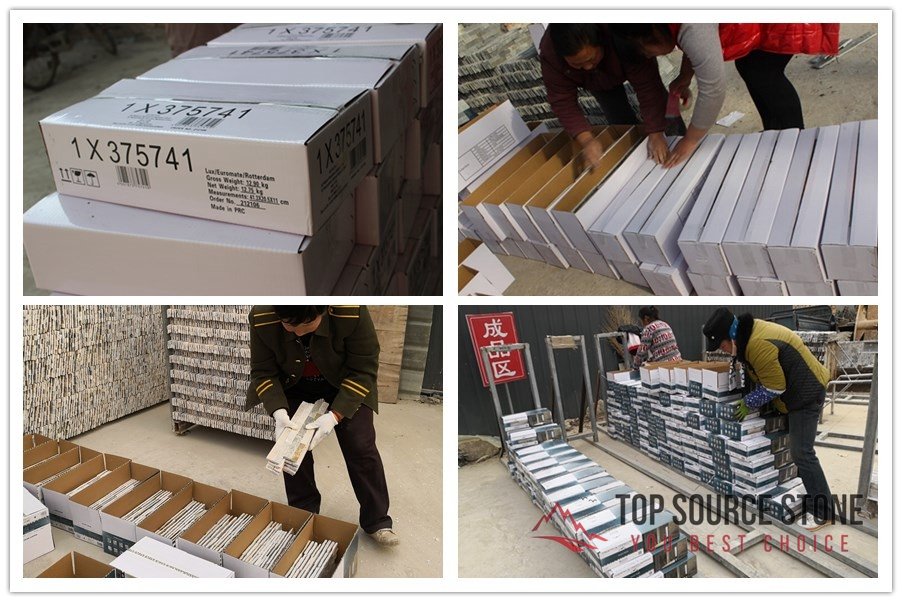
Furthermore, installers must implement a strict dry-run sequence on the floor before mixing thin-set mortar. Shuffling ledger panels from at least three separate crates randomizes the minor native stone textures, preventing color-blocking lines that align with panel seams. Fix these mechanical placement protocols, and the remaining joint gaps fall under standard site tolerances.
Grout, Caulk, and Joint Compounds: When to Use Each
Post-installation filling is a patch, not a fix. If your panels require it, you sourced the wrong product.
Most contractor attempts to fix visible seams with caulk or grout actually degrade the wall’s appearance. The issue is material mismatch: standard painter’s caulk cures at a different rate than stone adhesive, creating a visible shadow gap within 6–12 months as the two materials expand and contract at different coefficients. Wood filler is worse—it absorbs moisture, swells, and cracks the stone edge.
There are exactly three intervention methods, and each has a specific use case that most installers ignore:
- Color-matched silicone caulk: For interior gaps under 1/8 inch (3mm). Apply only after adhesive has fully cured (24–48 hours). Use a precision nozzle to inject the caulk into the gap, then tool it flush with a wet finger—do not spread it across the stone face. The silicone must be 100% silicone, not latex-blend, which shrinks.
- Polymer-modified grout (ASTM C1186): For exterior applications requiring freeze-thaw resistance. Standard sanded grout fails within one winter cycle because water penetrates the grout-stone interface, freezes, and pops the grout out. High-bond polymer grout with a minimum 3,000 psi compressive rating is the only exterior-safe option.
- What never to use: Wood filler, standard painter’s caulk, or any acrylic-based sealant. These products cure at different rates than the stone adhesive, creating differential movement that reopens the seam within 6–12 months.
Here is the hard truth that separates precision manufacturers from commodity suppliers: a panel cut to ±1mm edge tolerance and installed with a proper 1/3 offset should require zero post-installation seam filling. If you are ordering filling compounds in bulk for your installer network, you are treating a symptom, not the disease. The disease is the panel you sourced.

Distributor QC Checklist: Pre-Qualifying a Supplier Before the Container Ships
To stop defective, seam-prone panel runs at the factory origin, your procurement team must enforce a strict, data-backed vetting framework before finalizing wire transfers. Never accept generalized quality promises from trading brokers. Hand this 4-step checklist to your third-party pre-shipment inspectors:
- 1. Digital Caliper Tolerances: Measure a random 5% pool from finished crates. Reject any sub-lots where edge dimensional variances exceed ±1.5mm or nominal thicknesses drift out of spec.
- 2. Single-Batch Sourcing Audit: Cross-check quarry logs and packing lists to verify all panels stem from a single, sequential block extraction date—guaranteeing hue stability.
- 3. Backer Flatness Verification: Place a rigid steel straightedge across panel backs. Gaps exceeding 1/16 inch indicate warped mesh bases that will rock on-site, opening up seams.
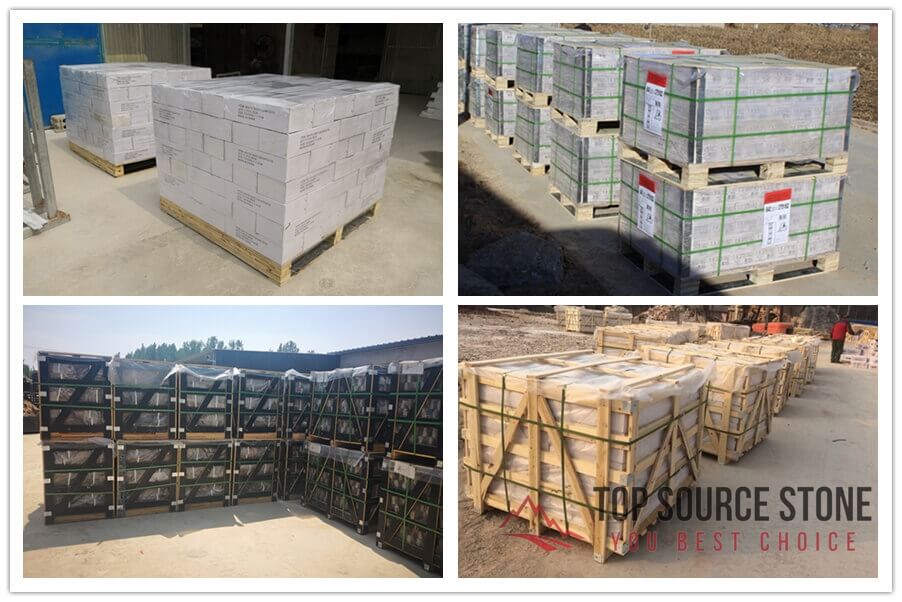
- 4. Pre-Crating Moisture Test: Force a digital pin-meter check across final pallets. Moisture readouts exceeding 0.5% will trap water within export boxes, causing micro-fractures during transit.
Conclusion
Visible seams in stacked stone panels are a margin killer that originates at the factory, not the jobsite. The diagnostic framework outlined here—edge tolerance certification, single-batch production documentation, and the 1/3 offset protocol—separates precision manufacturers from commodity suppliers before a container leaves the port. Distributors who enforce these specs at the sourcing stage eliminate the root cause of installer callbacks and site rejections, protecting both their P&L and their contractor relationships.
Review your current supplier’s batch-run documentation and edge-tolerance certifications against the QC checklist above. If those specs aren’t available in writing, it’s time to evaluate a manufacturer that guarantees them with every container order. Explore our precision-cut natural stone ledger panels to see how ±1mm water-jet tolerances and single-batch production eliminate seam visibility at the source.
Frequently Asked Questions
How do you fill gaps in stacked stone?
Use a color-matched polymeric sand or a flexible grout specifically designed for natural stone veneer to fill gaps up to 1/4 inch. For wider gaps caused by poor panel alignment, the underlying mechanical edge tolerances must be re-evaluated. If gaps exceed 1/4 inch, inspect your panel edge tolerance first.
How to cover up seams in paneling?
You cannot reliably cover up seams with caulk or paint if the root cause is a manufacturing tolerance failure exceeding ±2mm. The only permanent fix is to enforce a minimum 1/3 layout stagger using panels with exact edge specs. Masking seams with filler is a temporary fix; fix the sourcing spec.
Should you grout stacked stone?
Only if the manufacturer specifies a grout joint system; most stacked stone ledger panels are designed for a dry-stack look with tight, uniform gaps. Adding grout to a dry-stack product can trap unevaporated moisture, breaking the polymer matrix bond. Always confirm the panel system’s intended joint type before grouting.
How to hide exposed seams?
Exposed seams are a symptom of insufficient offset—installers must stagger each row by at least 1/3 the panel length to break up vertical lines. If seams remain visible after correct staggering, the fault rests with factory-side cutting variation. If staggering doesn’t work, reject the batch and check QC specs.
Do you have to seal a stacked stone?
Sealing is not mandatory for structural integrity, but it is recommended for exterior installations to prevent efflorescence and moisture penetration behind the veneer. For interior walls, sealing is optional but simplifies ongoing cleaning maintenance. Test a small area first to confirm the sealer doesn’t alter the stone’s color.
