
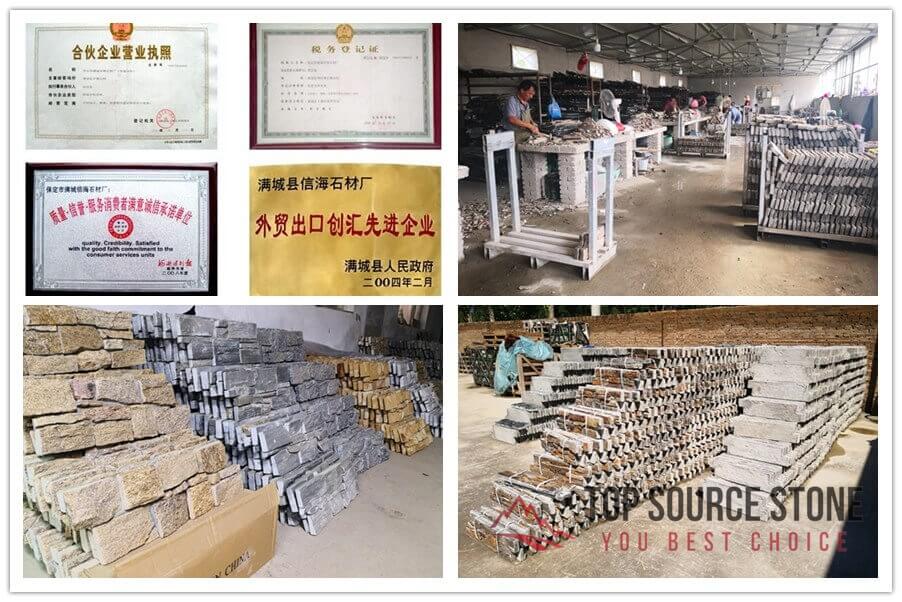
The imported vs local stacked stone decision for an Australian distributor really comes down to one number: your landed cost per square meter. If you’re sourcing locally, you’re looking at AUD $90 to $150 per square meter. A direct factory in China, like the one in Yixian, Hebei, puts that same material on your dock for AUD $45 to $65. That’s not a small gap. That’s the difference between a 45% gross margin and struggling to hit 25% on a standard bluestone order.
But margin math only works if the stone itself holds up. The real fear for a wholesaler isn’t freight costs. It’s the phone call from a specifier six months later saying the white quartzite facade has yellowed, or that the new batch doesn’t match the last one. Those problems usually trace back to one thing: buying from a middleman instead of a factory that controls the quarry. A direct supplier with its own pit and a documented batch-blending process can actually deliver more color consistency than a local Australian quarry blending from multiple faces. That’s the counter-intuitive part of this comparison.
Landed Cost Per Square Meter: Imported Chinese Stacked Stone vs Local Australian Quarries
Imported stone lands at AUD $45-65/m²; local stone costs AUD $90-150/m².
For an Australian distributor, landed cost per square meter is the single metric that determines whether your business can offer competitive retail pricing while keeping a 45-55% gross margin. Imported Chinese stacked stone — Blue Diamond, Quartzite, Bluestone — lands in Sydney or Melbourne at AUD $45-65/m². That figure includes ocean freight at roughly AUD $2,500-4,000 per 20ft container, plus 5% import duty under the China-Australia Free Trade Agreement (HS code 6802.23). GST adds 10% on top of landed value plus duty, but even after that, your all-in cost stays well under AUD $70/m².
Compare that to local Australian quarried stone: sandstone, bluestone, or granite ledger panels run AUD $90-150/m² at the quarry gate — before you add your margin. That means a distributor sourcing locally is forced into retail pricing above AUD $150/m² just to maintain a 40% gross margin. With imported stone, the same distributor can price at AUD $100-120/m² retail, undercut local suppliers by 20-30%, and still pocket a healthier margin.
Landed Wholesaler Margin Factors:
- Local Stone Cost Line: Quarry gate base price averages AUD $90-150/m². Avoids sea freight but eliminates room to offer volume discounts without eroding bottom margins.
- Margin Advantage Matrix: Importing allows a steady 45-55% gross margin at sub-AUD $100 retail scales. Local stone at the same retail caps margins at a low 25-35%.
- Lead Time Gap Tracking: Chinese direct factories process and ship within 15-20 days from order confirmation. Local quarries during peak building season (Oct-Feb) quote backlogs of 4-8 weeks.
The hidden cost trap most distributors miss is not freight or duty — it’s buying from a trading company instead of a direct factory. A trading company adds 15-25% to the FOB price, erases batch traceability, and cannot provide the compliance dossiers (AS 1530.1 fire test, 500-hour QUV resistance, 200-hour salt-spray) that Australian building inspectors demand. That’s why the real comparison is not ‘imported vs local’ — it’s ‘direct factory import vs middleman import vs local quarry.’ The first option wins on every KPI that matters to a wholesaler: landed cost, margin, lead time, and compliance documentation.
| Cost Category | Imported (China Direct Factory) | Local (Australian Quarry) | Margin Impact for Distributor |
|---|---|---|---|
| Landed Cost (per m²) | AUD $45 – $65 | AUD $90 – $150 | Import saves 30–50%, freeing margin for 45–55% gross profit |
| Lead Time (to warehouse) | 15–20 days (factory to port) | 4–8 weeks (peak season delays) | Import enables faster inventory turnover and JIT restocking |
| Batch Color Consistency | Single quarry + batch QC with Lb* coordinates | Often blended from multiple quarry faces | Direct factory reduces mismatch risk vs local blending |
| Compliance Documentation | AS 1530.1 fire, 500hr UV, 200hr salt-spray reports included | Varies; many lack dedicated stacked stone fire tests | Imported factory provides full compliance dossier for specifiers |
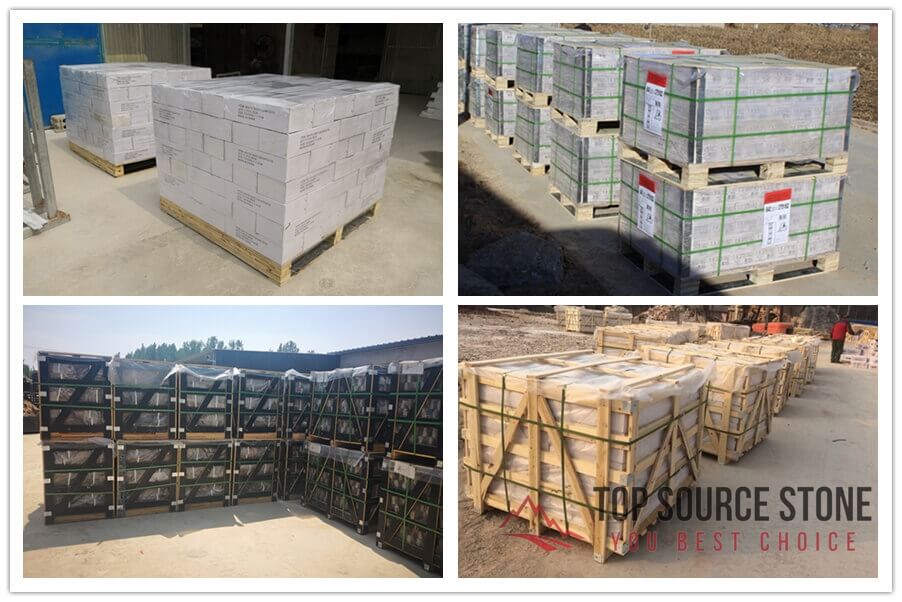
| Packaging & Breakage Rate | Low-breakage export crates (<1% breakage) | Standard pallets (2–5% breakage typical) | Better packaging protects margin from replacement costs |
Why Local Sourcing Wins on Logistics Delivery Speeds but Risks Batch Color Discrepancy
Local stone arrives fast but hides batch extraction inconsistencies that severely damage wholesale margins.
Australian quarries typically ship within 3–5 days and carry ABCB or local council compliance. That speed is real. But here is what they don’t tell you: most Australian quarries blend stone from multiple quarry faces to meet order volume. That means the batch you order in March can look visibly different from the batch you reorder in September. For a distributor supplying specifiers and installers who expect color continuity across a facade, that inconsistency is a liability, not a benefit.
Imported stone from a direct factory like Top Source Stone actually offers better batch consistency, because we quarry from a single pit and test every production run against an approved master sample. We do not blend from different faces. We do not rely on stockpiles with unknown origin. Every container shipped to Australia includes a batch color consistency certificate with Lb* color coordinates. That level of traceability is rare among local Australian suppliers.
Sourcing Logistics Constraints:
- Lead Time Turnaround Reality: Local stock maps 3–5 delivery days. China direct factory run tracks 15–20 production days + 12–15 ocean transit days, summing a stable 27–35 day pipeline window.
- Batch Variance Security: Open pits blend raw blocks from separate faults, creating hue drift. Single-vein direct extraction matches tones completely across seasonal release orders.
- Submittal Compliance Support: Direct manufacturing embeds accredited NATA-equivalent AS 1530.1 fire test reports and QUV weather logs straight into standard shipping container packing documentation packages.
The smart play is hybrid sourcing: use imported stone for your high-volume, consistent SKUs (Blue Diamond, Quartzite, Bluestone) to capture the margin, and keep 30% local stone for niche projects or council heritage requirements. That way you get the speed and compliance of local supply where it matters, and the margin and consistency of factory-direct import where it counts.
Hidden Performance Risks of Local Sourcing: Managing Panel Size Limits and Structural Warranties
Local sourcing feels safe until hidden sizing constraints and unrated mesh adhesives compress your P&L margins.
Most Australian distributors assume local stacked stone is the low-risk option. Shorter lead times, familiar compliance, no customs headache. But that assumption masks three specific traps that directly hit your margin and project reliability.
- Physical Sizing Limitations: Many domestic processing facilities max out at rigid 600x300mm configurations, spiking application labor and seam density. Direct Chinese extraction houses supply standard modular 6×24″ panels natively, saving 30% installer labor clock times.
- Fire Engineering Assembly Gaps: Building regulators mandate complete AS 1530.1 testing for vertical facades. Uncertified backer adhesives burn or smoke under thermal cycles. Specifying quarry-direct ensures non-combustible cement backs pass inspections.
- Contractual Warranty Ambiguities: Open-market yards often exclude hue stability from standard 1-year coverage logs. Securing direct factory contracts guarantees 5-year structural coverage tied directly to spectrophotometer coordinates.
These aren’t hypothetical edge cases. A distributor who commits to local stone for a 10-unit apartment facade at AUD $110/m² landed locks in a 35% margin ceiling. The same project using imported 6×24″ panels with fire certification and a 5-year warranty lands at AUD $55/m², freeing 20 points of margin to invest in showroom samples or competitive retail pricing.
The Scalable Wholesaler Sourcing Model: Blending Factory Imports and Premium Domestic Reserves
70% import volume from direct quarry plants, 30% domestic supply buffers — the ultimate margin strategy.
The smartest Australian distributors don’t pick one single origin source. They execute a calculated balanced model: 70% of core catalog SKU volume maps to an automated Chinese production plant to secure baseline cash flow margins, while 30% tracks to local yards for niche custom jobs. Holding 70% imported cargo at 50% gross profit margins combined with 30% domestic allocations at 30% profit targets secures a blended wholesaling baseline margin near 44% overall.
To solidify this matrix, distributors require a manufacturer flexible enough to process mixed SKU combinations without demanding single-color full container minimum order limits. Top Source Stone hosts a dedicated Oceania desk, exporting 200+ container volumes annually with full lot-traceability infrastructure natively embedded into custom private-labeled crates.
ABCB Compliance Checklist for Imported Ledger Panels: Fire, UV, and Salt-Spray Testing Standards
Five mandatory documentation test certificates that decisively screen out unverified middleman traders.
Australian Building Codes Board requires AS 1530.1 fire test reports for any stone cladding installed on facades above two storeys. A generic material declaration won’t pass council inspection. The report must be issued by an accredited NATA-equivalent lab and match the exact stone type, thickness, and backing system you’re importing. Top Source Stone provides this report per batch for all commercial-grade stacked stone panels.
UV-resistance data is non-negotiable for exterior use in the Australian sun. The minimum industry benchmark is 500 hours of accelerated QUV testing with no visible color change, chalking, or delamination. Some suppliers offer 300-hour reports — that’s insufficient for a 5-year facade warranty. Top Source Stone’s standard is 500 hours, and the test report includes Lb* readings before and after exposure so you can verify the delta yourself.
NATA and ASTM Core Audit Requirements:
- Accelerated Coastal Marine Aging: Demands 200 hours minimum of ASTM B117 salt-spray exposure loops to protect cargo targeted for coastal hubs (Sydney, Brisbane, Perth) from binder breakdown.
- Spectrophotometer Metric Matching: Direct factory shipment manifests include batch color consistency certificates mapping strict Lb* coordinates to prove vein replication.
- Live Production Sample Batches: Avoid approving containers over arbitrary showroom samples. Enforce direct lot coupon extractions shipped within 5 business days of sorting runs.
One missing report can hold your container at customs for weeks or trigger a costly facade replacement. Build your compliance dossier before you sign the purchase order, not after.
Conclusion
The margin math is clear. Importing from a direct factory like Top Source Stone drops your landed cost to AUD $45-65/m², compared to AUD $90-150/m² for local Australian stone. That delta—combined with batch consistency from a single quarry and documented compliance—lets you hit a 45-55% gross margin while offering competitive retail pricing.
Review the Commercial Stone Cladding Solutions page to see the product specs, batch documentation, and compliance reports that make this model work. Then request a sample match to validate color consistency before your first container.
Frequently Asked Questions
Is imported stone from China good quality for Australian weather?
Yes, if sourced from a direct factory that tests for UV and salt-spray resistance, it performs well in Australian conditions. The key is verifying the supplier runs those specific tests, not just general quality. Request UV and salt-spray test reports before ordering.
How does lead time compare between imported and local stacked stone?
Imported stone from a Chinese factory typically ships in 15-20 days, while local Australian quarries can take 4-8 weeks during peak season. That faster lead time lets you plan projects without the seasonal delays. Check current factory production slots for exact timing.
What are the hidden costs of importing stacked stone?
The main hidden costs are port handling, customs brokerage, and inland freight from the Australian port to your yard. These typically add 10-15% to the landed cost, so factor them into your final margin profitability spreadsheet forecasts accurately. Get a full landed cost quote including all destination fees.
Can I get a custom color mix for my Australian market?
Yes, direct factories like Top Source Stone offer custom color mixes by blending stone from their own quarries to match your market preferences. You just need to approve a physical sample before releasing bulk cargo container funding allocations. Send your color reference and request a sample batch first.
What is the MOQ for importing stacked stone from China?
MOQ for standard stacked stone panels is typically one 20-foot container, which holds about 250-300 square meters. Custom color mixes or private-label packaging may require a higher MOQ due to production setup. Confirm MOQ after finalizing your product spec and packaging needs.
