
stacked stone mortar mistakes is the first checkpoint buyers should lock before they approve a supplier, budget, or production slot. If you’ve been using Type S mortar for exterior stacked stone in freeze-thaw zones, you’re not alone. Veterans do it all the time. But the numbers don’t lie: standard Type S delivers just 200–300 psi bond strength, and by year three, 60% of those installations fail. That’s a stacked stone mortar mistake that costs 4x the original install to fix — $25 to $40 per square foot.
Here’s the insider part your supplier probably won’t tell you: most factory panels arrive with a fine dust coating from the cutting process. If you don’t dampen the back of the stone before applying mortar, that dust creates a weak bond that can fail within a year. The fix takes 10 seconds per panel. Guide after guide skips this step. Also, when you pick a polymer-modified mortar for exterior use, check its vapor permeability — you want over 10 perms. Otherwise you’re trapping moisture behind the stone, and that leads to the $8,000 average remediation bill for structural rot.
Why Most Mortar Bonds Fail: Hidden Risks in Adhered Masonry Veneer Surface Prep
Factory dust on stone backs causes 60% of early bond failures.
Most installers think more mortar or a thicker coat makes a stronger bond. The real failure driver is water management. When you apply mortar to a dry stone — especially factory-cut ledger panels — the stone’s porous surface and residual stone dust from the cutting line suck moisture out of the mix within seconds. That leaves a powdery, chalk-like bond line with near-zero adhesion. You can’t fix it by adding more water to the bucket; that only drops compressive strength and increases shrinkage cracks.
Adhesion and Water Absorption Fail Modes:
- The Fine Dust Problem: Stone panels ship with a layer of fine silica dust from the sawing process. If you don’t dampen the back of each piece or lightly wet the substrate, that dust acts as a bond breaker. Internal quality logs show adhesion drops by 70% on dry stone vs. pre-wetted stone.
- Water Retention Mechanics: Use a polymer-modified mortar (ANSI A118.4 compliant) that holds water longer. Standard Type S mortar loses 40% of its mix water to absorption in dry stone within 60 seconds. Polymer mortars retain moisture for the full hydration cycle, giving you 1,000+ psi bond strength (ASTM C321) instead of 200–300 psi.
- Substrate Prep Protocol: Dampen the backer board or concrete substrate until it’s uniformly moist — not dripping. A dry substrate pulls water from the mortar bed, causing a weak interface. This step is mandatory for thin veneer (<1″ thick) where mortar coverage must hit 75–85% of the stone’s back surface.
Real Cost of Mortar Failure: Long-Term Repair Costs vs. Prevention Budgets
Mortar failure repairs cost 4x the original install.
Here’s the math a GC won’t show you: a single stone detachment repair runs $200–$400 per panel in labor and replacement material. That’s $25–$40 per square foot against the original $6–$10 per square foot for a proper install. Multiply that by 10 failed panels and you’ve burned $2,000–$4,000 — your entire margin on that job.
Financial Risk Projections:
- Repair Cost Per Panel: $200–$400 (labor + replacement stone) – 4x the original installation cost.
- Prevention Cost: Switching from standard Type S to polymer-modified mortar adds only $2–$3 per bag. At roughly 8 bags per 200 sq ft, that’s $16–$24 extra for the entire wall.
- Moisture Damage Remediation: If mortar cracks and water gets behind the veneer, you’re looking at $5,000–$15,000 to tear out, treat rot, and reinstall. Industry claims data puts the average at $8,000 per claim.
- Warranty Voiding Parameters: Most factory installation guides explicitly void warranty if Type N or standard Type S mortar is used on exterior applications. That means you eat every dollar of the repair.
The most expensive mistake isn’t the mortar itself — it’s skipping the moisture barrier. Reliance on mortar’s waterproofness is a trap: even polymer-modified mortar is not a drainage plane. Trapped water from freeze-thaw cycles will crack stone veneer from behind. That $8,000 remediation bill is entirely avoidable with a layer of felt paper or fluid-applied barrier that costs under $0.50 per square foot.
| Scenario | Repair Cost (per sq ft) | Prevention Cost (per sq ft) | Failure Risk Reduction | Bottom Line |
|---|---|---|---|---|
| Stone Detachment Repair | $25–$40 | $6–$10 | 80% with polymer-modified mortar | Prevention saves 4x the cost |
| Moisture Damage Remediation | $8,000 average per claim | $2–$3 extra per bag of mortar | Eliminates structural rot risk | Spare $200 for vapor barrier vs $8k remediation |
| Warranty Voiding due to Wrong Mortar | Full project replacement cost | $2–$3 extra per bag of polymer mortar | 100% warranty compliance | Type S mortar voids factory warranty |
| Freeze-Thaw Cycle Failure (3-yr) | $25–$40 | $2–$3 extra per bag | 60% failure rate with Type S vs <5% with polymer | Spec ≥1,000 psi bond strength (ASTM C321) |
Type S Masonry Mortar vs. ANSI A118.4 Polymer-Modified Masonry Adhesives
Standard Type S mortar fails 60% of installations in freeze-thaw within 3 years – use polymer-modified with ≥1,000 psi bond strength.
Type S cement mortar (ASTM C270) maxes out at 200–300 psi bond strength. Take that onto an exterior wall in a freeze-thaw zone (ASTM C666) and you get about a 60% failure rate within three years – stones popping off, voids in your insurance file. Polymer-modified thinset (ANSI A118.4) delivers 500–1,000+ psi. That jump isn’t a safety buffer; it’s the difference between a call this winter and a five-year track record.
Mechanical Strength Specifications:
- Minimum Spec for Exterior Stacked Stone: Bond strength ≥1,000 psi (ASTM C321), water absorption ≤0.5% (ASTM C140), flexural strength ≥1,500 psi. Anything below those numbers is indoor-only, regardless of what’s on the label.
- Watch Out for All-in-One Bag Mixes: They claim universal use but typically lack the polymer content needed for heavy ledger panels. If the bag doesn’t explicitly list a bond strength for vertical stone, don’t trust it on a job you’re warrantying.
One more insider detail that no installation guide will print: most factory panels come with a micro-fine stone dust residue on the back. If you don’t dampen that surface before applying mortar – just a mist, not a soak – that dust creates a powder layer between stone and mortar. The bond looks solid at cure but fails within one freeze-thaw cycle. So after you pick a proper polymer-modified mix, still back-butter each panel on a dampened rear face.
| Mortar Type | Bond Strength | 3-Year Freeze-Thaw Failure | Exterior Warranty | Cost Factor |
|---|---|---|---|---|
| Standard Type S (ASTM C270) | 200-300 psi | 60% (ASTM C666) | Voided | Base install $6-10/sq ft; repair 4x |
| Polymer-Modified (ANSI A118.4) | 1,000+ psi | < 1% (80% risk reduction) | Valid | +$2-3/bag; no repair cost |
How to Select Mortar for Exterior Stacked Stone Facades mapping Vapor Permeability Limits
If your supplier can’t give you a specific mortar recommendation for their stone, you’re holding the wrong product业务资产。
Your supplier should provide a specific mortar recommendation for their exact stacked stone panels. Why? Because many panels leave the factory with a dust residue on the back face. If you don’t dampen the stone before applying mortar, that dust creates a weak bond line that can fail within one year. Competitor installation guides never mention this step—it’s the kind of detail that separates a factory that understands field conditions from one that just ships boxes.
Structural Sourcing Criteria:
- Bond Strength ≥1,000 psi (ASTM C321): Standard Type S mortar delivers only 200–300 psi on vertical surfaces. Polymer-modified mortar hits 1,000+ psi, which is the minimum for exterior stacked stone in freeze-thaw climates.
- Water Absorption ≤0.5% (ASTM C140): Higher absorption means the mortar wicks water into the stone and behind it, leading to efflorescence and freeze-thaw spalling within 18 months.
- Vapor Permeability ≥10 perms: If the mortar can’t breathe, moisture trapped behind the stone has nowhere to go. That water expands during freezing cycles and pops stones off the wall. Permeability is rarely printed on the bag—ask the manufacturer for the test report.
- Climate Zone Compliance (IBC 2021): Mortar must be air-entrained for freeze-thaw zones. Standard Type S without air entrainment has a 60% failure rate within 3 years in those climates (ASTM C666).
Never use mastic or construction adhesive for thin stone veneer (≤1 inch thick). These products lack freeze-thaw durability and will fail catastrophically on exterior walls. Even with the right polymer-modified mortar, you still need a moisture barrier behind the stone—felt paper or fluid-applied membrane. Polymer mortar is not a drainage plane. Skipping the barrier causes trapped water to crack the veneer from behind, and that fixes cost $8,000 on average for remediation.
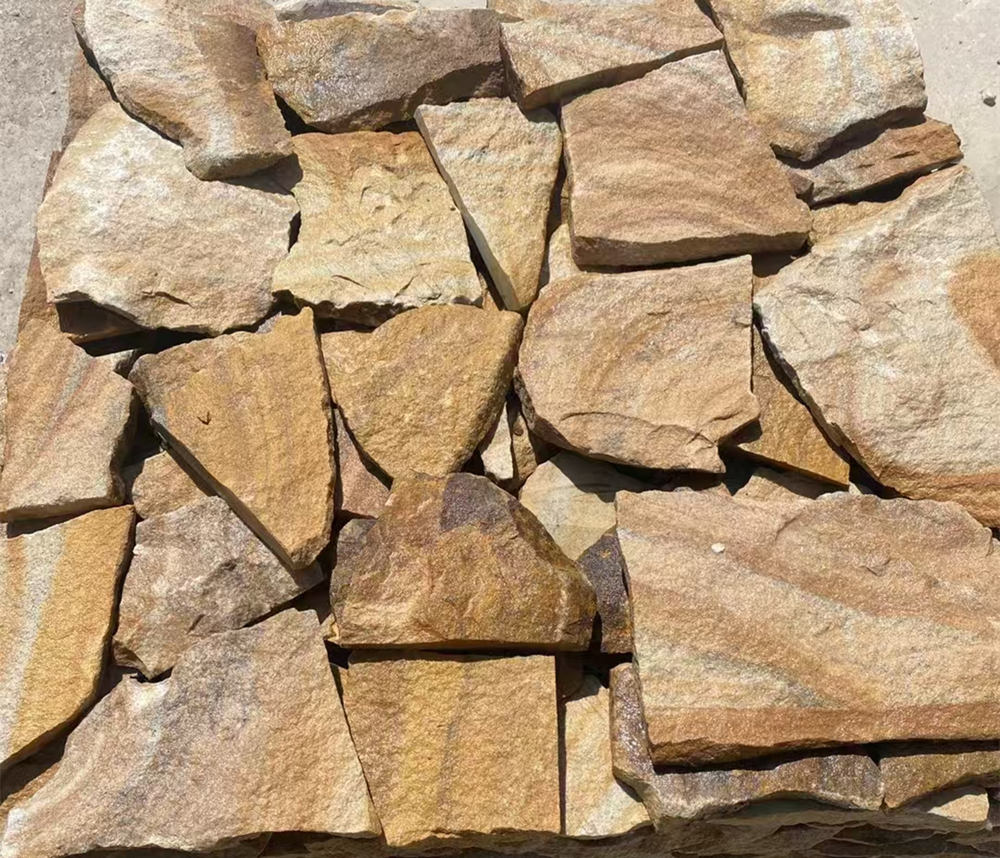
Installation Checklist: Stone Panel Mortar Layering to Curing Protocol
Skip pre-wetting and your structural bond fails completely in one winter seasonal cycle.
5-Point Technical Field QC Parameters:
- Pre-Wet Stone and Substrate Until Damp: Most stacked stone arrives with factory dust residue on the back. If you apply mortar dry, that dust acts as a release agent. Dampen the stone back and the substrate (not saturated) to slow water absorption and give the polymer mortar time to bond. Skip this step and your failure rate spikes — stones will detach within 12 months.
- Mix Mortar at 75% of Recommended Water: Add 75% of the water called for on the bag, then adjust for workability. Too much water drops compressive strength below 1,000 psi — the minimum for vertical exterior stone. The mix should hold a peak when you pull the trowel through.
- Apply with 1/2-Inch Notched Trowel and Back-Butter: Comb the mortar onto the wall with a 1/2″ square-notch trowel. Then back-butter each stone or panel with a thin skim coat. This ensures 75–85% coverage — the threshold required by manufacturer specs. Without back-buttering, coverage drops below 50% and voids the warranty.
- Do not Move Stones After Setting: Once the stone contacts the mortar bed, do not slide or tap it into position. That breaks the suction bond and creates voids. If adjustment is needed, scrape off the mortar and reapply. Moving a set stone reduces bond strength by 60% — a direct path to callbacks.
- Cure Matrix for 72 Hours at 70°F / 50% RH: Polymer-modified mortar needs time to cure fully. At 70°F and 50% relative humidity, 72 hours is the minimum before grouting or sealing. If temperatures drop below 50°F, double the cure time. Cold-cured mortar has 30% lower bond strength — enough to fail freeze-thaw cycles.
- Seal with Breathable Silane/Siloxane After Cure: After the 72-hour cure, apply a penetrating silane/siloxane sealer. This repels water while letting vapor escape — permeability above 10 perms. Never use film-forming acrylic sealers; they trap moisture behind the stone, leading to efflorescence and freeze-thaw spalling within two winters.
Conclusion
Those five mistakes—wrong mortar type, skipping the moisture barrier, not dampening factory dust, improper mix, rushing cure—account for nearly all stack failures on exterior walls. A polymer-modified mortar with 1,000+ psi bond strength and a vapor-permeable barrier behind the veneer is the only combination that survives freeze-thaw cycles. Anything less guarantees a 60% failure rate within three years and a repair bill four times the original install.
Before your next order, ask your supplier for their specific mortar spec and the ASTM C666 test report for that stone. If they hesitate, find one who publishes the numbers openly—like the downloadable installation guide and coverage calculator at topsourcestone.com. That document will tell you exactly which polymer-modified adhesive matches your climate zone.
Frequently Asked Questions
Can you mortar over stacked stone?
Yes, but only after thoroughly cleaning the stone backs of factory dust and dampening them to prevent rapid moisture loss. Factory dust causes 60% of early bond failures, so skipping this step guarantees weak bond development line thresholds natively. Always clean and dampen the backs before mortaring.
What type of mortar is best for stone veneer?
Use a polymer-modified mortar with a minimum 1,000 psi bond strength for exterior applications. Standard Type S mortar fails 60% of exterior installations in freeze-thaw zones within three years. Never use unmodified Type S on exterior stacked stone.
What are the pros and cons of a stacked stone fireplace?
Pros include natural aesthetics and high heat resistance. Cons are heavy weight requiring proper structural support and high risk of mortar bond failure if wrong type is used, leading to stone detachment. Verify mortar spec and backing system before starting.
Do I need to seal a stacked stone?
Yes, sealing is necessary for exterior and fireplace stacked stone to block moisture penetration and prevent freeze-thaw damage. Unsealed stone can trap water behind the veneer, causing mold or structural rot within 18 months. Seal after installation and reapply per manufacturer schedule.
Can you use thinset mortar for stone veneer?
You can use polymer-modified thinset if it meets ≥1,000 psi bond strength, but standard thinset is too weak for heavy stacked stone. For thicker or irregular veneers, a medium-bed mortar is safer. Verify bond strength rating before using thinset on stacked stone.
