

Commercial facade projects in Germany demand structural systems that balance architectural aesthetics with rigid DIN safety standards. For procurement teams and architects, choosing the right natural stone panel system often means the difference between a high-maintenance exterior and a high-performance building envelope that withstands seismic and thermal loads. Engineering a facade that meets these needs requires moving beyond simple veneer selection toward integrated composite solutions.
This guide evaluates the leading manufacturers providing stone systems tailored for the German market, with a focus on cement-backed panels that offer a 50–60% increase in compressive strength and interface cohesion improvements of 55%. We analyze technical benchmarks including DIN EN 12057 thickness tolerances, the logistics of high-volume direct importing, and how individually sawn-back structural designs achieve installation rates of up to 150 square feet per crew shift.
10 Premier Natural Stone Panel System Manufacturers Operative in Germany
Quick Comparison: Top Picks
| Manufacturer | Location | Core Strength | Verdict |
|---|---|---|---|
| TopSource Stone | China (Global Shipping) | Individually Sawn-Back Natural Stone Systems | Best for factory-direct authentic stone with high-end back-sawing precision. |
| Lithodecor (Sto Group) | Germany | Lightweight natural stone composite facade panels | Top choice for engineered ventilated facades on high-rise commercial buildings. |
| Traco | Germany | Integrated curtain wall stone units & anchoring | Excellent for projects requiring total system coordination and safety compliance. |
| Hofmann Naturstein | Germany | CNC-machined stone elements & rainscreen cladding | Premium vertically integrated solution for large-scale institutional contracts. |
| F. X. Rauch | Germany | Ventilated stone panel facade systems | Simplified procurement with stone and subframe bundled into one package. |
| Kurt Eder Naturstein | Germany | Prefabricated stone cladding units | Maximum site efficiency through pre-engineered units ideal for Central European climates. |
| Hoffmann Mineral | Germany | Thin natural stone composite panels | The go-to specialist for building retrofits and renovations where weight is a constraint. |
| Weberhaus | Germany | Residential stone panel packages | User-friendly stone solutions specifically tailored for timber-frame residential builds. |
| Fischer Fixing Systems | Germany (Global Network) | Undercut anchors & stone panel subframes | The institutional standard for mechanical stone panel substructures and cyclic load safety. |
| BAM Stone Partners | Germany / EU Supply | Calibrated architectural facade panels | Excellent institutional collective for heavy commercial and high-volume spec-grade projects. |
TopSource Stone
TopSource Stone operates as a specialized manufacturer that bridges the gap between raw quarry extraction and high-end architectural application. By maintaining full factory control over their own quarries, they ensure that every ledger stone and panel system reflects the genuine characteristics of slate, quartzite, and marble. This direct oversight eliminates the risks often associated with third-party sourcing, providing architects and developers with consistent material quality and the structural integrity required for large-scale premium projects.
Their technical execution focuses on an advanced individually sawn-back system, which simplifies the mounting process while maintaining a natural appearance. By using precision infrared cutting technology, the production team minimizes gaps and creates a seam-free finish that accommodates both interior and exterior environments. This integration of factory-direct pricing with lightweight installation technology allows project managers to reduce labor costs without compromising the luxury aesthetic of traditional heavy stone masonry.
At a Glance:
- 📍 Location: China (Global Shipping)
- 🏭 Core Strength: Natural Stone Panel Systems, Ledger Stone (Flat, Rough, Pencil, and Marble Series), L-shaped corner units
- 🌍 Key Markets: Global B2B, North America, Europe (Germany), Construction Contractors and Architects
Why We Picked Them:
| ✅ The Wins | ⚠️ Trade-offs |
|---|---|
|
|
Lithodecor (Sto Group)
Lithodecor operates as a dedicated division within the Sto Group, focusing specifically on high-performance building skins for the European institutional and commercial sectors. The company manufactures ultra-thin natural stone slabs bonded to advanced backing materials, a process that enables architects to use authentic granite, limestone, or sandstone on building heights where solid stone would be too heavy. By moving the assembly process into a controlled factory environment, they ensure that each composite panel meets strict structural tolerances before it ever reaches the construction site.
The engineering behind these ventilated rainscreen systems reduces the risk of moisture traps and thermal bridging, common issues in standard masonry. Because the panels are lightweight compared to traditional stone cladding, they require less intensive substructures, which can lower the overall load on the building frame. For developers and architects, this approach combines the aesthetic permanence of natural stone with a modern, technical execution that simplifies logistics and improves pace on-site during the facade installation phase.
At a Glance:
- 📍 Location: Germany
- 🏭 Core Strength: Lightweight natural stone composite facade panels, ventilated rainscreen systems
- 🌍 Key Markets: Germany, European Union commercial and institutional projects
Why We Picked Them:
| ✅ The Wins | ⚠️ Trade-offs |
|---|---|
|
|
Traco
Traco maintains a dominant position in the DACH region by providing fully engineered natural stone facade systems that prioritize regional quality and manufacturing control. Their approach centers on providing integrated curtain wall stone units that bridge the gap between architectural vision and structural reality. By managing the production of these facade panels within a controlled environment, they ensure that every element aligns with the high technical demands of German, Austrian, and Swiss public and commercial infrastructure projects.
A core element of their service involves the development of coordinated anchoring technology designed to withstand extreme environmental stress. This focus on fixing systems reduces installation risks and ensures that each stone unit meets the strictest European safety and longevity standards. The company effectively eliminates the variables typically found in stone masonry by offering a unified system where the stone and the mechanical attachments are engineered as a single, high-performance unit.
At a Glance:
- 📍 Location: Germany
- 🏭 Core Strength: Natural stone facade panels, curtain wall stone elements, fixing and anchoring systems
- 🌍 Key Markets: Germany, Austria, Switzerland commercial and public buildings
Why We Picked Them:
| ✅ The Wins | ⚠️ Trade-offs |
|---|---|
|
|
Hofmann Naturstein
Hofmann Naturstein operates as a specialized manufacturer focusing on project-specific natural stone panels for architectural envelopes. By controlling the entire supply chain from raw material extraction in their own quarries to the final assembly of facade components, they ensure a high level of local execution and material consistency. This vertical integration allows architects and developers to mitigate the risks associated with fragmented sourcing, as a single entity manages the technical requirements of rainscreen cladding and complex stone geometries.
The factory utilizes advanced CNC machining to produce precision stone elements that meet the rigorous tolerances required for modern curtain wall systems. This technological approach facilitates the creation of intricate shapes and textures while maintaining structural integrity across large-scale surfaces. By concentrating on institutional and commercial projects within Germany and the broader EU, they provide a streamlined process for factory-controlled production, reducing the likelihood of installation errors and ensuring that every stone panel meets specific engineering standards for ventilated facades.
At a Glance:
- 📍 Location: Germany
- 🏭 Core Strength: CNC-machined stone elements, rainscreen cladding, natural stone panels
- 🌍 Key Markets: Germany and EU institutional, cultural, and commercial projects
Why We Picked Them:
| ✅ The Wins | ⚠️ Trade-offs |
|---|---|
|
|
F. X. Rauch
F. X. Rauch specializes in the technical execution of ventilated stone facades, focusing on the German and European commercial sectors. The company streamlines the building process by bundling natural stone panels with the necessary aluminum and stainless steel anchoring systems. This integrated approach ensures that every component is engineered to work together, reducing the logistical headaches often associated with sourcing stone and substructures from separate vendors. By maintaining tight factory control over these components, they provide architects and developers with a reliable path to achieving high-performance exterior cladding.
Risk reduction is a central feature of their service model, particularly for projects requiring strict adherence to German DIN standards. They handle the complex engineering of the subframe and anchoring systems, ensuring that the entire assembly meets structural requirements and safety regulations. This localized expertise helps project managers avoid compliance issues during the installation phase. By delivering a pre-engineered package, F. X. Rauch improves onsite efficiency and ensures that the final facade maintains its structural integrity over its entire life cycle.
At a Glance:
- 📍 Location: Germany
- 🏭 Core Strength: Ventilated stone panel facade systems, substructure and anchoring engineering
- 🌍 Key Markets: Germany and neighboring EU countries office and mixed-use projects
Why We Picked Them:
| ✅ The Wins | ⚠️ Trade-offs |
|---|---|
|
|
Kurt Eder Naturstein
Kurt Eder Naturstein specializes in the production of panelized stone systems designed to streamline the construction of building envelopes. By shifting the complexity of facade construction from the job site to a controlled factory environment, they provide a solution that emphasizes local execution and rigorous quality oversight. This approach minimizes the typical risks associated with manual on-site stone masonry, ensuring that each cladding unit meets strict tolerance standards before it ever reaches the project location.
These prefabricated units are specifically engineered to handle the technical demands of Central European climates, where moisture management and thermal fluctuations are primary concerns. The systems integrate dedicated anchoring accessories and drainage paths that mitigate water ingress and allow for natural thermal movement. By using these engineered assemblies, developers can reduce installation timelines while maintaining the durability and aesthetic appeal of traditional natural stone facades.
At a Glance:
- 📍 Location: Germany
- 🏭 Core Strength: Prefabricated stone cladding units, anchoring accessories
- 🌍 Key Markets: Germany and Central Europe commercial and residential envelopes
Why We Picked Them:
| ✅ The Wins | ⚠️ Trade-offs |
|---|---|
|
|
Hoffmann Mineral
Hoffmann Mineral specializes in high-performance stone composite facade panels that bridge the gap between traditional masonry and modern engineering requirements. By bonding thin stone veneers to lightweight backing materials, they provide a solution for architects who want the premium aesthetic of natural stone without the structural burden of heavy slabs. This approach allows for factory-controlled precision during the manufacturing phase, ensuring each panel meets strict quality benchmarks before it ever reaches the job site.
The technical execution of these panels helps project managers mitigate risk during complex building renewals. Because the system utilizes a lightweight rainscreen cladding design, it reduces the load on the building’s skeleton while maintaining the durability of a natural exterior. Using these composites in local execution projects ensures that older structures can undergo a complete visual transformation with minimal structural reinforcement, effectively streamlining the retrofit process and reducing overall labor costs on-site.
At a Glance:
- 📍 Location: Germany
- 🏭 Core Strength: Thin natural stone composite panels, lightweight rainscreen cladding
- 🌍 Key Markets: Germany refurbishment, retrofit, and new-build facades
Why We Picked Them:
| ✅ The Wins | ⚠️ Trade-offs |
|---|---|
|
|
Weberhaus
Weberhaus operates at the intersection of modern timber construction and traditional masonry, providing a streamlined approach for German residential projects. By utilizing factory-controlled environments, they integrate standardized stone layout modules directly into hybrid wall assemblies. This method ensures that the precision of pre-fabricated timber frames matches the durability of natural stone, reducing the risks typically associated with on-site masonry coordination.
The technical execution focuses on modular facade systems that maintain high thermal performance while offering the high-end finish of solid stone. Homeowners and developers benefit from a localized supply chain that prioritizes energy-efficient integration, ensuring that the stone cladding does not compromise the home’s airtightness or insulation values. This controlled process allows for predictable timelines and consistent quality across single-family and low-rise residential developments.
At a Glance:
- 📍 Location: Germany
- 🏭 Core Strength: Residential stone panel cladding packages, modular facade systems
- 🌍 Key Markets: Germany single-family and low-rise residential buildings
Why We Picked Them:
| ✅ The Wins | ⚠️ Trade-offs |
|---|---|
|
|
Fischer Fixing Systems
Fischer Fixing Systems stands as the foundational global benchmark for subframe engineering, supplying the rigorous mechanical anchoring required to attach premium natural stone panels to high-stiffness commercial substrates. Based in Germany, the corporation manages advanced factory control over their heavy-duty undercut anchors and aluminum rail configurations. This systemized coordination avoids panel flexure and mitigates long-term fatigue under cyclic load profiles, ensuring full alignment with German building inspection codes.
Their dry-cladding assembly solutions significantly lower on-site masonry risks by establishing a uniform, predictable stress field across expansive multi-story developments. By partnering with international quarried stone fabricators, Fischer delivers coordinated mechanical attachment packages that allow thin-cut granite, limestone, and high-density quartz panels to be safely suspended on complex ventilated facades. Their localized engineering support helps project management teams verify wind suction tolerances and secure rapid technical approvals during the schematic design stage.
At a Glance:
- 📍 Location: Germany (Global Distribution)
- 🏭 Core Strength: Undercut stone anchors, dry-cladding back-fixing frames, mechanical sub-framing rails
- 🌍 Key Markets: German infrastructure, European commercial facades, and institutional curtain wall packages
Why We Picked Them:
| ✅ The Wins | ⚠️ Trade-offs |
|---|---|
|
|
BAM Stone Partners
BAM Stone Partners acts as a consolidated trade collective, bridging the gap between extensive quarry extractions and large-scale architectural projects across Central Europe. By coordinating production lines across multiple certified fabrication plants, they guarantee containerload availability of calibrated granite, sandstone, and marble slabs. Their supply chain setup eliminates the volume constraints that often delay massive municipal developments, providing a predictable ex-works flow of building materials.
The consortium maintains rigid material grading criteria, ensuring that all architectural stone panels align with the thickness tolerance parameters required for flat exterior joint alignment. Their technical datasets fulfill the sustainability requirements mandated by the EU Construction Products Regulation, facilitating seamless CE marking and Digital Product Passport onboarding. This focus on compliance and structural reliability makes them a key partner for European framework contracts and wholesale building distribution networks.
At a Glance:
- 📍 Location: Germany / EU Production Hubs
- 🏭 Core Strength: High-volume natural stone facade slabs, calibrated structural panel modules
- 🌍 Key Markets: German commercial developments, European public tenders, and institutional building packages
Why We Picked Them:
| ✅ The Wins | ⚠️ Trade-offs |
|---|---|
|
|
Engineering Monolithic Bonds: The Mechanical Advantages of Cement-Backed Panels
Cement-backed stone panels utilize a monolithic bond between natural stone veneers and a cementitious core to function as a high-stiffness composite element. This configuration enhances compressive strength by 50–60%, improves interface cohesion by 55%, and optimizes load distribution to reduce the mechanical demand on individual anchors in high-performance facade applications.
Composite Action and Flexural Stiffness in Bonded Systems
Cement-backed panels create a monolithic bond between the natural stone veneer and the cementitious core, allowing these distinct layers to function as a single composite element. This composite action significantly increases the effective section stiffness of the assembly. By unifying the materials, the system reduces differential movement and mitigates stress concentrations that typically plague mechanical dry cladding systems relying solely on point fixings.
The continuous bonded interface serves as a critical structural asset in facade and curtain wall applications. It improves the assembly’s resistance to wind suction, panel vibration, and sudden impact loads. Unlike stand-off systems, the integrated backing provides a stabilized surface that prevents the stone from absorbing the entirety of external bending forces, extending the service life of the building envelope.
Enhanced Load Capacity and Interface Cohesion Metrics
The integration of a cementitious backing layer provides a measurable boost to the structural profile of natural stone. Experimental data indicates a 50–60% increase in compressive strength, allowing the panels to efficiently carry bearing forces at brackets and support ledges. This is particularly vital at story-height slab edges and corner conditions where local compression is most intense.
Dense cement networks further enhance interface cohesion by approximately 55%. This high level of cohesion minimizes slip and prevents delamination under the cyclic thermal or seismic loading common in mid-rise and high-rise structures. Furthermore, utilizing CO₂-modified cement pastes can achieve 13% higher early-age strength, which supports faster factory production cycles and ensures superior dimensional stability during the critical curing phase.
Structural Optimization Through Shear Interlocking and Stress Distribution
Engineers improve load transfer by integrating shear keys or textured surfaces at the stone-cement interface. This physical modification creates mechanical interlocking that raises shear capacity far beyond what chemical bonding can achieve alone. The interlocking mechanism ensures that out-of-plane loads and cyclic wind shear do not compromise the bond between the decorative stone skin and its structural support.
The backing layer functions effectively as a structural diaphragm, distributing peak forces across the entire panel area. This broad distribution lowers the specific tension and shear demand on individual mechanical anchors, enabling thinner stone units to be used without increasing the risk of crack initiation. Compared to point-fixed mechanical systems, monolithic configurations offer higher global stiffness and a more uniform stress field across the facade assembly.
German Regulatory Alignment: Navigating Compliance and Structural Rigidity Benchmarks
German facade engineering focuses on the intersection of DIN quality grading and European structural standards. Successful stone module integration requires precise adherence to thickness tolerances under DIN EN 12057/12058 and environmental validation through EN 12152, alongside new digital traceability mandates like the 2024/3110 Digital Product Passport.
Dimensional and Quality Standards for Stone Modules
Adherence to DIN EN 12057 establishes the baseline for modular wall tiles, dictating specific thickness tolerances and flatness benchmarks essential for ventilated façades. This standard ensures that stone skins meet the mechanical requirements for thin-cladding applications while maintaining aesthetic uniformity across large surface areas.
Classification into graded quality classes (A, B, C) allows engineers to match stone panels with project-specific structural and visual performance needs. This grading system is vital for German commercial developments where regularity in material density and surface finish directly impacts the longevity of the building envelope. Furthermore, deployment of DIN EN 12058 for cut-to-size slabs helps align large-format panel modules with structural support grids, ensuring that anchors and brackets interface correctly with the stone units.
Structural Stiffness and Environmental Integrity Benchmarks
System validation through EN 12152 and EN 12154 certifies that rainscreen assemblies withstand air permeability, water penetration, and wind resistance requirements. These benchmarks are material-neutral yet require stone sub-frames to exhibit specific stiffness levels to avoid vibration or fatigue under cyclic wind loads. Assessments of flexural strength and weathering resistance ensure that anchored and cassette-type systems maintain their mechanical properties throughout the building’s lifecycle.
Compliance with the Euratom Basic Safety Standards (EU-BSS) adds a layer of health and safety oversight, particularly for stone types with naturally occurring radioactive material (NORM). National transposition in Germany necessitates monitoring gamma radiation levels in specific granites to ensure occupant dose criteria remain within prescribed limits, a critical check for high-rise residential and public institutional projects.
Digital Traceability and Climate Compliance Frameworks
Integration of the EU Construction Products Regulation 2024/3110 introduces the Digital Product Passport, mandating that manufacturers provide structured data on performance and sustainability. This move toward digital compliance allows for transparent lifecycle assessments and easier verification of CE marking during the procurement phase. For projects involving imported stone, managing Carbon Border Adjustment Mechanism (CBAM) obligations is now required to document embedded CO2 emissions and align with European Green Deal targets.
Utilizing guidance from the Bundesverband Naturstein permits architects to align international procurement with local German quality grading. These industry best practices provide a bridge between varying global extraction standards and the rigid mechanical expectations of the German market, facilitating smoother technical approvals and reducing the risk of installation failures.
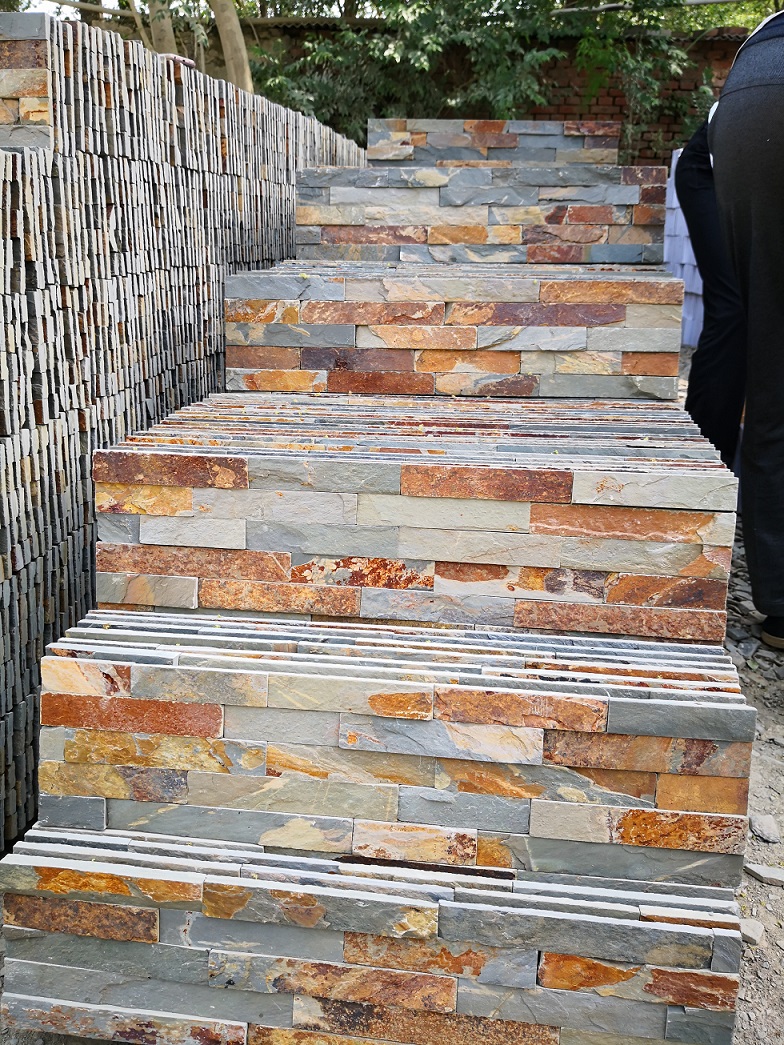
Elevate Your Architecture with Premium Stacked Stone
Direct Importing Economics: Securing High-Volume Spec-Grade Project Shipments
Direct procurement of natural stone facade systems for 2026 architectural programs requires a shift from simple price-per-square-meter metrics toward comprehensive landed cost modeling. By integrating HS code optimization, container load engineering, and risk-based offtake agreements, enterprise purchasers can stabilize margins against freight volatility and ensure compliance with evolving EU digital product passport and carbon adjustment mandates.
HS Code Optimization and Regulatory Duty Mapping
Directly importing natural stone panel systems at project volumes requires precise assignment of HS codes to cladding panels, fixing systems, and sub-framing. Strategic mapping helps avoid unnecessary duty and safeguard tariffs that can otherwise inflate costs on six-figure shipments. Procurement teams should model landed cost scenarios under various trade regimes before tendering, as misclassification can shift total duty liability by several percentage points and disrupt project budgets.
Verification of FTA eligibility and monitoring safeguard tariff exposure for German facade imports is essential for stabilizing long-term cost models. Evaluating tax scenarios across multiple trade regimes ensures that procurement directors can lock in predictable pricing during the early design phases. These compliance screenings act as a safeguard for enterprise import programs, preventing friction during customs clearance for large architectural developments.
Container Logistics and Volumetric Load Engineering
Securing high-volume shipments of brittle natural stone systems involves engineering pallet dimensions and stacking reinforcement to achieve 85–95% container utilization. Matching payloads to the project bill of quantities (BOQ) for 20-ft and 40-ft containers reduces per-square-meter freight costs while minimizing the risk of cargo damage. Research indicates that maximizing weight and space usage prevents the hidden costs associated with extra containers and overweight penalties.
Risk-based ocean freight contracting helps mitigate the impact of Currency Adjustment Factor (CAF) and bunker surcharge volatility. Because CAF is often expressed as a percentage uplift on base freight, its volatility can erode the price advantages of factory-direct sourcing over long shipping routes. Integrating these surcharges into total transport cost models allows for more accurate sensitivity analyses and better protection against seasonal logistics fluctuations.
Risk-Based Procurement and Multi-Phase Offtake Agreements
Establishing factory-direct offtake agreements is a foundational step in locking in production capacity and pricing for multi-phase architectural programs. These structured contracts define committed volumes, price formulas, and delivery schedules, ensuring that overseas processors remain aligned with the project’s timeline and quality standards. This approach provides the level of supply security required by institutional investors and bank-led due diligence processes.
Successful procurement strategies prioritize supplier technical dossiers—including mechanical test data, CE conformity, and fire performance—over nominal ex-works pricing. Implementing a risk framework that tracks on-time delivery rates, spec-conformity failure rates, and claim incidence per container ensures long-term supply stability. Moving beyond the lowest bid toward a reliability-first model protects projects from the delays and claims often associated with unverified supply chains.
Top Source Stone: Precision-Calibrated Stone Panel Systems for Flawless European Install
Precision-calibrated stone panel systems utilize sawn-back split-face modules and back-fastened mechanical slots to ensure seamless alignment and high installation productivity for large-scale European building envelopes. These systems achieve rates of 120–150 sq ft per crew shift by integrating lightweight construction with industrial-grade dimensional tolerances.
Sawn-Back Dimensional Dynamics and Mechanical Alignment
Modern stone panel systems utilize individually sawn-back profiles to eliminate visible grout lines, creating a continuous aesthetic across expansive wall surfaces. By employing precision-calibrated back-sawing on every module, these systems ensure an exceptionally flat reverse surface for clean contact lines. The inclusion of back-fastened mechanical fixing slots allows for secure attachment to standard European rail systems and building envelopes. These engineered tolerances meet the strict layout requirements frequently demanded in premium German and EU architectural projects, where geometric accuracy is paramount.
Optimizing Installation Productivity for Large-Scale Façades
High-efficiency stone panels enable installation rates between 120 and 150 square feet per crew shift, providing a significant reduction in project timelines compared to traditional masonry methods. The lightweight nature of these panels, typically ranging from 8 to 13 lbs per square foot, removes the necessity for heavy structural footings or specialized brick ledges. To maintain these standards, factories utilize automated infrared cutting and a three-stage quality control process. Technicians verify dimensional accuracy after the initial cut, following final assembly, and again before packing to ensure every module fits the 2026 building design specifications.
Material Performance and Adhesive Integrity
Sourcing raw materials from proprietary quarries allows for consistent color grading even across high-volume shipments for multi-phase projects. The structural bond of these panels relies on high-strength epoxy resins specifically formulated for natural stone, preventing detachment during the extreme temperature fluctuations found in European climates. Materials such as slate, quartzite, and marble are selected for their chemical stability, providing UV resistance and permanent color retention suited for long-term exterior applications in various regional environments.
Frequently Asked Questions
Why do commercial architects specify cement-backed stone panels over mesh backing?
Architects specify cement-backed panels because the cementitious substrate creates a stiffer, monolithic body that improves load distribution and reduces cracking risks. Unlike mesh, which serves primarily as a transport aid, a cement matrix allows for reliable mechanical fixing and helps the panel withstand wind loads and impact stresses in high-traffic applications.
Can your factory guarantee exact millimeter thickness calibration across bulk orders?
While an absolute identical thickness for every sheet is not possible with natural stone, factories provide a tight thickness tolerance band. For 2026 project standards, industrial producers typically maintain a tolerance range of ±0.5 mm to ±1.0 mm, verified through coplanar alignment and precision caliper checks.
What is the standard packaging method to protect interlocking corners?
Standard export logistics protocols involve protecting the profiles within heavy-duty wooden crates using precise, tight-pack geometry. Individual sawn-back units and modular corner profiles are structurally nested and tightly strapped into place to eliminate internal friction vectors and corner chipping during long maritime voyages.
Are natural stone panel systems suitable for fireplace surrounds?
Natural stone is inherently non-combustible, making stone panel systems an excellent choice for fireplace surrounds. These systems offer the aesthetic of traditional masonry without the weight, though installations must still follow local building codes regarding clearance and substrate heat resistance.
How do sawn-back natural stone modules improve installation efficiency?
The precision-engineered sawn-back design ensures that individual split-face stone modules sit flush against the subframe layer without irregular gaps or lippage. This back-fixing and mechanical matching significantly reduces total onsite labor hours and alignment errors compared to traditional hand-stacked masonry.
Final Thoughts
Success in the German commercial facade market depends on balancing structural engineering with rigorous regulatory compliance. Cement-backed stone panel systems offer a clear mechanical advantage by creating a stiff composite that handles wind loads and thermal stress better than traditional mesh alternatives. By prioritizing digital traceability and technical standards like DIN EN 12057, developers can ensure their material choices meet the high performance expectations of 2026 building programs.
Direct procurement remains the most effective path for stabilizing project budgets against global freight volatility and evolving trade duties. Moving toward high-volume, precision-calibrated shipments reduces onsite labor hours and minimizes the risk of installation delays. Ultimately, selecting stone systems that combine industrial-grade tolerances with documented environmental performance allows architects and procurement directors to deliver durable, high-specification building envelopes that stand up to both climate demands and economic scrutiny.
