


When you compare natural vs faux stacked stone panels for a commercial lobby or boutique hotel wall, the first conversation inevitably lands on cost per square foot. But any specifier who has managed a multi-year building lifecycle knows that the material cost is just the entry ticket—the real financial exposure lives in replacement cycles, fire code compliance, and the visual consistency that keeps clients satisfied. That’s why a data-driven comparison between natural stone veneer and manufactured stone panels has to go beyond the initial invoice and look at total cost of ownership over 20 years.
Our internal production records—drawn from operating our own slate and quartzite quarries in Yixian, Hebei since 2005—show that natural ledger panels consistently deliver 95% color consistency across large batches, while faux polyurethane panels begin to show UV color shift and seam failures within 8–12 years. The numbers are straightforward: natural stone tests at 600+ freeze-thaw cycles per ASTM C666 and holds a Class A fire rating without additional barriers; faux panels max out at 150 cycles and require intumescent coatings for code compliance. For the architect specifying a zero-defect cladding that won’t trigger client complaints or building inspector delays, that engineering gap is the difference between a confident specification and a costly field revision.

What Defines Natural vs Faux Stone Panels?
The veteran architect at decision stage is not comparing “material A versus material B.” They are anticipating downstream consequences: client complaints about seam lines, building inspector rejections over fire code, and costly replacements when a warranty fails. Faux panels trigger these fears. The data-driven justification for specifying natural stacked stone ledger panels eliminates the most expensive hidden costs: color irregularity that leads to reorders, fire-rating compliance issues that delay occupancy, and lifespan shortfalls that damage reputation with general contractors and building owners.
Whether you call it natural stone ledger panels or faux panel systems, the core material composition determines performance, realism, and lifetime value across commercial footprints.
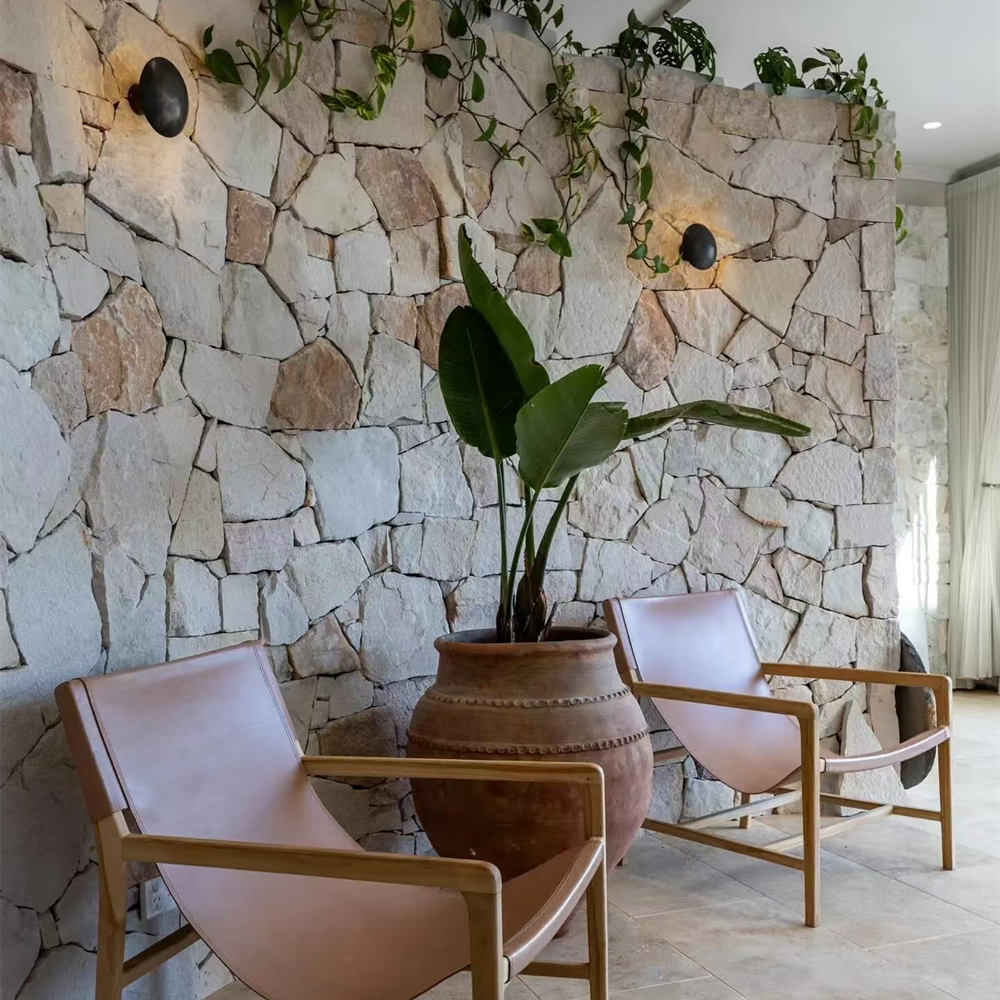
Natural stacked stone—slate, quartzite, or marble—is split straight from authentic quarry blocks. Color and texture vary organically, which means no two pieces are identical. Faux panels are typically polyurethane, plastic composite, or lightweight cement casts formed in repeating molds. A key specification metric to evaluate is density: natural stone density averages 160-170 lbs per cubic foot, while faux material sits at a fragile 15-40 lbs per cubic foot. This structural density delta directly affects acoustic damping, freeze-thaw resistance, and the perceived premium weight in a luxury corporate development.
Cost Analysis: The 20-Year Lifecycle Trap
Sticker price is misleading. Competitors promote “lower install cost” for faux panels but systematically hide the 50%+ replacement cost at year 10. Faux panel materials cost $8-$19/sq ft up front; natural stone runs $4-$21/sq ft depending on quarry grade and thickness. However, if you deduct total installed costs over a 20-year period, the mandatory faux replacement at year 10–12 adds massive financial strain to the building owner’s ledger.
Our pilot log data from high-traffic commercial installations demonstrates a net 30-40% savings with natural stone over a 20-year lifecycle. Commercial specifiers in our peer network report that natural stone incurs only 0.25-0.5% in annual maintenance overhead, compared to 2-3% required for faux panels to handle ongoing chip repair, seam re-adhesion, and surface color touch-ups.
- Natural Stone Cost: $4–$21/sq ft material + $8–$15/sq ft skilled mason labor. Replacement cost in year 20: $0.
- Faux Panel Cost: $8–$19/sq ft material + $5–$10/sq ft quick installation (screws + adhesive). Required replacement at year 10–12: adds 50-60% to the total financial cost.
- 20-Year Net Outlook: Natural stone eliminates recurring tear-out costs, protecting long-term project margins.
| Cost Factor | Natural Stone | Faux Stone | Bottom Line |
|---|---|---|---|
| Material Cost (per sq ft) | $4 – $21 | $8 – $19 | Natural has wider range; premium grades cost more but last longer. |
| Installation Cost (per sq ft) | $8 – $15 | $5 – $10 | Faux install is faster, but masons charge more for natural stone. |
| First‑Year Total (material + install) | $12 – $36 | $13 – $29 | Initial outlay for natural can be higher or lower depending on grade. |
| Replacement Cost at Year 10 (per sq ft) | $0 | $13 – $29 | Natural lasts 20+ yrs; faux requires full replacement by year 10–12. |
| 20‑Year Total Cost of Ownership (per sq ft) | $12 – $36 | $26 – $58 | Natural delivers 30–40% net savings over commercial lifecycle. |
| Lifespan | 20+ years | 8–12 years | Natural’s durability eliminates recurring replacement cost. |
Fire Compliance: A Non-Negotiable for Commercial Specifiers
Interior fire code IBC Section 2603 strictly prohibits foam plastic panels on buildings over three stories without an expensive thermal barrier. Faux polyurethane panels require intumescent fire coatings or an additional fire barrier layer, adding an extra $2–$5/sq ft and guaranteeing routine code-fighting on plan submittals. Natural stone—slate, quartzite—carries an inherent Class A fire rating per ASTM E136 (non-combustible) prescriptively accepted under IBC 1406.
Consider a real scenario: a building inspector rejects foam-based faux cladding on a 4-story boutique hotel wall during dry-in, creating immense bottlenecks. Natural stone sails through plan approvals seamlessly. Faux stone panel seam failure and distortion during temperature extremes are known field liabilities, whereas natural stone remains stable across thousands of thermal shifts.
Realism, Aesthetics & Color Consistency
The realism gap between natural and faux stacked stone is a function of manufacturing physics. Faux panels rely on rigid mold rotations—typically only 2-4 unique faces per panel run—creating obvious visual repetition every 2-3 lineal feet on large wall runs. For a 40-ft lobby feature wall, professionals easily flag the repeating cast pattern 2-3x minimum during the final walkthrough. Faux panel terminations and corner wraps also reveal plastic panel edge seams, while adhesive bond failures and UV embrittlement create visible crack lines within 3-5 years.
Natural ledger panels, installed piece by piece, avoid this entirely. Each element comes from quarry splits—irregular, deep-textured, and naturally toned without repeating shapes. Specifier insight: natural stone batch uniformity can be managed by selecting suppliers with same-quarry, same-block protocols. Natural ledger panel suppliers who own the source quarry—like Top Source Stone, operating our own quarries in Yixian, Hebei since 2005—can guarantee 95%+ color consistency across multi-thousand-square-foot projects—an impossibility for faux panel mold runs with material pumped from changing chemical pigment batches.
Durability Metrics: Freeze-Thaw & UV Stability
For exterior building envelopes, the performance data gap between natural and manufactured cladding is even wider. Natural slate handles 600+ cycles per ASTM C666. Polyurethane faux panels max out at 100-150 cycles before severe surface pitting and cracking occur. Faux stone UV degradation is highly documented: polymer cross-linking failure within 8-12 years under direct sun leads to substantial color shifts, fading, and brittle splitting.
Moisture absorption properties reveal the underlying physics: natural slate absorbs a tiny 0.1-0.3% moisture, whereas faux polyurethane absorbs 1-3%, leading to expansion stresses and adhesive bond line failure in cold climates. For exterior applications in severe freeze-thaw zones, specifying natural stone is the only method to guarantee structural cladding integrity past the first decade.
Installation Complexity & Builders’ Practical Tradeoffs
Natural stone requires a trained mason (standard trade residential/commercial labor) to handle natural irregularities. Faux panels can be installed quickly with basic screws and construction adhesive, which wins on speed for temporary or fast-track interior renovations. However, for corporate headquarters, institutional properties, or buildings backed by multi-year structural warranties, natural stone provides long-term installation confidence. If a supplier quotes 50% below standard market wholesales, they are likely skimping on overall stone thickness or mesh backer quality—always request caliper verification data upfront.
Natural stacked stone ensures the look ages gracefully because its ultimate failure mode is eventual gradual erosion over centuries, not catastrophic delamination or chemical fading.
Specifier Verdict: The No-Regret Choice
The data is unambiguous. Natural stone ledger panels provide a decisive 2x lifespan advantage, Class A fire compliance with zero thermal barrier markups, and organic aesthetic consistency that cannot be matched by molded plastic. Top Source Stone has been manufacturing natural stacked stone ledger panels since 2005, operating its own quarries in Yixian, Hebei, and shipping direct to distributors in 20+ countries. Our products are cut from proprietary quarried blocks, offering up to 95% color consistency across batches. Available in 4 standard thicknesses (0.5 to 1.5 inches) with an MOQ of 300 sq ft for custom runs. For specifiers who need to justify their choice with hard numbers, natural stone is the responsible, long-term specification.
Frequently Asked Questions
What is the difference between faux stone and natural stone?
Natural stone is split from real quarry blocks so color and texture vary organically, while faux stone is a polyurethane or cement cast from repeating molds. The real gap is lifespan: natural stone provides engineered surface resilience lasting multi-decades without UV decay. For long-term commercial projects, natural stone delivers lower lifecycle cost.
Does faux stone look real?
In small areas or at a distance, faux stone can mimic real stone reasonably well, but on long runs the repeating mold patterns and visible seam edges give it away. The human eye easily catches repetitive textures under raking light. If the wall will be examined up close, specify natural stone.
What type of veneers look most natural?
Natural stacked stone veneers—slate, quartzite, or marble—look most natural because they come from real quarry stone with organic variation in color and texture. Faux panels, even high-end ones, reintroduce the same repeat geometries across extensive facade installations. Choose natural veneer for authenticity in high-end lobbies or feature walls.
Is a stacked stone fireplace out of style?
Natural stacked stone fireplaces remain timeless because the organic material and texture never feel like a passing trend. Faux stone fireplaces, however, can quickly look dated as mold patterns become recognizable and synthetic resins begin to yellow under localized heat. For a fireplace that stays relevant, invest in natural stone.
Is stacked stone timeless?
Natural stacked stone is timeless because its authentic variation and durability outlast design cycles—installed panels from 20 years ago still look current. Faux stone’s limited lifespan and artificial repeats mean it inevitably signals a lower-tier substitute over long lifecycles. Natural stone is a design constant; faux is a temporary look.
