


Managing Stacked Stone Supply Across Phased Projects: One Lot, Staged Delivery, Elevation by Elevation
Short answer: a phased stone package works when one purchase covers the whole quantity from a single production campaign, delivery is staged to the build program, and installation follows a color-balanced elevation plan instead of container order. Reserve the full tonnage, including waste and attic stock, at order time; require crate manifests tagged to phase and elevation; make the supplier deliver a panel schedule keyed to floor, bay and tone so the installer can blend across the facade; and hold a reserve for damage and future repairs. What kills phased stone jobs is not the quarry, it is buying each phase separately and discovering in phase two that the lot no longer exists.
General contractors running multi-block or multi-phase builds meet the same trap on every stone cladding package. The design is approved, phase one looks right, and five months later the color that matched the approved sample has quietly drifted, because the second purchase order hit a different quarry bench or a different splitter line. Stone is geological, not manufactured to formula, so the only control that survives a phase gap is contractual control of one lot. This article is the package structure a GC procurement team can put into a bid: how to buy once and deliver in stages, how to plan color distribution across an elevation, and who owns each document, from quarry reservation to the last attic crate.
Buy the Whole Quantity Once, Even If You Build in Phases
The phase gap is a quarry problem, not a factory problem. Between phase one and phase two a bench can be exhausted, a new extraction face can open with a different mineral tone, and a factory re-splitting the same commercial name from new blocks will produce a visibly different wall. The fix is a single procurement covering the entire project quantity, calculated with the fabricator’s yield estimate plus a stated allowance for cutting waste, handling breakage and replacement stock, rather than an arbitrary percentage. One purchase order, one quarry campaign, one approved production plan: that is the structure, and the staged element is delivery, not production.
Specify the material by quarry and approved range, not by trade name and photograph. The acceptance basis is a range board showing the full permitted spectrum, lightest through darkest, with stated allowances for veining and mineral marks; a single hand sample is not a specification. The Natural Stone Institute’s guidance on selecting and specifying dimension stone is the reference most specifiers recognize, and its resources at naturalstoneinstitute.org are the neutral authority to cite when the package defines natural variation as acceptable and out-of-range material as rejectable. Our own project-side walkthrough of a lobby installation, in the stone cladding case study, shows what that approval chain looks like from the factory side.
Structure Delivery Around the Program, Not Around Production Runs
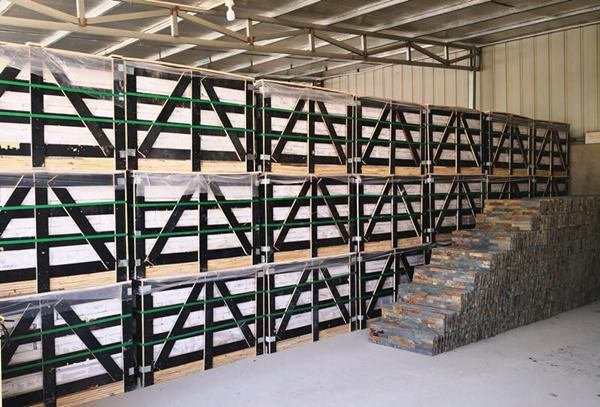
With the full quantity contracted, delivery becomes a logistics exercise tied to the master schedule. Crates are tagged with the phase and elevation they serve, the factory ships against your sequence, and material for later phases goes into proper storage: covered, off the ground, protected from freeze-thaw and standing water, with responsibility for storage damage stated in the contract. This is where the phase gap stops being a color risk, because phase-two crates are phase-one production crated and held, not new stone made later. The freight and storage plan should be a deliverable of the package, and our guide to stacked stone logistics covers what a handover-ready shipping document set looks like.
Hold a deliberate reserve beyond the delivery plan: attic stock for repairs, sized for pylon damage, mep penetrations and the chips that happen years after handover, not just for phase-two installation. State in the package who stores it, who insures it and how reissue works. A reserve that lives in a contractor’s yard with no paperwork becomes a dispute the first time a crate is opened and three panels are cracked.
Plan Color Distribution Elevation by Elevation
Containers are a logistics sequence, and installing in container order is the fastest way to put a visible tone boundary down a finished wall. The working plan is a blend map: panels numbered by elevation, floor, bay and position, each with a tone family, so the installer pulls panels by location, not by whichever crate arrived first. The factory supplies the batch information and the tone grading, and can pack to the map; the installer owns field verification and the pull sequence on the scaffold. Three documents make this work in practice: the panel schedule keyed to elevation and bay, the crate manifest cross-referenced to that schedule, and the approved range board the factory graded against.
The economics of tone control are a factory capability, and the mechanics of how lots are graded and matched before crating are covered in our guide to batch color consistency for ledger panels; for custom blends specified by the architect, the options are set out in the custom color blending guide. On site, the plan is only as good as its enforcement: require the subcontractor to draw from multiple crates simultaneously within each visual field, which homogenizes minor tone drift instead of concentrating it in one corner of the building.
Write the Package So Each Party Owns a Deliverable
Phased supply fails when responsibilities blur, so the package should name them. The supplier owns quarry reservation, the approved range, production to one campaign, tone grading, crate manifests keyed to the panel schedule, and storage-quality obligations for held phases. The contractor owns the master program dates, off-site storage conditions where material is held locally, the blend enforcement on the scaffold, and the reserve inventory records. The installer owns the pull sequence and the field verification against the range board. Each deliverable has a document, and each document has a number that ties it to a lot, which is what makes the whole chain auditable when a question arrives two years after handover.
Lead-time mechanics sit behind this structure, and they are contractual, not verbal: the fabrication clock starts on approval of shop tickets and range samples, not on purchase order signature. The production-cycle detail, including seasonal pinch points and how to sequence approvals so the factory can hold your slot, is in our lead-time and production-cycle guide, and the order structure for a multi-SKU or multi-phase load is developed further in the multi-SKU MOQ negotiation guide.
Control the Two Things That Break a Locked Campaign: Scope Growth and Field Cuts
Even a perfectly locked lot can be undone by ordinary project life. Design development adds a feature wall nobody priced, a mep penetration eats ten panels, and suddenly the reserved quantity is short on the exact lot that made the wall match. The package should therefore name a change mechanism: additional quantities are filled from the reserved campaign’s attic stock first, and if the stock is exhausted, the shortfall is bought from the same quarry bench with a range-board re-approval before it ships, never filled by a quiet second order against a fresh photograph. State in the contract who pays for the re-approval when the change originates with the owner, because that clause is what stops a late addition from becoming a free re-match exercise for the supplier.
Field cuts are the quieter killer. Every panel trimmed on site to dodge an interface problem reduces the reserve and introduces edges the factory never finished. The installer’s method statement in the package should commit cutting to the shop where possible and require the site to log every cut panel against the panel schedule, so the reserve accounting stays honest. These are small clauses with large effects: the campaigns that drift are rarely the ones with bad stone, they are the ones where nobody was watching the count.
Conclusion: One Campaign, Staged Crates, a Blend Map
Phased stone supply is a solved problem with three moves: contract the full quantity from one production campaign with the reserve built in, stage delivery to the build program with crates tagged to phase and elevation, and install from a color-balanced blend map instead of container order. What the GC buys with that structure is not just stone; it is the guarantee that block six and block one were cut from the same ground under the same approved range, with a reserve waiting for the repair call five years out. The alternative, buying phase by phase against a sample, quietly transfers quarry risk onto the project schedule, and the schedule always collects.
Frequently Asked Questions
Can we order stone phase by phase if the quarry is large?
You can, and large quarries reduce the risk, but they do not remove it: extraction faces move, and the same commercial stone name changes character between benches. A single campaign with staged delivery buys the same build flexibility without the drift.
Who should own the blend and sequencing plan?
The supplier owns the data: tone grading, batch codes and a panel schedule keyed to elevation and bay, packed to the map on request. The installer owns the working pull sequence and field verification. The GC owns enforcement and the reserve records.
How much reserve should a phased project hold?
Size it with the fabricator from the panel layout and yield estimate, as a stated allowance on top of the net quantity, covering cutting waste, breakage and future repairs. The number is project-specific, and it belongs in the package, not in a verbal promise.
