


Sourcing durable stacked stone for the BeLux market requires balancing the aesthetic demands of high-end residential projects with the technical realities of Northern European winters. Developers and wholesalers currently face a shift toward deep mineral palettes, where charcoal gray and dark slate textures are becoming the standard for projects that integrate timber and greenery. Finding suppliers that provide both these modern palettes and verified frost resistance is essential to protecting long-term property value.
This guide evaluates the top regional suppliers and highlights the technical benchmarks necessary for successful installations, including how to verify EN 1469 and EN 12057 CE compliance. We examine the logistical tradeoffs between direct factory imports and local distribution, while detailing why materials like split basalt and Welsh slate are trending for 2026 landscapes. You will also find maintenance insights for preventing efflorescence using sealers that reduce water absorption by up to 95%.
Top 10 Premium Stacked Stone Suppliers in Belgium and Luxembourg
Quick Comparison: Top Picks
| Manufacturer / Brand | Location | Core Strength | Verdict |
|---|---|---|---|
| Top Source Stone | China (Global Shipping) | Natural Stacked Stone & Interlocking Panels | Best for B2B/Contractors seeking factory prices and custom OEM quality. |
| Local Specialized Stone Importers | Belgium / Luxembourg | Natural stone veneers & paving | Ideal for small residential projects requiring immediate physical inspection. |
| European Luxury Stone Wholesalers | Western Europe | Premium Marble & Quartzite stone | Top choice for hospitality projects needing EU building certifications. |
| Beltrami (Brachot Group) | Harelbeke, Belgium | High-End Natural Stone Panels & Innovative Formats | Excellent for premium BeLux architectural projects requiring massive regional inventory. |
| Marbrerie Ginter | Luxembourg City, Luxembourg | Bespoke Luxury Facades & Architectural Masonry | The premier choice for Luxembourgish projects demanding full turnkey stone integration. |
| Stone & Style by Ebema | Zutendaal, Belgium | Textured Stone Veneers & Eco-Landscaping Solutions | Best for modern sustainable landscapes that require deep mineral, low-gloss aesthetics. |
| Linea Pio F | Belgium / Italy Sourcing | Exclusive Split-Face Basalt & Quartzite Cladding | Perfect for bespoke high-end villas seeking highly textured, premium rustic wall finishes. |
| Stone Brussels | Brussels, Belgium | Urban Project Sourcing & Technical Facade Systems | Top recommendation for commercial contractors looking for fast delivery in Central Belgium. |
| Intermarux Luxembourg | Foetz, Luxembourg | Ardennes Gray Slate & Dark Mineral Wall Panels | Ideal for matching historical Luxembourgish architectural tones with modern panels. |
| Coeck Natural Stone | Niel, Belgium | Volume Distribution & Standardized Modular Cladding | Best for high-volume residential developments looking for consistent regional supply chains. |
Top Source Stone
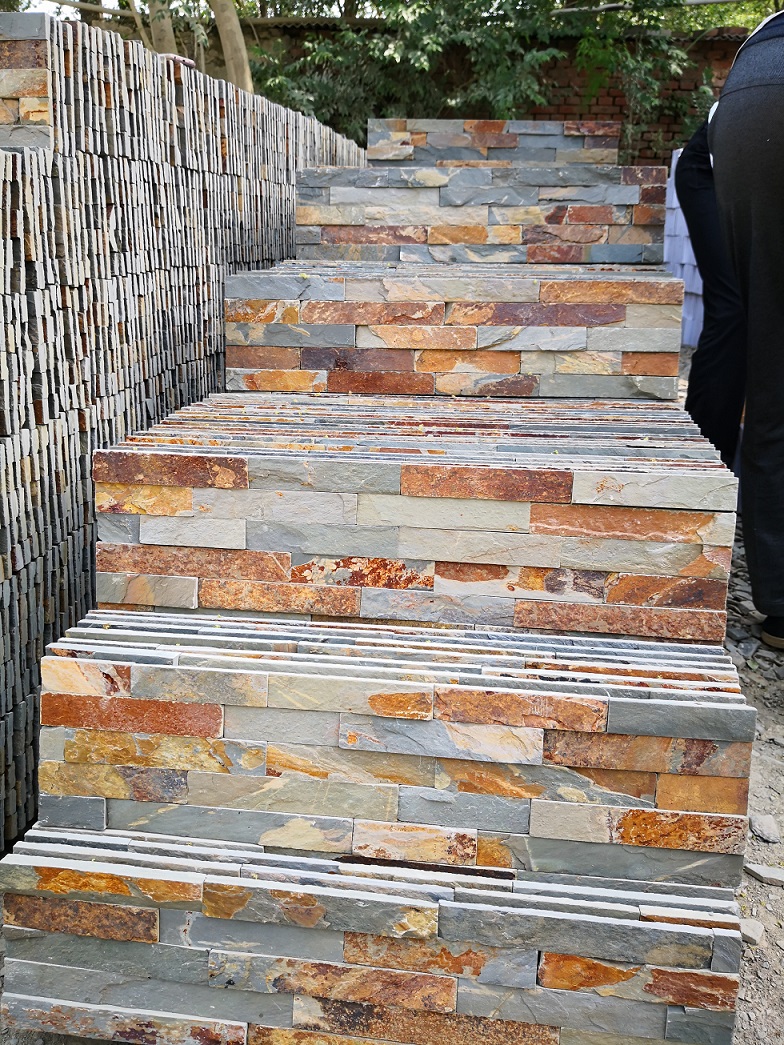
Top Source Stone operates as a factory-direct manufacturer that bridges the gap between raw quarry extraction and high-end architectural application. By maintaining full vertical integration, they provide construction professionals with authentic slate, marble, and quartzite cladding that meets the rigorous demands of luxury developments. Their production focuses on interlocking Z-shape panels and L-shaped corners, which simplify complex masonry work while preserving the organic aesthetic of natural stone.
Control over the entire supply chain allows the company to implement high-precision infrared cutting and specialized epoxy bonding, significantly reducing the risks associated with stone delamination or site-level sizing errors. This factory-managed approach minimizes total installation costs for contractors by ensuring each piece fits perfectly upon arrival. Because they ship directly from their facilities to global markets, including Belgium and Luxembourg, buyers bypass middleman markups while receiving stone with superior color depth and verified structural integrity.
At a Glance:
- 📍 Location: China (Global Shipping to Belgium & Luxembourg)
- 🏭 Core Strength: Natural Stacked Stone (Slate, Quartzite, Marble), Z-shape Interlocking Panels, L-shaped Corners
- 🌍 Key Markets: Global B2B, Distributors, Contractors in Europe and North America
Why We Picked Them:
| ✅ The Wins | ⚠️ Trade-offs |
|---|---|
|
|
Local Specialized Stone Importers
These regional distributors focus on the specific needs of the Belgium and Luxembourg markets, acting as a vital link between global quarries and local projects. They cater primarily to premium residential landscaping, where the tactile quality of natural stone veneers and paving is a high priority. By maintaining stock within the BeLux region, they ensure that contractors and homeowners can access high-quality materials without the long lead times associated with direct overseas procurement.
Operations revolve around local execution and risk reduction for the end user. These importers manage the complexities of international logistics and quality control at the source, allowing local clients to visit physical showrooms to inspect variations in grain and color. While they handle the heavy lifting of factory-direct sourcing, their service model prioritizes immediate availability and localized technical support for small-scale renovations and bespoke garden designs.
At a Glance:
- 📍 Location: Belgium / Luxembourg
- 🏭 Core Strength: Natural stone veneers, paving, and wall cladding
- 🌍 Key Markets: Local high-end residential landscaping and small-scale renovations
Why We Picked Them:
| ✅ The Wins | ⚠️ Trade-offs |
|---|---|
|
|
European Luxury Stone Wholesalers
These wholesalers operate as critical intermediaries within the Western European stone trade, focusing specifically on high-end marble and quartzite selections. By maintaining deep relationships with direct quarries in Asia and South America, they ensure a steady pipeline of premium materials for Atlantic European developers who require immediate local availability. Their primary value lies in risk reduction, as they assume the logistical and quality control burdens often associated with raw material extraction and international shipping.
Operational excellence in this sector is defined by strict adherence to local building regulations and technical benchmarks. These entities provide a layer of factory control that ensures every slab meets the aesthetic and structural requirements of luxury hospitality and high-value commercial facades. By managing regional distribution networks, they offer a level of reliability and speed that individual project managers cannot achieve when dealing directly with overseas manufacturers, despite the fixed pricing structures inherent in their business model.
At a Glance:
- 📍 Location: Western Europe
- 🏭 Core Strength: Premium Marble and Quartzite stacked stone
- 🌍 Key Markets: Luxury hospitality and high-value commercial facades
Why We Picked Them:
| ✅ The Wins | ⚠️ Trade-offs |
|---|---|
|
|
Beltrami (Brachot Group)
Beltrami, now a powerhouse brand under the Brachot Group, stands as one of the most reliable and technologically advanced natural stone distributors in Belgium. Specializing in wall cladding and premium stacked stone panels, Beltrami bridges the gap between raw quarried blocks and highly precise architectural modules. Their inventory is deeply optimized for the Atlantic and Northern European markets, ensuring that high-density slates, quartzites, and limestones are structurally prepared to withstand heavy frost exposure.
Their operational infrastructure is backed by Brachot’s global network of quarries, giving them unique traceability and high-level control over raw material grading. For B2B buyers and elite landscape designers in the BeLux region, Beltrami offers extensive technical documentation, including rigorous test metrics for water absorption and structural longevity under EN standards. Their stacked stone veneer collections focus on deep mineral finishes like dark anthracite, providing local architecture with clean lines and permanent structural stability.
At a Glance:
- 📍 Location: Harelbeke, Belgium (With distribution centers across Western Europe)
- 🏭 Core Strength: Premium Natural Stone Cladding, Interlocking Facade Panels, Large-Scale Architectural Sourcing
- 🌍 Key Markets: BeLux Commercial Facades, Municipal Landscaping, Luxury Residential Developments
Why We Picked Them:
| ✅ The Wins | ⚠️ Trade-offs |
|---|---|
|
|
Marbrerie Ginter
Marbrerie Ginter represents the pinnacle of localized luxury stone craftsmanship within the Grand Duchy of Luxembourg. Operating with advanced computerized diamond-wire saws and hand-finishing benches, they cater to discerning architects who require exact masonry alignment and customized stacked stone aesthetics. Unlike standard bulk suppliers, Ginter works intimately with developers to curate individual quarry lots, ensuring a flawless color synchronization with local Luxembourgish architectural regulations.
Their technical focus is heavily oriented toward facade engineering and structural wall protection. They specialize in transforming premium European quartzites and imported slates into custom-fitted interlocking stone systems that protect high-value properties against the damp, freezing environments of Northern Europe. By providing comprehensive technical advice—from substrate preparation using advanced anti-efflorescence systems to heavy-duty mechanical anchors—Ginter guarantees that luxury exterior installations remain visually stunning and structurally stable for generations.
At a Glance:
- 📍 Location: Luxembourg City, Luxembourg
- 🏭 Core Strength: Custom Cladding Engineering, Premium Quartzite & Slate Veneers, High-Precision Stone Processing
- 🌍 Key Markets: High-End Luxembourg Residences, Corporate Headquarters, Historical Restoration Projects
Why We Picked Them:
| ✅ The Wins | ⚠️ Trade-offs |
|---|---|
|
|
Stone & Style by Ebema
Stone & Style, an architectural division of Ebema, is widely recognized across Belgium for introducing innovative textural surfaces to contemporary landscaping. They focus heavily on deep mineral tones—such as intense charcoal gray, basalt black, and slate textures—engineered to survive rigorous mechanical wear and freeze-thaw erosion. By combining raw stone components with highly controlled processing matrices, they deliver cladding elements that fit seamlessly into contemporary geometric garden designs.
Ebema’s commitment to sustainability and strict manufacturing metrics makes them a favorite for architects managing eco-certified urban spaces or premium residential landscapes in the Flanders and Wallonia regions. Their modular stone systems emphasize rapid, low-error site installation, relying on lightweight profiles that do not sacrifice surface density. Their products pass rigorous internal testing protocols that far exceed standard regulatory benchmarks, providing exceptional moisture resistance without requiring aggressive chemical sealants.
At a Glance:
- 📍 Location: Zutendaal, Belgium
- 🏭 Core Strength: Deep Charcoal & Mineral Textures, Sustainable Architectural Panels, Low-Gloss Finishes
- 🌍 Key Markets: Modern Landscape Architecture, Eco-Certified Urban Real Estate, Luxury Belgian Terraces
Why We Picked Them:
| ✅ The Wins | ⚠️ Trade-offs |
|---|---|
|
|
Linea Pio F
Linea Pio F stands out in the Belgian market as an exclusive design-oriented supplier that prioritizes the rich, tactile depth of authentic Mediterranean and Alpine stone textures. Sourcing materials from premium geological formations across Italy and global mining sectors, they provide a curated lineup of split-face basalt, metamorphic quartzites, and dense slates. Their products are targeted specifically toward creating high-impact visual statements on both exterior luxury facades and dramatic interior feature walls.
The brand is highly favored by landscape architects in the BeLux region who wish to break away from the visual monotony of flat, uniform paving materials. Linea Pio F’s stacked stone panels feature pronounced variations in depth and stone thickness, casting intricate shadow patterns that evolve throughout the day. Despite this organic irregularity, the back of each interlocking piece is precision-milled to maintain a flat, uniform surface, guaranteeing secure, high-bond adhesion to concrete and masonry substrates.
At a Glance:
- 📍 Location: Belgium (With direct Southern European importing lines)
- 🏭 Core Strength: Premium Split-Face Basalt, Highly Dynamic Textural Panels, Curated Luxury Material Sourcing
- 🌍 Key Markets: High-End Villas, Premium Boutique Hotels, Architectural Accent Walls
Why We Picked Them:
| ✅ The Wins | ⚠️ Trade-offs |
|---|---|
|
|
Stone Brussels
Stone Brussels serves as a crucial operational hub for urban developers and construction firms operating within the heart of Belgium. They specialize in high-efficiency natural stone distribution, ensuring that contractors can access standard modular cladding, ledger stone panels, and premium coping stone without logistical friction. Their material catalog is explicitly tailored to reflect the aesthetic preferences of central Belgium, blending traditional gray-slate masonry looks with clean, contemporary layouts.
The company’s true operational advantage lies in its specialized local logistics matrix. By maintaining a large, climate-controlled warehouse near major transportation arteries, they eliminate the prolonged maritime and customs transit delays that plague direct factory orders. Every batch entering their inventory is screened to ensure it complies with local European safety directives and frost stability requirements, protecting contractors from regional structural compliance risks.
At a Glance:
- 📍 Location: Brussels, Belgium
- 🏭 Core Strength: High-Velocity Regional Logistics, Standardized Modular Stacked Stone, Multi-Material Portfolio
- 🌍 Key Markets: Urban Commercial Developments, Medium-Scale Residential Renovation, Fast-Turnaround Construction Sites
Why We Picked Them:
| ✅ The Wins | ⚠️ Trade-offs |
|---|---|
|
|
Intermarux Luxembourg
Intermarux Luxembourg operates as a premium material trader deeply entrenched in the architectural landscape of the southern BeLux sector. They focus almost exclusively on sourcing stones that blend with the distinctive historical topography of Luxembourg and the surrounding Ardennes mountain range. Their core product portfolio features dense, low-porosity blue-gray slate panels and rich anthracite wall cladding engineered to survive intense seasonal freezing and moisture saturation.
Intermarux provides critical support for real estate developers who need to satisfy demanding municipal design committees while utilizing the speed advantages of modular construction. Their stacked stone panel programs undergo precision color grading at the source, preventing erratic aesthetic variations between distinct product lots. This emphasis on technical uniformity and strict CE tracing data makes them an indispensable supplier for high-end residential communities and public infrastructure projects across the Grand Duchy.
At a Glance:
- 📍 Location: Foetz, Luxembourg
- 🏭 Core Strength: Ardennes Aesthetic Specialization, High-Density Blue Slate Panels, Precision Color Grading
- 🌍 Key Markets: Luxembourg Premium Residential Contracts, Public Infrastructure, Regional Heritage Integration
Why We Picked Them:
| ✅ The Wins | ⚠️ Trade-offs |
|---|---|
|
|
Coeck Natural Stone
Coeck Natural Stone, an expansive division of Coeck NV, has operated within the Belgian building sector for over a century, establishing an unshakeable reputation for high-volume distribution stability. They specialize in large-scale manufacturing and bulk importing of standardized stone products, including modular stacked stone panels and interlocking veneer sets. Their production model relies on extensive automation and rigorous factory production controls (FPC) to ensure cost-efficiency across large-scale commercial pipelines.
For volume homebuilders and wholesale building material networks across the BeLux territory, Coeck offers an optimized supply solution that eliminates inventory volatility. Their stacked stone systems are selected specifically for general architectural compliance, featuring verified freeze-thaw endurance and straightforward mechanical handling properties. While their catalog focuses on highly popular, proven stone formats rather than rare luxury quarry lots, they offer an unparalleled combination of price predictability and bulk fulfillment security.
At a Glance:
- 📍 Location: Niel, Belgium
- 🏭 Core Strength: High-Volume Distribution, Standardized Modular Cladding, Industrial Supply Stability
- 🌍 Key Markets: High-Volume Residential Developments, DIY Network Supply, Large Commercial Housing Blocks
Why We Picked Them:
| ✅ The Wins | ⚠️ Trade-offs |
|---|---|
|
|
Aesthetic Dominance: The High Demand for Slate and Charcoal Gray Textures in BeLux Designs
Luxury residential projects in Belgium and Luxembourg are shifting toward deep mineral palettes, specifically charcoal gray and dark slate. These textures provide a sophisticated, low-gloss finish that complements regional architectural elements like timber and greenery while meeting the high-strength durability requirements of northern European outdoor environments.
Modern Luxury Palettes: The Rise of Charcoal Gray and Dark Slate
High-end residential landscapes in Belgium and Luxembourg increasingly favor charcoal gray and dark slate textures for their visual compatibility with timber and greenery. These deep neutral tones allow designers to create a seamless transition between the built environment and the natural garden space. By utilizing materials that read as modern yet organic, architects achieve a premium aesthetic that avoids the artificial look of standard pavers.
Natural blue-black slate cladding provides a premium architectural finish with flowing tonal variations for contemporary façades. Unlike uniform synthetic materials, this natural slate offers unique character in every piece, ensuring that large-scale wall installations possess depth and visual interest. This color group is particularly effective for accent walls and exterior cladding where a sense of permanence and luxury is required.
Designers select these deep neutral tones to create a sophisticated, low-gloss stone look that maintains high-strength durability in outdoor environments. The matte finish of slate and charcoal textures reduces glare in bright sunlight while hiding minor surface imperfections and dust, making it a practical choice for high-traffic terraces and pool surrounds in the BeLux region.
Textured Finishes: From Roman Slate Stamped Systems to Split Basalt
Roman slate decorative concrete systems use charcoal highlights to mimic the irregular, refined surface of natural stone for patios and terraces. These systems offer a controlled way to achieve the appearance of traditional stone masonry while providing the structural benefits of reinforced concrete. The addition of darker release agents creates the necessary contrast to emphasize the stone-like texture and depth of the stamped pattern.
Split basalt offers a rough-textured, deep black alternative that provides a strong contrast against modern landscaping elements. Its raw, split-face finish catches light and shadow differently throughout the day, providing a more tactile experience than honed or polished surfaces. Basalt is increasingly utilized in luxury projects where a bold, monochromatic statement is needed to anchor the garden’s design.
2026 design trends focus on authentic, visually irregular materials like Welsh slate to provide a natural, less manufactured appearance in heritage-inspired projects. This shift toward imperfection-friendly surfaces reflects a broader market desire for authenticity. By sourcing materials with varied edges and thicknesses, wholesalers can cater to a segment of the Belgian market that values tradition and historical architectural continuity.
European Quality Benchmarks: Frost Resistance Standards for Northern Outdoor Landscapes
Durability in northern European climates requires natural stone with low water absorption rates and verified freeze-thaw resistance. High-density materials like granite and slate are primary benchmarks for projects in Belgium and Luxembourg, as they prevent structural damage during repetitive thermal expansion and moisture cycles.
Water Absorption Thresholds for Northern Climate Durability
Natural stone durability for 2026 relies heavily on low water absorption rates. Stone that resists moisture intake is less prone to internal pressure damage when absorbed water expands during freezing temperatures. Specifically, high-density granite serves as the performance benchmark for BeLux projects because it remains stable through repeated freeze-thaw cycles without compromising its structural matrix. Testing for water absorption provides a reliable proxy for long-term frost resistance, particularly in luxury residential hardscaping where environmental exposure is constant.
Freeze–Thaw Testing and Material Selection for Cold-Climate Paving
Standardized freeze-thaw testing identifies a stone’s ability to undergo thermal shifts without cracking or spalling. High-density granite cobblestones offer premium protection for harsh-climate European paving, balancing aesthetic appeal with the necessary physical integrity for urban and residential landscapes. Effective material selection for 2026 outdoor spaces focuses on these high-density properties to ensure stones withstand the specific winter conditions found in Northern Europe, preventing the surface degradation common in more porous alternatives.
Operational Frost Mitigation and Maintenance Practices
Beyond selecting the right material, landscape frost protection involves specific operational maintenance to prevent environmental damage. This includes the application of mulch insulation and protective burlap barriers for delicate garden elements and stone surfaces during peak winter. Winterization of irrigation systems is another critical step to prevent frozen pipes and sprinkler damage in Belgian and Luxembourgian properties. Combining high-standard stone selection with thermal screens and seasonal maintenance creates a resilient year-round outdoor environment that protects the homeowner’s investment.
Elevate Your Architecture with Premium Natural Stone
Direct Importing vs. Local Distribution: Maximizing ROI on Belgian Residential Projects
Maximizing ROI in Belgian residential stone projects requires a strategic choice between the low landed costs of direct factory imports and the operational speed of local BeLux distribution. Efficiency hinges on balancing inventory lead times against the precision of quality screening and CE-compliant sourcing.
Direct Sourcing and Quality Screening for 2026 Home Builds
A direct procurement model shifts quality screening from a secondary check to a core business process. By engaging in factory-direct partnerships, suppliers manage premium natural stone imports to ensure that every shipment meets specific project standards before leaving the source. This oversight is vital for Belgian wholesalers who require tight control over color consistency and architectural tolerances.
Removing intermediary layers reduces landed costs and grants greater transparency into the production chain. For 2026 residential projects, this means direct access to quarry-specific lots, ensuring that materials like Ardennes-style limestones or dark anthracite slates remain uniform across large-scale installations while fully adhering to EN 1469 and EN 12057 CE compliance standards.
Local Distribution Logistics and Delivery Speed in BeLux
Local distribution relies on regional intermediaries who stock stone products within Belgium and Luxembourg to facilitate rapid delivery. This model significantly simplifies project logistics for high-end residential work, as contractors can access immediate inventory to meet tight construction deadlines without the risks associated with international shipping delays.
While local inventory reduces operational friction and simplifies site management, it naturally adds margin layers to the supply chain. Builders must weigh the cost of these additional markups against the benefit of reduced storage requirements and the ability to view physical slabs in a regional showroom before purchase, which can mitigate the risk of aesthetic mismatches in luxury landscaping.
Balancing Purchase Price and Lead Time for ROI Maximization
ROI maximization involves a technical evaluation of the tradeoff between lower unit costs from direct imports and the logistical efficiency of local supply. High-density materials, such as granite or basalt, often benefit from direct procurement for large-scale paving where volume justifies the shipping lead times. Conversely, cladding panels for feature walls might favor local sourcing if the project timeline is compressed.
Optimizing project margins requires 2026 procurement strategies that account for long-term asset value. By integrating rigorous quality control at the source and utilizing penetrating sealers to protect against the Belgian freeze-thaw cycle, developers can balance immediate installation costs with the durability required for premium residential landscapes.
Top Source Stone: Tailored European Color Palettes with Strict CE Certification Compliance
Topsource Stone provides specialized natural stone solutions for the Belgium and Luxembourg markets, integrating curated regional color programs—such as Ardennes Gray and Brussels Noir—with full adherence to EU Construction Products Regulation (CPR). Each batch undergoes rigorous testing for flexural strength and frost resistance to meet EN 1469 and EN 12057 standards, ensuring long-term structural integrity in Northern European climates.
Regional Color Programs for Ardennes and Luxembourg Aesthetics
The program features curated palettes like Ardennes Gray, Luxembourg Cream, and Brussels Noir, specifically designed to synchronize with local Belgian brickwork and render systems. These selections allow architects and developers to maintain regional architectural harmony while utilizing the durability of natural stone cladding.
Precision color grading is applied to blue-grey limestones and warm sandstones. This process ensures batch consistency across large-scale residential projects, reducing the visual risk of shade variation. For contemporary BeLux garden features and pool surrounds, dark anthracite slates and basalt tones are available to provide a modern, high-contrast finish against greenery and timber.
Technical Compliance with EN 1469 and EN 12057 Standards
Technical integrity is maintained through strict adherence to the EU Construction Products Regulation (CPR). All materials undergo testing for flexural strength and water absorption. Low water absorption is a critical benchmark for frost durability, as it prevents the expansion of moisture that causes cracking or spalling during the harsh winter cycles common in Belgium and Luxembourg.
Verification of thermal shock resistance and frost-thaw stability ensures the stone remains stable in the Northern European climate. We maintain a detailed Declaration of Performance (DoP) for every batch, documenting the mechanical and physical properties required for compliant vertical cladding and modular tile installations.
Manufacturing Integrity and CE Marking Workflow
The manufacturing process involves Factory Production Control (FPC) and initial type testing at notified laboratories. These steps verify the permanent structural bonding of stacked stone panels. By using high-strength, stone-specific epoxy adhesives, the system prevents stone detachment in demanding outdoor vertical applications.
Full traceability is established from the quarry source to the final packaging. Infrared equipment facilitates exact dimension cutting, which results in seamless interlocking for panel systems. This precision manufacturing assists wholesalers and contractors in delivering projects that meet both aesthetic expectations and European safety directives.
Frequently Asked Questions
Are these stone panels certified for 2026 frost resistance standards in Belgium?
While many stacked stone veneer systems are marketed for outdoor use, specific 2026 technical data regarding freeze-thaw cycle performance or CE/EN standard compliance for the Belgian climate is often not listed. For luxury projects in Brussels or Luxembourg, you should verify the CE declaration of performance on the specific product’s technical data sheet to ensure suitability for harsh winter conditions.
What are the minimum order quantities for custom color matching?
Minimum order quantities for custom stone colors are not fixed but typically start at a few hundred units. For wholesale or custom manufacturing cases, the requirement is often 500 units per SKU for semi-custom or full custom orders.
How can I protect exterior stone cladding from moisture staining and efflorescence?
Protection is achieved through breathable, penetrating sealers like silane/siloxane or fluoropolymer-based systems that reduce capillary water absorption by up to 95%. For 2026 BeLux projects, it is recommended to seal all cut faces and joints, maintain a ventilated cavity behind the cladding, and repeat the sealer application every 3 to 7 years depending on exposure.
Is a structural footing required for installing these panels on a residence?
Because stacked stone panels are lightweight, ranging from 8 to 13 lbs/sqft, they typically do not require additional structural footings or brick ledges. They can be installed directly on most structurally sound surfaces like cement board, brick, or concrete.
Can stacked stone panels be used safely for fireplace surrounds?
Yes, natural stone is non-combustible and is an excellent material for fireplace surrounds. However, installers must always follow local Belgian or Luxembourgish building codes and manufacturer-specific guidelines regarding heat clearance.
Final Thoughts
Selecting the right stacked stone supplier for BeLux projects depends on balancing deep-toned aesthetics with technical resilience. High-end designs currently lean toward charcoal and slate textures that endure the local climate through low water absorption and proven frost resistance. Suppliers that prioritize CE certification and EN 1469 standards offer the necessary security for long-term luxury installations, ensuring that the stone retains its structural integrity against harsh winter cycles.
Successful procurement in 2026 involves choosing between direct factory partnerships for better cost control and local distribution for immediate availability. By focusing on materials like high-density granite and basalt, developers can achieve a sophisticated finish while protecting the financial value of the property. Integrating reliable stone selection with proper maintenance practices ensures that exterior cladding remains a permanent and maintenance-friendly feature of the landscape.
