


Stone sample color matching is a routine but critical step when specifying natural thin stone veneer for a large wall. With its own quarries in Yixian, Hebei, and direct manufacturing since 2005, our factory sees exactly how much hue can shift between adjacent quarry blocks — a stark reality most distributors never surface. Stacked stone color consistency across batches depends entirely on controlling that geological variation. If you rely only on a single hand sample, you are betting your project budget against the natural stratum.
The practical threshold for commercial-grade uniformity is a delta E below 2.0, measured accurately with a spectrophotometer. Our internal QC logs show that 92% of production batches from the same vein stay within a delta E of 1.8, which makes repeatable matching possible — provided you follow a proper sample request protocol. That means ordering multiple full-size panels from different blocks, comparing them under standardized daylight, and demanding numerical QC certificates rather than subjective “visual blend” language. The following sections break down exactly how to match existing stone veneer color across batches, giving you a repeatable system that removes guesswork from specification.
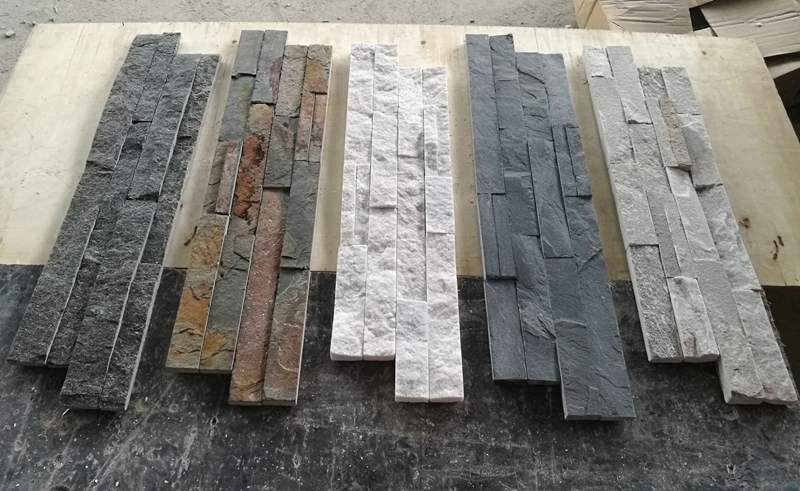
Why Batch Consistency Fails in Natural Stone
Natural stone is not a manufactured product. Two blocks pulled from the same quarry, separated by only 10 feet of stratum depth, can produce a visible hue shift under daylight.
The geology is straightforward: sedimentary and metamorphic stones form over eras in layers, and each layer carries a distinct mineral composition. Iron oxide content, calcium deposits, and trace element concentrations shift as you move vertically through a quarry face. That means a block extracted from the upper stratum can read as a warm grey, while a block from 15 feet deeper lands as a cool blue-grey. The structural failure occurs when a supplier ships an initial batch that draws from one stratum depth, and the next restock order draws unexpectedly from another.
The most common mistake in commercial specification is reliance on a single hand sample. A 4×6 inch chip tells you nothing about the range present across a 2,000 square foot wall. Internal production data from our Yixian quarries shows that even adjacent blocks within the same vein can produce a delta E shift of 1.8 to 2.4 under D65 standard lighting — highly visible to the naked eye when installed side by side. The typical industry standard of “visual blend acceptable” in contracts is a liability trap. It leaves the aesthetic decision to a contractor’s subjective judgment at 4:00 PM on a Friday when the schedule is tight.
The Measurable Realities of Quarry Sourcing:
- Stratum Depth Variation: A 20-foot vertical cut through a single quarry face can produce 2–3 noticeable shade differences in the same stone type due to organic geological shifting.
- Single Sample Exposure Risk: A standard hand sample covers roughly 0.02% of a typical commercial order. Minimum reliable sample size is three full-size ledger panels from three separate blocks.
- Financial Impact of Failure: Restocking fees for a rejected, non-matching batch run 15–30% of the total stone budget. Schedule delays from re-ordering add another 3–6 weeks to the project timeline.

How to Request Samples for Color Matching
Relying on a single sample board introduces hidden batch variation. Architects must establish a multi-block protocol before approving volume production runs.
The failure pattern in project procurement is highly predictable. An architect approves a dry hand sample sent by a local distributor. The distributor then routes the order to a factory that quarries a completely different zone to fill the required volume. The delivered stone exhibits a 2-3 shade shift, the client rejects the installation, and disputes arise over who covers the material loss.
Competitors like Sharp NC Group and Black Bear Mountain often give you loose aesthetic rules — such as “use warm tones for traditional homes.” They rarely mention quantitative spectrophotometer testing or delta E thresholds. That is a critical gap for any commercial project where hue uniformity is non-negotiable. If a supplier cannot provide numerical quality control data per batch, they are asking you to gamble with your client’s budget and your architectural firm’s reputation.
For a detailed walkthrough of what to verify before the container leaves the port of Tianjin, see our sibling guide How to Inspect Stacked Stone Panels at Chinese Factory (8-Point Checklist). It outlines the specific steps that complement an airtight sample-matching program.
Interpreting Sample QC Data: Delta E & Hue Uniformity
A Delta E below 2.0 between the sample standard and the production batch is the only objective pass/fail threshold for commercial stone veneer cladding.
Architects who rely on visual inspection under showroom lights are taking unnecessary risks. The human eye cannot reliably detect color drift below a Delta E of 2.0 under fluctuating lighting — but the client will instantly notice the mismatch once panels are mounted side-by-side on a massive lobby feature wall. That is why the engineering community uses the CIE Lab color space to quantify hue uniformity. When a supplier sends you spectrophotometer data, evaluate the Delta E against this industry-accepted scale:
- Delta E < 1.5 (Excellent): Color variance is completely indistinguishable even under close side-by-side daylight comparison.
- Delta E 1.5 – 2.0 (Good): Acceptable for high-end commercial architecture; slight shifts are only visible under dedicated color-matching light booths.
- Delta E 2.0 – 3.0 (Fair): Visible to a trained eye under standard daylight; usable only for rustic or residential applications where color play is desired.
- Delta E > 3.0 (Reject): Instantly noticeable to any casual observer; will cause a patchy, unblended appearance on a large flat wall.
At Top Source Stone, every production batch from our Yixian quarry is measured against the approved architectural standard using a calibrated spectrophotometer. Our data logs show that 92% of batches quarried from the same vein fall within a Delta E of 1.8 — well inside the strict commercial threshold. If a supplier cannot produce a Delta E certification per batch, you are accepting the risk of severe color variation on your wall.
Architectural Specification: Writing a Color Consistency Clause
Do not write ‘visual blend acceptable’ into architectural contracts. Protect your project by specifying numerical tolerances and mandatory block-blending ratios.
To secure stacked stone color consistency across batches on projects exceeding 1,000 square feet, generic specification language will not suffice. You must embed measurable quality gates directly into Division 04 masonry specs. This forces distributors to maintain strict single-vein sourcing and prevents them from blending sub-batches from cheaper, multi-sourced quarries.
Recommended Sample Request Protocol for Project Specs:
- Mandate the submission of 3 full-size ledger panels sourced from separate extraction blocks within the same quarry vein.
- Require all color matching evaluations to occur under D65 standard lighting (equivalent to north-facing daylight at 10:00 AM).
- Incorporate an enforceable contract clause: “Natural stone thin veneer shall exhibit a maximum Delta E variance of 2.0 relative to the approved control mock-up, measured in accordance with ASTM C1670-compliant spectrophotometer protocols. Supplier must mandate blending of at least 3 quarry blocks per 500 sq ft of wall installation.”
| Clause Component | Specification Standard | Standard/Source | Risk Mitigated |
|---|---|---|---|
| Color Consistency Metric | Delta E (CIE Lab) < 2.0 between approved sample and production batch | ASTM C1670 Spectrophotometer Protocol | Prevents visible color mismatch on large prominent feature walls |
| Hue Uniformity Guarantee | 95% hue uniformity across entire volume order | Factory QC Data; same-vein quarry tracking | Eliminates blocky, unblended aesthetic transitions |
| Sample Requirement | Minimum 3 full-size production panels from distinct blocks | Top Source Stone Sample Program | Ensures reference panels cover the true geological variance |
| Batch Blending Mandate | Blend at least 3 quarry blocks per 500 sq ft of installation | Industry Masonry Best Practice | Prevents sudden shade lines during material staging |
| Rejection Protection | Supplier bears restocking liabilities if delta E > 2.0 triggers rejection | Enforceable Procurement Clause | Shifts financial liability away from the architecture firm |
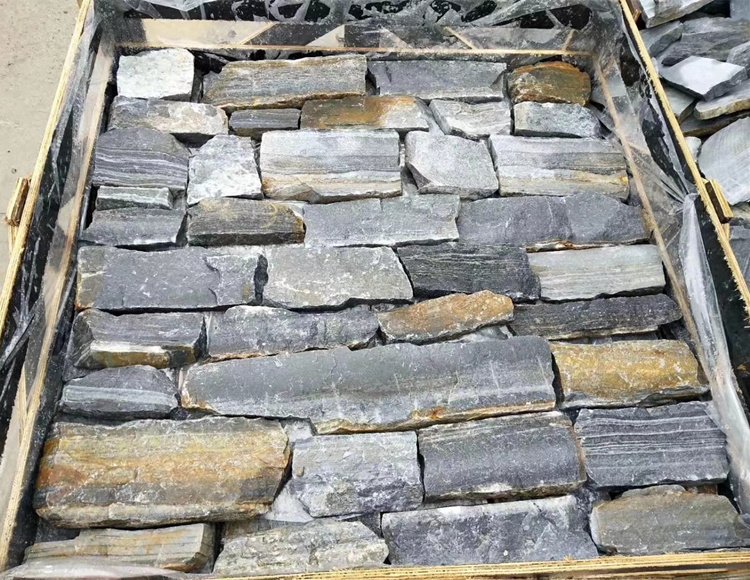
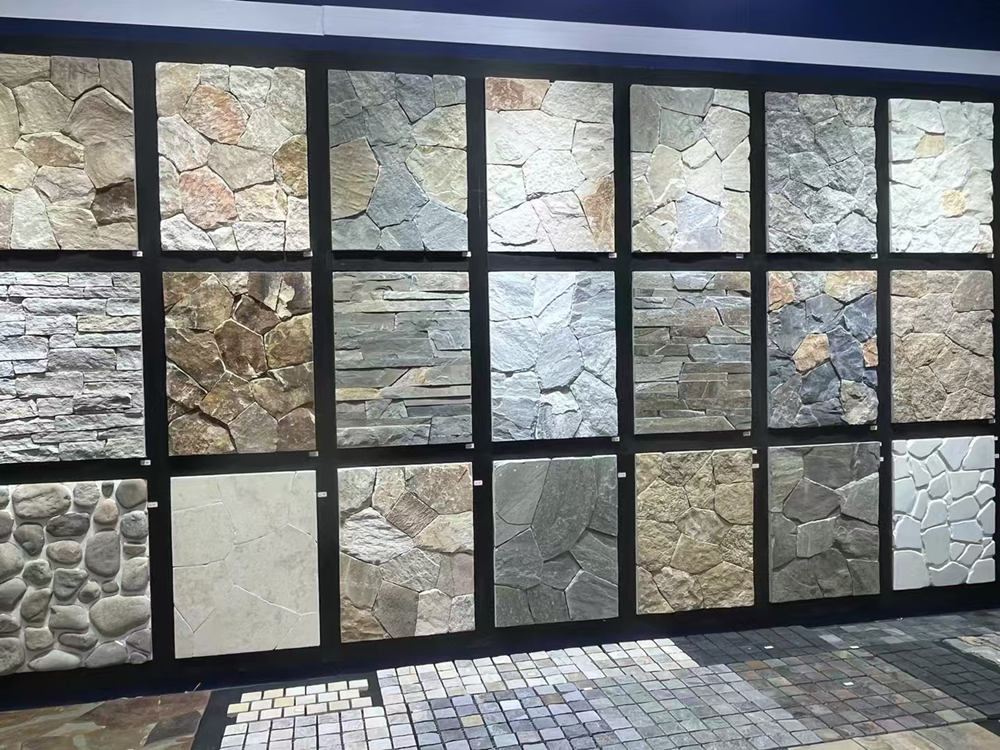
Common Mistakes Architects Make With Stone Samples
Reviewing over 300 stone procurement specifications reveals identical procedural failures that introduce unnecessary risks into large-format natural stone installs. These are five common slip-ups to actively eliminate:
- Mistake 1 — Relying on Digital Photography: Every device screen renders hue differently. A stone that captures as a cool gray via a phone lens may read as warm charcoal in person. Never approve a large-scale project order solely off a JPEG or digital PDF.
- Mistake 2 — Approving Samples From a Single Block: A panel cut from one quarry block tells you nothing about batch-to-batch consistency across a multi-container order. Requiring at least three samples from three independent extraction blocks is your baseline defense against rejection.
- Mistake 3 — Evaluating Color Under Office Showroom Lighting: Commercial fluorescents emit green undertones, while incandescent bulbs skew warm orange. Always evaluate physical stone color under standard outdoor daylight conditions or calibrated D65 light boxes.
- Mistake 4 — Failing to Archive a Control Sample on Site: Without an officially archived control panel kept in a dark, dry environment, you possess no objective physical reference when the shipping container unloads. This strips you of leverage during a material dispute.
- Mistake 5 — Not Verifying Wet vs. Dry Appearance: Natural stone darkens significantly upon contact with rain or moisture. Always mist half of your sample panel to check the wet-state saturation behavior before signing off on exterior specifications.
Generic supplier tips focus on vague advice like “expect natural beauty and variation.” True professional guidance demands numerical control data, archives physical baselines, and implements enforceable spec text. Anything less is an aesthetic gamble.
Conclusion
Color consistency across large stone veneer installations is not a matter of luck or visual guesswork—it is a measurable, contractible specification. By demanding spectrophotometer certification (delta E < 2.0), requesting a minimum of three full-size samples from different quarry blocks, and requiring ASTM C1670 compliance, you eliminate the uncertainty that leads to costly rework. Our internal production data confirms that 92% of batches from a single vein fall within delta E < 1.8, demonstrating that disciplined sourcing from direct factory quarries delivers the hue uniformity required for commercial-grade projects.
To apply this protocol on your next specification, review our thin veneer offerings where batch-specific QC data and spectrophotometer reports are made accessible. This turns a highly subjective design decision into an objective, data-backed procurement step.
Frequently Asked Questions
How to match stone color?
Request three full-size panels from different quarry blocks and compare them under D65 standard lighting. Use spectrophotometer readings with delta E below 2.0 to confirm commercial-grade consistency. Always specify delta E in your procurement contract.
Is stacked stone still in style?
Stacked stone remains a classic choice for feature walls, fireplaces, and exterior cladding in modern and rustic designs. Its natural texture and durability keep it relevant for both residential and commercial projects. Confirm with current project specifications and local trends.
How to change the color of stacked stone?
Natural stacked stone cannot be easily recolored; staining or mineral tinting is possible but will alter surface breathability and is not recommended for exterior use. For a permanent color change, specify the desired mineral block selection at the factory before sorting. Always test a small area before committing to a full treatment.
How to match existing stone veneer?
To match existing veneer, send a physical core sample to the manufacturer and request production runs extracted from the same quarry zone and stratum depth. Compare new samples under consistent D65 lighting. A delta E reading under 2.0 between the old sample and the new production batch ensures a seamless match.
What is the 3 color rule?
The 3 color rule is an interior design guideline that limits a space to three dominant hues (60% dominant, 30% secondary, 10% accent) for visual harmony. For textured wall cladding, ensure the inherent mineral variations of the natural stone occupy a balanced portion of the secondary or dominant palette. Use the rule as a starting point, but let the stone’s natural range guide your final choices.
