

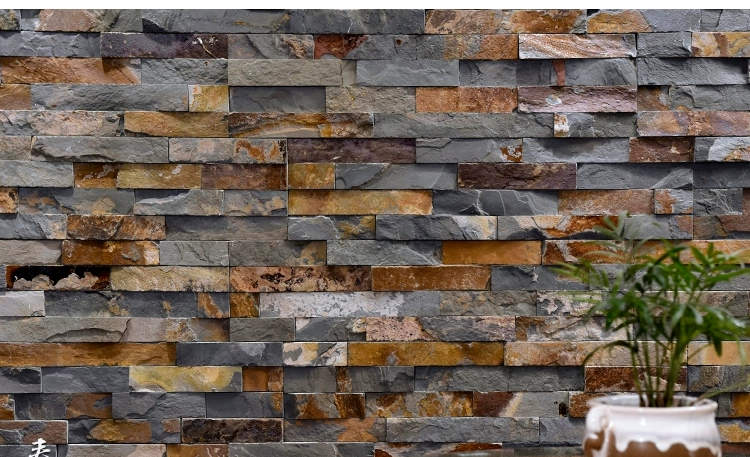
A stacked stone factory inspection checklist is the single most cost-effective tool a novice distributor has to protect their first container investment. You are about to commit $15,000 to $20,000 on a product you cannot physically touch until it lands at your warehouse. The margin for error is razor-thin, and the difference between a profitable first order and a container of unsellable scrap often comes down to what you verify before the container is sealed.
Most importers rely on the sample board the factory sent them. That sample is a curated best-case scenario. The real production run can drift in color, vary in thickness, or hide moisture levels that guarantee freeze-thaw failure after two winters. Containers have arrived where 8% of the panels had to be sorted into a dumpster because nobody checked the quarry lot continuity or the actual ASTM C170 report at the factory gate. That 8% rejection rate on a $15,000 shipment is $1,200 in direct loss, not counting the labor to sort it and the delayed project timeline for your customer.
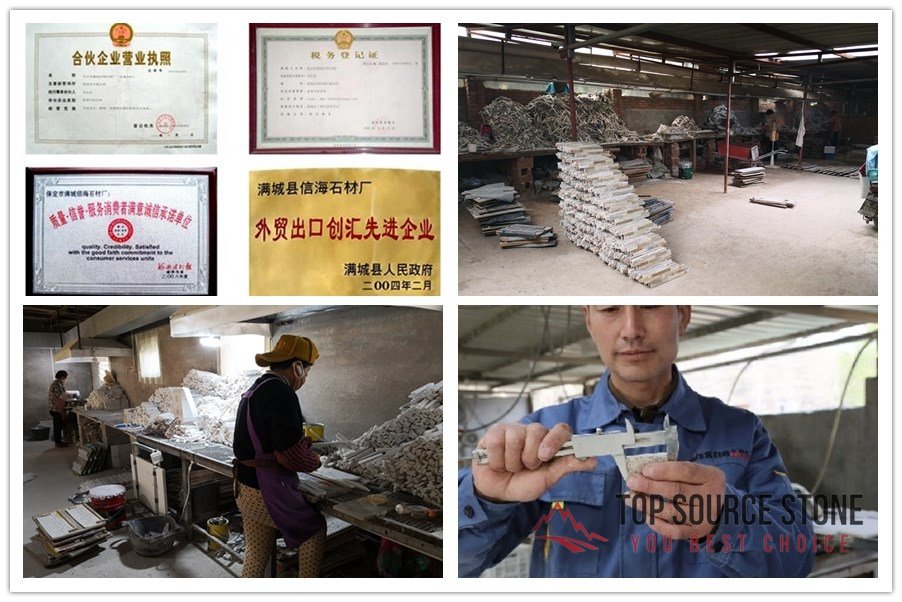
This 6-point checklist is designed to prevent exactly that scenario. It is built from the same pre-shipment protocols used at our factory in Hebei, where stacked stone ledger panels have been produced since 2005. It gives you a repeatable, auditable framework to hand to a local third-party inspector or to run yourself if you are on-site. Every checkpoint targets a specific failure mode that eats into your margin: color batch drift, dimensional variance, hidden moisture, missing compliance docs, and packaging that cannot survive a trans-Pacific voyage. A $200 to $500 inspection fee is negligible when it protects your margin from a 5% to 8% defect rate.
1. Color Consistency: Batch Quarry Lot Control
Forget mixing individual pieces on site. True color consistency starts at the quarry face—always demand a single 10-ton block lot number.
Most importers make a critical error: they approve a sample board, then expect the entire container to match it. The real secret to repeatable color is strict quarry lot control. You must verify that every panel in your order comes from the same 10-ton quarry block, processed in a single sequential run. If a factory mixes blocks from different quarry faces or different strata depths, you will get visible, blocky hue shifts between pallets—even if the overall description looks fine on paper.
Here is the hard color specification your pre-shipment inspector needs to enforce:
- Spectrophotometer Calibration Data: Demand a printed report under D65 illuminant showing ΔE ≤ 2.0 for every production batch. Do not accept a single averaged reading for the whole order—each individual pallet sub-lot must have its own verification reading on file.
- Physical Mock-Up Wall Testing: Require a 4-panel dry-lay mock-up using actual production pieces pulled at random, not pre-selected samples. You need to see a minimum of 95% visual uniformity across the panels under natural daylight conditions.
- Block Sourcing Documentation: Ask for the quarry block number and matching production date stamp on the final packing list. If the factory cannot trace each panel back to a specific geological block, you are gambling on extreme color drift.
A factory that claims to “blend” color by mixing leftover pieces from different blocks is hiding poor quarry control. Blending masks inconsistency—it does not eliminate it. On a jobsite, your customer will see a wall where one section looks warmer or cooler than the rest. Enforce single-block sourcing, and you eliminate that rejection risk before the container leaves the yard.
2. Sizing Verification: Stacked Stone Dimension Tolerance Inspection
The stacked stone dimension tolerance inspection is non-negotiable because your contractor customers will reject panels that require tedious shimming or grinding on site. A 1/16 in. variance across 100 sq ft adds up to visible lippage that completely ruins the dry-stack aesthetic. Your inspector must handle a digital caliper, not a standard tape measure, to execute these specific tolerance checks:
- Panel Thickness Variance: Maximum variation must not exceed ±1/16 in. (1.5 mm) on 95% of measured samples pulled randomly across the production floor. If thickness strays, weight per square foot increases, directly affecting structural load performance and installation speed.
- Squareness & Length Profiles: Corner deviation must stay ≤ 1/8 in. over a 24 in. length profile. If panels are slightly trapezoidal, gaps will cascade across rows.
- Unbiased Sampling Method: Ensure the 5% random pull comes straight from finished pallets on the staging floor, never from a pre-arranged QC hold area designed for presentation.
| Feature | Specification | Inspection Method | Risk if Failed |
|---|---|---|---|
| Panel Thickness | Nominal ± 1/16 in. (1.5 mm) | Caliper on 5% random sample | Weight variance, installation gaps |
| Length Tolerance | ± 1/8 in. over 24 in. | Poor interlocking, uneven joints | |
| Squareness (Corner) | Deviation ≤ 1/8 in. over 24 in. | Framing square on 5% random sample | Warped installation, visible gaps |
| Surface Flatness | Gap ≤ 1/16 in. under straightedge | Straightedge on 5% random sample | Rocking panels, lippage issues |
3. Water Absorption & Freeze-Thaw Material Protocol
Water absorption under 3% and 50-cycle freeze-thaw resistance are non-negotiable for exterior cladding. Skip this check, and you are importing facade delamination.
The relevant material metric for outdoor installations is the water absorption rate, measured strictly per ASTM C97. For any stacked stone ledger panel destined for an exterior facade, a retaining wall, or a wet-area interior, the absorption rate must be ≤3%. If a factory cannot produce a verified report showing this performance baseline, the stone will soak up moisture, expand, and spall away within two winters.
The freeze-thaw test per ASTM C666 is the ultimate structural separator. This test subjects the stone assembly to 50 rigorous cycles of freezing and thawing. After the test, the panel must exhibit zero cracking, pitting, or layer delamination. Many trading companies skip this because it takes weeks and destroys samples. Your quality control checklist must demand original lab certificates—if the factory offers an in-house “simulation report” instead of an accredited stamp, walk away.
Here is the advanced technical detail most importers completely miss: moisture content at the exact time of packaging. A stone panel can easily pass the ASTM C97 lab test but still fail miserably in the field if it is crated while wet from the fabrication saws. If the internal moisture content exceeds 0.5% at packaging, the freeze-thaw cycle begins prematurely inside the dark container during trans-Pacific ocean transit. By the time the container reaches your warehouse, micro-fractures have already formed. Your checklist must require a digital pin moisture meter reading on the production floor immediately before crating occurs.
4. Packaging & Palletization: Container Breakage Prevention Standards
A clean panel means nothing if it shatters during ocean transit. Importers must audit the crate construction and container tie-down standards.
Transit breakage is a direct drain on a distributor’s net margins. Stacked stone ledger panels are heavy and brittle; a loose pallet can cause a cascading failure inside the container during rough ocean transit. Your inspector must physically inspect the crating assembly on the floor. Standard guidelines require solid wood crates constructed from heat-treated lumber bearing the official ISPM-15 fumigation stamp. Reject any factory utilizing flimsy, thin slats or non-reinforced plywood boxes for full container loads.
To safeguard your inventory investment from chipping and impact damage, enforce these strict packaging protocols:
- Internal Cushioning Layers: Every individual stone panel must be separated by thick foam sheets or heavy-duty corrugated cardboard dividers to prevent stone-on-stone friction during forklift movement.
- Heavy-Duty Corner Guards: All exterior edges of the wooden crates must be wrapped in rigid plastic corner protectors and bound with a minimum of four heavy industrial nylon or steel straps.
- Moisture Control Inserts: Because containers experience severe temperature drops over ocean routes, each crate must contain industrial desiccant bags, and the entire pallet should be tightly shrink-wrapped to block ambient humidity.

5. ASTM C170 & Compliance Documents Audit
A manufacturer self-certification is worth the paper it is printed on. You require original third-party reports from an ISO/IEC 17025 accredited laboratory.
This is where novice distributors get burned most often. The factory hands you a binder of “test reports” printed on their own corporate letterhead. That document carries zero legal weight in Western markets. If a stone cladding system fails on a commercial jobsite and the general contractor initiates litigation, a manufacturer’s self-declaration will not survive discovery. You need lab-generated reports featuring an verifiable report number, a digital signature from the testing facility, and direct traceability back to the current quarry batch.
Ensure your inspector verifies the physical documentation matches these minimum standard parameters:
- Compressive Strength (ASTM C170): Interior masonry requires a minimum threshold of 1,800 psi; heavy exterior cladding demands a robust 2,500 psi or higher. Reject any reports that combine both ratings without clear context.
- Lab Accreditation Verification: Cross-check the testing facility’s ISO/IEC 17025 accreditation certificate online via official government portals. A lab operating without this validation cannot issue a document that customs authorities or commercial general contractors will accept as valid.
- Declaration of Performance (DoP): Essential for CE marking compliance if the stone cargo is routing into European ports. Missing DoP paperwork means the container sits in expensive bonded storage while your project schedule stalls.
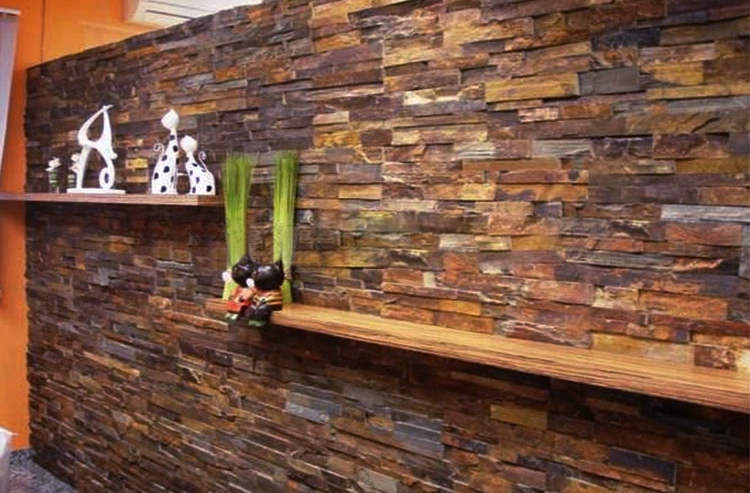
6. Dry-Lay Inspection: Joint Flushness and Fitment
A dry-lay test across random boxes reveals warped backing boards and loose corner interlocking that single sample pieces hide completely.
The sample board sent to your office was crafted by hand for display. The bulk production run is a different story. To guarantee an easy installation for your contractors, your quality checklist must enforce a mandatory dry-lay field test on the factory floor. The inspector must lay out a minimum of 12 random ledger panels into a multi-row interlocking grid on a flat surface.
During this dry-lay procedure, check for these explicit error modes:
- Warp and Rocking Detection: Place a precision metal straightedge across the assembled faces. If you observe a gap exceeding 1/16 in. beneath the edge, the panels are warped. Warped backing structures cause panels to rock during thinset application, leading to cracked mortar joints within months.
- Z-Shaped Interlock Seamlessness: Verify that the interlocking ends mesh together tightly without leaving jagged seams or dark background shadows. Wide joint gaps increase water infiltration risk on exterior facades.
- Mesh Adhesion Durability: For mesh-backed modular units, pull firmly at the edges to test the glue bond strength. If stone pieces break away from the backing easily under light hand pressure, the adhesive formulation is brittle and will fail during rough jobsite unboxing.
Conclusion
A single defective container can erase 4–7% of your annual distributor margins. The comprehensive checklist outlined above gives you a repeatable system to catch color drift, hidden moisture, and substandard packaging before your container leaves the factory gate. Each checkpoint serves as a direct safeguard against the $750–$1,200+ in unsellable stock that a 5–8% rejection rate would cost on a standard wholesale order.
Now take the next step: compare your current supplier’s QC documentation against the ASTM C170 and freeze-thaw requirements listed here. If you want to see how a factory with owned quarries and batch-specific color reports delivers on these standards, review our Blue Diamond Loose Ledgestone Veneer specs and request a sample kit.
Frequently Asked Questions
Does stacked stone need to be sealed?
Yes, exterior and wet-area installations require sealing. During inspection, verify that the stone’s porosity and absorption rate are low enough to accept sealant without darkening the color. Always test sealant on a sample panel before full application.
How do you fill gaps in stacked stone?
Use color-matched silicone or caulk designed for natural stone movement. Our inspection checks joint uniformity to ensure gaps never exceed ¼ in., minimizing the need for excessive filler. Precise panel sizing reduces your grout and labor costs.
How expensive is stacked stone?
Wholesale factory-direct pricing ranges from $3.50–$6.50 per sq ft FOB China. Hidden defects like color mismatch or chipped edges can add $0.80+ per sq ft in sorting waste, so a pre-shipment inspection is essential. Factor inspection costs into your landed price calculation.
What are stacked stone panels?
Pre-assembled mosaic-like natural stone cladding units, typically 6″x24″ interlocking pieces mounted on a mesh backing. Factory inspection verifies that the mesh adhesion and interlock pattern meet the project’s dimensional specs. Confirm panel dimensions match your wall layout before ordering.
What is stacked stone used for?
Interior accent walls, fireplaces, exterior facades, columns, and commercial lobbies. The inspection confirms intended use compliance by checking water absorption and freeze-thaw data for exterior applications. Always specify the end-use environment when requesting test reports.
