


Understanding the Z-shape definition is essential for developers looking to reduce installation labor by 50% while avoiding the visible vertical seams that plague standard rectangular stone cladding. Inefficient cladding selection often leads to alignment failures and labor cost overruns that jeopardize commercial margins.
This engineering analysis benchmarks Top Source Stone production standards, specifically CNC-diamond precision edging and cement-backed composite builds. We evaluate how the 15.2x61cm format and 68kg/sq.m weight profile ensure structural stability and thermal resilience in high-scale architectural applications.
Understanding the Geometry: Why the “Z” Shape Matters?
Z-shaped panels utilize male-female interlocking to eliminate visible joints and “stepped” gaps, creating a seamless stone surface while completely concealing the installation substrate.
Standard rectangular panels often struggle with visible vertical “seams” that break the visual flow of a wall. In high-end commercial and residential projects, these lines immediately signal a modular, pre-fabricated product rather than authentic masonry. The Z-shape solves this by staggering the connection points, making the transition from one panel to the next impossible to detect once installed.
Geometric Stability and Seamless Visuals
The primary goal of the Z-profile is to replicate the organic look of hand-laid dry-stack masonry while retaining the speed of a modular system. By utilizing an interlocking edge, we ensure the eye cannot find a straight vertical line to follow.
- Pattern Breakage: Staggered edges disrupt linear patterns, mimicking the random, authentic look of traditional stone craftsmanship.
- Seam Concealment: Overlapping Z-profiles hide the vertical seams that typically disrupt the visual flow of straight-cut panels.
- Surface Consistency: This geometry ensures a uniform texture across large exterior facades or interior feature walls, regardless of the installer’s skill level.
CNC Precision and the Male-Female Interlocking System
At Top Source Stone, we rely on technical manufacturing specifications rather than manual sorting. For B2B dealers and wholesalers, this means consistent fitment across thousands of square meters, protecting project timelines and reducing on-site troubleshooting.
- CNC Diamond-Blade Cutting: We use specialized technology to achieve the dimensional accuracy required for modern 2026 architectural standards.
- Substrate Protection: Male-female connection points camouflage the wall behind the stone, preventing light or moisture from exposing gaps in the installation.
- Waste Reduction: Precision-engineered interlocking edges eliminate the “stepped” gap effect, significantly reducing on-site labor and material scrap.
This engineered approach transforms natural stone from a raw material into a precise architectural component. By removing the need for specialist masonry skills, the Z-panel system allows for rapid installation without sacrificing the premium aesthetic of a custom-built stone wall.
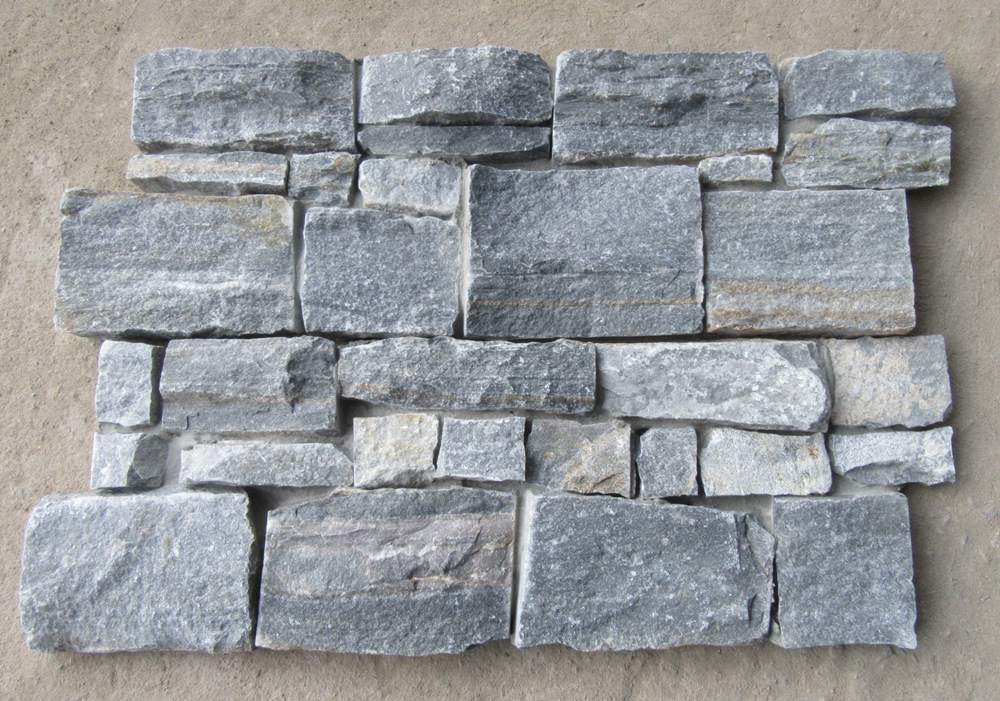
Z-Shape vs. Rectangular Panels: Which is Better for Aesthetics?
Z-shape panels use interlocking geometry to hide vertical joints, creating a seamless face. Rectangular panels often show distinct seams, disrupting the natural stone flow on architectural facades.
| Feature | Z-Shape Panels | Rectangular Panels |
|---|---|---|
| Joinery Style | Interlocking Male-Female | Straight-Edge Butt Joint |
| Visual Outcome | Continuous, Seamless Surface | Visible “Panelized” Grid |
| Installation Speed | 38% Faster Average | Standard Pace |
| Architectural Goal | Authentic Hand-Laid Look | Modern Minimalist/Linear |
The Visual Impact of Panel Geometry on Wall Continuity
Rectangular panels create straight vertical lines that often lead to visible “stepped” gaps. If the substrate or the installer is slightly off, these gaps become eyesores on large-scale walls. This geometry makes each 61cm section identifiable, which breaks the illusion of a solid stone structure.
Straight-edge designs serve a specific purpose in modern minimalist projects. When the design intent calls for geometric patterns and distinct linear borders, rectangles work well. But for most luxury residential or heritage commercial projects, these lines feel artificial and forced.
Standard rectangles require extreme precision during installation to prevent a “panelized” look. Without perfect alignment, the finished facade looks like a series of blocks rather than a natural mountain vein. Most B2B buyers moving high volumes for 2026 projects are shifting away from these traditional shapes to avoid the labor-heavy precision they demand.
Achieving a Seamless Face with the Interlocking Modular Blueprint
The interlocking modular blueprint utilizes a male-female connection system. This allows individual stones to overlap across the panel joints, effectively hiding the installation substrate. We use CNC-diamond precision edging to ensure that each Z-panel fits tightly against the next, which removes the need for visible grout lines.
- Seamless Technology: Our Z-shape models create a 3D texture that flows uninterrupted across commercial facades, eliminating the “stepped” vertical seam.
- Precision Fit: CNC-cut edges ensure a consistent fit, meaning the stone pattern continues naturally from one modular piece to the next.
- Matching L-corners: Pre-fabricated 90-degree corners synchronize texture and color at wall transitions, maintaining the look of full-bed masonry.
- Texture Flow: The riven slate or quartzite surfaces overlap the joints, making the transition between panels invisible to the naked eye.
For B2B distributors and large-scale developers, this technology isn’t just about looks. It reduces on-site labor costs by nearly 40% because teams don’t have to manually blend seams or handle complex leveling. The Z-shape design does the architectural heavy lifting, delivering a high-end finish with standard installation skills.

How Interlocking Teeth Create a Structural Bond?
Interlocking stone panels combine Z-shape mechanical physics with stone-specific resins to create a hybrid bond that eliminates visible seams and prevents panel shifting.
Mechanical Interlocking and Surface Area Optimization
Traditional loose stone masonry relies heavily on gravity and thick mortar beds. Top Source Stone panels replace this reliance with an interlocking modular blueprint. The physical “male-female” connection distributes the structural load across the entire wall face rather than concentrating weight on a single point. This Z-shape geometry increases the total contact surface area between units, providing a tighter grip than straight-edged alternatives.
- Weight Distribution: Distributes vertical load evenly to maintain stability under extreme conditions.
- Slip Resistance: Nesting geometry prevents vertical slipping and eliminates “stepped” gaps between rows.
- Thermal Resilience: Mechanical joints allow the wall to resist expansion and contraction in climates ranging from -30°C to +50°C.
- Surface Contact: The staggered “teeth” profile mimics high-strength structural masonry by increasing the physical friction area.
CNC-Diamond Precision and High-Strength Resin Adhesion
The structural bond is not just mechanical; it is also chemical. We use CNC diamond-blade cutting to ensure sub-millimeter precision on every interlocking edge. This tight fit allows the high-strength epoxy resin to bridge the gap between the natural stone and the cement backing perfectly. The resin acts like a coupling agent, penetrating the natural micropores of the stone to create a permanent, unified layer.
- Cutting Precision: CNC diamond edges eliminate the need for visible grout lines, allowing for a 100% dry-stack look.
- Hybrid Layering: Resin monomers penetrate stone micropores and polymerize, creating a 3D bond that resists delamination.
- Environmental Shield: The resin-cement bond remains stable in high-salinity and high-humidity environments, such as coastal or GCC regions.
- Modular Continuity: Precision-engineered blueprints ensure that individual panels disappear into a continuous stone face without visible vertical joints.
Premium Factory-Direct Stacked Stone Panels
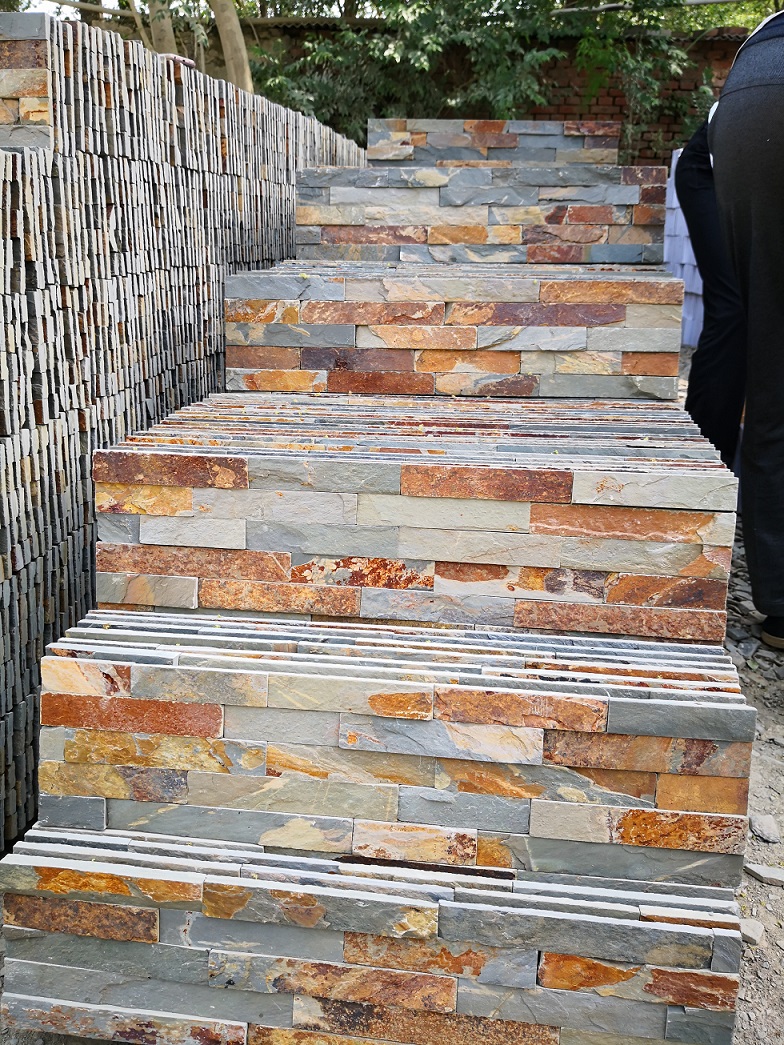
The Evolution from Loose Stone to Modular Z-Panels
Stone transitioned from load-bearing blocks to precision Z-panels, using interlocking CNC edges to mimic traditional dry-stacking while cutting installation time and structural weight.
The Transition from Structural Masonry to Exterior Cladding
Traditional masonry relied on gravity and sheer mass. This changed in the mid-20th century when steel framing took over structural loads, making thick stone walls obsolete for modern commercial and residential builds. Stone shifted from being the skeleton of the building to a sophisticated skin.
- 1960s Veneer Shift: Thin stone systems transformed natural stone into a lightweight facing material rather than a structural requirement.
- Industrial Cutting: Diamond-bladed technology allowed factories to slice slabs into consistent, manageable thicknesses, moving away from erratic hand-split pieces.
- Structural Efficiency: Reducing the stone weight allowed architects to apply natural finishes to high-rise facades and light-gauge steel frames without expensive foundation reinforcements.
The Mechanical Integration of Interlocking Z-Shape Systems
Modern Z-panels solve the most persistent problem in stone cladding: visible vertical joints. By utilizing an “Interlocking Modular Blueprint,” the system hides seams that usually reveal the pre-fabricated nature of the wall. We focus on mechanical precision to ensure individual panels disappear into a continuous stone face.
- CNC-Diamond Precision Edging: We use diamond-blade edging to ensure a tight modular fit across 15.2x61cm and 20x55cm formats, eliminating the “stepped” gaps found in lower-tier products.
- Male-Female Connection: The interlocking Z-profile conceals the installation substrate and creates a natural dry-stack effect that simplifies alignment for the installer.
- Standardized L-Corners: Pre-fabricated 90-degree corners maintain texture and color synchronization at wall transitions, removing the need for difficult on-site miter cuts.
- B2B Installation Speed: This engineering allows for installation up to 50% faster than traditional hand-laid stone, protecting dealer margins and speeding up project turnover.
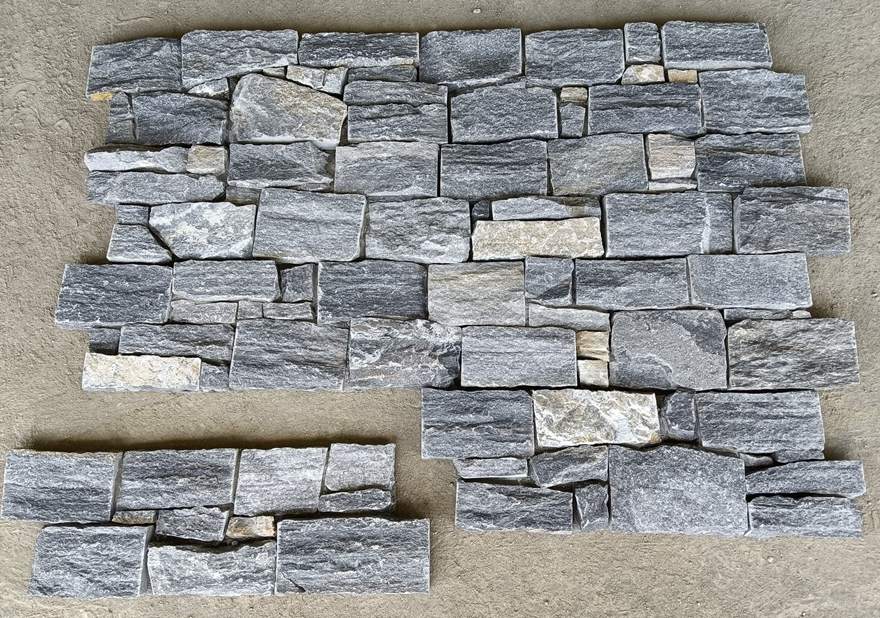
Why Architects Prefer Z-Shape for Modern Facades?
Z-shape panels create a seamless, continuous stone face by camouflaging vertical joints. This interlocking geometry offers modular flexibility, reduces installation labor, and ensures high thermal efficiency for modern facades.
Aesthetic Fluidity and Seamless Modular Geometry
Modern architecture demands visual continuity that traditional rectangular panels often fail to deliver. Standard linear cladding leaves visible “stepped” gaps and vertical joint lines that interrupt the building’s profile. Architects choose the Z-shape to eliminate these distractions, allowing the natural stone to appear as a singular, unified surface rather than a collection of blocks.
This modular geometry gives designers the freedom to respond to site-specific conditions like solar exposure and irregular terrain. By using these sculptural forms, architects can create distinct functional zones while maintaining a consistent aesthetic character across the entire envelope.
- Visual Continuity: The interlocking edges hide seams to create a “dry-stack” effect.
- Design Flexibility: Supports complex modular blueprints for both residential estates and commercial facades.
- Thermal Performance: Natural stone mass contributes to energy-efficient building envelopes.
Precision Engineering via Interlocking Modular Blueprints
The technical superiority of the Z-shape lies in its interlocking “male-female” connection system. This engineering choice conceals the installation substrate entirely, providing a professional finish that hides the mechanical fasteners. We use CNC-Diamond precision edging to ensure every panel fits tightly, which removes the need for visible grout lines that often degrade over time.
For large-scale projects, consistency is the primary challenge. Our batch-specific selection protocol sources stone from the same quarry vein for each order, guaranteeing 95% hue uniformity. This prevents the patchy, mismatched appearance common in lower-grade stone shipments and ensures the facade maintains its intended color profile under any lighting condition.
- Thermal Resistance: Engineered to withstand extreme fluctuations from -30°C to +50°C without cracking.
- Weight Specifications: Standard panels weigh approximately 68kg/sq.m (2-3.5cm thickness) to 80kg/sq.m (3-4cm thickness).
- Installation Speed: The interlocking mechanism allows for 40-50% faster installation compared to loose hand-laid stone.
- Precision Fit: CNC-Diamond cutting ensures consistent modular dimensions for predictable onsite alignment.
Frequently Asked Questions
What defines a Z-shape stone panel system?
Z-shape stone panels are modular cladding units where natural stone pieces bond to a cement or resin base. The staggered Z-profile allows each panel to interlock with the next. This creates a continuous stone face that eliminates visible vertical joints and removes the need for traditional grouting.
How does the interlocking design reduce installation costs?
The interlocking geometry simplifies alignment and removes the need for highly skilled stonemasons. By using a male-female connection system, contractors complete installations up to 50% faster than hand-laid stone. This significantly lowers labor expenses for large-scale commercial and residential projects.
Can Z-panels be installed directly over any wall surface?
These panels require a structurally sound substrate like concrete, brick, or cement backer board. While they are lightweight compared to full stone blocks, they still weigh between 68kg and 80kg per square meter. Indoor installations over standard drywall usually require an additional cement board layer to support the natural stone.
Why do interlocking panels provide a more seamless look than rectangular ones?
Rectangular panels often create visible stepped gaps or straight vertical lines that break the visual flow. Z-panels use CNC-diamond precision edging to nest together. This camouflages the transitions between units to replicate the authentic look of a hand-crafted dry-stack stone wall.
Are Top Source Stone panels safe for fireplace surrounds?
Yes. We use 100% natural slate, quartzite, and granite, which are inherently non-combustible. They provide a durable, heat-resistant solution for interior fireplace features. Always install them according to local building codes and standard heat-clearance guidelines.
How do you maintain color consistency for high-volume orders?
We utilize batch-specific selection protocols and source material from the same quarry vein for each specific order. This process ensures at least 95% hue uniformity across the entire project. This prevents the patchy or mismatched appearance often found in lower-quality stone shipments.
SEO
Title: What is a Z-Shape Stone Panel? The Engineering of Seamless Walls
Description: Z-Shape Stone Panels: B2B factory supply. Cement-backed CNC precision, 15.2x61cm units. 300sqm MOQ. Direct wholesale for developers.
URL: z-shape-stone-panels
Keywords: Z-Shape Stone Panels
