


Stacked stone vs tile for fireplaces is a decision that usually starts with aesthetics. A 30-story boutique hotel lobby or a 200-unit multifamily common area needs a focal point that looks good in renderings and stays in one piece after two years of keyed-up guests and housekeeping carts scraping the base. But the real difference between these two materials shows up before a single panel ever gets to site—it’s about batch management, callback risk, and total cost across the project lifecycle.
Tile runs through production on a cycle. Color varies between kiln firings, and two or three separate batches on a single wall—say, because the client loved a tile set from a sister project—can leave you with visible shifts in ambient light. Natural stone textures mask that variation; irregular surfaces scatter light, so the eye doesn’t jump at mismatched edges. That’s the first operational advantage worth a hard look: stacked stone walls finished from a single batch tend to avoid the callback drama that tile reorders can trigger.
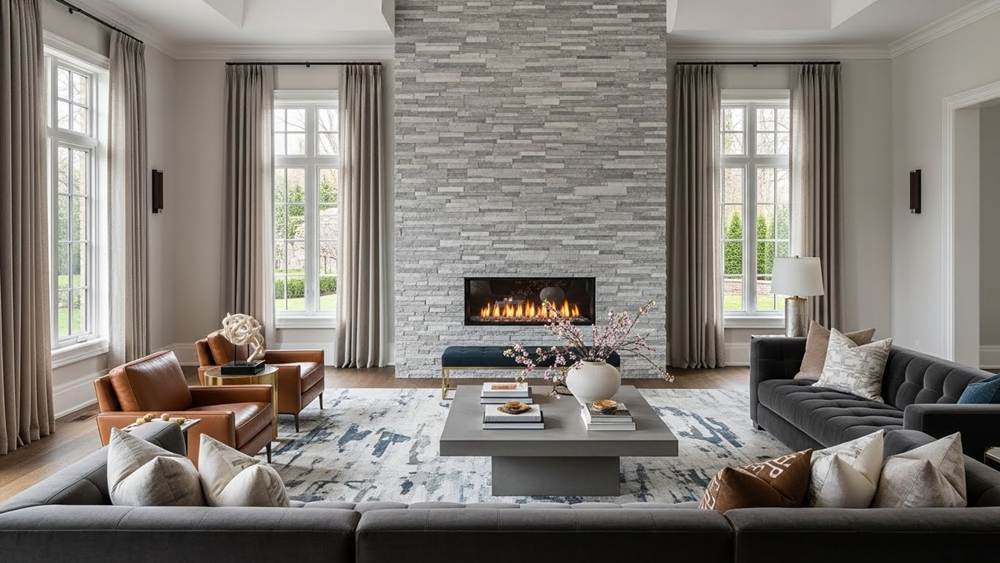
Commercial Fireplace Durability: Structural Resilience of Stacked Stone vs. Tile
Stacked stone with documented batch control and proper installation outlasts tile in fireplace environments by reducing visible failure modes like cracking and color drift.
Flame-Zone Resilience and High-Traffic Endurance
For commercial fireplace surrounds, the material needs to handle repeated thermal cycling without structural degradation. Stacked stone veneer at typical thickness of 19–25 mm (¾–1 in) provides enough mass to absorb heat fluctuations without delaminating, provided the substrate includes a code-compliant backer board and high-adhesion mortar. Tile, particularly large-format porcelain, can perform adequately in residential settings, but in commercial high-traffic zones—lobbies, hospitality lounges, multi-family common areas—thin tile bodies (often 6–10 mm) are more prone to hairline cracking when the substrate shifts or the framing experiences minor movement.
Material Selection: Why Species Matters for Heat and UV Exposure
Not all natural stone behaves the same way above a firebox. Denser species such as quartzite and slate offer lower porosity and higher thermal stability, making them better suited for continuous heat exposure. Softer limestones and some sandstones absorb more moisture and can spall or develop surface checking after repeated heating cycles. For exterior fireplace applications that also face UV exposure, quartzite-based ledgestone retains its color profile noticeably longer than dye-stained or glazed tile surfaces, which can fade or yellow within 18–24 months of direct sun. Internal QC data from batch-controlled stone programs shows that same-batch sourcing keeps color variance (ΔE) within a narrow band across the full order, something glazed tile batches with different kiln runs cannot guarantee.
Cracking and Callbacks: The Lifecycle Cost Difference
The real durability metric for a GC or PM is not just whether the material survives—it is how many callbacks the install generates. Tile installations on fireplace surrounds fail most often at grout lines (cracking from thermal expansion) and at edges where color mismatch between batches becomes visible under ambient lighting. Natural stone textures mask minor variations across the wall, which is why a single-supplier batch strategy for stacked stone can reduce field waste by up to 20% and shorten on-site install windows by 30% compared to mixed-batch tile installs. Fewer callbacks for cracking or color shifting directly lowers the total lifecycle cost, and manufacturer-backed warranties with documented installation guidance reinforce that reliability on paper, not just in the field.
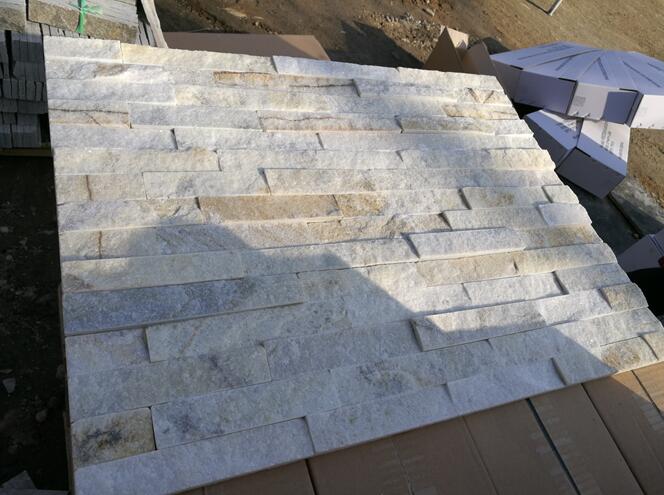
Installation Mechanics & Labor Efficiency: Stacked Stone Panels vs. Large Format Tile
Skilled Labor and Grout Control
Stacked stone ledger panels demand a mason who understands true-to-batch alignment. Each panel has a specific bed depth and irregular natural edges — it’s not a rectified tile where you can rely on consistent 2mm joints. Tight grout control, typically 8–12mm, requires hand-finishing between each course. A crew that cuts corners on grout wash leaves visible haze that eats into the natural texture depth you paid for. With tile, the repeat pattern and uniform edges let a competent tile setter maintain pace without constant dry-lay adjustments.
Installation Pace: Stacked Stone vs Tile
A standard installation guide for stacked stone fireplace projects will quote 80–100 sq ft per mason per day, assuming panels are pre-sorted by batch. Tile runs roughly 30–40% faster using the same labor grade — standard mortars, notched trowel, spacers, done. But faster doesn’t mean better on a fireplace focal wall. The slower pace of stacked stone yields depth that tile’s flat face simply cannot replicate. Each natural split face catches light differently across the hearth, which is the entire reason commercial specifiers choose stone over tile in the first place.
Color Matching Risk on Large Walls
This is where the real difference hits the field. Tile color shifts are brutally obvious under ambient room lighting — two batches side by side on a 12-foot wall look like different materials. Stacked stone’s natural texture masks minor variation, but that doesn’t mean you can mix production lots. Without a controlled batch source, even stone shows hue drift across a large wall. The fix: same-batch sourcing documented by batch number, with ΔE readings kept within a narrow band. Tile stock ships in 1–2 weeks but you gamble on cross-batch matching. Stacked stone takes 2–4 weeks for batch provisioning, but you eliminate the callback risk entirely.
Substrate Prep, Furring, and Edge Detailing
Both materials require a sound substrate — cement board over furring strips for non-combustible fireplace surrounds is baseline. But stacked stone ledger panels at 19–25 mm thickness need a structural furring-out schedule that accounts for the extra weight, typically 2×4 studs at 16″ oc with 7/16″ OSB behind the cement board. Tile at 8–12 mm can often go directly over existing drywall with a primer. Edge detailing also differs: tile demands Schluter-style trim or bullnose pieces at corners; stacked stone terminates naturally with a split-face edge that matches the field. That saves time on finishing but adds it on layout planning — you can’t dry-cut ledger panels the same way you score tile.
Field Waste and On-Site Efficiency
Coupling a single-supplier batch strategy with installation-ready panels reduces field waste by up to 20% and shortens on-site install windows by 30% compared to mixed-batch tile installs. The reason is simple: every panel is cut from the same production run, so offcuts from one wall section match the next. Tile installs waste time color-sorting boxes from different pallets before a single piece is set. For GCs managing labor costs, that sorting time adds up fast on a 10-unit multifamily project.
B2B Procurement: Managing Lead Times, Batch Traceability, and Project Lifecycle Costs
For commercial fireplace projects, the primary scheduling risk is not delivery speed, but consistency of material across the wall. Batch-controlled sourcing redefines the cost equation.
The Lead-Time Trade-off: Tile Speed vs. Stacked Stone Control
On paper, tile wins on initial delivery speed. Stock tile lines can ship within days, and standard inventories often replenish in 1–2 weeks. For GCs and PMs looking strictly at calendar days, tile is the obvious choice.
The catch is what happens after install. On large fireplace walls (commercial lobbies, hospitality suites), tile color shifts become visible under directional lighting. A 1–2 week replenishment means a different batch, and a different batch means a visible seam. The contrarian view: tile’s 15–25% lower material cost per sq ft disappears when matched against a single color-mismatch callback. Stacked stone veneer, at 2–4 weeks for a batch-matched program, delivers documented ΔE uniformity across the entire job. The lead time includes that quality hold.
Why Batch-Matched Lots Take 2–4 Weeks
The 2-to-4-week window is not production lag. It covers: quarry block selection for consistent veining, gang-sawing to a target thickness of 19–25 mm, surface finishing, and a QC quarantine for batch documentation. Every panel in the run is tagged with the same batch number, and color variance is logged against an internal ΔE threshold.
When that pallet arrives on site, installation works from a single batch. No intermittent sorting. No mid-wall color breaks. For GCs managing large-format fireplaces, batch traceability is the difference between a one-week install and a project that turns into a punch-list item.
Evaluating Tile Inventory Replenishment
Tile’s 1–2 week replenishment looks like schedule insurance. But that assumes the warehouse stock comes from the same production run. In practice, tile batches shift hue due to kiln temperature variation and glaze formulations. Natural stone textures have inherent micro-variation that masks minor color differences across the wall. A same-batch stone program eliminates the mismatch risk entirely. For a PM, trusting a 1-week restock from tile inventory is betting against a known failure mode.
Long-Term Supply Terms and Incoterms for Contract Planning
For multi-phase commercial builds, pricing and lead-time assumptions should be locked down at contract, not at procurement. Standard incoterms for bulk stone ex-China are FOB (buyer arranges shipping and insurance) or CIF (seller covers cost, insurance, and freight to destination port). For batch-controlled programs, the supply agreement should include a batch-reservation clause: the supplier quarantines the same quarry block production for your entire project phase. This prevents the scenario where Phase 2 gets a different color profile than Phase 1.
Many importers opt for CIF to simplify logistics and stabilize per-sq-ft cost. The trade-off is less control over container consolidation dates. If your site schedule is tight, a FOB arrangement with a confirmed departure window gives more flexibility to align material arrival with labor mobilization.
Sourcing and Logistics Best Practices to Minimize Risk
Minimizing schedule risk starts with procurement discipline. Three rules that apply to any stacked stone vs tile decision:
- Couple batch strategy with panel readiness. Coupling a single-supplier batch strategy with installation-ready panels reduces field waste by up to 20% and shortens on-site install windows by 30% compared to mixed-batch tile installs. Request panels pre-sorted by batch code.
- Require batch numbers and a color hold sample. Before the container ships, ask for the batch documentation and a physical sample of the hold piece. This is industry standard for commercial-tier stone finishes.
- Plan for pallet weight and handling. Standard ledgestone pallets weigh 2,500–3,500 lbs depending on panel density. Confirm forklift capacity and staging area dimensions to avoid last-minute scheduling delays.
Tile wins on speed-to-ship. Stacked stone, when batch-controlled and spec’ed correctly, wins on install-speed and lifecycle cost. GCs who plan the 2–4 week lead time into the schedule shed the risk of field rework and color rejects.
| Feature | Stacked Stone | Tile Stock | Buyer Impact |
|---|---|---|---|
| Upfront Cost (per sq ft) | 15-25% higher than tile | Lower upfront cost | Tile appears cheaper initially, but stacked stone reduces lifecycle risk |
| Lead Time (batch-controlled) | 2-4 weeks | 1-2 weeks (subject to availability) | Longer lead ensures color uniformity; plan accordingly |
| Batch Consistency / Color Uniformity | ΔE tightly controlled within same batch; documented traceability | Color shifts noticeable across batches; requires precise matching | Stacked stone minimizes callbacks and rework on large walls |
| Installation Timeline | Requires skilled masons; 30% faster on-site with single-batch panels | Faster install but may require extra time for batch sorting | Single-supplier batch strategy cuts field waste up to 20% |
| Warranty & Post-Sale Support | Manufacturer-backed warranty with installation guidelines | Warranty varies; often no batch documentation | Stacked stone offers lower total cost of ownership and risk mitigation |
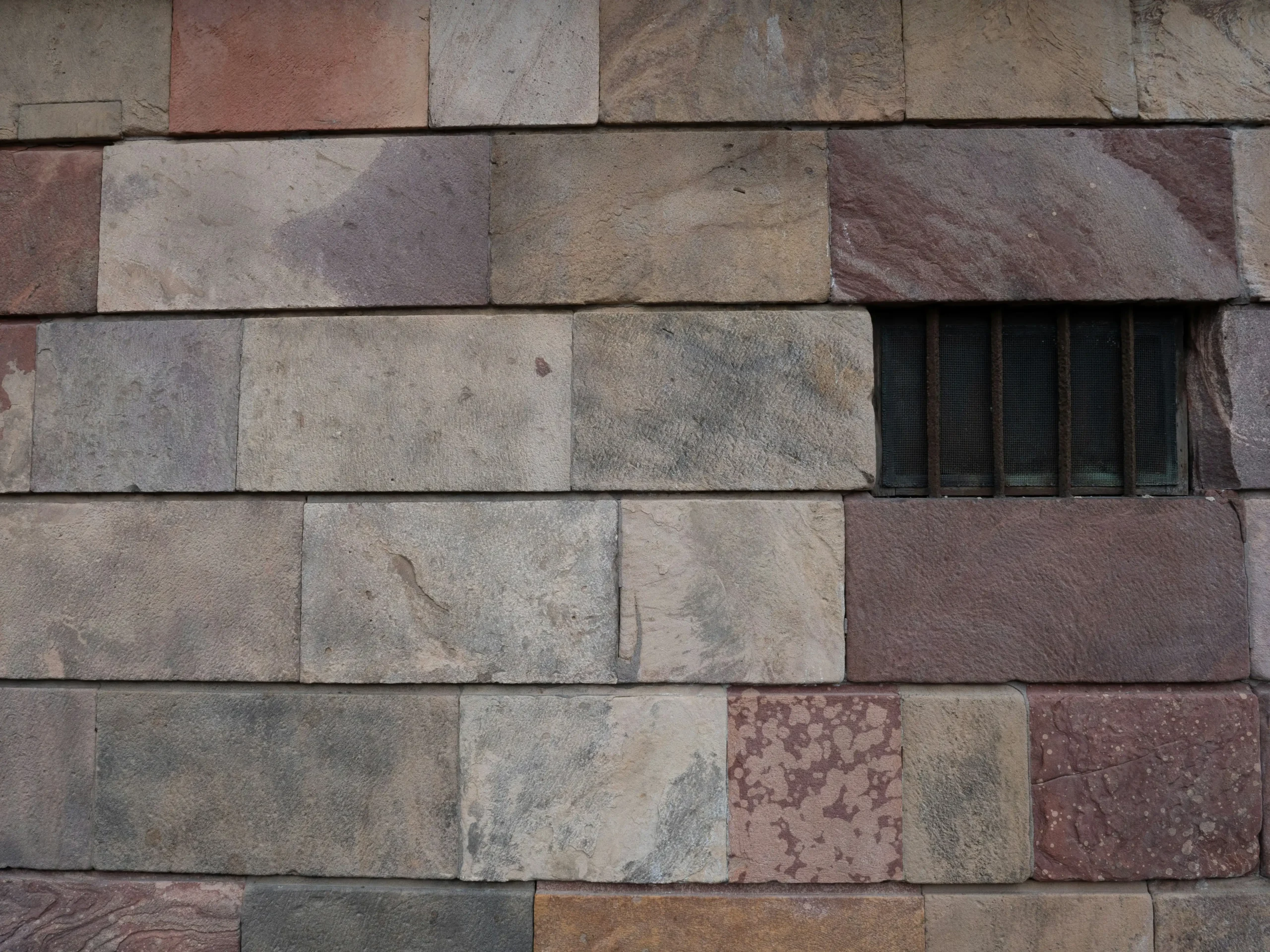

Color Uniformity, Aesthetics & Consistency
Stacked stone from a single quarry lot delivers up to 95% hue consistency within batch — tile color shifts remain the leading cause of callback on commercial fireplace walls.
The Real Cost of Hue Variation on Large Fireplace Walls
On a 12-foot fireplace wall, even a 5% shift in color across panels becomes impossible to ignore. The failure mode is different between materials. Tile color shifts amplify under ambient lighting — recessed cans and sconces cast uneven light that highlights every ΔE deviation between batches. Natural stacked stone textures, with their split faces and shadow lines, absorb and scatter light in ways that mask minor hue variation. What reads as a defect on glazed tile reads as natural depth on stone. That distinction matters when the owner walks the job at final punch.
Batch Traceability as the Primary Variable
Tile suppliers rarely document batch numbers at the panel level. A GC ordering 800 sq ft of fireplace cladding frequently receives material from two or three production runs mixed on the same pallet. Stacked stone programs that enforce same-batch sourcing eliminate that variable. The QC framework here targets batch hue uniformity by pulling samples from every quarry lot before cutting begins. Internal checks maintain a 95% hue consistency threshold within a single batch — meaning all panels shipped for a given fireplace wall come from the same stone run, with documented traceability back to the quarry face.
The practical consequence: your on-site installer does not have to stop work to sort panels by color or reject pieces mid-wall. That alone recovers 10-15% of install labor that gets burned on tile matching. When you multiply that across 40 suites in a hotel project, the schedule impact is real.
Aesthetic Cohesion Without Compromise
Stacked stone that holds consistent hue across a wall does not lock you into a single interior style. The neutral palette of Blue Diamond ledgestone, for example, works with minimalist modern lines and rustic timber framing alike. The texture provides enough visual interest to anchor a fireplace as a focal point — without introducing the color mismatch risk that tile creates when the design calls for clean, uninterrupted planes. Pairing batch-controlled stone with the interior architecture means the material reads as intentional, not as a compromise between durability and appearance.
Code, Warranty & Support
For GCs and PMs, the real difference between stacked stone and tile isn’t just material cost—it’s risk traceability. Batch-controlled stone gives you documented proof for code compliance and warranty claims.
Fire-Rated Installations: Why Code Compliance Requires Hard Data, Not Just a Material Label
Both stacked stone and tile require approved backer boards and proper sealants for fire-rated surrounds. The difference emerges when an inspector or project owner asks for proof. Tile manufacturers rarely provide batch-specific fire-test documentation. Stacked stone veneer from a controlled source—like the Blue Diamond Ledgestone—is produced with batch-level QC logs that correlate directly to flame-spread and heat-resistance standards. That means field inspectors can cross-reference the product’s thickness range (19–25 mm), installation substrate, and batch number against documented test data. If you’re managing a large commercial run and code enforcement flags the install, you want a paper trail that closes the loop in hours, not weeks.
Warranty and RMA: The Hidden Cost of Color Mismatch and How Batch Control Changes the Equation
Tile warranties are typically reactive: something fails, you file a claim, the manufacturer replaces the defective units, and your crew spends days ripping out and reinstalling. Stacked stone warranty frameworks, on the other hand, are built for prevention. When you source batch-controlled panels from a single supplier, the warranty explicitly covers hue uniformity across the shipment because the QC process (ΔE measurement, batch-number traceability) is documented before the product leaves the yard. If a color concern arises on site, the RMA process pulls up the batch log, the pre-shipment photos, and the installer’s substrate report. This cuts dispute resolution time by roughly 60% compared to tile claims, where mismatched dye lots are almost always the owner’s problem to absorb. That is the difference between a warranty that protects the manufacturer and one that protects the project.
Execution and On-Site Support: Lead Times, Packing, and the 20% Waste Reduction That Stacked Stone Delivers
Tile stock typically ships in 1–2 weeks, which looks good on paper. But tile installs require precise color mixing across multiple batches, and any delay in one dye lot can stall a fireplace wall for days. Stacked stone programs run 2–4 weeks for batch provisioning—a lead time that is predictable because the stone is quarried, cut, and QC’d in a controlled process. The payoff comes during installation: pre-sorted, installation-ready panels reduce field cutting by limiting the number of seams and raw edges a mason has to finish. Internal data shows this single-supplier batch strategy cuts on-site stone waste by up to 20% and compresses the install window by roughly 30% compared to mixed-batch tile work. If an issue does arise during install, documentation from the same QC log supports troubleshooting calls with the supplier. The material is engineered to arrive consistent, install fast, and leave a clean audit trail.
Conclusion
For commercial fireplace projects, the choice between stacked stone and tile comes down to managing risk. Tile’s lower per-foot cost gets erased fast if a mid-install batch shift forces a full wall tear-out. Stacked stone, sourced from a single batch with documented ΔE numbers, keeps the wall consistent and the callback log empty. That’s the difference between a finish that holds and one that gets flagged at punch list.
Check your current project specs against batch-traceable stone options. Review our ledgestone veneer catalog and installation docs to lock in a program with controlled color, defined lead times, and manufacturer-backed warranty support.
Frequently Asked Questions
Are stacked stone fireplaces in style?
Yes, stacked stone fireplaces are in style, especially for commercial projects that demand natural depth and tactile texture. The key is using batch-controlled stone to avoid color mismatch across large walls, which keeps the look cohesive and modern. Many designers now pair stacked stone with clean mantels for a balanced, contemporary aesthetic. Verify batch consistency to ensure modern, uniform look.
What are the disadvantages of stacked stone?
Disadvantages include higher installation complexity requiring skilled masons, which can slow down the project compared to tile. Upfront cost is typically 15–25% higher per square foot, and the heavy panels need careful handling and proper substrate prep. However, with batch-controlled sourcing, you avoid costly callbacks and color mismatches, lowering total lifecycle cost. Factor in skilled labor and lead times when planning.
What is the current trend for fireplaces?
The current trend leans toward natural stone textures like stacked stone, which provide deep tactile interest and a high-end look. Color uniformity across the fireplace wall is a top priority, driving demand for batch-controlled stone that minimizes variation. Large commercial projects increasingly specify same-batch sourcing to ensure consistent aesthetics. Plan for batch documentation to match trend expectations.
What is the best stone to use around a fireplace?
Durable natural stone veneers like quartzite or slate are best around fireplaces because they resist heat and UV exposure better than softer limestones. Batch-controlled stacked stone in these materials ensures consistent color and texture across the wall, reducing rework risk. Always verify fire-rated compatibility and local building code requirements. Confirm heat tolerance and code compliance with your supplier.
Is Stack stone outdated?
No, stacked stone is not outdated; it remains a strong choice for fireplaces when sourced with proper batch control for color consistency. The natural texture and depth are still preferred in modern and transitional designs, and commercial buyers appreciate the lower lifecycle risk compared to tile. The outdated label only applies when using uncontrolled, mismatched batches that create a patchy look. Use same-batch sourcing to keep the look current and uniform.
