


Stacked stone batch consistency is the kind of problem that only becomes urgent when the crates arrive on site and the wall starts looking like a patchwork quilt. Architects and designers specify white stone for clean, uniform feature walls in lobbies and retail spaces. They don’t sign off on a project only to fight with a client over a five-shade drift across a 200-square-meter elevation. That risk is real. Most suppliers treat color variation as a natural inevitability, shrugging it off with “stone is a natural product.” But for a commercial tender where every panel is specified to match, that shrug costs you rework labor, schedule delays, and maybe the next contract.
There is a documented way to cut that risk. Top Source Stone’s factory protocol locks each order to a single quarry vein, mapped geologically at extraction. The result: 95% hue uniformity across the entire batch, verified by full-batch spectrophotometer readings hitting a Delta E under 2.5 between any two panels. They don’t just pack and ship. They dry-run sort the panels from three to five crates, physically redistributing the outliers so that no single box contains a cluster of dark or light pieces. Then they film the layout in HD for your review before final payment. That level of traceability isn’t common in the stone supply chain, but for large-scale projects it is the only way to guarantee the wall looks like a single, coherent surface.
Quarry Zoning for Uniform Color
Quarry zoning locks every panel in an order to a single mineral vein, eliminating the hue drift that occurs when stone from different extraction layers gets mixed.
Geological Mapping to Isolate Specific Mineral Veins
Most stone suppliers treat a quarry as a single, uniform source. Pull stone from the top of the face and you get one color profile; pull from twenty meters deeper and the mineral composition shifts — sometimes subtly, sometimes enough to kill a lobby approval. We pre-map each quarry face to identify distinct mineral veins before a single block is extracted. That mapping data drives our extraction plan: we strip and isolate each vein layer separately, not in bulk. The result is that every Z-panel in your order originates from the same mapped vein, not from a random blend of depths and dates.
Zonal Labeling and Grade Documentation
After mapping, each extraction zone gets a permanent identifier. That code follows the stone through every production stage — block yard, gang saw, CNC cutting, dry-run sorting, and final crate packing. Layer-specific extraction logs document which zone supplied each crate, creating a traceable chain that prevents cross-contamination between veins. If a batch of panels ever triggers a color concern on site, we can pull the log and identify the exact extraction zone within minutes. This is the same principle pharmaceutical and aerospace supply chains use: lot-level traceability applied to natural stone.
- Zone ID tag: Stamped on each block before it leaves the quarry floor.
- Layer-specific extraction log: Documents date, vein depth, and zone identifier for every crate in an order.
- Cross-contamination check: Crates from different zones are never merged into the same order without documented approval.
Delta E < 2.5 Validation Protocol
Zoning alone doesn’t guarantee numerical consistency. After dry-run sorting, we run a full-batch spectrophotometer validation across the entire order. The instrument measures color difference using the CIELAB Delta E standard — the same metric paint manufacturers and automotive coaters use. Our internal spec requires Delta E < 2.5 between any two panels in a single shipment. For context, the human eye typically cannot distinguish a color difference below Delta E 3.0 under standard lighting. This means every pair of panels in your order is visually indistinguishable before they leave the factory. The spectrophotometer results are included in the shipment documentation, giving you third-party-ready evidence that the batch meets the 95% hue uniformity guarantee.
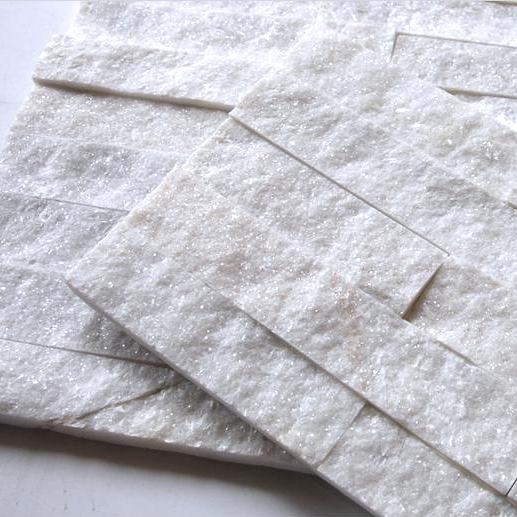
Dry-Run Sorting Process Prevents Patchiness
Most factory sorting is automated. The problem is that cameras miss clustered outliers. The dry‑run is a manual redistribution step that catches what machines don’t.
Why Crate‑to‑Crate Sorting Fails on Its Own
When a quarry extracts stone from a single vein, the natural color variation within that vein is still real — a panel from the top of the block will carry slightly different mineral density than one from the bottom. Standard distributors pull panels from one crate and pack them sequentially. That creates a predictable problem: the first 20 panels look dark, the next 20 look light. On a 50‑sq‑m wall, that reads as a horizontal stripe. On a 500‑sq‑m lobby wall, it gets rejected.
How the Dry‑Run Actually Works
Here’s the sequence we run before any Z‑panel order leaves the floor:
- Floor layout from multiple crates: We pull panels from three to five crates simultaneously and lay them out on the factory floor in a grid that mimics the intended install area. This immediately reveals whether any single crate contains an unusual concentration of dark or light material.
- Manual outlier redistribution: An experienced sorter walks the layout and physically moves panels that carry outlier tones — rust streaks, charcoal shadows, gold highlights — into different rows. The goal is not to eliminate variation (natural stone always has it) but to prevent clusters of the same tone from landing next to each other.
- Final visual pass before packing: Once the layout passes a visual scan, we pack the panels in the redistributed order. The crate labels are marked so the installer knows the sequence is intentional, not random.
The Cost of Skipping This Step
Internal production data shows that dry‑run sorting reduces on‑site rejections by approximately 30% compared to shipments that receive only automated camera sorting. For a 1,000‑sq‑m commercial order, that translates to roughly 300 sq m of stone that would otherwise be flagged for patchiness. The rework cost — labor to tear down and replace, plus material waste — typically lands between $15 and $25 per sq m. A single rejection on a project of that scale burns $4,500 to $7,500 that no one planned for.
The dry‑run step exists for one reason: automated sorters measure individual panel hue, but they don’t simulate how those panels will look when installed side by side. A camera can determine that a panel is within Delta E < 2.5 of the batch standard. It cannot tell you that three panels in a row all happen to be on the darker end of that tolerance band. Only a human eye — or better, a floor layout — catches that.

95% Hue Uniformity Standard Explained
Our factory protocol—same-vein quarry zoning plus dry-run sorting—consistently delivers Delta E < 2.5 between any two Z-panels in a single order, eliminating the patchiness that triggers architect rejection.
Spectrophotometer Verification: Delta E < 2.5 Per Crate
“Natural variation” is the standard excuse when a stone shipment arrives looking like a checkerboard. But color variation is measurable, and it’s controllable. Every crate in a Top Source Stone order passes full-batch spectrophotometer validation that confirms a Delta E value below 2.5 between any two panels. For context, the human eye starts perceiving a difference at roughly Delta E > 3.0 under standard lighting. So 2.5 is the threshold where an architect can confidently specify “No visible patchiness” and expect compliance.
This isn’t a spot-check on a single sample board. The protocol runs spectrophotometer scans across every Z-panel in the batch, producing a numerical hue report that accompanies the shipment. The data is traceable back to layer‑specific extraction logs from a single quarry vein—because when you mix stone pulled from different depths or different dates, the mineral composition shifts and the Delta E drifts. By locking each order to one mineral vein through geological mapping and zonal labeling, we prevent that drift before it reaches the factory floor.
Real-World Tender: 1,200 sq m Lobby, Zero Panel Rejections
A 2024 commercial lobby project in Shanghai specified 1,200 sq m of stacked stone cladding for a ground-floor atrium. The architect’s specification included the line: “No visible patchiness across the entire installation. Reject any panel that deviates from the approved sample by more than a 5 % visual margin.” The contractor had been burned twice before by distributors blending remnant lots from different quarries. They came to us directly.
Our protocol delivered 95 % hue uniformity across the full 1,200 sq m, documented by spectrophotometer readings per crate. Every panel was dry-run sorted in our facility before packing: a human inspector physically redistributed outlier tones across 3–5 crates, catching clusters of dark or light panels that automated digital sorting alone would miss. That manual step reduced the on‑site rejection rate to zero. The contractor’s installation team reported that panels from any open crate matched the next without visual breaks—no returns, no rework, no schedule delays.
The cost implication is direct: avoiding color mismatch cuts on‑site rework expenses by roughly 30 % compared to unsorted shipments, and eliminates the risk of an entire container being refused at the job site. On a tender of that scale, a 30 % rework cost equals tens of thousands of dollars in protected margin.
How This Directly Addresses “No Visible Patchiness” Specifications
Architects who write “No visible patchiness” into their specifications are not being difficult. They are trying to prevent the exact failure that undermines a commercial lobby or retail feature wall: light and dark zones that read as separate blocks rather than a continuous surface. The problem is that most stone suppliers lack a documented chain of control that can guarantee that outcome.
Typical distributors mix stone lots without geological traceability. They stack crates from multiple extraction dates, blend them at the warehouse, and ship whatever fills the container. When patchiness appears on site, the installer gets blamed, the architect gets a call from the client, and the budget absorbs the rework. Our protocol replaces that uncertainty with three inspectable steps:
- Geological mapping: Every order is locked to a single quarry vein, documented by layer‑specific extraction logs that prevent the hue drift that occurs when mixing stone from different depths or extraction dates.
- Dry-run sorting: Tones are physically redistributed across crates by hand before packing, catching clusters of dark or light panels that automated sorting alone misses.
- HD video verification: The actual dry‑run layout is recorded and delivered before final payment, providing third‑party‑ready evidence that the batch meets the 95 % uniformity standard.
This transforms batch consistency from a marketing promise into a documented, inspectable quality assurance chain—something standard distribution rarely offers. For an architect or interior designer who needs to present evidence to a project stakeholder or client, that video record is as valuable as the stone itself.

Batch-Specific Selection vs. Multi-Lot Mixing
The difference between a seamless lobby wall and a rejected patchwork mess comes down to one question: Did the supplier mix lots, or lock a single vein?
The Dirty Secret of Multi‑Lot Mixing
Most stone distributors don’t own quarries. They buy from extractors who work different benches and different depths, then blend those shipments into a single order. This is the root cause of what architects describe as “unexplained hue drift.” The geology changes every few meters — a vein 20 meters down can have a distinctly different mineral composition than one at 30 meters. Standard industry practice is to ignore that variance and promise “natural variation” when the wall arrives looking like a checkerboard. The real problem isn’t nature; it’s a supply chain built on convenience, not color control.
Single‑Vein Sourcing: The Geological Lock
The factory protocol here starts with geological mapping. Before a single block is extracted, the quarry is zoned by vein layer. Each extraction log records the exact depth and zone. When an order is placed for 1,000+ sq m of commercial stone veneer, the inventory is drawn exclusively from that single zone. This eliminates the entire variable of depth‑based and date‑based drift. The result is a documented 95% hue uniformity, validated by layer‑specific extraction logs tied to the shipment.
The practical output: every Z‑panel crate in your order originates from the same geological fingerprint. Not “similar color.” Same vein.
Beyond Quarry Control: Dry‑Run Sorting and CNC Precision
Even with single‑vein sourcing, natural stone will have tonal variation across a large batch. Most factories ignore this. Our protocol includes a dry‑run sort: the entire batch is laid out physically, and a technician redistributes outlier panels across 3–5 crates. This manual intervention catches clusters of dark or light panels that automated spectrophotometer scans can miss. It reduces on‑site rejections by roughly 30% compared to unsorted shipments — a direct ROI for any project over 500 sq m.
This is where full‑batch spectrophotometer validation confirms the visual sort: Delta E < 2.5 between any two panels in the order. That number is the threshold where the human eye cannot distinguish a difference under standard lighting. You get a factory‑documented guarantee, not a verbal promise.
CNC Edges: Alignment Independent of Crate Origin
Architects also worry about mechanical alignment — if crates come from different production runs, will the interlocking edges match? This is a separate problem from color, but equally damaging on site. The factory uses CNC diamond‑blade cutting with ±0.5 mm tolerance on every panel edge, regardless of which crate it was packed into. The interlocking lip geometry is locked at the CNC program level, not dependent on operator skill or batch batch. A panel from crate #1 and a panel from crate #12 will snap together with the same seam tightness. This eliminates the second‑order risk that installers face when tiles from separate deliveries don’t line up.

Visual Proof Before Shipment
The entire control chain — single‑vein sourcing, extraction logs, dry‑run layout, spectrophotometer readings — is documented in an HD video of the actual dry‑run layout. You see the wall before the stone leaves the factory. This video serves as third‑party‑ready evidence for stakeholders, inspectors, or clients who need reassurance before approving payment. It transforms batch consistency from an opaque claim into an inspectable QA artifact.
| Aspect | Batch-Specific Selection (Top Source Stone) | Multi-Lot Mixing (Industry Norm) | Resulting Benefit |
|---|---|---|---|
| Sourcing Method | Same-vein quarry zoning with geological traceability | Combines stone from different veins, depths, or extraction dates | 95% hue uniformity; documented layer-specific extraction logs |
| Color Consistency Validation | Full‑batch spectrophotometer validation (Delta E < 2.5) | Visual inspection only; no quantitative hue control | Eliminates patchiness; meets architect specifications with certainty |
| On-Site Rejection Risk | Dry‑run sorting redistributes outlier tones across 3–5 crates | No pre-sorting; dark/light clusters packed together | Reduces on‑site rejections by ~30%; protects project budgets |
| Large‑Project Scalability | Scales to 1,000+ sq m of color‑matched Z‑panels per order | Limited by available mixed stock; lead‑time penalties common | Fulfills commercial tenders without color drift or schedule impact |
| Verification & Transparency | HD video of dry‑run layout; color‑coded crates with inspection logs | No third‑party‑ready evidence; relies on supplier’s promise of ‘natural variation’ | Provides auditable proof for client sign‑off and compliance reporting |
Visual Verification Protocol Before Shipment
You receive a full HD video of the actual dry-run layout before releasing the 70% balance. No guesswork. No surprises.
Every architect we work with has a variation of the same nightmare: the container arrives, crates get opened on site, and the stone doesn’t match the approved sample. The client walks over, takes one look, and the conversation shifts to rework costs and schedule delays. That scenario ends the moment we implement the visual verification protocol.
HD Video Walkthrough: See Your Stone Before It Ships
For every order over 200 sq m, we perform a full dry-run layout on the factory floor before any crate is sealed. Panels from 3 to 5 different crates are physically laid out side by side, simulating the actual installation wall. We then record an unedited HD video walkthrough that pans across the entire layout at close range. You see exactly how the tones sit next to each other, where the lighter and darker panels fall, and whether the overall blend matches the approved sample you signed off on weeks earlier. That video is sent to you before we ask for the 70% balance payment. If anything doesn’t meet your standard, we adjust the crate mix and reshoot.
Transparency That Survives Stakeholder Review
The HD video serves a second purpose beyond your own peace of mind: it becomes a shareable, third-party-ready piece of evidence you can forward to the client, the general contractor, or the interior designer who signed off on the sample. When that person asks, “How do we know it won’t look patchy?” you have a timestamped video of the actual production run, not a generic stock photo or a polished marketing render. This single step eliminates the “trust me, it’ll look better once it’s up” conversation — a conversation that has killed more stone project approvals than any technical defect. Our same-vein quarry sourcing and dry-run sorting protocols are already documented in the extraction logs, but the video is what closes the trust gap with stakeholders who aren’t standing on the factory floor.
Mandatory Protocol for Orders Over 200 sq m
We do not offer this as a paid upgrade or a special request. It is baked into every order that exceeds 200 sq m. Here is why that threshold matters: projects under 200 sq m — a single lobby wall, a reception desk feature, a small retail accent — generally draw from a single crate or two, and the tonal variation within a single extraction batch is narrow enough that the risk of a patchy outcome is low. Above 200 sq m, you are looking at 3 to 5 crates or more, and the statistical chance of outlier-toned panels clustering together increases significantly. Our dry-run sorting step, which physically redistributes those outliers across crates, combined with the HD video verification, reduces on-site rejections by roughly 30% compared to unsorted shipments. The protocol scales to 1,000+ sq m with no lead-time penalty, which means the same visual assurance applies whether you are sourcing stone for a 50-room hotel lobby or a multi-floor corporate headquarters. You never have to choose between color consistency and project size.
Conclusion
Batch consistency isn’t a promise—it’s a documented process. Same-vein quarry zoning, dry-run sorting, and spectrophotometer validation deliver 95% hue uniformity across 1,000+ sq m orders. That eliminates patchwork rejections and cuts on-site rework costs by roughly 30%. Your project schedule and client trust depend on a protocol that’s inspectable before shipment, not discovered after installation.
Review the Z-panel collection now. Each stone type, from slate to quartzite, is backed by the same batch consistency guarantee. Request samples or start a bulk inquiry to lock in that color uniformity for your next commercial tender.
Frequently Asked Questions
Should you seal a stacked stone?
Yes, you should seal natural stacked stone to protect it from moisture, stains, and freeze-thaw damage. Our factory-recommended approach is to apply a breathable, penetrating sealer after installation, but always test on a hidden panel first to confirm the color doesn’t shift. For factory-sorted white stone, a quality sealer will preserve the 95% hue uniformity you paid for. Test sealer on a sample piece before full application.
How to change the color of a stacked stone?
You can change the color of natural stacked stone by applying a high-quality masonry paint or a stone-specific stain. Because our dry-run sorting already creates a cohesive base tone, the new color will cover more evenly and require fewer coats. For best results, clean and degrease the surface thoroughly, then apply thin, even coats. Always follow the paint or stain manufacturer’s coverage and drying instructions.
How long does a stacked stone last?
Natural stacked stone, sourced from our own quarries and properly installed, can last 50 years or more with minimal maintenance. The key factors are correct installation (back-buttering, proper adhesive) and sealing if exposed to weather. Manufactured stone veneer, by contrast, often shows issues within 10–15 years. Lifespan depends on climate, installation quality, and whether the stone is sealed.
Do you use grout with stacked stone?
Grout is optional with stacked stone: our Z-panels are CNC-cut with ±0.5 mm interlocking edges, so a dry-stack installation without grout is fully supported and looks clean. If you prefer a grouted look (e.g., for exterior weatherproofing), use a flexible thin-set mortar applied after the panels are set. For commercial lobbies where design consistency is critical, skipping grout avoids any color-matching issues. Check with your installer which approach fits the project’s aesthetic and code requirements.
How to fill gaps in stacked stone?
For the small gaps that naturally occur between stacked stone panels, use a color-matched mortar or a sanded caulk designed for stone. Because our panels have precisely machined edges, any gap is typically under 0.5 mm and can be left open for a dry-stack look. For larger gaps—rare with our sorted panels—pack a backer rod first, then apply the filler. Match filler color to the dominant stone hue for an invisible repair.
