

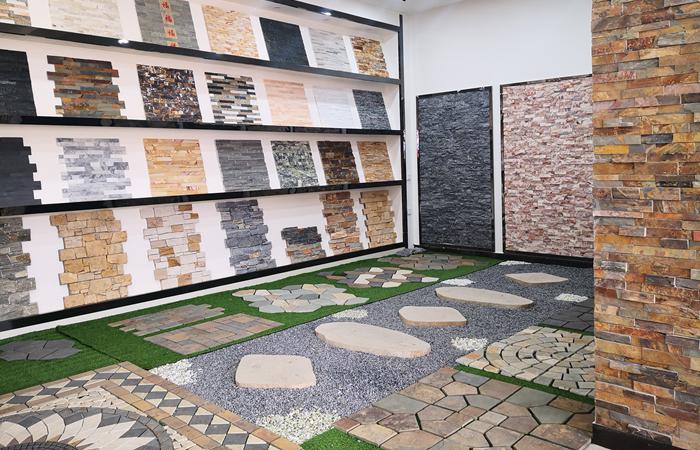
Slate Material selection directly affects operational downtime and can trigger costly warranty claims and facade replacements when boards fail, chip, or delaminate on mission-critical exteriors. Choosing the wrong natural slate stone, or using improper cutting and sealing methods, drives rework, creates safety hazards during repairs, and exposes building owners and contractors to unexpected capital outlays and reputation risk.
This guide functions as a field-ready SOP: it explains the geological properties that govern strength and cleavage, maps the color range from rusty coppers to deep charcoals, quantifies freeze-thaw resistance for exterior facades, lays out step-by-step techniques to cut slate ledgestone without chipping edges, and specifies sealing protocols to enhance natural tones and extend service life. Expect inspection checkpoints, tool specs, acceptable tolerances, and troubleshooting steps aimed at reducing downtime and minimizing lifecycle costs for slate veneer installations.
The Geological Properties of Natural Slate Stone
Slate forms by low-grade regional metamorphism that realigns platy minerals into a foliation (slaty cleavage) that controls how the rock splits, its mechanical performance, and its suitability for thin veneer applications.
Mineralogy and Formation Processes
Slate originates from fine-grained sedimentary precursors such as shale and mudstone. Under low-temperature, directed pressure in orogenic settings, clay minerals recrystallize into fine mica (illite, muscovite), with accessory chlorite, quartz and variable feldspar or carbonate; trace iron sulphides (pyrite) and carbonaceous material commonly appear and influence color and staining behavior.
Metamorphic grade stays low to very low, so grain size remains fine while developing pronounced slaty cleavage. That mineralogy and low-grade recrystallization set density, porosity and splitting behavior—properties specifiers must match to application and climate when selecting quarry material.
| Property | Typical Values / Minerals | Implication for Veneer & Cladding |
|---|---|---|
| Mineralogy, Density & Thickness | Illite/muscovite, chlorite, quartz ± feldspar/carbonate; density ~2.6–2.9 g/cm³; standard thin veneer thickness 25–40 mm; weight ~65 kg/m² | Source from consistent quarry vein; use sawn-back, 25–40 mm pieces for predictable adhesion and load; confirm weight-per-area for substrate and anchorage design. |
Cleavage, Fissility, and Mechanical Behavior
Slaty cleavage results from the parallel alignment of platy minerals and provides a predictable plane for splitting into thin, flat sheets. Cleavage differs from original sedimentary bedding; installers must orient pieces so the cleavage plane aligns with expected loads and finish requirements to avoid laminated failure.
Mechanically, slate shows higher flexural capacity along cleavage and reduced tensile strength perpendicular to it. That directional behavior governs maximum usable panel span, fastener placement and recommended thickness. Cut and finish parallel to cleavage to minimize edge chipping and specify allowable panel thickness based on the deposit’s cleavage quality.
Physical Properties: Density, Porosity, and Strength
Density typically falls between 2.6 and 2.9 g/cm³ (≈160–180 lb/ft³), which lets designers estimate dead loads accurately. Natural slate usually exhibits low open porosity and water absorption below a few percent, but microfractures or saprock zones raise absorption and risk for freeze-thaw damage in exposed climates.
Compressive strength suits facade and flooring uses; flexural strength varies with cleavage orientation and microcrack population. Slate shows low thermal expansion, but specify movement joints for long runs and evaluate substrate compatibility to prevent rigid restraint that could induce cracking.
Color Variations and Weathering Factors
Color reflects primary and trace minerals: oxidized iron yields rusty reds/browns, carbonaceous matter gives deep greys/blacks, and chlorite imparts green tones. Surface finish—natural cleft, sawn, or honed—alters sheen and perceived saturation; choose finish to match design intent and maintenance expectations.
Slate does not fade like many man-made materials, but weathering from repeated wetting, freeze-thaw cycles or salt exposure can cause surface flaking in lower-quality or more porous batches. Reduce risk by sourcing from consistent beds, grade material for cleavage and porosity, and specify sealing or detailing where runoff, de-icing salts, or constant saturation occur.

Rich Color Variations: From Rusty Coppers to Deep Charcoals
Slate’s visible palette reflects specific minerals, trace elements and metamorphic history, so quarry selection and finish choices determine the installed color outcome.
Mineral Causes Behind Slate Colors
Slate’s tones come from a handful of predictable mineral signals and the rock’s metamorphic conditions. Iron-bearing phases such as pyrite and limonite oxidize and leave rusty coppers, ambers and reddish streaks on exposed faces. Carbon-rich organics and fine-grained clays concentrate in layers and produce deep grays to near-black charcoals. Minor mineral phases—chlorite, glauconite and trace copper-bearing minerals—create green and blue casts where they occur.
Metamorphic pressure and temperature control grain size and banding; small shifts in those conditions produce subtle veining and tonal layering that make each quarry distinct. Surface weathering and oxygen exposure intensify warm tones over time, especially on freshly split, cleft faces.
Common Color Families and Typical Applications
Different color groups suit predictable design roles. Choose the family that supports the architectural intent—accent warmth, neutral backdrop or high-contrast drama—and specify matching grout, metalwork and trims to hold the visual intent in installation.
- Rusty coppers and warm browns: pair with natural wood and warm metals; ideal for rustic facades, hearth surrounds and accent walls.
- Mid-grays and blues: suit coastal, industrial and contemporary interiors; use for kitchen backsplashes and exterior cladding.
- Deep charcoals and blacks: create dramatic, high-contrast features in lobbies, galleries and modern exteriors.
- Mixed-tone ledgestone (multicolored): gives a textured, natural look for landscape walls and outdoor fireplaces.
- Lighter gray and neutral tones: complement minimalist and Scandinavian schemes where a subtle stone backdrop is desired.
Finishes and Treatments That Modify Perceived Tone
Surface finish and sealers significantly change how color reads under light. Rough, split faces scatter light and present variegated, softer tones. Sawn or honed surfaces reduce texture and deliver a more even, muted appearance. Pick the finish to match the intended reflectivity and tactile quality.
- Split-face / natural cleft: preserves raw texture and true variegation; rough surfaces soften highlights and midtones.
- Honed / sawn: evens color, lowers contrast and suits modern interiors where consistency matters.
- Wet-look sealers and impregnators: deepen colors, boost saturation and make dark grays approach black.
- Matte sealers: provide stain resistance with minimal color change for a natural appearance.
- Field test finishes on sample panels before approval; the same product can look different across color families and under different light angles.
Ensuring Color Consistency: Grading, Batching and Quality Control
Natural variation makes QC essential on B2B projects. Use quarry-level grading and strict batch control to create reliable color lots, and tie every shipment back to those lots for traceability. Top Source Stone practices sourcing from the same quarry vein per order to minimize shifts across large runs.
- Grade and sort stone at the quarry into defined color lots; label every crate and pallet with lot numbers for project traceability.
- Ship sample panels from the same lot as production material to confirm appearance and finish decisions on site.
- Recommend ordering adequate extra material from the same batch to allow for cuts, waste and future repairs; store spares dry and cataloged by lot.
- During installation, mix panels from multiple boxes to blend natural variation and avoid visible banding or striping.
- Perform visual inspection at three production stages—post-cut, pre-pack and pre-ship—to confirm color and finish targets; record photos for client sign-off.
Design and Maintenance Tips to Preserve Color Intent
Lock appearance decisions into specs and contract documents so installers follow the visual intent. Specify sealer type, grout color and accessory materials up front. For exteriors, detail flashings and drainage to prevent water pooling that can alter surface appearance over time.
- Specify sealer type (wet-look vs. matte) in contract documents to lock in the intended appearance and set maintenance expectations.
- Pair warm-toned slates with warm grout, wood trims and brass or copper accents; use light grout with pale slates to maintain a clean look.
- For exterior use, detail appropriate flashings and drainage; prolonged water pooling can cause efflorescence and shift perceived color.
- Recommend routine cleaning with soft brushes and pH-neutral stone cleaners; avoid acidic cleaners that strip sealers and alter surface tones.
- Document batch numbers and keep spare panels stored in a dry, labeled location for accurate future repairs and color matching.
Premium Stacked Stone, Faster Installs

Freeze-Thaw Resistance for Exterior Facades
Control water entry and provide positive drainage; with those two controls in place, slate veneer survives seasonal freeze–thaw far better than most installers expect.
How Freeze-Thaw Cycles Damage Natural Slate
Water infiltrates surface pores, microcracks and bedding planes in slate. When that water freezes it expands roughly 9% in volume, creating tensile stresses that open microfractures, cause edge spalling and promote delamination along cleavage planes. Repeated cycles propagate those fractures until pieces chip or detach.
Salts from de-icing chemicals or marine spray worsen the problem: salts crystallize inside pores during drying periods and force grain detachment and surface scaling. Slate’s natural foliation and cleavage form directional weaknesses, so failure often follows the stone’s bedding planes rather than appearing as uniform cracking.
- Common signs: edge chipping, surface powdering, hairline cracks and loss of face area.
- Delamination and loosening typically show along linear bedding planes before random fracturing.
Testing, Standards and Performance Metrics
Lab teams and stone manufacturers simulate seasonal exposure with accelerated freeze–thaw and salt-scaling tests referenced to recognized standards (ASTM, EN and comparable national methods). Practitioners evaluate mass loss or surface scaling after a set number of cycles, changes in flexural or tensile strength, and water-absorption/open-porosity figures to predict field performance.
Specifiers should request lab reports for facade-grade material and compare results to acceptance criteria in the project specification. Complement lab evidence with local field-exposure references when available, because natural variation between quarry lots and site microclimates affects long-term durability.
| Performance Metric | Typical Lab Practice | Top Source Stone Reference |
|---|---|---|
| Mass loss / surface scaling; retained strength; water absorption & open porosity | Accelerated freeze–thaw plus salt-scaling per ASTM/EN; report % mass loss and retained mechanical properties for specified cycle counts | Quarry-to-project consistency; sawn-back veneer, controlled thickness 25–40mm, typical assembly weight ~65kg/m²; provide lab certificates for facade-grade lots |
Design and Installation Practices to Improve Resistance
Design details that prevent water retention and permit movement reduce mechanical stress and dramatically lower freeze–thaw damage. The facade assembly should shed and ventilate water rather than trap it behind the veneer.
- Install a drained, back‑ventilated rainscreen with a continuous drainage plane and positive weep paths to keep water out of the veneer cavity.
- Specify through‑wall flashings at sills, heads and transitions and slope shelf details to force rapid runoff.
- Provide control and expansion joints sized and located for the cladding field to avoid rigid, continuous adhesion that traps stress.
- Use corrosion‑resistant mechanical anchors sized for wind and thermal movement; combine with adhesive only where project loads or seismic design require it.
- Hire installers experienced with thin-stone veneers and specify setting materials and adhesives rated for freeze–thaw cycles and compatible with natural stone chemistry.
Material Selection, Surface Treatments and Maintenance
Choose slate with lower open porosity and documented freeze–thaw test results for exterior veneer. Lot-to-lot consistency matters on large projects; require source verification so the entire order comes from the same quarry vein when color and performance uniformity matter.
- Use penetrating water repellents (silanes/siloxanes) that reduce capillary uptake while allowing vapor transmission; avoid film‑forming coatings that trap moisture behind the stone.
- Clean gently with neutral pH cleaners; do not use high‑pressure washing or acidic cleaners that open the surface and increase porosity.
- Inspect facades after severe winters and repair cracked, delaminated or loose pieces promptly; local resealing after repairs preserves adjacent stone.
- Schedule reapplication of penetrating sealers based on observed performance (water beading vs. absorption), manufacturer guidance and site exposure—not on a fixed calendar alone.

Cutting Slate Ledgestone Without Chipping the Edges
A controlled, wet cutting workflow combined with continuous-rim diamond tooling, firm support and shallow progressive passes prevents edge breakout on thin ledgestone veneer.
Select the Right Blade and Equipment
Start by matching the blade and tool to slate’s thin, brittle nature. Use continuous-rim diamond blades and wet-capable equipment to reduce vibration, cool the cut, and limit microfractures that cause edge chips. Match blade diameter and rated RPM to the power tool; oversized speed or a worn blade increases chatter and breakout risk.
- Use a continuous-rim or turbo continuous-rim diamond blade rated for slate or natural stone.
- Prefer wet cutting (wet saw or wet-ready grinder) to cool the blade, suppress dust and minimize edge fracturing.
- Match blade diameter and RPM to the tool; avoid undersized or damaged blades that increase vibration.
- For small detail cuts, use an angle grinder with a fine diamond blade rather than a coarse masonry disc.
Marking, Scoring and Progressive Cutting
Define the visible face and mark the cut line clearly. Score the face first to create a controlled fracture plane, then deepen the kerf in multiple shallow passes. Move the stone slowly through the blade — steady, slow feeds reduce stress and keep the edge intact.
- Mark the cut clearly on the face side; cut from the face toward the back to protect the visible edge.
- Make an initial shallow score along the line to create a controlled break point.
- Increase cutting depth in multiple passes rather than forcing a single deep cut.
- Maintain a steady, slow feed speed; stopping to let the blade cool reduces microfractures.
| Specification | Typical Value | Top Source Stone Note |
|---|---|---|
| Veneer Dimensions & Thickness | 100–200mm W × 100–150mm H; Thickness 25–40mm | Individually sawn-back loose stone with controlled thickness for flat bonding and ~65kg/m² installed weight. |
Support, Clamping and Backing to Prevent Vibration
Stabilize the piece close to the cut. Long unsupported spans let the stone flex and vibrate, which produces edge chips as the blade exits. Clamp to a rigid work surface and use sacrificial backing to absorb exit-side breakout; that combination eliminates movement and transfers cutting forces into the support, not the stone.
- Support the stone close to the cut line; avoid long unsupported overhangs.
- Clamp the piece securely to a stable table or work surface to stop movement.
- Use a sacrificial backing (plywood or rubber) under the slate to absorb vibration and limit breakout on the exit side.
- Apply masking tape along the cut line to slightly reduce edge flaking on thin pieces.
Cutting Corners and Irregular Shapes Without Breakout
Plan relief and starter cuts before attempting interior corners or tight curves. Remove bulk material with relief cuts, then follow the contour in overlapping shallow passes. For interior cutouts, switch to a handheld wet grinder or an oscillating tool to work carefully around tight radii without stressing adjacent edges.
- Drill small starter holes at inside corners or tight curves before connecting cuts.
- Make a series of relief cuts to remove bulk material and reduce stress on the final contour cut.
- For internal cutouts, use a handheld wet grinder or oscillating blade to work slowly and follow the guide marks.
- Avoid aggressive plunges; approach corners with overlapping shallow passes and finish with hand tools if needed.
Edge Finishing, Touch-ups and Inspection
Inspect every cut for hairline cracks and microchips. Remove tiny chips with light chisel taps away from the face, then blend the edge with diamond hand pads or silicon carbide sanding pads. Clean slurry immediately; residual slurry can hide cracks and interfere with adhesion or sealers.
- Trim tiny chips with a pointed chisel or fine carbide tool using light taps away from the face.
- Refine the edge with diamond hand pads or silicon carbide sanding pads to blend and smooth.
- Clean cut surfaces of slurry and inspect for hairline cracks; discard pieces with through-cracks.
- Apply a suitable natural stone sealer to cut edges where exposure or staining is a concern.

Sealing Slate to Enhance its Natural Deep Tones
A correctly chosen and applied sealer deepens slate’s color, blocks common stains, and preserves texture while keeping the stone breathable for long-term exterior performance.
Why seal slate? Benefits for color and protection
Sealing slate enhances visual depth and reduces long-term maintenance burdens. The right product amplifies veins and contrast without filling natural clefts, and it creates a barrier against oil, water, and organic staining that otherwise darken or discolor the stone over time.
- Enhances color: wet-look or penetrating enhancers deepen contrast and make veins and layers more visible.
- Protects against stains from oils, grease, and organic spills, reducing long-term discoloration.
- Makes routine cleaning easier and reduces the need for aggressive cleaners.
- Maintains breathability when you choose a penetrating, vapor-permeable sealer for exterior use.
- Helps preserve slip performance when you avoid high-gloss, film-forming coatings on walking surfaces.
Choosing the right sealer: penetrating, topical, and color-enhancing options
Match sealer chemistry to the application and desired look. Penetrating products protect from within and keep a natural matte appearance; topical coatings change sheen and add surface resistance but can affect texture and vapor movement. Use color enhancers when you want a deeper tone without a surface film.
- Penetrating impregnators (silane/siloxane/silicate) block water and stains while remaining breathable and subtle in appearance.
- Color enhancers/‘wet-look’ penetrators deepen tones without leaving a peelable film; ideal for accent walls and low-traffic interiors.
- Topical acrylics or urethanes increase gloss and stain resistance but can peel, alter texture, and reduce breathability—use cautiously outdoors.
- Water-based products lower VOCs and dry faster; solvent-based products penetrate more deeply but require more ventilation.
- Always run a small test patch to confirm color change, sheen, and slip feel before full application.
Preparing slate for sealing: cleaning, drying, and test patch
Prep determines whether a sealer bonds and performs. Remove surface contaminants, confirm the stone accepts liquid, and never seal while the substrate remains damp or coated with old films. A methodical test patch prevents costly finish issues on the full installation.
- Remove dirt, loose mortar, and debris by sweeping and low-pressure washing or rinsing.
- Use a pH-neutral stone cleaner for routine soil; use a dedicated sealer stripper if old film-forming coatings exist.
- Rinse thoroughly and allow the slate to dry fully—commonly 24–72 hours depending on temperature and humidity.
- Check porosity with a water droplet test: a bead that soaks in within 10–20 minutes indicates good absorption for penetrating products.
- Apply a test patch on an inconspicuous area to confirm color change, coverage rate, and drying time.
Application best practices and common pitfalls
Apply sealers in controlled sections and remove excess immediately to avoid dark blotches. Use the tool recommended by the manufacturer—low-pressure sprayer for even coverage, roller for interiors, and brush for edges and corners. Keep conditions stable and follow cure times to reach full performance.
- Work in manageable sections and apply sealer evenly with a low-pressure sprayer, roller, or brush depending on product instructions.
- For penetrating sealers, apply until the stone no longer absorbs product, then wipe off excess to prevent dark spots.
- Keep ambient temperature and surface temperature within manufacturer limits (commonly 10–30°C) and avoid rain or direct sun during application.
- Do not mix products from different chemistries; follow manufacturer dwell and cure times exactly.
- Avoid high-gloss topical sealers on floors or wet areas unless you add slip-resistant aggregates or choose a matte/topcoat option.
Maintenance, reapplication schedule, and troubleshooting
Inspect sealed areas at least once a year and clean with pH-neutral products. Reapply based on wear and appearance instead of a fixed calendar to extend protection without wasting materials. When problems appear, remove the failed layer and return to a compatible penetrating system for long-term results.
- Check protection annually by placing water drops on the surface; if water soaks in quickly, plan reapplication.
- Typical reapply interval: penetrating sealers every 1–5 years depending on exposure; topical systems may need recoating every 3–7 years.
- Clean with pH-neutral stone cleaners; avoid acidic or abrasive products that strip sealers.
- If film peels or yellows, remove it with a compatible stripper and reapply a suitable penetrating sealer.
- Record product brand, batch, and application date for consistent future maintenance and to simplify troubleshooting.
Conclusion
Proper installation and handling of slate ledgestone veneer preserves its geological strength, color integrity, and freeze-thaw performance over time. Following recommended cutting techniques, sawn-back adhesion practices, and sealing procedures reduces edge chipping, ensures masonry-grade bond strength, and supports site safety and OSHA compliance. This attention to detail extends the cladding’s service life and helps protect substrates and installed equipment.
Review your project specifications and current substrate conditions, or contact Top Source Stone for certified thin stone veneer samples and a technical catalog to assist with specification, mockups, and sealer selection. Our team can provide quarry-to-project consistency data and matched L-shaped corners to streamline quoting and mockups.
Frequently Asked Questions
Is slate ledgestone veneer good for exteriors?
Yes. Natural slate ledgestone veneer is an excellent choice for exterior use because it is dense, low-porosity, UV-stable, and generally resistant to weathering and freeze-thaw cycles. For long-term performance install it over a properly prepared, load-bearing substrate with a weather-resistant barrier, correct flashing and drainage, and corrosion-resistant anchors or stainless-steel fasteners. Avoid direct ground contact, allow for movement and control joints, and test samples first because some iron-bearing slates can surface-stain differently.
Does natural slate stone rust?
No. Slate itself does not rust because it is a metamorphic rock made of clay minerals, quartz, mica and similar constituents. However, slate can develop iron staining if it contains iron-bearing minerals or pyrite that oxidize, producing orange or brown discoloration. Also metal fixings in contact with slate can corrode and transfer rust stains, so always use stainless or otherwise corrosion-resistant anchors and fasteners.
How to cut slate ledgestone veneer safely?
Use the right tools and PPE: a wet diamond blade tile saw or a continuous-rim diamond blade in an angle grinder for irregular cuts; for thin veneer consider score-and-snap. Always wear an N95 or P100 respirator, safety glasses, hearing protection, and gloves, and use water to cool the blade and suppress silica dust. Secure the stone, make slow steady cuts, support cut pieces to prevent breakouts, and finish edges with a rubbing stone or sanding pad. If you are unsure, have a professional stone cutter do the work.
Best sealer for slate ledgestone?
Use a breathable penetrating (impregnating) stone sealer formulated for natural slate and masonry, such as a silane/siloxane or fluoropolymer impregnator. These protect against water and oil-based stains while preserving the natural look and allowing vapor transmission. For enhanced color use a non-film-forming color-enhancing impregnator but test a small area first. Reapply based on exposure, typically every 2 to 5 years. Avoid film-forming acrylics that can peel and trap moisture.
How long does a slate stone wall last?
A well-built slate stone wall can last decades to centuries. Solid structural or full-thickness slate walls often endure 100+ years, while properly installed thin veneer walls typically last 50+ years with correct installation and maintenance. Longevity depends on quality of installation, substrate and drainage, climate and freeze-thaw exposure, mortar and anchors, and ongoing maintenance such as repointing and sealing.
