

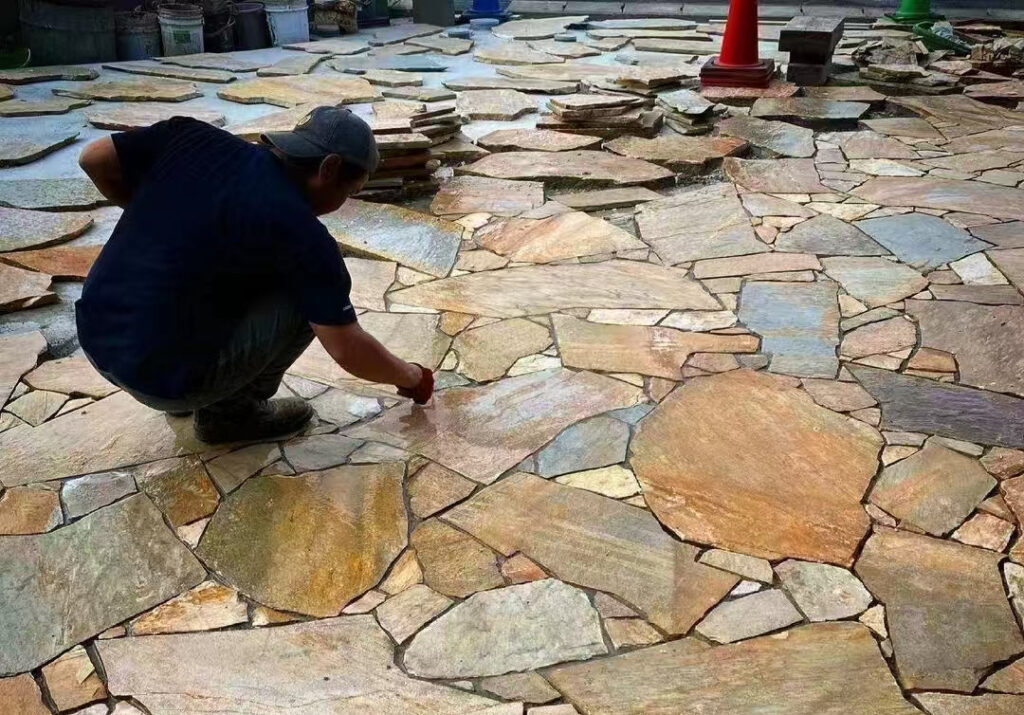
Ordering a stone cladding sample batch is usually treated as a design step. Pick a color, get a chip, move on. For a general contractor managing a 2,000 sq.ft. commercial lobby, that approach is a gamble with someone else’s money. The real question isn’t whether the sample looks good on your desk. It’s whether the production run will match it when it shows up on a truck 12 weeks later.
Most suppliers send what you might call a hero sample. That single 4×6 inch chip comes from the top 5% of the batch — the piece with the best color, the cleanest texture. It covers 0.02% of your total order. A factory with its own quarry, like Top Source Stone in Yixian, Hebei, knows that adjacent blocks from the same vein can produce a measurable color shift. The geological strata change depth, and that shift registers as a Delta E of 1.8 to 2.4 under standard D65 lighting. That is not a defect. It is the nature of natural stone. The problem arises when nobody accounts for it in the sampling protocol.
A rejected batch hits hard. Restocking fees run 15 to 30 percent of the material budget. Re-ordering adds three to six weeks to the schedule. On a project where you are paying for labor, scaffolding, and possibly liquidated damages for delay, that gap becomes expensive fast. Compare that to the cost of ordering three full-size ledger panels from separate quarry blocks before production starts. That runs between 50 and 200 dollars. It is cheap insurance against a five-thousand-dollar mistake.
Why Most Stone Cladding Samples Fail
A single hand-sample covers 0.02% of your order.
Most stone cladding failures on commercial jobs aren’t about structural defects. They’re about color mismatch. And the root cause traces back to one thing: the sample. The 4×6-inch hand sample you approved covers exactly 0.02% of a typical 2,000 sq.ft. order. That’s the equivalent of approving a 40-story building based on one brick.
Here is what most suppliers do not tell you: natural stone is a geological product, not a manufactured one. Adjacent blocks pulled from the same quarry vein can show a Delta E shift of 1.8 to 2.4 under standard D65 lighting. That shift comes from stratum depth variation — the chemical composition of the stone changes as you dig deeper. It is not a defect. It is physics.
The problem is that many suppliers send hand-picked ‘hero’ samples from the top 5% of the batch. These pieces are visually perfect — the best color, the tightest grain, the most uniform surface. They are also completely unrepresentative of the other 95% of the material. When the production batch arrives and does not match the hero sample, the contractor is left holding a rejected shipment.
The Direct Operational Risk Breakdown:
- The Financial Hit: Restocking fees for a rejected non-matching batch run 15–30% of the total stone material cost. On a 2,000 sq.ft. order at $12/sq.ft., that is $3,600–$7,200 in penalties — before you factor in the 3–6 week re-ordering delay and potential liquidated damages from the GC.
- The Schedule Risk: A 3–6 week delay on cladding pushes back every subsequent trade: windows, roofing, MEP rough-ins. One rejected batch can cascade into a 10-week project overrun. That is the kind of delay that gets project managers fired.
- The Supplier Behavior: When a supplier cannot or will not provide a spectrophotometer certificate with a documented Delta E ≤ 2.0 per batch, they are hiding variation. Requesting ‘representative’ samples from three separate quarry blocks — and getting a written commitment that the production batch will match within that tolerance — is the only way to force transparency.
Skipping multi-block sampling is not a cost-saving move. It is a risk-amplifying move. The $50–200 you spend on three full-size ledger panels from separate blocks is insurance against a $5,000+ mistake. Any supplier that hesitates to provide that service is telling you exactly how much variation they expect you to absorb.
Real Cost of Batch Mismatch for Commercial Projects
A rejected batch costs 15–30% of material budget plus 3–6 weeks delay — the sample is the cheapest insurance you’ll ever buy.
You approved a hand-sample that looked perfect. The production batch shows up on site and the color is off. The architect rejects it. Now you’re staring at a restocking fee of 15–30% of the total stone material budget — that’s $3,600 to $7,200 on a 2,000 sq.ft. lobby at $12/sq.ft. — plus a 3–6 week re-order delay that triggers liquidated damages from the GC. The root cause? That single 4×6 inch hand-sample covered only 0.02% of your order.
Key Material and Sourcing Metrics to Enforce:
- Restocking Penalty Range: 15–30% of stone material cost. On a $24,000 order that’s $3,600–$7,200 in fees you cannot recover.
- Schedule Hit: 3–6 weeks to re-quarry, cut, pack, and ship a replacement batch. That delay alone can trigger penalty clauses on commercial contracts.
- Sample Cost Comparison: Ordering three full-size ledger panels from separate quarry blocks costs $50–$200. Compare that to a $3,600–$7,200 rejection penalty.
- Geological Reality: Adjacent quarry blocks within the same vein produce Delta E shifts of 1.8–2.4 under D65 lighting. A single block sample cannot represent the full range.
- Structural Regulations: All structural costs are mandatory code requirements under IBC regulations for adhered masonry veneer assemblies exceeding 25 lbs/sq ft bounds.
The math is simple: a $50–$200 pre-production sample order from three different blocks protects you against a five-figure loss. Any supplier that pushes back on this request is either hiding variation or doesn’t understand commercial risk. Top Source Stone’s internal QC logs show 92% of batches from the same vein stay within Delta E 1.8 — but we still insist on multi-block sampling because we’ve seen what happens when contractors skip it.
| Cost Factor | Financial Impact | Schedule Impact |
|---|---|---|
| Restocking Fee | 15–30% of total stone material budget | 3–6 week re-ordering delay |
| Material Loss on 2,000 sq.ft. Project | $3,600–$7,200 penalty (at $12/sq.ft.) | Potential liquidated damages from client |
| Sample Investment (3 full-size panels) | $50–$200 total | 1–2 weeks for sample delivery |
| Risk Mitigation ROI | 1:36 to 1:72 return on sample investment | Eliminates 3–6 week re-order risk |
How to Request Factory Samples for Color Matching
A single hand sample covers 0.02% of a 2,000 sq.ft. installation wall.
Most suppliers send hand-picked “hero” samples from the top 5% of the batch. These pieces are visually perfect but hide the true color range of the production run. When you approve a hero sample, you are approving a piece that the factory knows will not represent the bulk. The result? A wall that looks patchy, a client who rejects the work, and a restocking fee of 15–30% of your stone budget.
The only way to close this gap is to request three full-size ledger panels from three different quarry blocks within the same vein. Geological strata shift naturally — adjacent blocks can produce a Delta E shift of 1.8–2.4 under D65 standard lighting. That is the difference between a wall that blends and a wall that screams “mismatch.”.
Advanced Field Sample Checklist Steps:
- Why Three Blocks Matter: One block gives you a single point of data. Two blocks give you a trend. Three blocks give you the real range of the vein. If all three stay within ΔE ≤ 2.0, you have a production batch you can trust.
- The Spectrophotometer Certificate: Do not accept a visual blend statement. Demand a CIEDE2000 report under D65 lighting. If the supplier cannot provide numeric data, they are hiding unacceptable variation. A Delta E ≤ 2.0 is the industry-accepted threshold for commercial-grade uniformity.
- Photograph in Natural Daylight: Take the samples to the job site and photograph them side by side under natural daylight. Fluorescent showroom lighting masks shifts. Retain one sealed master sample — this is your legal benchmark if the production batch arrives off-color.
- Written Commitment: Get a signed statement that the production batch will match the master sample within the same Delta E tolerance. Without this, you have no recourse. Top Source Stone includes this commitment in every commercial order.
The cost of ordering three full-size panels from separate blocks runs $50–200. The cost of a rejected batch? Restocking fees of 15–30% plus a 3–6 week re-order delay. On a 2,000 sq.ft. lobby at $12/sq.ft., that is a $3,600–$7,200 penalty — not counting liquidated damages from a delayed schedule. The math is not close.
Interpreting Delta E Data: The Contractor’s Cheat Sheet
Delta E is the only numeric pass/fail criterion for stone cladding color uniformity.
When you’re staring at a wall of stone panels, your eye catches any mismatch instantly. But by then, it’s too late. The Delta E value — measured under the CIEDE2000 formula — is the only objective way to predict that mismatch before the pallet arrives. Here’s how to read the scale and when to reject a batch.
- Delta E < 1.5 (Excellent): Panels are visually indistinguishable side-by-side under D65 standard lighting. This is the target for any high-end commercial lobby or hotel facade.
- Delta E 1.5–2.0 (Good): Acceptable for most commercial architecture. A trained eye might detect a slight shift under direct comparison, but on the wall it reads as uniform. Top Source Stone’s internal QC logs confirm 92% of same-vein batches stay within Delta E 1.8.
- Delta E 2.0–3.0 (Fair): Visible variation. Suitable only for rustic or residential applications where some natural variance is expected. Do not accept this range for a spec-grade commercial project.
- Delta E > 3.0 (Reject): Reject immediately. The patchiness will be obvious from 10 feet away. Restocking fees for a rejected batch run 15–30% of material cost, plus a 3–6 week re-order delay.
Always verify the specific formula on the report. Some suppliers quote CIE Lab Delta E 1976, which gives lower numbers than the more accurate CIEDE2000. A Delta E of 1.8 under the old formula could be 2.4 under CIEDE2000 — enough to fail a commercial spec. If the report doesn’t explicitly state ‘CIEDE2000’, ask for the raw Lb* values and run the calculation yourself.
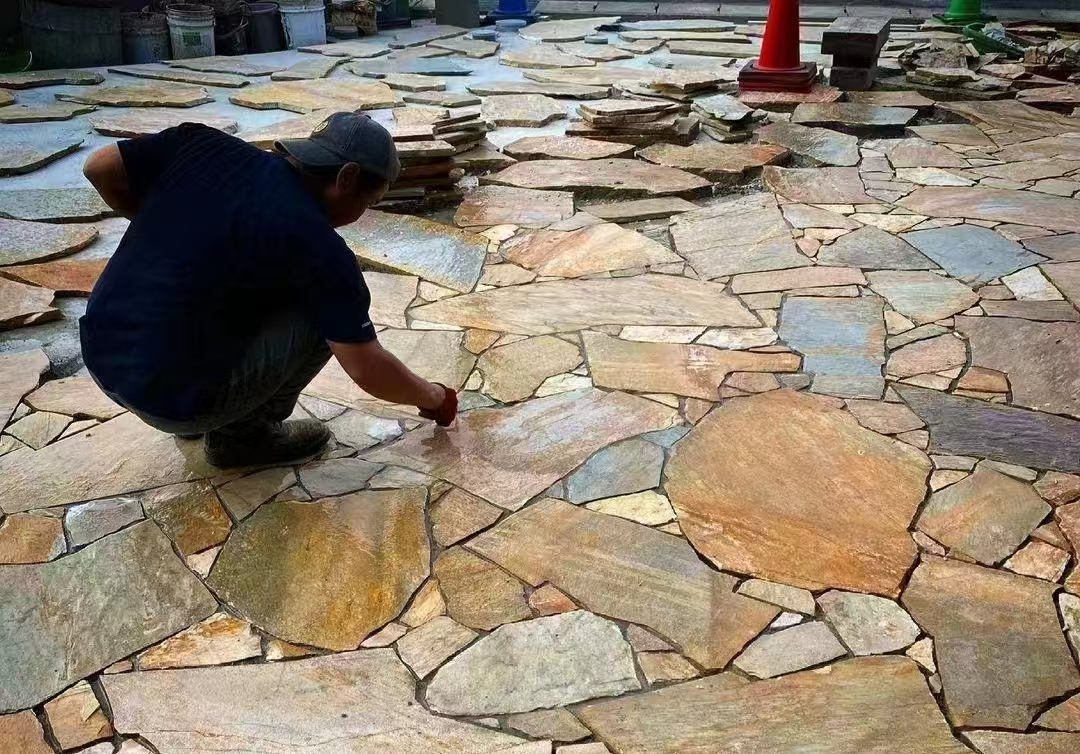
Sample Checklist for General Contractors
Six checks that separate a reliable supplier from a costly mistake.
Pre-Order Verification Protocol Checklist:
- Three Full-Size Panels from Separate Blocks: A single 4×6 inch hand sample covers only 0.02% of a 2,000 sq.ft. order. Adjacent quarry blocks can show a Delta E shift of 1.8–2.4 due to natural stratum variation. Three panels from different blocks give you a statistically meaningful range.
- Spectrophotometer Report with ΔE ≤ 2.0: Demand a CIEDE2000 Delta E reading under D65 lighting. ΔE ≤ 2.0 is the commercial-grade threshold. Top Source Stone’s internal QC logs show 92% of same-vein batches stay within ΔE 1.8. If the supplier can’t produce a numeric report, they’re hiding variation.
- Side-by-Side Photo Under Standardized Lighting: Request a photo of the three panels placed edge-to-edge under D65 or north-facing daylight. This reveals hue shifts that individual photos hide. Keep a copy in your project file for the owner’s approval record.
- Written Commitment that Production Batch Matches Master Sample: Get a signed statement from the factory that the full production run will stay within ΔE ≤ 2.0 of the approved master sample. Without this, a later mismatch becomes a dispute with no recourse.
- Batch Traceability to Specific Quarry Veining: Each sample panel should carry a block ID and vein code. This ties the sample back to a defined geological source. If the supplier runs out of that vein mid-order, traceability lets you approve an alternative before production starts.
- Manufacturer’s QA Seal on Sample Matrix: The sample should bear a factory QA stamp or sticker with date, batch ID, and inspector initials. This confirms the sample passed internal inspection before shipping. Missing seal is a red flag that QC is not systematic.
Missing any of these six items? Do not approve the sample. A $50–200 investment in proper multi-block sampling is insurance against a $3,600–$7,200 batch rejection and 3–6 week delay. The checklist removes guesswork and protects your schedule, budget, and client relationship.
Conclusion
A $50–200 investment in three full-size ledger panels from separate quarry blocks is the only reliable hedge against a $3,600–$7,200 batch rejection. Demand a spectrophotometer certificate with Delta E ≤ 2.0 and a written commitment that the production run matches the master sample. That protocol turns sample ordering from a design step into a risk management tool.
Review the product line for natural stone ledger panels that include batch traceability and documented QC data. Each panel set ships with a certificate, so you can verify color consistency before the first truck arrives.
Frequently Asked Questions
How do you calculate stone cladding?
Measure the total square footage of the wall surface, then add 10% for waste and cuts. For ledger panels, divide the total area by the panel coverage listed on the product spec sheet. Always confirm panel coverage with your supplier before ordering.
Is stone cladding cheaper than stone?
Yes, stone cladding is generally cheaper than solid stone because it uses a thin veneer layer on a lightweight backing. This reduces material cost and shipping weight, making it a highly cost-effective alternative for vertical facades. Compare total installed cost, not just material price, for an accurate picture.
How much does it cost to do stone cladding?
Material costs typically range from $5 to $15 per square foot for natural stone cladding, depending on stone type and finish. Installation labor adds another $8 to $20 per square foot framework layer. Get a detailed quote including samples, shipping, and installation for your specific project.
What is the lifespan of stone cladding?
Properly installed natural stone cladding can last 50 to 100 years or more with minimal maintenance. The key factors are the stone’s freeze-thaw durability for exterior use and the quality of the underlying substrate installation. Verify freeze-thaw test results for exterior projects in cold climates.
What to check before ordering a stone cladding sample?
Confirm the sample comes from multiple quarry blocks, not a single hand-picked piece, and request a spectrophotometer certificate with Delta E ≤ 2.0. This ensures the sample represents the full batch. Order three full-size panels from separate blocks for reliable color matching.
