

Short answer: since 1 July 2024, engineered stone is banned from manufacture, supply and installation in Australia, and a customs officer or building certifier will not take your word that a stacked stone panel is natural. The pack that gets panels cleared and accepted is: a batch-level natural stone composition declaration, a Safety Data Sheet naming natural quartzite or slate as the raw material, an independent lab report showing mineral composition and crystalline silica content, factory batch traceability records, and commercial invoices whose goods description says natural stone, not artificial or agglomerated stone. Customs (ABF) checks the goods against the import declaration and the description on documents; certifiers and builders check whether your paperwork proves the product is outside the ban. One missing link in that chain, and your container stops moving.
The ban did not just change what Australian builders install. It changed what every importer of wall cladding must be able to prove, sometimes years after the panels are already on a wall. If you wholesale stacked stone into Australia, the documents in this article are now part of your product, as real as the pallets they travel on. This guide walks through each document, what it must say, where importers get tripped up, and how to assemble the pack so it survives both a customs query and a site inspector with a clipboard.
Why the 2024 Ban Changed the Paperwork, Not Just the Product
Australia’s engineered stone ban took effect on 1 July 2024, making it prohibited to supply, manufacture or install kitchen benches, panels and other products made from artificial or engineered stone containing crystalline silica. The reason was silicosis: respirable crystalline silica released during cutting, grinding and polishing of high-silica engineered slabs. Natural stone was not the target, because its crystalline silica is locked inside the mineral structure and generally presents at far lower working-exposure risk when cut with proper controls. But the ban drew a legal line between two categories of stone, and the only way anyone standing at a wharf or on a building site can tell which side a panel falls on is paperwork. The industry-side controls for cutting any stone, engineered or natural, are covered separately in the guide to silica dust management for stone job sites.
For a wholesaler this creates a specific obligation. Your customers, builders and stonemasons, are now legally required to know what they are installing. When they ask for “proof it’s natural,” they are not being difficult. They are protecting their licence. The importers who win projects in 2026 are the ones who can hand over a document pack the same afternoon a builder asks for it.
The Australian Border Force controls what crosses the border, and its import controls on engineered stone remain in force, so the description on your import declaration matters as much as the product inside the container. ABF’s published guidance on importing goods is the reference point customs brokers use, and you can read the general import framework at abf.gov.au/importing-goods. Everything else in the pack exists to support the story those documents tell.
Document 1: The Natural Stone Composition Declaration
This is a signed statement from the factory, on letterhead, that says what the product is made of and how it is made. It sounds simple, and that is exactly why importers skip it, then regret it. A useful declaration names the stone type (for example, natural grey slate or natural quartzite), states that the panels are cut and split from quarried block with no resin, epoxy, polymer binder or added pigments, and identifies the quarry or production batch where the stone was extracted. It should be signed by someone with authority, not a sales assistant, and it should reference the purchase order or batch number so it cannot be reused for a different shipment.
What makes this document strong is specificity. “This product is natural stone” proves nothing. “Batch QZ-2214, quarried in Hebei province, split-face finish, composed of natural quartzite containing no added resins, binders or pigments, 98% natural mineral content by weight” gives a certifier something to check against the lab report. If the factory refuses to write the batch number on the declaration, that is information too: it means either the declaration is generic boilerplate or they cannot actually trace the batch, and both are problems you want to discover before the container ships, not after.
Document 2: The Safety Data Sheet, Read Correctly
Every factory has a Safety Data Sheet, but most importers never read Section 3, the composition section. For a natural stacked stone panel, Section 3 should list natural quartzite, slate, or quartzitic sandstone as the substance, with a crystalline silica content figure that reflects the geology of the stone. Engineered stone, by contrast, lists silica flour or ground quartz as a deliberately added constituent, usually at very high percentages, along with polyester resin. That difference between “naturally occurring crystalline silica within the mineral” and “added crystalline silica” is the legal dividing line the ban is built on.
Ask for an SDS dated within the last two years, in English, naming the legal entity that actually produces the panels. A safety data sheet that names a different factory than the one that quoted you is a small red flag worth resolving early. And keep the SDS in your file even though you never open it on site: it is the document an occupational hygienist or certifier reaches for first when they want to know what dust a panel will release when a mason trims it with a grinder.
Document 3: Independent Laboratory Testing
The declaration tells the story and the SDS names the substance, but an independent lab report is the document that turns claims into evidence. Two test types matter. The first is mineralogical composition, typically X-ray diffraction, which identifies the minerals actually present: quartz, mica, feldspar in a slate; or the dense interlocked quartz grains of a quartzite. The second is crystalline silica content by weight, which places the product on the right side of the ban’s definition. A factory can arrange both through third-party labs, and the report should identify the sample batch, the method used, and the lab’s accreditation.
One report covers one sample. If your supplier tests a pallet from 2023 and you import in 2026, that gap is a weakness in your pack. Sensible importers ask for testing tied to their production batches, at least for the initial order and then periodically as new quarries or colours enter the mix. The cost of a lab test is trivial next to the cost of a container held at the border, and the report becomes a sales asset: a PDF you forward to builders before they even ask.
Document 4: Batch Traceability from Quarry to Pallet
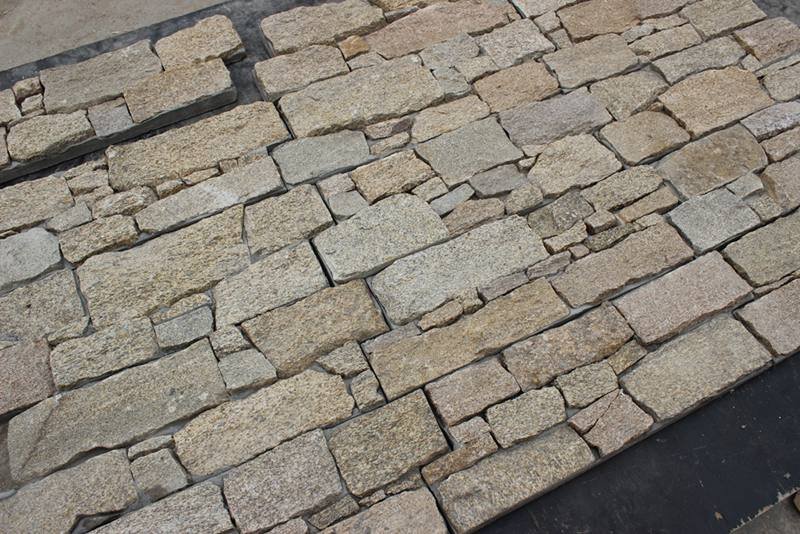
Traceability is the document pack’s connective tissue. It links the batch number on your declaration to the pallets in the container: production records showing the date each batch was split and netted, packing lists listing batch numbers per pallet, and photographs of the batch labels taken during container loading. When a certifier later asks “how do I know the tested sample came from the same stone as my wall?”, traceability is the answer.
This is also where importers discover which suppliers are real manufacturers. A factory that splits its own block knows exactly which quarry face a batch came from and can produce that record in an hour. A middleman who buys panels from three workshops and repacks them cannot, because the information does not exist. Requiring batch traceability is therefore not just compliance hygiene; it is a supplier qualification test that costs you nothing but a question. The same lot discipline that keeps colors consistent between pallets is what makes a traceability file credible, and the factory guide to batch color consistency for stone ledger panels shows what lot control looks like from the production side.
Document 5: Commercial Documents That Say the Right Thing
The last document is one you already have, and it is the one customs actually reads: the commercial invoice and the bill of lading. The goods description should read “natural quartzite stacked stone panels” or “natural slate wall cladding,” not “decorative panels” and not the generic “stone veneer” that a harried clerk might type. Descriptions like “artificial stone” or “man-made panels” trigger the engineered stone import control and questions you do not want. Match the description across the invoice, packing list, bill of lading and import declaration, because mismatched descriptions are the most common reason a routine consignment becomes a stopped one.
Harmonized System classification is part of this too. Monuments and worked building stone head under HS 6802, and the correct subheading depends on the stone and its working. Your customs broker chooses the final code, but your invoice description is what the broker has to work from, and vague invoices produce wrong codes, and wrong codes produce penalties. The fix costs five minutes with your factory’s documentation team before the invoice is issued.
What Australian Customs Actually Checks
Importers sometimes imagine a customs officer unwrapping pallets and testing panels. In practice, the first line of scrutiny is documentary. The broker lodges an import declaration with the goods description, HS code and origin; the ABF’s import control on engineered stone means declarations describing engineered or artificial stone products get held for the import permit question, which, since the ban, cannot be answered for supply into the Australian market. Natural stone consignments move through on the strength of honest description. If a container is flagged for inspection, officers compare what they see against the documents: panels that look like resin-bound aggregate next to an invoice saying “natural slate” is the kind of mismatch that invites a deeper look.
Biosecurity is the other screen, and it is unrelated to the ban but lands on the same documents. Timber pallets and packing must meet ISPM 15 treatment, and clean stone with no soil residue is expected; the Department of Agriculture, Fisheries and Forestry sets those conditions. An importer who packs paperwork properly for the ban but ships dirty pallets has still stopped their container, just for a different reason.
What Builders and Certifiers Actually Check
Customs clearance gets your container off the wharf; the building site is a second gate. Site certifiers and commercial builders increasingly ask for the composition evidence before installation, because once a product is on a wall, the cost of removing it dwarfs the cost of asking first. What satisfies them is the combination: the declaration naming the stone, the SDS, the lab report, and the traceability that ties the tested batch to the delivered pallets. A wholesaler who can email that pack as a single PDF wins the job more often than a wholesaler who says “trust me, it’s quartzite.”
There is one more site-side concern worth understanding so you can talk to your customers credibly: even natural stone contains naturally occurring crystalline silica, and cutting any stone produces dust. The ban removed engineered stone from the market; it did not remove the obligation to cut wet, use extraction and follow silica dust controls. When your customers raise silica, the professional answer is not “our stone is silica-free” (it is not) but “our stone is natural, here is the composition evidence, and here are the wet-cutting practices the stone industry recommends.”
How to Assemble the Pack Before You Need It
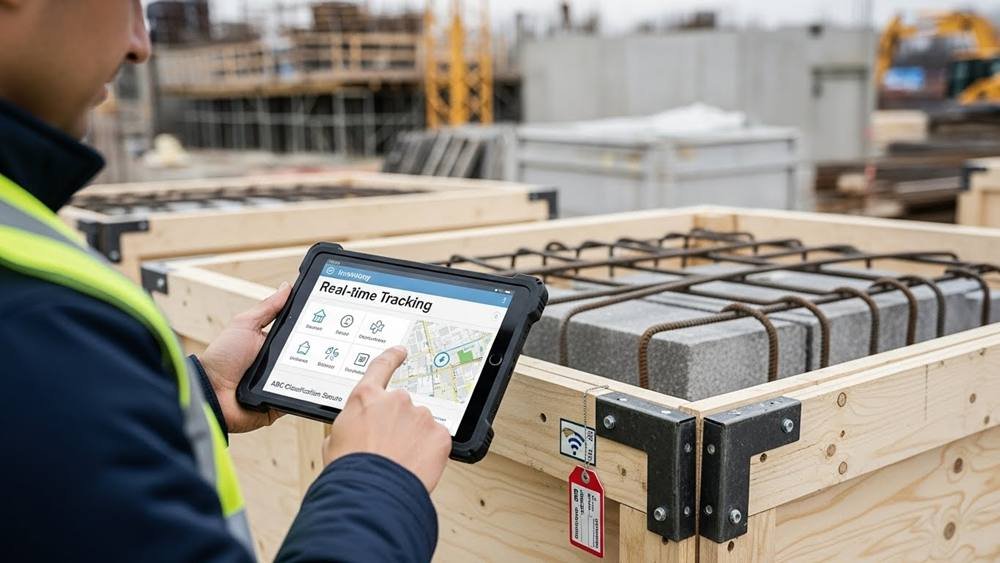
The importers who move fastest treat the document pack as an order deliverable, produced at the same time as the panels. The sequence that works: request the batch-level declaration and SDS when the purchase order is confirmed; schedule lab testing against a production sample for first orders with a new supplier; require packing lists with batch numbers and loading photos as part of the shipping document set; and check your own invoice description before you sign it. Then file the pack against the container number so that in three years, when a builder calls, you can forward it in one email.
Keep a one-page cover sheet that lists what is in the pack and the batch numbers covered. Certifiers are busy people; handing them an indexed PDF reads as competence, and competence closes sales. None of this requires the factory to change how it makes panels. It requires you to ask for the documents as a condition of the order, which is precisely the bargaining power a purchase order gives you.
Where Importers Get Tripped Up
Three failures account for most of the trouble. First, generic documents: a declaration or SDS that does not name the batch, the entity or the stone precisely enough to be checked against anything. Second, description drift: invoice says one thing, bill of lading says another, declaration says a third; each mismatch adds a question and questions cost days. Third, stale evidence: a lab report from a different supplier or an old batch, offered as if it covered a new shipment. All three are avoidable with the checklist above, and none of them are found at the factory; they are found in the importer’s own document flow.
A final note on scope: the ban and its import controls apply to the Australian market, and rules differ elsewhere. If you also wholesale into the United States or Europe, the same document pack still serves you, because the underlying question “is this stone natural and what is in it” is universal, but verify each market’s own requirements with your broker rather than assuming Australia’s rules travel.
Conclusion: Paperwork Is Now Part of the Product
The engineered stone ban turned documentation from an afterthought into a product feature for anyone wholesaling stone cladding into Australia. The pack is short: composition declaration, SDS, lab report, traceability, clean commercial documents. It is cheap to assemble at order time and expensive to reconstruct after a problem. Importers who build it into their ordering routine clear customs faster, win builder trust sooner, and can answer the natural-stone question in one email instead of one week. That is the entire competitive difference, and it is available to anyone disciplined enough to ask for five documents before the deposit is paid.
Frequently Asked Questions
Do I need new documents for every container?
The declaration, packing lists and loading photos are per-batch documents, so a new production run needs its own. The SDS typically stays current for a product line, and lab reports should be tied to new batches whenever the quarry, colour or supplier changes.
Will customs ask for my document pack on every shipment?
No. Most natural stone consignments clear on the declaration and description alone. The pack exists for the shipment that gets questioned and for the builder who asks before installation, which is where its value shows.
Who pays for the laboratory testing?
Practices vary: some factories test their product lines routinely and share reports, others test only on request. For first orders with a new supplier, paying for an independent test yourself is the safer route, and the report is yours to keep regardless of how the relationship develops.
