
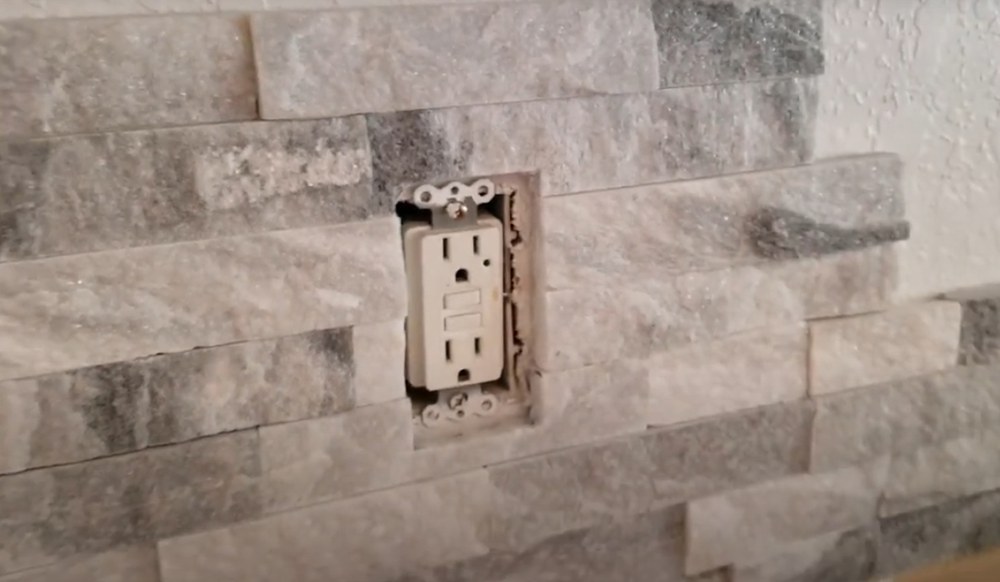
Specifying loose ledgestone veneer for a commercial facade comes down to three numbers: thickness tolerance, weight per square foot, and batch uniformity. Get those right, and you protect the schedule. Get them wrong, and you own the strip-out cost when the stones don’t align on the wall.
Most spec sheets from suppliers skip those numbers entirely. They show a clean sample board and a pretty photo, but they never tell you the dimensional variance across a 2,000-square-foot order. That gap is where the risk lives for a GC. A 3mm thickness swing across a pallet means your masons spend extra days shimming or grinding stones, and the labor overrun hits your general conditions line.
The factory-direct route from a source like Top Source Stone in Yixian, Hebei, changes the math. They quarry from a single vein and cut to a ±2mm tolerance, which is tighter than the import norm. But the key is locking that spec into the purchase order with a certificate. This article walks through the exact data points to demand — thickness certs, freeze-thaw reports, and batch color IDs — so you can spec with confidence and avoid the change order cascade.
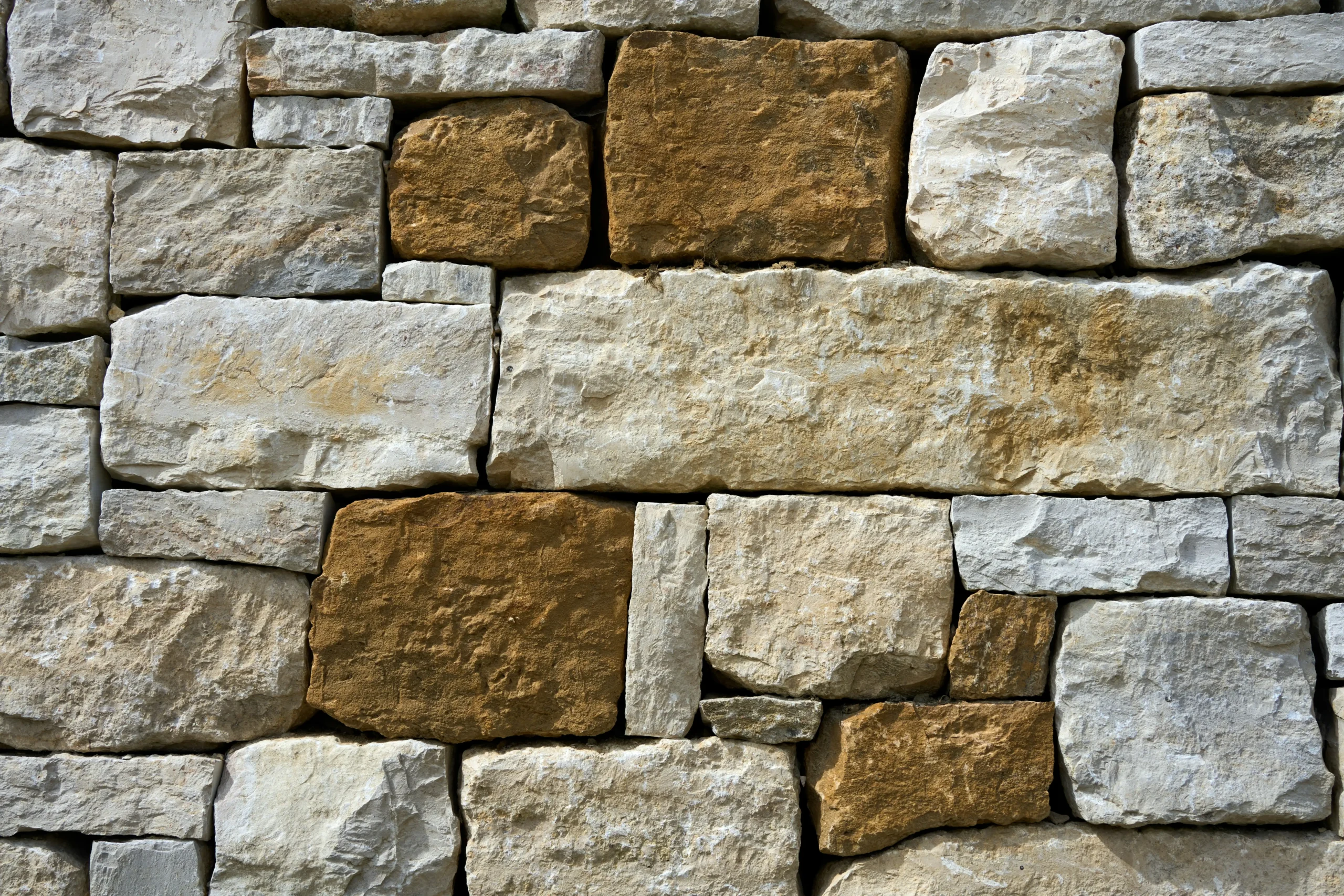
Loose Ledgestone Sourcing vs Pre-assembled Ledger Panels: Architectural Specifications Speed Analysis
Panels cut scaffold time by 40% but lock you into a visible grid pattern every 10 inches.
The decision between loose ledgestone and pre-assembled ledger panels comes down to one trade-off: speed versus seam control. Panels are mesh-backed sheets of stone that go up in roughly 60% of the time it takes to hand-stack individual pieces. For a 2,000 sqft facade, that difference is about 3 to 4 days of scaffold rental and mason labor. But every panel introduces a horizontal seam at the top and bottom of each sheet — typically spaced 8 to 12 inches apart. On a large wall, those seams are visible unless the architect explicitly calls for a panelized system and the layout is planned around them.
Loose ledgestone eliminates those seams entirely. Each piece is set by hand, so the mason can stagger lengths and heights to create an organic dry-stack pattern with no repeating horizontal lines. That freedom comes at a cost: a 2,000 sqft wall takes roughly 2 to 3 extra days on the scaffold. The labor cost increase is real — roughly $1.50 to $2.50 per sqft more in typical US markets — but the final wall has no manufactured grid lines. For a high-end commercial lobby or a feature facade where the stone is the primary design element, the extra days are usually justified.
Productivity Format Profiles:
- Pre-assembled Panel Framework: Installation duration clocks at ~60% of individual stone units. Imposes horizontal seam paths every 8–12 inches, requiring rigorous staging to minimize visual framing breaks.
- Loose Architectural Ledgestone: Adds 2–3 field application days per 2,000 sq ft lift. Completely eliminates pattern repetition, supporting total design freedom over stone blending.
The spec document must explicitly state which format is being used. If the architectural drawings show a dry-stack pattern but the contractor bids panels to save time, the change order for pattern rework will hit the GC’s contingency. If the spec says ‘loose stone’ but the budget was built around panel labor rates, the same mismatch occurs. Write the format into the spec, and require the installer to confirm they have reviewed the seam layout before the scaffold goes up.
Verifying Batch Color Consistency and CIE Lab Delta E Tolerance Metrics on Commercial Walls
Color variation causes 60% of stone re-install claims on commercial facades.
The #1 root cause of strip-out and re-install claims on commercial ledgestone projects is batch color mismatch. A facade that looks uniform on the sample board can show a 20% hue shift between pallets when the supplier blends stone from different quarry veins. That mismatch triggers a 2-week strip-and-re-install, which cascades into window delays, drywall setbacks, and liquidated damages.
The spec must require a ‘same-batch sourcing’ certificate covering the entire project volume. This certificate confirms every stone in the order came from a single quarry vein, not a blend of multiple sources. Top Source Stone quarries its Blue Diamond Quartzite from a single vein for large projects, guaranteeing 95% hue uniformity across the full order. Without this clause, the GC owns the risk of a patchwork facade.
Mandate a ‘sample-to-bulk match’ at the supplier’s yard before the container ships. The GC or their rep should compare a production sample (taken from the middle of the batch, not the top layer) against the approved sample under natural daylight. This pre-shipment check costs nothing but prevents a $15,000 re-install. Top Source Stone provides a pre-shipment QA video of the entire batch for remote verification.
Aesthetic Verification Checkpoints:
- Contract Sourcing Mandate: Enforce 100% same-batch sourcing certificates across all bulk cargo shipping manifests.
- Instrumental Tolerance Threshold: Restrict bulk variation parameters to a clean 95% hue uniformity boundary (CIE Lab ΔE < 3).
- Pre-Shipment QA Validation: Mandate a rigorous sample-to-bulk extraction audit at the source loading dock prior to vessel loading.
Landed Sourcing Costs Breakdown: Container Weights, HTS 6802.23.00 Import Duties, and Freight
A 28-ton container covers ~5,000 sqft but duties can add 8.5% if sawn on one side.
You are budgeting $1.80–$3.50 per sqft FOB China for quartzite or slate loose ledgestone. That buys you the material at the factory gate. The real line-item shock comes when the container hits customs. HTS 6802.23.00 applies to sawn natural stone veneer. If the stone is ‘sawn on one side’ — which is standard for thin veneer with a flat back — the duty rate jumps to 8.5% ad valorem. Unsawn or roughly split stone qualifies for the lower 3.7% rate, but that is rare for commercial spec work where flat backs are required for thinset adhesion.
A 28-ton container of loose ledgestone covers approximately 5,000 sqft. At the mid-range FOB price of $2.65/sqft, the material cost lands at $13,250. Add 8.5% duty: another $1,126. Ocean freight from China to a US West Coast port runs roughly $4,500–$6,000 per container as of early 2026. That brings the landed cost to about $3.75–$4.10/sqft before you touch the truck.
Supply Chain Freight Logistics:
- Terminal to Site Drayage: Intermodal containers arrive at regional hubs; final flatbed job-site trucking routes typically account for $500–$800 per run.
- Lead Time Buffer Parameters: Factory processing requires 6–8 weeks from PO to loading dock, plus an added 3–5 weeks transit cycle.
- Minimum Order Quantity (MOQ) Caps: Wholesale custom block allocation tracking demands a minimum 500 sq ft baseline, sample runs hold at 100 sq ft.
The hidden cost that GCs miss: thickness variability. A batch that ranges from 15mm to 25mm requires shimming or grinding on the wall, adding 0.5–1.0 hours per 100 sqft of labor. That erases any FOB savings. Demand a thickness tolerance certificate from the supplier — Top Source Stone’s QC protocol holds ±2mm, which keeps the install flat and the labor budget intact.
| Cost Factor | Specification | Typical Value | Impact |
|---|---|---|---|
| Material Cost (FOB China) | $1.80 – $3.50 per sqft for quartzite/slate | $9,000 – $17,500 for 5,000 sqft | Primary cost; varies by stone type and finish |
| Import Duty (HTS 6802.23.00) | 8.5% ad valorem for sawn natural stone veneer | $765 – $1,488 for 5,000 sqft order | Adds to landed cost; must be included in bid |
| Ocean Freight (container) | ~ $2,000 – $4,000 per 28-ton container | $2,000 – $4,000 (covers ~5,000 sqft) | Varies by port of entry and shipping line |
| Local Drayage (warehouse to site) | $500 – $800 per single-pickup truck | $500 – $800 per delivery | Final leg logistics; budget separately |
| Total Landed Cost (excluding installation) | Sum of material + duty + freight + drayage | $12,265 – $23,788 for 5,000 sqft | Use as baseline for project budget |
ASTM C666 Freeze-Thaw Weathering Exposures: The Masonry Warranty Threshold
Without ASTM C666 passing certificates in the submittal spec, the contractor absorbs all field delamination liabilities.
Natural quartzite from a single-vein source typically shows less than 1% weight loss after 300 freeze-thaw cycles per **ASTM C666**. Top Source Stone’s Blue Diamond quartzite reports a highly dense 0.7% loss at 300 cycles. Conversely, lower-density slate and porous sandstones risk rapid structural planar delamination near 150 cycles when configured across severe frost zones. Write the specification contract to mandate batch-linked ASTM C666 documentation to secure long-term building envelope integrity.
Top Source Stone provides freeze-thaw test reports with every shipment of Blue Diamond quartzite ledgestone. The report references the same quarry vein and batch ID used for the project. That gives the GC a documented chain of evidence if the facade is ever challenged during a building envelope inspection or warranty claim.

ASTM E84 Class A Fire Rating Requirements for Exterior Stone Veneer Assemblies
Natural stone is non-combustible, but the assembly must pass Class A flame spread testing.
The IBC 2018 and 2026 both require exterior stone veneer in commercial buildings to achieve a Class A fire rating, meaning a flame spread index between 0 and 25. The stone itself passes this test inherently, but the full assembly — including the substrate, mortar, and any adhesive — must also comply. The substrate must be non-combustible (typically gypsum board or cement board), and the mortar must meet ASTM C270 for Type S or Type N. Type S is the standard for exterior work because its 1,800 psi compressive strength resists thermal cycling better than Type N.
The hidden liability is that many suppliers sell mixed-rock ledgestone (granite, limestone, sandstone, quartzite in one shipment). Different rocks have different thermal expansion rates. Under fire exposure, a facade with mixed lithologies can develop micro-cracks at the boundaries between rock types, even if the assembly passes the initial flame spread test. That is why the spec should require a single-source material — preferably quartzite — with a test report showing no contribution to flame spread. Top Source Stone documents UL certification for its quartzite collections, confirming the stone does not propagate flame.
Fire Engineering Criteria:
- Flame Spread Index Limits: Must track within 0–25 parameters for full Class A ratings. Natural metamorphic profiles score beneath 10 natively.
- Substrate Specifications: Non-combustible base sheathing layers (5/8-inch Type X gypsum or standard concrete masonry units) are strictly mandatory.
- Adhesive Mortar Compliance: ASTM C270 Type S (1,800 psi compressive baseline) handles seasonal thermal stress vectors seamlessly without debonding.
Conclusion
Specifying loose ledgestone veneer comes down to three locked-in numbers: thickness tolerance, weight per square foot, and batch color uniformity. Miss any one, and you own the strip-and-reinstall cost. The data sheet from a factory that quarries its own stone and publishes ASTM C666 results removes the guesswork.
Review the Blue Diamond quartzite spec sheet and compare the published tolerances against your next bid package. The certificate pack and factory-direct pricing calculator are on the product page.
Frequently Asked Questions
What is the difference between stone veneer and Ledgestone?
Stone veneer is a broad category of thin stone cladding, while ledgestone is a specific style of veneer cut into long, flat pieces that create a highly textured, organic layered appearance. Specify loose ledgestone only if your mason can handle the extra labor for a seamless finish.
What is the difference between dry-stack and ledgestone?
Dry-stack refers to the installation method where stones are placed without mortar joints, while ledgestone is a stone shape that naturally fits that style due to its flat, rectangular dimensions and modular stackability characteristics natively. Confirm the stone thickness tolerance (±2mm) to prevent lippage in a dry-stack application.
What is the difference between ledgestone and tight cut?
Ledgestone has a naturally cleft, irregular face with varied lengths, while tight cut stone is sawn to uniform dimensions for a precise, modern grid pattern. Loose ledgestone veneer gives you unmatched design freedom across variable miter joint layouts. Choose ledgestone for rustic projects and tight cut for clean, architectural lines.
Is Type S or Type N better for stone veneer?
Type S mortar is better for stone veneer because it has higher bonding strength and flexibility, which is critical for natural stone that can vary in weight and interstitial backing surface bonding profile areas. Always use Type S for loose ledgestone veneer over 15 lbs per square foot.
How to fix loose stone veneer?
Remove the loose stone, clean the back and the wall surface of old mortar, then reapply fresh Type S mortar and press the stone firmly into place. If multiple stones are loose, inspect the entire wall for substrate or mortar mix issues.
