

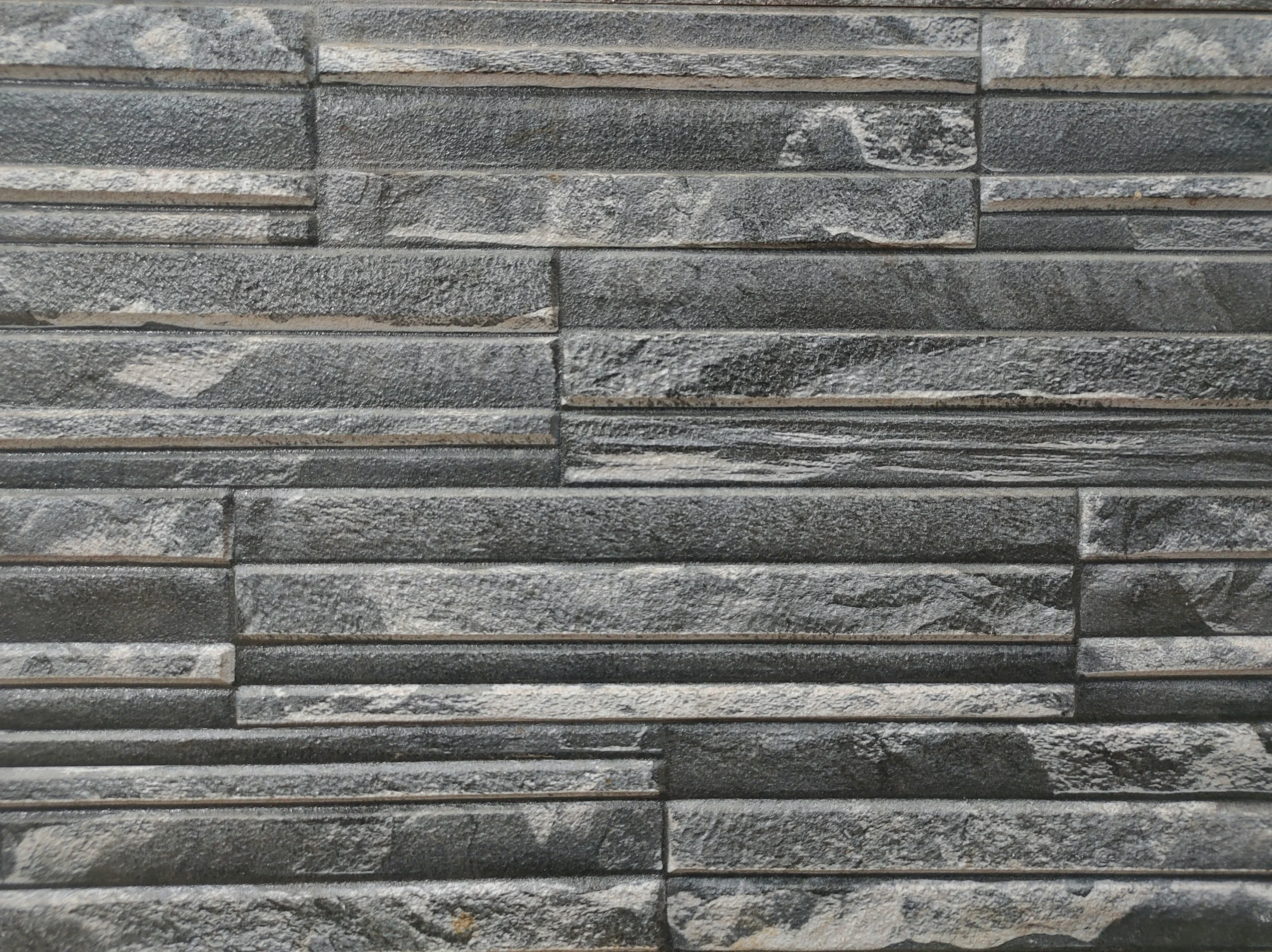
When you are specifying fire rated stone veneer for a commercial project, the first question every GC or PM asks is not about aesthetics—it is whether the assembly will pass the fire marshal’s inspection on the first pass. That concern drives every decision from material selection to installation sequence, and it is the reason most manufactured veneer suppliers cannot give you a straight answer on ASTM E84 or NFPA 285 compliance without burying the caveats in fine print.
Here is the reality: natural thin stone veneer from a factory like Top Source Stone is inherently non-combustible. Our ledger panels—precision-split from quarried granite, slate, or quartzite—consistently test at a Flame Spread Index of 0–10 under ASTM E84, placing them firmly in Class A. That is not a marketing claim; it is a physical property of stone itself. No cement binders, no organic aggregates, no chemical additives that degrade or spall under extreme heat. The challenge is not the stone—it is the system. The complete wall assembly, including sheathing, cavity space, and anchoring method, must meet IBC Chapter 14 and, for buildings over 40 feet, possibly NFPA 285. That is where most spec documents fall short, and where a supplier who actually owns the quarry and controls the full production line can make the difference between a seamless approval and a costly rework cycle.
In this guide, the following lays out exactly what you need: the fire code basics that apply to natural stone cladding, a side-by-side comparison of natural versus manufactured veneer fire ratings, the installation sequence for a fire-rated assembly, and how factory-direct pricing from China can cut your material cost by 30–50% while still delivering full ASTM documentation and batch-to-batch color consistency. If your buyer is weighing upfront price against the risk of failing inspection, this is the data you need to make the call with confidence.

Fire Code Basics for Stone Veneer
Natural stone ledger panels are non-combustible by material (ASTM E84 Class A), but your wall assembly determines whether you pass fire inspection.
IBC Chapter 14 (1405.10) governs adhered veneer for exterior walls. The code does not care about the stone alone; it cares about the entire assembly: sheathing, insulation, air gap, and anchoring. A natural stone panel with Flame Spread Index 0–10 means nothing if your substrate is combustible and you skipped the fire-rated gypsum layer. NFPA 285 enters the picture when the assembly includes combustible components like foam insulation or vapor retarders. This is a full-scale wall burn test. Passing it requires a documented system — not just a material data sheet. If you are cladding a building over 40 ft, expect the authority having jurisdiction (AHJ) to request the NFPA 285 report for your specific wall build-up.
ASTM E84 measures surface burning characteristics. Natural stone veneer from Top Source Stone delivers a Flame Spread Index of 0–10 and Smoke Developed Index under 50, earning Class A — the same classification as concrete and gypsum. Here is how the classes break down for cladding specifications:
- Class A (0–25 FSI): Required for buildings over 40 ft, exit enclosures, and corridors. Natural stone and most non-combustible cladding fall here.
- Class B (26–75 FSI): Allowed on lower-rise commercial with sprinkler trade-offs. Typical for some treated wood products.
- Class C (76–200 FSI): Limited to one- and two-family dwellings or buildings under 40 ft with fire-resistant construction.
Factory-direct pricing from our own quarries in Hebei, China cuts material cost by 30–50% compared to US-manufactured thin veneer. MOQ starts at 500 sq ft. The trade-off is lead time — typically 4–6 weeks for container shipment — but our on-site QC ensures 95% batch-to-batch color consistency, so you are not wasting labor sorting panels at the job site. That is a real cost offset when your project schedule has zero float.

Natural vs. Manufactured Veneer Fire Ratings
Natural stone and manufactured veneer both earn Class A under ASTM E84. But how they behave at 1000°F and above determines which you can spec for high-rise assemblies without engineering judgment letters.
The composition difference drives the fire performance gap. Natural stone ledger panels are split directly from quarry blocks — granite, slate, quartzite — with zero organic binders, polymers, or Portland cement. Manufactured stone veneer is cast from a cement-aggregate mix that includes chemical accelerators and iron oxide pigments. Both pass the surface-burning test, but the assembly behavior diverges under sustained heat exposure.
Here are the material properties that matter for fire-rated commercial cladding:
- Density Parameters: Natural stone ranges 2.5–2.8 g/cm³. Manufactured veneer comes in at 2.0–2.4 g/cm³. Lower density means higher porosity, which can trap moisture that turns to steam under fire conditions and causes destructive spalling.
- Thermal Degradation: Natural stone (granite, slate, quartzite) remains intact up to 2000°F. Manufactured veneer begins to spall and crack above 1200°F because the cement matrix undergoes dehydration and differential thermal expansion.
- Weight per sq ft: Our 1–1.5 in natural panels weigh 8–12 lb/sq ft. An equivalent manufactured veneer with the same coverage weighs 10–15 lb/sq ft due to the dense mortar base required for casting, inflating dead load factors.
- Modularity Sizing: Natural ledger panels come in controlled dimensions (4×12, 6×12, 8×16 in) with 95% batch-to-batch color consistency. Manufactured pieces vary dimensionally from pour to pour, expanding layout labor.
The real-world consequence: specify manufactured veneer on a high-rise facade and you are relying on a product that rarely has full-scale fire propagation tracking per NFPA 285 as a standalone cladding. Most manufactured suppliers only provide ASTM E84 data—the basic material-level test. If the inspector asks for assembly-level fire test data and your supplier cannot deliver, you face massive schedule delays. For a deeper look at long-term maintenance costs, reference our sibling article Thin Stone Veneer vs. Manufactured Veneer for Commercial Facades.
Installation Sequence for Fire-Rated Assemblies
A correct commercial staging sequence guarantees that the non-combustible properties of natural panels line up with local building inspectors’ field requirements.
Step 1: Install the substrate and weather-resistive barrier. Use Type X gypsum sheathing over steel studs at 16 in o.c. The WRB must be non-combustible (e.g., fluid-applied membrane or asphalt-impregnated felt). If using foam insulation, verify NFPA 285 compliance for the full assembly. See our substrate types guide for framing details.
Step 2: Attach the Z-bar or metal lath. For ledger panels, a mechanically fastened Z-bar system is preferred. It creates a 0.5–0.75 in drainage cavity that improves fire resistance by allowing hot gases to vent. Use corrosion-resistant galvanized or stainless steel. Fasten at 6 in o.c. vertically and 16 in o.c. horizontally.
Step 3: Apply scratch and brown coat (if using adhered system). Mix Type S mortar per ASTM C270. Apply a 0.5 in scratch coat, score it, let it cure 24 hours. Then apply a 0.375 in brown coat. For mechanically fastened panels, skip this step—panels attach directly to Z-bar with gravity locks and screws.
Step 4: Install the ledger panels. Start at the bottom, working up. Use a level and straightedge. Maintain a 0.25 in gap between panels for thermal expansion. Mechanically fasten at each Z-bar location. For adhered panels, back-butter each stone with Type S mortar and press into the scratch coat.
Step 5: Install weep screeds and expansion joints. Weep screeds at the base of the wall drain moisture. Place them 6 in above finished earth grade or 2 inches above paved structures. Expansion joints are required every 25 ft horizontally and 12 ft vertically for walls over 40 ft.
Specifying Fire-Rated Stone Panels for Large Projects
When compiling submittal paperwork for high-exposure commercial properties, designers must enforce specific geological metrics. Ensure your material section explicitly mandates compliance with ASTM C1670—the standard specification for thin natural stone veneer ledger units. Do not accept broad “non-combustible stone” descriptors without verifiable batch-run charts.
Your formal document layout should track these precise CSI MasterFormat codes to ensure contractors tender accurate pricing benchmarks: Use code 04 43 13 for Stone Masonry Veneer section dividers, specify 04 43 16 for Adhered Thin Veneer specifications, and designate 04 43 33 for modular Natural Stone Ledger Panels. Incorporating these specific parameters into your Section 04 43 00 workflow protects your architectural firm against downstream material substitution disputes.
Top Source Stone produces natural stone ledger panels in granite, slate, and quartzite from our own quarries in Yixian, Hebei. Available standard sizes include 4×12 in, 6×12 in, and 8×16 in. Custom dimensions require MOQ of 500 sq ft. Batch-to-batch color consistency is maintained at 95% hue uniformity, verified by sample logs provided with each shipment.

Fire Insurance & Liability Considerations
Fire insurance premiums for commercial buildings are calculated using the ISO Building Code Effectiveness Grading Schedule and specific construction class ratings. A non-combustible cladding assembly documented to ASTM E84 (Class A) and NFPA 285 can reduce your annual insurance premium by 12–18% compared to an undocumented assembly. That’s a direct P&L impact, not a theoretical benefit.
The liability angle is sharper. If a fire event occurs and your wall assembly uses manufactured veneer without a complete NFPA 285 pass report for the exact build-up, carriers can deny payouts. For GCs carrying professional builder’s risk policies, underwriters strictly check these explicit quality indicators:
- Independent Lab Test Certification: Reject broad supplier self-letters. Carriers require verified Intertek or UL logs showing structural pass thresholds under full thermal tests.
- Single-Vein Quarry Sourcing: Sourcing from a unified quarry block lot links your batch to a traceable geological profile, minimizing variance penalties.
- Z-Bar Cavity Ventilation: Incorporating a 0.5–0.75 inch drainage air gap reduces moisture entrapment risk that can silently compromise binder coats over time.
The financial comparison is straightforward. A factory-direct natural stone panel from Top Source Stone costs $8–12 per sq ft landed. Add $4–6 for the fire-rated sheathing, Z-bar system, and labor. Total installed cost: $12–18 per sq ft. A single liability claim from a non-compliant assembly on a 10,000 sq ft facade can exceed $250,000 in legal fees, rework, and premium increases. The math favors documentation from day one.
Conclusion
Proper specification and installation of fire-rated stone veneer are non-negotiable for commercial projects. As outlined above, natural stone panels inherently meet Class A requirements per ASTM E84, but the full wall assembly—including sheathing, drainage cavity, and anchoring—must comply with IBC Chapter 14 and NFPA 285 where applicable. Sourcing from a quarry owner like Top Source Stone eliminates the 30–50% cost premium of domestic manufactured veneer while providing full ASTM C1670 documentation and batch-consistent color.
Review the product specifications for Natural Stone Ledger Panels, including available sizes, thickness options, and downloadable compliance data. Use the contact form to request bulk pricing or a sample kit for your next commercial cladding project.
Frequently Asked Questions
Is stone veneer fire rated?
Yes, natural stone veneer is fire rated as non-combustible Class A per ASTM E84, but the entire wall assembly including backing and anchoring must meet IBC Chapter 14 requirements. Verify your assembly design with the local fire marshal.
What is the fire rating B1 B2 B3?
B1 (non-flammable), B2 (normally flammable), and B3 (easily flammable) are European fire classification profiles under the DIN 4102 standard framework. Natural stone panels naturally meet B1 non-combustibility thresholds. Confirm the exact code equivalency with your local building department.
How to properly install stone veneer?
Proper installation requires a fire-rated assembly per IBC Chapter 14 with correct backing, flashing, and anchoring, plus a plumb, level wall to avoid visible seam gaps. Always follow the manufacturer’s specific installation guide for fire-rated assemblies.
What CSI code is stone veneer?
Stone veneer typically falls under CSI MasterFormat code 04 43 13 (Stone Masonry Veneer) within Division 04. For adhered thin veneer cuts, specify 04 43 16, and use 04 43 33 for modular ledger units. Verify the specific code with your specifier using the current MasterFormat edition.
Is Type S or Type N better for stone veneer?
Type S mortar exhibits higher bond strength (minimum 1800 psi compressive rating) and is required for all exterior thin stone veneer specifications in commercial setups. Type N (750 psi) is restricted to interior or low-exposure masonry environments. Always check the stone manufacturer’s specification and consult your structural engineer.
