
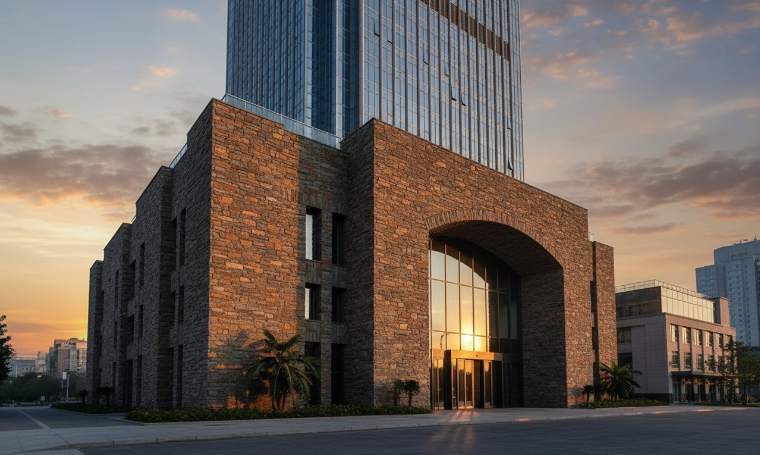
Cement-Backed Engineering (Structural) solves the systemic risk of facade delamination that costs commercial developers millions in liability and remediation every year. While thin-set adhesives often fail under the weight of stone cladding, a concrete-integrated base eliminates the weak link where chemistry meets gravity. Ignoring these structural fundamentals leads to more than just aesthetic cracks; it creates a safety hazard that compromises the long-term viability of the building envelope.
This guide analyzes why mineral-to-mineral bonding and fiberglass reinforcement outperform traditional glue-bonded methods in high-traffic environments. We examine the mechanics of thermal expansion management, the physics of mechanical interlocking, and the specific shear strength metrics required to meet modern engineering specs. By the end of this technical breakdown, you will understand how to verify bond integrity and why a heavier substrate serves as a strategic stabilizer against thermal shock.
Why are traditional glue-bonded panels prone to delamination in exterior use?
Traditional adhesive-based stone cladding fails because chemical polymer chains cannot withstand the relentless cycle of moisture infiltration and differential thermal expansion found in exterior environments.
Water remains the leading cause of panel failure in exterior environments. It penetrates seals at vulnerable points like windows, roof lines, and wall penetrations, leading to internal rot and compromised structural integrity. Once moisture reaches the backing, many standard glues soften or re-emulsify, losing their structural grip on the stone. This trapped moisture also creates ideal conditions for mold growth behind the panel, which destabilizes the substrate bond according to 2026 performance standards.
Impact of UV Exposure and Humidity Fluctuations
Constant exposure to environmental stressors directly breaks down the integrity of chemical adhesives. UV radiation from direct sunlight degrades the polymer chains in lower-grade adhesives, making them brittle and prone to cracking over time. Furthermore, high humidity levels—specifically those exceeding 80% RH—hinder the initial bonding process and weaken existing bonds. Extreme temperature swings combined with moisture accelerate the chemical breakdown of the adhesive layer, rendering the cladding system unsafe.
Differential Thermal Expansion and Contraction
Traditional glue-bonded systems often fail because the stone veneer and the adhesive expand at different rates during temperature cycles. Heating and cooling cycles cause the stone to expand and contract, creating internal shear stress that exceeds the adhesive’s flexibility. Unbalanced panel constructions respond unequally to humidity changes, which forces the decorative face to pull away from the substrate. Rigid adhesives lack the elasticity needed to survive the 2026 thermal shock requirements for high-performance exterior facades.
Surface Contamination and Poor Mechanical Interlocking
Failures often start during production when contaminants prevent the glue from achieving a deep, permanent bond with the stone surface. Oily residues, stone dust, and manufacturing debris on the back of the stone create a physical barrier that prevents proper chemical adhesion. Traditional glues often rely on surface tension rather than a deep mechanical interlock with the stone’s pores. Additionally, a lack of controlled pressure and temperature during the bonding phase leads to inconsistent contact points across the panel, creating weak spots that eventually lead to delamination.
Would you like me to analyze the specific shear bond strength of our cement-backed mineral-to-mineral system compared to these traditional adhesives?
How does the Cement-Mortar base create a superior “Mineral-to-Mineral” bond?
Transitioning from organic polymer glues to a cementitious mortar base replaces temporary surface adhesion with a permanent crystalline bridge that fuses the natural stone cladding directly to the structural substrate.
Crystalline Hydration and CSH Development
The cement-mortar base relies on the hydration of tricalcium silicates (C₃S) and dicalcium silicates (C₂S) to initiate the curing phase. During this process, the chemical reaction produces calcium silicate hydrate (CSH), which forms a dense, microscopic network. These CSH crystals do not just sit on the surface; they grow directly into the microscopic irregularities and rifts of the natural stone. This creates a structural bridge where the stone and the backing become a single, coherent mineral mass.
By 2026 standards, this crystallization process ensures the bond reaches its full design strength early in the lifecycle and continues to stabilize across decades. Unlike chemical adhesives that lose elasticity and “ghost” from the surface, this mineral bond thrives in the same alkaline environment as the wall itself.
Capillary Action and Interfacial Bonding
Physical suction plays a critical role during the application of the cement backing. Capillary action draws fine mortar fluids and minerals deep into the pores of the slate or quartzite. This movement creates a high-density paste layer at the micro-level interface, eliminating the voids that typically trap moisture.
| Bonding Feature | Traditional Glue-Bonded | Mineral-to-Mineral (Cement) |
|---|---|---|
| Primary Mechanism | Surface tension / Chemical film | Crystalline Hydration (CSH) |
| UV & Heat Resistance | High risk of embrittlement | Inherently UV Stable |
| Interface Density | Prone to micro-voids | High-density particle packing |
| Longevity Trend | Degrades over time | Strengthens via carbonation |
By eliminating these microscopic gaps, we prevent moisture from weakening the bond from within. This particle packing density ensures that the junction between the stone and the cement backer remains impermeable to the freeze-thaw cycles that often destroy mesh-backed or glue-bonded alternatives.
Structural Densification and Carbonation Strength
The bond strength actually improves as the material ages through a process called natural carbonation. Progressive carbonation of calcium hydroxide within the mortar provides additional cementing strength and crack-healing capabilities. This ongoing mineral densification transforms the panel from a composite product into a monolithic architectural element.
Natural stone and cement share nearly identical thermal expansion coefficients. This compatibility reduces internal shear stress at the mineral-to-mineral interface during extreme seasonal cycles. In high-temperature regions like the Middle East or high-moisture zones in Southeast Asia, this shared physical behavior prevents the stone from popping off the substrate—a common failure in resin-bonded systems that expand at different rates than the stone they hold.
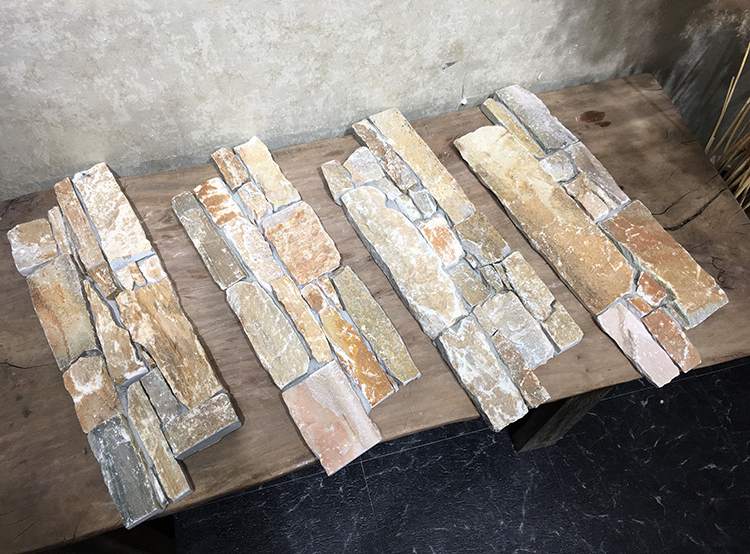
Premium Stacked Stone for Architectural Excellence
Why is Fiberglass Mesh reinforcement essential for long-term structural integrity?
Fiberglass mesh serves as the internal structural skeleton that bridges the architectural beauty of natural stone with the industrial durability required for high-performance exterior cladding systems.
Reinforcement at the core of a cement-backed stone panel determines how well the unit handles the physical stresses of a building’s lifecycle. Traditional methods often rely on the adhesive alone, but adding a fiberglass layer creates a composite material capable of absorbing energy that would otherwise cause the stone to fail. This stabilization is vital for maintaining the bond between the natural stone face and the mineral base under constant environmental pressure.
Superior Crack Control and Distribution
The mesh framework within the stone panel’s backing manages physical stresses by distributing mechanical loads evenly across the entire surface. This prevents localized pressure points from developing into structural fractures. It minimizes the formation of hairline cracks caused by settling or minor movements in the building substrate. By containing internal tension, the mesh ensures that natural stone layers remain securely attached to the cement base throughout 2026 and beyond.
- Mechanical loads spread across the panel to eliminate stress concentration.
- Stabilization prevents hairline cracks from expanding into full-thickness fractures.
- Internal tension management keeps the stone-to-cement bond intact during structural settling.
Corrosion Resistance for Harsh Environments
Fiberglass does not react with moisture or oxygen, giving it a distinct advantage over metal reinforcements in exterior stone cladding. This material choice eliminates the risk of “rust-bursting,” where metal expands during oxidation and shatters the surrounding concrete. Fiberglass remains chemically inert when exposed to the alkaline environments typical of cement-based mortars. This resistance to environmental decay ensures the internal reinforcement stays functional for the intended lifespan of the structure.
- Non-reactive properties prevent structural damage from oxidation and moisture.
- Chemical stability in alkaline cement prevents reinforcement degradation over time.
- Long-term durability exceeds traditional steel-mesh alternatives in coastal or humid regions.
Enhanced Flexural Strength and Impact Resistance
Integrating high-quality mesh improves the panel’s ability to withstand bending and external impacts. Reinforced panels exhibit high tensile strength, so they resist wind loads and thermal expansion without snapping. The mesh provides a safety layer that holds stone fragments together even if the panel suffers a direct heavy impact. This structural rigidity simplifies logistics and handling, which reduces breakage rates during transport to the job site.
- High tensile strength allows panels to resist wind pressure and thermal cycles.
- Secondary safety containment keeps fragments attached in the event of severe impact.
- Increased rigidity lowers the risk of fracture during shipping and on-site installation.

Can your cladding survive the thermal shock of extreme temperature fluctuations?
Thermal shock resistance in 2026 architecture requires material parity; cement-backed stone panels eliminate the internal shear stress that causes traditional resin-bonded systems to delaminate during rapid solar-to-rain transitions.
Managing Differential Thermal Expansion
Natural stone and its substrate expand at different rates, a physical reality that often leads to catastrophic failure in composite cladding. When a stone veneer is bonded to a disparate material like plastic or organic resin, the resulting mechanical tension during temperature spikes tears the adhesive bond apart. We solve this by using a cement-mortar backing that shares a similar mineral profile with the stone itself, allowing the entire panel to move in relative unison.
- We align expansion coefficients between the stone veneer and the cement backing to neutralize internal mechanical stress.
- Sudden temperature spikes from intense 2026 solar exposure followed by cold rain can cause rigid, poorly matched materials to crack.
- Standardized testing confirms that cement-bonded systems maintain their structural shape better than plastic-based composites under extreme heat.
Resistance to Freeze-Thaw Cycle Damage
Water penetration followed by freezing creates internal hydraulic pressure that can easily delaminate weak cladding systems. In colder climates, this cycle happens daily during winter, acting like a wedge that slowly pries the stone away from its base. Our system utilizes high-density minerals and a non-porous bonding method to ensure that moisture has no place to settle and expand.
- The dense molecular structure of natural stone like slate and quartzite naturally resists the water absorption that fuels freeze-thaw damage.
- Applying professional-grade sealants prevents moisture from entering microscopic pores and expanding as ice.
- Our manufacturing process ensures the bond between stone and cement remains intact even after repeated 2026 winter freeze cycles.
Adhesive Stability in High-Heat Environments
Traditional chemical glues often soften when surface temperatures rise, leading to total panel failure in sun-drenched regions. In 2026, where global temperatures frequently push building materials to their limits, relying on organic adhesives is a liability. Mineral-based bonds provide far superior stability because they do not rely on volatile chemicals that degrade under UV light and heat.
- Mineral-to-mineral bonds provide stability when surface temperatures exceed 70°C in harsh summer conditions.
- We avoid standard epoxies that become brittle or lose grip during 2026 heat waves.
- Mechanical interlocking within the cement base acts as a secondary failsafe against thermal degradation.
Structural Integrity Under Rapid Cooling
Rapid cooling causes materials to shrink quickly, which can pull cladding away from the wall if the substrate doesn’t contract at the same speed. This phenomenon is common in high-altitude projects or desert environments where nightfall brings a 30-degree temperature drop in minutes. Our heavy-duty cement panels mitigate this risk through sheer thermal mass and internal reinforcement.
- The high thermal mass of our 85kg/sqm panels helps regulate the speed of temperature changes within the material.
- Fiberglass mesh reinforcement absorbs the tension created when the exterior face cools faster than the interior bond.
- Contractors in 2026 specify these reinforced systems for projects where daily temperature swings are most severe.

Why do engineering specs prioritize “Mechanical Interlocking” over chemical adhesion?
Engineers prioritize mechanical interlocking because physical impedance provides a permanent fail-safe against shear forces and environmental degradation that eventually compromise pure chemical bonds.
Physical Impedance and Surface Area Optimization
Mechanical interlocking transforms the bond from a surface-level attachment to a structural integration. By utilizing the Z-shape interlocking system, the panel design increases the effective surface area available for the mortar to grip. This geometry allows the cementitious base to flow into the microscopic pores and macroscopic ridges of the natural stone. Unlike flat-backed panels, these interlocking patterns create physical hooks that resist gravity and wind-load shear forces through material density rather than just surface tension.
| Bonding Metric | Standard Chemical Adhesive | Mechanical Z-Interlock |
|---|---|---|
| Primary Strength Factor | Surface tension & Molecular attraction | Physical impedance & Geometry |
| Shear Force Resistance | Limited to adhesive tensile limit | Structural (Up to 7.22 MPa) |
| Environmental Aging | Degrades with UV and moisture | Stabilizes over time via hydration |
Our 2026 manufacturing protocols employ infrared cutting to ensure these interlocking patterns remain precise across thousands of square meters. This precision ensures that every stone panel seats perfectly within the next, creating a modular blueprint that eliminates the “stepped” gaps common in lower-tier cladding. The increased contact points allow for a more uniform distribution of weight, which is vital for heavy-duty natural stone reaching 80kg per square meter.
Long-Term Stability Against Environmental Stress
Chemical adhesives face an uphill battle against the “delamination trap.” In exterior facades, water infiltration and UV exposure eventually weaken organic polymer chains within glues. In contrast, mechanical bonds rely on the physical shape of the material, which does not “evaporate” or break down under high-heat cycles. By using a cement-mortar base, the panel facilitates a mineral-to-mineral bond that manages thermal expansion coefficients (CTE) ranging from 7–13 × 10⁻⁶/°C.
- Mechanical systems accommodate the natural expansion of stone during 2026 thermal cycles without cracking the bond line.
- Natural stone panels avoid structural failure by transferring lateral loads through the physical connection of the “male-female” interlocking edges.
- Engineering specs for high-wind zones mandate this approach to prevent stone fallout caused by adhesive fatigue.
Synergy with High-Strength Epoxy Adhesives
The most robust architectural designs utilize a dual-bond strategy. We combine the physical Z-shape interlocking with specialized high-strength epoxy resins. While the mechanical shape provides the structural skeleton, the epoxy fills any microscopic voids to ensure a hermetic seal against moisture. This hybrid approach ensures that even if one mechanism is stressed, the other maintains the panel’s position on the substrate.
Quality control teams perform three-stage inspections to verify the integrity of both the mechanical fit and the adhesive application. By meeting rigorous 2026 standards, we provide B2B partners with a cladding solution that satisfies the most demanding commercial safety requirements. This redundancy eliminates the risk of stone fallout, protecting both the building’s residents and the distributor’s reputation.
Would you like me to draft a technical comparison between Z-shape interlocking and standard rectangular panels for your next procurement guide?
Is the 85kg/sqm weight of cement panels a strategic advantage for adhesion?
While often mistaken for the panel’s net weight, the 85kg/sqm specification represents a critical structural load-bearing threshold that ensures the substrate remains rigid and dimensionally stable under the constant vertical stress of natural stone.
Structural load limits for stone veneer support
The 85kg/sqm specification defines the maximum load-bearing capacity of the cement substrate. This rating is fundamental for supporting heavy natural stone veneers, such as the 3-4cm thick Slate or Gneiss panels from Top Source Stone, without risking structural failure. Since high-density stone panels typically exert a downward force of 60kg to 80kg per square meter, using a substrate with an 85kg/sqm limit provides the necessary safety margin to prevent the backing board from bowing or warping under gravity.
- Architectural standards in 2026 require substrates to handle the static weight of stone combined with dynamic environmental pressures like wind load.
- A high weight capacity prevents the backing board from deforming under the constant vertical pull of the stone.
- Rigid cement bases provide a stable foundation that stops microscopic movements from fracturing the primary adhesive bond.
Substrate density and mechanical bond stability
High-capacity cement panels utilize a specific density that creates a superior surface for mineral-to-mineral interlocking. Unlike lightweight alternatives that may be overly porous or structurally weak, these dense boards offer a surface that allows liquid adhesives to penetrate and anchor deeply into the substrate. This controlled porosity ensures that the adhesive does not lose its moisture too rapidly, allowing for a complete and stronger chemical cure.
- Denser cement boards provide a strong surface that facilitates deep anchor penetration for liquid adhesives.
- Higher density prevents the board from wicking moisture too quickly out of the mortar, ensuring a controlled curing process.
- Stable substrates maintain their exact dimensions during temperature shifts, which reduces physical stress on the bond between the stone and the board.
Managing vertical shear stress in exterior walls
The strategic advantage of this specification lies in the synergy between the board’s load capacity and the adhesive’s shear strength. Engineers prioritize the ratio between the mass of the cladding and the tensile bond strength of the chosen adhesive system to ensure long-term adhesion. Using a substrate rated for 85kg/sqm creates a robust safety envelope for stone panels, accounting for both the dead load of the material and potential seismic vibrations or thermal shocks.
- Engineers focus on the relationship between the panel mass and the tensile bond strength of the specific adhesive system.
- A substrate rated for 85kg/sqm provides a necessary safety margin for natural stone panels that weigh between 40kg and 60kg.
- Properly specified cement boards ensure the entire wall assembly performs reliably under combined vertical loads and environmental vibrations.

How to verify the bond strength of your supplier’s cement backing?
Reliable verification of cement-backed stone panels requires a transition from visual inspections to empirical, multi-stage testing protocols that validate the mineral-to-mineral interface.
Standardized Pull-Off Testing (ASTM C1583)
We evaluate the tensile strength of the bond between the natural stone and the cement backing using calibrated pull-off equipment. This empirical method removes guesswork by quantifying the exact force required to disrupt the panel’s structural integrity.
- Technicians apply a portable pull-off tester to a bonded stone sample to measure the exact force required to cause a failure.
- We analyze the failure point; a high-quality bond results in a failure within the stone or the cement itself, not at the adhesive interface.
- Engineers verify that results meet or exceed the 2026 industry safety standards for vertical exterior cladding.
Shear Strength and Mechanical Load Analysis
Testing must address the ability of the cement-mortar base to resist gravity and sliding forces in high-impact environments. This ensures that the heavy-duty nature of the 85kg/sqm weight capacity translates into actual on-wall stability.
- Labs perform controlled shear tests to simulate the long-term weight stress of 8-13 lbs per square foot on vertical surfaces.
- The “mineral-to-mineral” bond between the stone and the concrete base prevents lateral shifting over decades of use.
- We confirm the backing maintains structural integrity under simulated load conditions without delamination or internal slippage.
Non-Destructive Acoustic and Digital Inspection
Modern 2026 verification techniques allow for internal inspection without damaging the stone panels. This provides a “X-ray” view into the quality of the internal epoxy-cement interface.
- Acoustic emission monitoring detects micro-cracks or voids within the epoxy-cement interface that remain invisible to the naked eye.
- We utilize digital image analysis or CT scanning on random batch samples to ensure consistent adhesive coverage across the entire panel.
- Quality control checks for uniform penetration of the high-strength epoxy into the stone pores and the cement substrate.
Thermal Cycle and Aging Simulation
Bond longevity depends on the panel’s reaction to extreme temperature swings and moisture exposure. Without these simulations, a panel that passes an initial pull-off test might still fail after one winter season.
- Samples enter environmental chambers to undergo rapid freeze-thaw cycles, testing the absolute limits of thermal expansion.
- We examine the bond after prolonged UV and moisture exposure to ensure the epoxy remains flexible and resilient.
- This testing guarantees that the integrated fiberglass mesh continues to reinforce the cement base even after years of simulated weathering.
Conclusion
Choosing cement-backed systems ensures that commercial facades maintain structural integrity against thermal stress and environmental wear. This mechanical interlocking approach eliminates the risks associated with glue-based delamination while meeting strict architectural safety standards. We engineered these panels to provide a permanent bond that remains secure for the life of the building.
Review our technical data manual or request a physical sample to verify the bond strength for your specific project requirements. Our team can help you select the right stone panels to meet your local safety and compliance standards.
Frequently Asked Questions
What is the shear bond strength of cement backed panels?
Cement backed panels typically exhibit a shear bond strength ranging from 200 to 350 psi (1.4 to 2.4 MPa), depending on the specific thin-set mortar or adhesive used. This mechanical bond is significantly more durable than traditional glue-bonded panels, which are prone to delamination due to moisture exposure and environmental stress.
Does the concrete base absorb moisture over time?
Yes, concrete is naturally porous and will absorb moisture through capillary action. Water infiltration is a primary driver of panel degradation, particularly at wall penetrations or where seals fail. To prevent rot, mold growth, and internal structural stress, it is essential to use high-quality sealants and ensure proper drainage in exterior applications.
Can I cut cement backed stone with a standard wet saw?
Yes, cement backed stone can be cut with a standard wet saw equipped with a continuous-rim diamond blade. The wet saw is preferred because it reduces dust and prevents the cement backing from overheating or cracking during the cutting process.
Do cement panels require additional mechanical ties?
For installations exceeding 10 feet in height or in areas with high seismic activity, additional mechanical ties or “Z-clips” are strongly recommended. While the cement-to-cement bond is robust, mechanical ties provide a secondary safety factor against delamination caused by extreme thermal expansion and contraction cycles.
What is the cure time for cement-to-cement bonding?
Standard cure time for a full mechanical bond is 24 to 48 hours for initial set, with a full cure reached at 28 days. Environmental factors such as high humidity (above 80% RH) and temperatures below 70°F (21°C) can significantly hinder the bonding process and extend drying times.
Are these panels suitable for curved wall applications?
Cement backed panels are rigid and generally not suitable for tight curves. However, for large-radius curves, they can be installed using a “score and snap” method on the backing or by utilizing narrower panel segments to approximate the curve. For any curved application, ensure that the substrate is properly prepared to handle the differing expansion rates of the materials.
