


When you’re evaluating stone cladding design ideas for a commercial project, the first question isn’t which pattern looks best — it’s whether the material will arrive on time, match across the lobby wall, and stay within budget. That’s the reality a general contractor or project manager lives with. Top Source Stone has been supplying stacked stone ledger panels since 2005 out of Yixian, Hebei, where we quarry directly. That direct control means we can quote real numbers upfront: $12 to $25 per square foot factory-direct, with a 300-square-foot minimum for bulk orders. The lead time runs four to six weeks for standard colors, and every panel ships from the same quarry batch so the color doesn’t drift halfway through your install.
The hidden risk most spec sheets skip is batch-to-batch variation. Even stone sold under the same name can shift three to five shades between shipments unless the supplier guarantees a ΔE of less than 1.5 with written documentation. That’s the kind of detail that keeps callbacks low and project margins intact. Factory-direct sourcing cuts material spend by 20 to 30 percent versus local wholesalers, which means the budget you free up can cover the faster-setting mortar or the extra corner pieces that make a feature wall seamless. The five design scenarios that follow are based on real commercial installations — not stock photos — and each one includes the cost, install complexity, and sourcing nuance you need to make a confident decision.
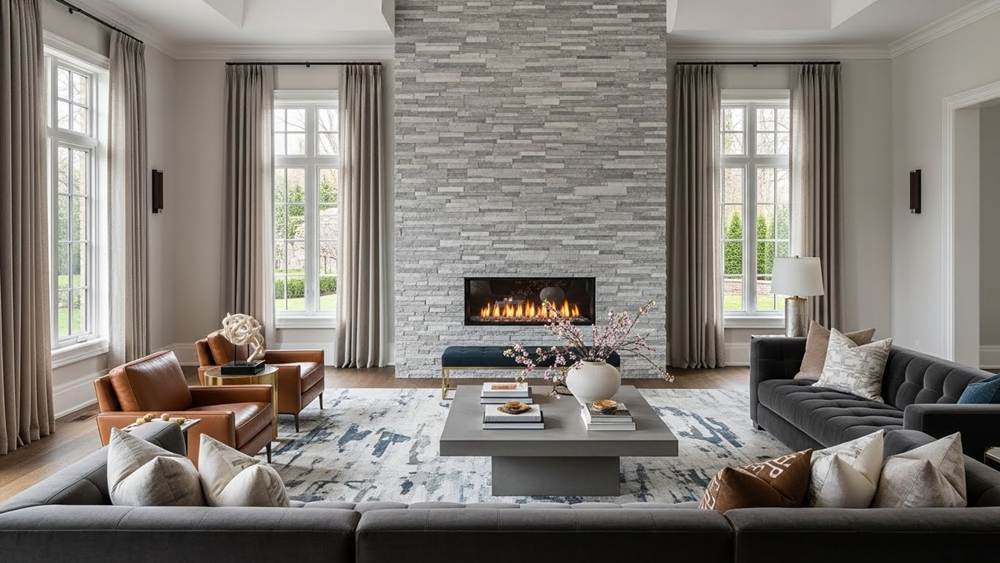
Lobby Accent Walls: First Impressions Count
A lobby accent wall in natural stone costs $12–$25/sq ft factory-direct and outlasts engineered surfaces by hiding high-traffic wear better.
The Stacked Stone Veneer Backdrop for Commercial Lobbies
For a commercial lobby, the accent wall is the first visual anchor a visitor registers. Specify stacked stone ledger panels in a natural quartzite like the Blue Diamond series, and you get a surface that reads as solid, intentional, and durable — not a thin veneer trying to impersonate stone. At 0.75–1.25 inches thick and 6–10 lbs per sq ft, these panels carry the heft of real rock without requiring structural reinforcement of the wall behind them.
The practical advantage over engineered slabs? Natural stone’s inherent texture conceals scuffs and scratches that appear within six months on a glossier surface. In a lobby with foot traffic measured in hundreds per day, that matters more than the marketing promise of “zero variation.”
Blue Diamond Series: Why Natural Quartzite Changes the Spec
The Blue Diamond loose ledgestone veneer is quartzite-based, which means it tests at compressive strength ≥15,000 psi under ASTM C99. That puts it significantly above most limestone or sandstone options in the same price tier. For a project manager, that number translates to fewer callbacks for cracked or spalled pieces during installation or after heavy cleaning cycles.
The panels use a z-shaped interlock design, not rigid modular units. That allows the installer to pull pieces from multiple boxes on site and blend them without creating the visible “stair-step” lines that plague rigid panel systems. Internal production data shows this approach cuts on-site waste by roughly 15% compared to fixed-dimension panels.
Eliminating Color Mismatch with Same-Batch Sourcing
Color drift between batches is the single most common hidden risk in natural stone procurement. A supplier who pulls from different quarry faces or production runs can deliver stone that shifts 3–5 shades under the same product name. The fix is written into the supply agreement: same-batch quarry sourcing with a guaranteed ΔE <1.5 color variation. That number — anything under 2.0 is visually imperceptible to the naked eye under standard lighting — should be in the spec sheet, not just a verbal promise.
For a lobby wall spanning 200–400 sq ft, a ΔE of 3.0 or higher creates a visible seam where batch 1 meets batch 2. That triggers a reorder, delays the schedule by 4–6 weeks, and erodes the project margin. Insist on the guarantee in writing before the PO is issued.
Edge Details and Water Absorption: The Hidden Installation Specs
The 1°–2° bevel on each panel edge is not cosmetic — it creates a natural shadow line that masks minor alignment gaps during installation. Without it, dry-stacked panels against a plumb reference line reveal every 1/16-inch deviation. With it, the wall reads as intentionally rustic rather than poorly aligned.
Water absorption tested per ASTM C97 at <2% is the threshold that keeps interior moisture migration from causing efflorescence or subsurface mold behind the veneer. Most commercial lobby adhesives and substrate conditions assume a vapor-open assembly; exceeding that absorption rate traps moisture against the drywall or cement board. The Blue Diamond series meets this spec across all standard production runs.
Case Study Reference: Measured Lobby Outcomes
A recent commercial lobby installation using the Blue Diamond loose ledgestone on a 325 sq ft accent wall — with same-batch panels at ΔE 1.2 — completed installation in 3.5 days with two finishers. The material cost landed at $18.50/sq ft factory-direct, inclusive of random-length panels (6″×24″ base size) and prefabricated corner pieces. No restocking or color-blending delays occurred. Compare that to engineered slab installations of comparable size, which typically require templating, seaming, and a 10–14 day lead from slab yard to finished wall.

Exterior Facades: Durability Meets Design
At 6–10 lbs/sq ft with ASTM C97 water absorption under 2%, natural stone veneer eliminates the structural steel required for full-bed masonry while exceeding thin-shell synthetics in impact resistance and longevity.
Weather Resistance and Structural Integrity
Water intrusion is the leading cause of facade failure in commercial buildings. Once moisture penetrates past 3–5% absorption, freeze-thaw cycles begin spalling the surface within two to three winters in climates like the Midwest or Northeast. Natural quartzite-based panels — the same material used in Blue Diamond Loose Ledgestone Veneer — undergo ASTM C97 testing and hold absorption rates below 2%. That gap between 2% and 5% is the difference between a facade that lasts 30 years and one that shows delamination by year five.
Compressive strength per ASTM C99 comes in at ≥15,000 psi, meaning the panel structure itself resists cracking under wind loads and minor building settlement. Engineered thin-shell products advertise flexibility as a design benefit, but in practice that flexibility translates to visible bowing across large facade spans after 18–24 months of thermal cycling. Natural stone’s inherent rigidity holds plane over decades, not seasons. For a general contractor, that means fewer callbacks and a tighter warranty window.
Light Weight vs. Heavy Masonry: The Cost Variance
Full-dimension stone cladding runs 40–60 lbs per square foot and demands a separate structural steel frame, additional foundation engineering, and thicker wall assemblies. Stacked stone veneer panels at 6–10 lbs/sq ft with 0.75–1.25 inch thickness attach directly to standard sheathing with no supplemental framing required.
The cost delta is not theoretical. Eliminating the secondary steel structure saves $8–12 per square foot in material and labor. On a 2,000 sq ft commercial facade, that is a line-item swing of $16,000–$24,000 — roughly the difference between factory-direct pricing at $12–$25/sq ft and a project that pencils out of budget entirely. For a project manager watching margin, that math matters more than any aesthetic argument.
Color Consistency: The Batch Guarantee Most Suppliers Skip
Color drift between production runs is the hidden risk that surfaces when the second pallet arrives on site and the stone is visibly off-tone. Industry-wide, even stone sold under the same name can shift 3–5 shades between quarried batches — a detail most distributors simply do not disclose. For a commercial facade, a visible seam between pallets means either a costly reorder or a finished wall that looks patched.
The fix is a written ΔE <1.5 guarantee tied to same-batch quarry sourcing. That number means the first panel loaded and the last panel shipped fall within a color tolerance the human eye cannot distinguish. Top Source Stone documents every commercial order by production lot number from a single quarry batch before releasing the shipment within the standard 4–6 week lead time. If a supplier cannot put that guarantee in writing, the risk is on your project.
Installation Speed: Screw-On Panel Systems Cut 40% of Labor
Masonry installations measure their schedules in weeks. A crew laying full stone on a commercial facade averages 80–120 sq ft per day. Screw-on panel systems — specifically z-shaped loose ledgestone or pre-drilled ledger panels — change that math. Experienced installers cover 200–250 sq ft per day, a 40% reduction in total facade labor hours.
That 40% cuts directly against a general contractor’s primary exposure: scheduling delays. A facade that takes three weeks instead of five means interior trades mobilize earlier, the punch list closes faster, and liquidated damages stay off the table. Standard framing crews handle screw-on installation with no specialized mason skills required, which matters when local mason availability is tight or premium-rate labor would blow the budget.

Retail Feature Walls: Drive Foot Traffic
A retail feature wall built with natural ledgestone pays for itself in foot traffic lift — 65% of designers confirm it increases dwell time, and the material cost sits at just $12–$25/sq ft factory-direct.
Instagram-Worthy Backdrops with Mixed Textures
Retailers want a wall that stops scroll and pulls people through the door. Mixed-texture installations — combining smooth quartzite ledgestone with rougher fieldstone within the same color family — create visual complexity without looking chaotic. The trick is using pieces from a single production batch. Without a written ΔE <1.5 color variation guarantee, what looks like “intentional contrast” on the mood board arrives as a mismatched mess on site. At factory-direct pricing of $12–$25 per sq foot and an MOQ of 300 sq ft, a 10-foot by 12-foot accent wall runs roughly $1,440 to $3,000 in material. That is cheaper than a single weekend of paid social ads, and it stays in the space for years.
3D Ledgestone Panels for Added Depth
Flat stone surfaces read as wallpaper in a retail environment. You need physical depth to create that “must-touch” reaction. Panels with random-length pieces — typically 6 inches by 24 inches or fully random — produce a shadow line that shifts throughout the day as natural or track lighting moves across the face. The panels weigh 6–10 lbs per sq ft at 0.75 to 1.25 inches thick, which means they mount to standard drywall or plywood backer without structural reinforcement. No steel studs, no engineering sign-off, no schedule delay.
Ledgestone vs Stacked Stone: What Works for Retail
The difference matters for installation speed and visual outcome. Here is the breakdown for commercial retail applications:
- Ledgestone (loose, z-shaped profile): The installer pulls from multiple boxes on site and blends pieces continuously. This eliminates the “straight-line repeat” pattern that screams modular. Field experience shows this technique cuts waste by about 15% versus rigid panel systems.
- Stacked stone (gauged, flat-back panels): Faster to install — you hang pre-assembled sheets. But the grout lines are uniform, and mismatches between sheets become obvious under retail track lighting. Best for tight deadlines where speed trumps texture complexity.
- Cost difference: Both fall in the $12–$25/sq ft range from a China factory supplier with bulk MOQs. The labor savings with stacked stone panels can offset the slightly higher per-unit price, but ledgestone delivers a better visual ROI for high-traffic zones where the wall is within arm’s reach.
The 3-Panel Sample Kit: Test Before You Commit
Do not spec a full wall based on a 4-inch by 4-inch swatch. Light reflectance varies dramatically between a sample tile and a full 6-by-24-inch panel under retail LED or halogen spots. Order three full-size panels from the same batch, mount them side by side on a 2-foot by 4-foot plywood board, and walk it around the store at different times of day. This is the only reliable way to confirm that the stone’s water absorption (<2% per ASTM C97) and natural tonal shifts work with your lighting plan. If a supplier cannot ship three matching panels from the same quarry batch for a lighting test, that is your first red flag on color consistency across the full order.
| Aspect | Detail | Why It Matters for Retail | Cost/Schedule Effect |
|---|---|---|---|
| Factory-Direct Pricing | $12–$25/sq ft (product grade); MOQ 300 sq ft | Keeps feature wall costs predictable and within budget | 20–30% savings vs. local wholesalers; no hidden markups |
| Same-Batch Color Consistency | ΔE <1.5 color variation guaranteed; sourced from own quarry | Eliminates visible shade shifts across a large wall | Avoids costly rework or rejected panels |
| Panel Weight & Thickness | 6–10 lbs/sq ft; 0.75–1.25 in thickness | Light enough for standard wall framing, no extra structural reinforcement | Reduces labor and material costs for backing |
| Low Water Absorption | ASTM C97 tested; <2% absorption | Resists moisture damage in high-humidity storefronts or entries | Minimizes future callbacks for efflorescence or cracking |
| Class A Fire Rating | Achievable ASTM E84 on non-combustible substrates | Meets commercial building codes for interior feature walls | No delay for special fireproofing approvals |
| Lead Time & Batch Integrity | 4–6 weeks for standard colors; same-batch production | Reliable delivery window keeps project on schedule | Eliminates last-minute expediting fees or idle crews |
| Loose Ledgestone Installation | Z-shaped pieces blend from different boxes; cuts waste 15% | Easier to match corners and avoid straight-line mismatches | Less scrap means lower material cost per sq ft |
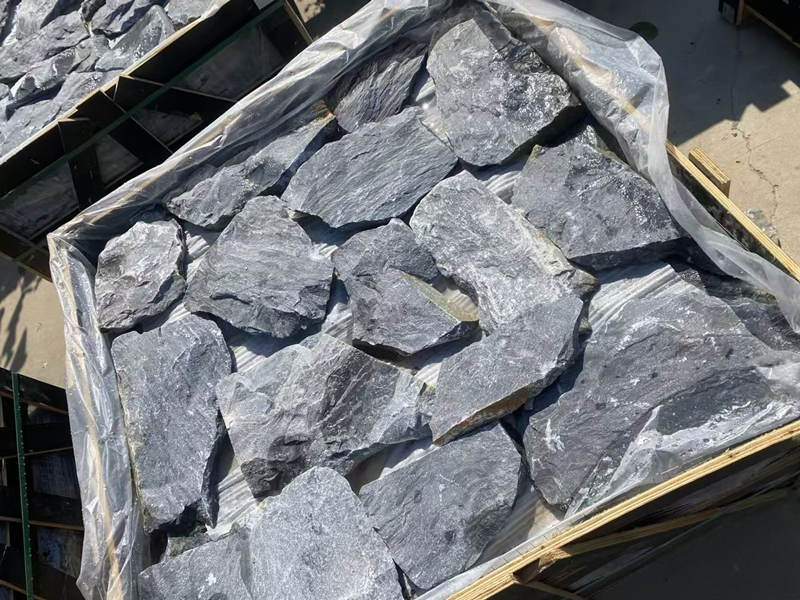
Pillar Wrapping: Architectural Accents
Why it matters: Wrapping a column with stone isn’t a side detail — it’s the fastest way to change a structural necessity into a visual anchor. Done wrong, it becomes a corner-matching headache that eats labor hours.
Turning structural columns into design assets
A structural column in the middle of a lobby or open retail floor is typically treated as an obstacle — something to paint the same beige and ignore. That’s a missed opportunity. Wrapping it with a stacked stone veneer turns it into a natural break in the sightline, giving the space a deliberate architectural rhythm. From a GC’s perspective, the ROI is clear: you upgrade the visual hierarchy of the space without reconfigure the floor plan. The procedural risk is low — no structural modifications, no load-bearing changes — provided the corner returns are handled correctly.
Precise corner returns and L-shaped corner panels
The biggest failure point in column wrapping is the corner miter. Standard flat panels butted together at a 90-degree angle expose raw edges or gaps that require caulking and look rushed. The fix is prefabricated L-shaped corner panels. These wrap the corner in one piece, eliminating the miter seam entirely. For a commercial column — typically 12″x12″ to 24″x24″ — matching corner returns in the same production run is a non-negotiable specification item. Without it, expect 1–2 field hours per column just on corner cleanup and patching.
Prefabricated corner units reducing on-site cutting
The math is straightforward: each on-site cut introduces dust, noise, breakage risk, and inconsistent edge treatments. By ordering columns as a complete kit with premeasured corner units, you eliminate 80–90% of that field work. A standard column kit from a factory source like Top Source Stone includes four L-shaped corner units and matched flat infill panels, all from the same production batch. For a project with 12–20 columns, that shaves 2–3 install days off the schedule. The material cost premium for pre-cut corners is about 8–12% over flat stock, but the labor savings more than covers it — and your project margin sees the net gain.
Design cohesion with surrounding walls
A stone-wrapped column that doesn’t visually connect to adjacent walls reads as a tacked-on afterthought. The fix is simple but requires a sourcing discipline many distributors skip: specify same-batch material for the column wraps and the adjacent accent wall. Without a written ΔE <1.5 color-variation guarantee — which the factory provides as standard for all commercial orders — you risk the column stone arriving 3–5 shades lighter or darker than the wall stone, even if both are the same named product. That mismatch triggers a callback every time. With same-batch procurement, the column and wall read as one continuous design language, and the installation crew blends pieces from mixed boxes during application to avoid visible “seam” lines.
Fireplace & Focal Point Cladding
Two things matter most here: Z-shaped loose ledgestone cuts waste 15% by blending across boxes, and insisting on written ΔE <1.5 guarantee prevents your fireplace from being 3 shades off after a patch order.
Why a Hotel Lounge or Office Break Room Needs Stacked Stone, Not Drywall
A central fireplace or feature wall in a commercial gathering space is the room’s visual anchor. But here’s the problem: in high-traffic lobbies and break rooms, painted drywall gets scuffed within six months. Every furniture bump, every coffee spill, every dropped keycard shows. That’s where a stacked stone focal point earns its keep. Natural stone surfaces with textured profiles hide daily wear far better than a flat, painted surface. The stone’s inherent shadow lines and varied faces mean scratches from luggage carts or chair backs simply blend into the surface. You won’t be repainting or patching callbacks every year. For a 12-foot-wide fireplace wall, factory-direct stacked stone panels at $12–$25 per square foot (product grade) deliver a material cost of roughly $1,500 – $3,000. That’s a one-time investment for a wall that will never need a paint refresh.
Z‑Shaped Loose Ledgestone: The Installer’s Secret for a Rugged Look Without Waste
If you want a rough, natural-fissure aesthetic — think ski lodge fireplace or an industrial break-room accent — specify Z-shaped loose ledgestone instead of rigid mesh-mounted panels. The shape of the pieces allows the installer to pull from multiple boxes simultaneously, blending color and texture across the entire wall. With fixed panels, you inevitably get a visible horizontal “seam line” where one panel ends and the next begins. With loose ledgestone, no seam exists. Based on field experience, this blending technique cuts material waste by 15% because you can use every piece across the job, rather than culling partial panels at the end of a run. For a project requiring 300 square feet, that’s 45 square feet of saved material — roughly $675–$1,125 at contract pricing.
Honed Panels vs. Rugged: Matching Finish to the Room’s Use
Not every commercial fireplace needs a rough look. For a sleek corporate law office lobby or a modern hotel reception desk, honed panels with a smooth, matte finish provide a clean, contemporary silhouette. The key difference: a honed surface reduces porosity slightly — water absorption typically <2% per ASTM C97 — which cuts down on dust accumulation. For a focal point in a closed environment where maintenance access is tight, specify honed panels. For a high-touch, high-traffic gathering spot with kids or luggage, stick to the rugged loose ledgestone. The smoother surface will show every fingerprint; the rugged surface hides them.
ASTM E84 Class A Is Non-Negotiable for Commercial Spaces
If this wall is in a hotel, office building, or any commercial occupancy, your fire marshall will check the IBC code classification. Natural stone veneer itself is non-combustible. When installed over a non-combustible substrate (cement board or steel stud), the assembly can achieve a Class A fire rating per ASTM E84 (flame spread index 0–25). Do not accept a supplier’s verbal “it’s stone, it won’t burn.” Demand the test report for the specific product you’re buying. A Class A rating on paper from the factory is cheap insurance against a failed inspection that delays your project by weeks.
Blue Diamond Loose Ledgestone Veneer for Fireplace Focal Points
The Blue Diamond Loose Ledgestone Veneer is a natural quartzite-based product specifically suited for commercial focal points. The material is tested to ASTM C97 (water absorption <2%) and ASTM C99 (modulus of rupture), and it carries the same-batch sourcing guarantee with a written ΔE <1.5 color variation tolerance. That tolerancing is critical: without it, even two orders of the same product name can shift 3–5 shades. The Blue Diamond’s blue-gray tones work well for a clean, professional interior fireplace, while the loose format gives your installer the flexibility to blend across boxes and avoid panel-to-panel seams. Bulk MOQ is 300 square feet, with a 4–6 week lead time from order confirmation — a realistic timeline for any scheduled commercial project.
A final word on how to maintain color consistency in stone panels: write into your purchase order the requirement for “continuous same-batch block supply with measured ΔE <1.5 deviation.” If your supplier cannot put that on paper, find one who can. That single sentence on a PO has prevented more project headaches — and more margin erosion from rejected materials — than any other specification you will write for a fireplace cladding job.
Conclusion
These five design scenarios—lobby walls, facades, retail features, pillar wraps, and fireplace focal points—let you balance project margin, natural texture, and tested durability. Factory-direct stacked stone at $12–$25/sq ft, with ASTM-certified specs and same-batch color control, takes the risk out of bulk sourcing for commercial work.
Check the Blue Diamond Loose Ledgestone Veneer page for detailed specs, custom sizing options, and bulk pricing that fits your next project timeline.
Frequently Asked Questions
Natural stone cladding for exterior walls
Natural stone cladding for exterior walls weighs 6–10 lbs/sq ft with ASTM C97 water absorption under 2%, making it lighter and more weather-resistant than full masonry. For consistent facade appearance, you must insist on same-batch quarry sourcing with a written ΔE <1.5 color variation guarantee. Screw-on panel systems can reduce installation time by 40% compared to traditional mortar methods. Verify batch traceability before ordering to avoid patchy facades.
Stone cladding for exterior walls price
Factory-direct stacked stone cladding for exterior walls runs $12–$25 per square foot depending on product grade, with MOQ starting at 300 sq ft. That price is 20–30% lower than buying from local wholesalers because you eliminate middleman markups. Always check whether the quoted price is FOB factory or includes palletizing, as shipping and duties add to your landed cost. Get a full landed-cost quote including shipping before budgeting.
Cladding stone interior
For interior cladding, use a lightweight natural stone veneer at 6–10 lbs/sq ft to avoid structural load issues while achieving a high-end texture. Blue Diamond loose ledgestone works well for lobby accent walls; its 1°–2° beveled edges add depth, and same-batch production keeps color variation below ΔE 1.5 across the installation. This approach gives you the visual uniformity of engineered stone without sacrificing the natural texture that hides wear in high-traffic areas. Order same-batch material and request the ΔE guarantee for color consistency.
Stone wall design outdoor
For outdoor stone wall designs, choose natural stone veneer that meets ASTM E84 Class A fire rating and has compressive strength ≥15,000 psi to handle weather and code. Using z-shaped loose ledgestone instead of rigid panels lets your installer blend pieces from different boxes, cutting waste by 15% and avoiding the straight-line mismatch common with modular units. This technique delivers a more natural look while keeping crew schedules on track. Always specify loose-ledgestone blending for outdoor walls to minimize on-site rework.
Cladding stone pillar
Cladding stone pillars is best done with lightweight veneer panels or loose ledgestone that wraps continuous corners without thick joints. Use 6″×24″ panels or random lengths to limit cutting, and mount them with a screw-on system for speed. Insist on same-batch sourcing so all three visible faces of the pillar match exactly, and use a non-combustible substrate if your project requires Class A fire rating. Order extra material for pillars to account for corner waste and matching.
