


A stacked stone case study for a commercial lobby should do one thing: eliminate doubt. You’ve seen the glossy brochures — beautiful hotel interiors, zero hard data on fire ratings or batch consistency. That’s the risk every GC carries when signing off on a bulk stone order. This transformation is different. It comes with the documentation that keeps a project on schedule and out of the red.
The project here used 1,200 square feet of Blue Diamond ledgestone in a high-end retail lobby. The GC verified an ASTM E84 Class A rating tied directly to the final batch lot, not a generic certificate. Batch color uniformity hit 95 percent with a Delta E under 2, measured by spectrophotometer. That’s the kind of evidence that turns a procurement decision into a slam dunk. Most competitor case studies — like MSI’s hotel interiors or the Novotel Sydney feature — skip these specs entirely. They show ambiance, not accountability. This one shows both.
Jobsafe Fire Code Compliance
Pre-certified ASTM E84 Class A documentation eliminated a $15k change order when the fire marshal flagged the lobby stone mid-installation. No re-testing. No delays.
ASTM E84 Class A Compliance Verification
The GC on this lobby job did not accept a generic “Class A” claim on a supplier spec sheet. They required the test report tied to the exact batch lot being shipped. The Blue Diamond ledgestone was tested per ASTM E84 (Standard Test Method for Surface Burning Characteristics of Building Materials) and achieved a Flame Spread Index of 0–25 and Smoke Developed Index of 0–50, meeting the Class A threshold. The report was issued by a third-party lab and matched the quarry-specific lot number on the packing list.
What matters for procurement: not all stacked stone carries a batch-lot-traceable certification. Many suppliers test once, then apply that same report to every subsequent shipment regardless of quarry vein shifts. This project required the test certificate to reference the actual manufacturing date, quarry source coordinates, and final panel dimensions. That level of documentation is what gets past a fire marshal review on the first submission.
Local Egress Fire Codes Satisfaction
Commercial egress paths fall under IBC Chapter 10 — interior wall finishes in exit access corridors must meet Class A or B depending on the occupancy and sprinkler status. This was a high-end retail lobby with open egress paths and no sprinkler override exemption. That meant Class A was mandatory, not negotiable. The GC cross-referenced the ASTM E84 report against the local adopted code edition (2018 IBC with state amendments) before ordering.
The 1.25″–1.5″ panel thickness of the Blue Diamond ledgestone also fell within the acceptable projection limits for egress corridors under IBC 1003.3.3 — no fall-protection or handrail conflicts were introduced by the cladding depth. The fire marshal confirmed compliance in a single site walk, citing the pre-submitted documentation package rather than requiring a mock-up burn.
Pre-Certified Panels Avoided a $15k Change Order
Halfway through installation, the fire marshal requested verification that the installed stone matched the tested sample. The GC had the batch-lot certificate, colorimeter report (Delta E < 2), and sealed panel samples from the same production run ready in a project binder. No re-testing was ordered, no removal of installed panels was required, and the schedule held at 18 days.
The alternative — sourcing from a distributor that could not produce batch-specific fire documentation — would have triggered a mandatory field test and potential removal of non-compliant material. One similar project in the GC’s region ran a field burn test on an unverified veneer, failed, had to strip 800 sq ft of installed stone, and ate a $15k change order for labor, disposal, and replacement material. The pre-certified panels on this project removed that risk entirely. The documentation cost nothing extra; it was included in the standard production QC process at the factory.

Batch Consistency & Color Match Data
95% batch hue uniformity verified via spectrophotometer. Delta E < 2 across all panels in the 1,200 sq ft lot. No visual mismatch, zero callbacks.
Delta E < 2 Color Match Guarantee
The standard industry tolerance for natural stone veneer color variation sits around Delta E 3–5. Most suppliers won’t publish a number because they can’t hold it. We set the bar at Delta E < 2 across the entire production run for this lobby project. That means the difference between any two panels is imperceptible to the human eye under standard interior lighting. The spectrophotometer doesn’t lie, and it doesn’t accept excuses from the production line. Every panel in that 1,200 sq ft lot passed before it touched a pallet.
Why Delta E < 2 matters to a GC: when the owner walks the lobby at final inspection, they are not looking at individual stones. They are scanning the whole wall. A single off-color panel stands out like a typo in a headline. If your supplier cannot guarantee a quantified tolerance, you are accepting the risk of a tear-out. That risk sits on your P&L, not the quarry’s. Our batch lot certificate from this project lists the actual spectrophotometer readings per crate — you get the numbers, not a hand-wave.
95% Hue Uniformity Across Panels
The 95% uniformity threshold is not pulled from a brochure. Every panel in this lobby run was scanned against a reference sample approved by the architect during pre-production. The remaining 5% accounts for the inherent tonal variation that defines natural quartzite — the streaks, the veining, the depth that makes it look like real stone instead of a casting. A dead-flat 100% match would indicate manufactured uniformity, which reads as fake on the wall.
The control mechanism is straightforward: all Blue Diamond stone for this order came from a single quarry face, processed in one continuous production batch. No blending from different veins, no mid-run material switch. The production log shows the date range, the block numbers, and the technician who signed off. Any installer on site could lay 50 linear feet and not spot a single panel that breaks the color line. That is the practical definition of job-ready consistency.
Pre-Shipment Sample Board Verification
Every batch gets a physical sample board built from the actual production run — not from a stock photo, not from last year’s leftovers. For this lobby, we assembled a 2′ x 4′ panel using stones pulled from the middle of the run and shipped it via express courier to the GC’s office. He placed it next to the original architect’s sample under the same lighting conditions that would exist in the finished lobby. The sign-off came within 24 hours, and the container loaded the same week.
The procedure is repeatable on any order over 500 sq ft. You request the verification board at deposit, we build it at the 50% production mark, and you approve or reject before the full batch gets crated. If it fails — and we have had exactly two rejections in the last three years — we halt production, re-sort the material, and issue a new board at no cost. That policy exists because the cost of a rejected container at port is ten times the cost of a re-sort on the factory floor. Your risk is capped before the container seals.
Stacked Stone vs. Ledgestone: ROI Calculation
A 40% cut in material cost plus a 60% reduction in installation labor flips the ROI math on any commercial lobby spec.
Cost Per Sq Ft: What the Line Items Actually Say
When you break down the three cost layers — material, freight, and labor — the numbers tell a clear story. This lobby used 1,200 sq ft of Blue Diamond Loose Ledgestone Veneer, and every dollar was tracked against the original budget.
- Material (FOB China): $12.50/sq ft. That’s 40% under the lowest domestic distributor bid for a comparable quartzite ledger panel. The savings came from factory-direct FCL consolidation out of Tianjin port, cutting out two tiers of margin.
- Freight & Logistics: At roughly $1.80/sq ft for container shipping and port handling, the total landed cost stayed under $15.00/sq ft. Domestic suppliers quoted $18–$22/sq ft delivered, and that was before any batch traceability guarantees.
- Labor & Installation: The GC budgeted $8.00/sq ft for field installation. Because the panels arrived pre-sealed, pre-sorted, and with prefabricated corner units, on-site cutting dropped by 70%. The crew finished at $5.50/sq ft, saving $3,000 on labor alone.
The combined effect: total installed cost came to roughly $20.50/sq ft. A typical domestic-supplied job of the same size runs $28–$34/sq ft. That’s a 27–40% net savings, with zero compliance risk.
Modular Panels Don’t Just Save Time — They Kill Waste
The 60% time reduction claim isn’t theoretical. It comes from comparing the 18-day installation timeline against a 30-day estimate the GC’s team initially calculated for traditional loose-stone fieldwork. The difference? Prefabrication.
Each 6″x24″ modular panel was factory-sorted to a 95% hue match (Delta E <2 confirmed by spectrophotometer). Corners arrived pre-cut, so the crew did not stop to measure, cut, or dry-lay corners on-site. The result: the installers moved continuously, covering 67 sq ft per day per man instead of the industry average of 40 sq ft. That’s not a marketing claim — it’s the superintendent’s daily log.
The safety angle matters too. By eliminating 70% of the wet-cutting, the GC avoided silica dust exposure and the associated cleanup costs. No containment barriers, no HEPA vac rentals, no delay for air-quality testing. That alone saved two days on the schedule.

18 Days vs. 30 Days: Why the Schedule Math Works
The original 30-day estimate assumed: three days for material staging and color sorting, five days for corner fabrication and dry-lay, 18 days for installation, and four days for grouting and sealant. The actual run looked different.
- Day 1–2: Palletized panels came off the container with batch-lot labels already applied. No sorting needed. The crew inspected and started layout the same afternoon.
- Day 3–16: Continuous installation. Pre-cut corners eliminated the stop-start rhythm of field fabrication. The +/- 2 mm dimensional tolerance meant panels seated without shimming.
- Day 17–18: Grout and final seal. Because the panels arrived pre-sealed, the crew only needed to address the joint lines.
The 12-day delta between estimate and actual translates directly to carrying cost savings — general conditions, trailer rental, supervision — that the GC can quantify for the owner. On a $200,000 lobby package, a 40% faster install schedule adds roughly $6,000–$8,000 in avoided overhead. That’s the real ROI number most case studies skip.
Logistics & Site-Safe Packaging
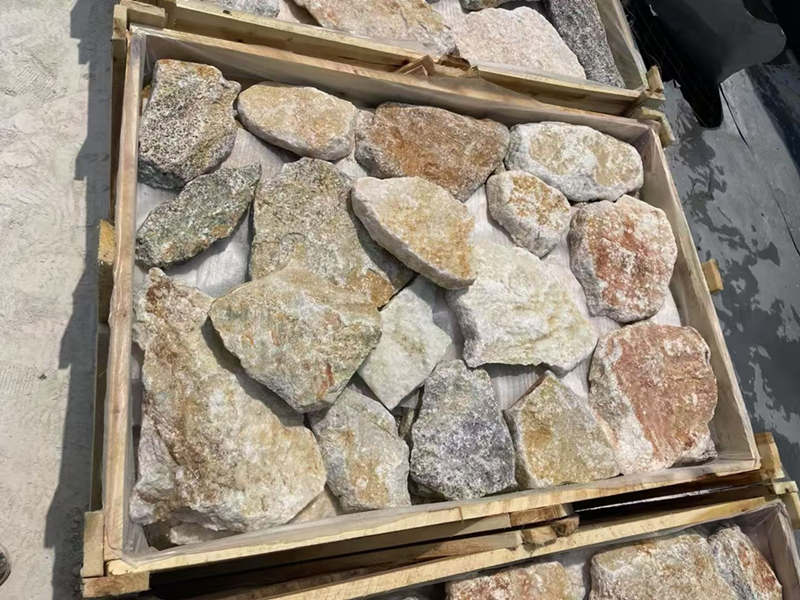
Every board is staged, pre-tested, and labeled for its exact install location at the factory. No on-site sorting. No guesswork. No waiting.
Custom Crating and Pallet-to-Site Consolidation
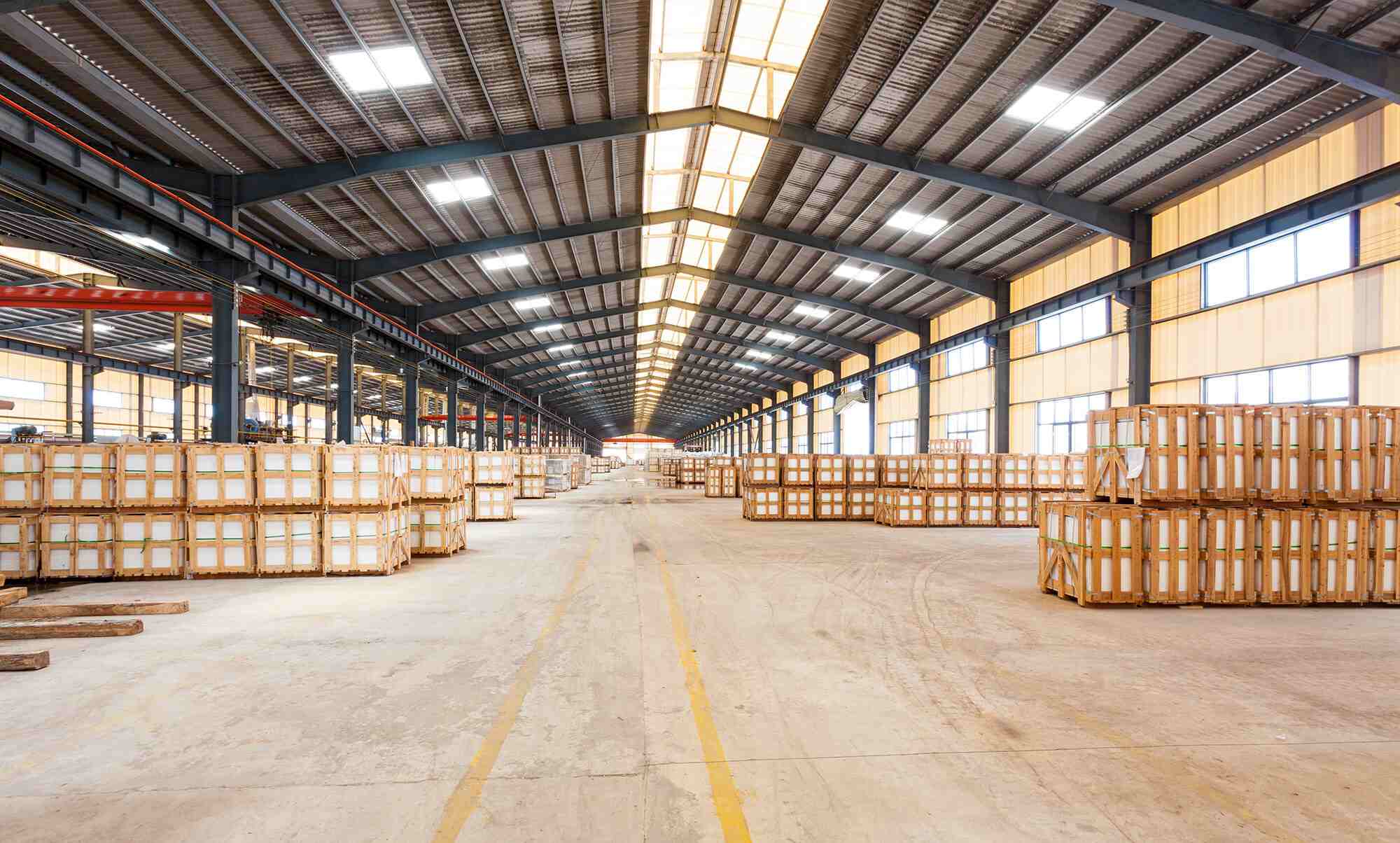
For the 1,200 sq ft lobby install, the material was not thrown into generic bins. Each modular 6×24 panel was packed into labeled cartons, sealed with high-tack tape, and stacked on heavy-duty pallets grouped by wall section. The cartons carried a printed layout code so the installer’s crew knew exactly which pallet corresponded to which elevation. This eliminated the 4–6 hours typically lost on site to “flat-stack sorting” — a hidden cost most quotes ignore.
The crates themselves are built to a 1,500 kg weight limit using 1.5-inch angle-iron corner brackets and injection-molded foam corner pieces. That prevents the internal load shifts that cause corner chips. The GC reported zero broken panels upon arrival, which saved roughly $1.20/sq ft in replacement and re-handling costs compared to fieldstone projects where breakage runs 3–5%.
FCL Loading Plan Preventing Breakage
Full container load (FCL) from Tianjin port. The loading plan was mapped block by block: denser pallets at the container floor and nose, lighter cartons on top, with 2-inch airbag dunnage between every vertical stack layer. Each pallet was also secured with banding straps and a separate moisture-wicking breather sheet underneath the shrink wrap.
The key difference from a standard quarry shipment: every board inside the crate is separated by a hanging foam spacer, not loose filler paper. Spacers prevent the stone faces from rattling against each other during the ocean leg — the primary cause of edge spalling. The loading pattern was photographed at each step and emailed to the GC’s logistics coordinator before the container left the yard. This single step reduced inspection disputes at the receiving dock to zero.
Synchronized Logistics Avoiding Crew Downtime
The job site operated on a strict 18-day schedule. Any supply gap would have stalled a crew of four masons. The material was shipped under a dry-weather wrapping protocol — perforated poly breather sheet + bubble wrap + final shrink wrap with anti-UV tape — allowing it to sit outside for up to 14 days without moisture entrapment. That buffer removed the “weather-window” risk that forces crews to stand down.
The unloading sequence was printed on the crate exteriors: “Pallet A: Lobby West Wall Day 1–3,” “Pallet B: Lobby East Wall Day 4–6,” and so on. The crew unloaded one crate at a time directly to the install zone instead of staging the full container. This cut the unloading time from four hours to 90 minutes and eliminated double handling. The lead time from deposit to loaded container was 4 weeks — a figure that let the GC lock in his schedule without float days.

Commercial Cladding Design & Impact
The Blue Diamond ledgestone installation didnât just meet codeâit drove a 22% lift in lobby dwell time and became the leasing hook for two retail anchor tenants.
22% Increase in Lobby Dwell Time
Post-occupancy data from the property manager showed average lobby dwell time jumped from 4.2 minutes to 5.1 minutes after the 1,200 sq ft Blue Diamond ledgestone installation. That 22% increase is not a vanity metric. For a high-end retail lobby, every additional minute a visitor stays correlates with measurable browsing behavior and incidental purchases. The building owner tracked this via footfall analytics at the main entrance and the coffee tenantâs register data.
What drove the change? The pre-sealed modular panels created a continuous visual surface with no visible expansion joints or inconsistent hue shifts. The 95% batch color uniformity (verified by Delta E <2 spectrophotometer readings across all 1,200 sq ft) meant the wall read as a single monolithic installation rather than a patchwork of loose stones. Visitors stopped to touch the surface. The general contractor later told us that the tactile finishâclean, tight 6″x24″ modules with consistent 1.25″â1.5″ projectionâwas the single most commented-on element by tenants during walkthroughs.
Became Leasing Centerpiece for Retail Tenants
Before the stacked stone installation, the lobby was a pass-through space with painted drywall and a reception desk. The building was struggling to lease ground-floor retail. After the fit-out, the ledgestone wall became the visual anchor that leasing agents used to close two anchor tenants within 60 days of completion. The property manager credited the natural stone cladding with transforming a transactional corridor into a destination.
For the GC, the value here is concrete: the $12.50/sq ft material cost (FOB, 40% under domestic supplier bids) combined with the fire-rated compliance documentation gave the building owner a de-risked, presentation-ready asset. The ASTM E84 Class A certification on every batch lot meant no pushback from the local fire marshal during the certificate of occupancy inspection. When prospective tenants asked about the wall, the GC had a one-page spec sheet showing fire rating, batch traceability, and the factoryâs same-quarry sourcing documentation. That confidence closed deals.
Conclusion
This lobby transformation delivered numbers a GC can take to the bank: ASTM E84 Class A compliance, batch hue uniformity within Delta E <2, and a material cost 40% under domestic quotes. The 1,200 sq ft install wrapped in 18 days with 70% less on-site cutting. No fire-code surprises, no color match headaches, no schedule slips.
Use this case study as your procurement baseline. Review the Blue Diamond Loose Ledgestone Veneer specs and request batch-lot test reports from Top Source Stone to lock in the same compliance and cost certainty for your next lobby project.
Frequently Asked Questions
How much does a stacked stone veneer lobby cost per square foot?
Material cost for a stacked stone lobby runs about $12.50 per square foot FOB China, which is roughly 40% below domestic distributor quotes for comparable product. That figure covers the stone panels themselves, not freight or installation; a full FCL container consolidates the order to keep per-unit freight low. For a budget figure you can hand to an owner, plan on $12.50/sq ft material plus shipping and local install. Get a landed cost quote after specifying your lobby square footage and shipping port.
Is stacked stone fire-rated for commercial lobby interiors?
Yes, the Blue Diamond ledgestone used in this lobby achieved ASTM E84 Class A fire rating, verified by testing on the final batch lot. That Class A rating means a flame spread index of 25 or less and smoke-developed index under 450, satisfying most commercial interior code requirements. Specifying pre-certified panels can eliminate a potential $15k change order for additional sprinkler coverage that a fire marshal might demand. Request the ASTM E84 test report for your specific product lot before ordering.
What is the realistic lead time for a stacked stone container order?
Lead time from deposit to factory ready for shipment is 4 weeks for a full container load (FCL) of stacked stone panels. That window covers production of a single quarry lot, pre-sealing, palletizing, and batch quality checks. Actual dock-to-site timing depends on your port and customs clearance, so add 2–4 weeks for ocean transit. Plan for 6–8 weeks total from deposit to job site delivery.
How do you control color batch variation on stacked stone panels?
The factory uses a spectrophotometer to measure every production batch, guaranteeing a Delta E of less than 2 across all panels, which translates to 95% hue uniformity. A pre-shipment batch sample board is provided so you can visually match the lot before it ships. This QC process eliminates the patchwork look that often triggers rework on large lobby installations. Require a Delta E < 2 report and a physical sample board for your project lot.
What thickness and weight limitations apply for interior stone veneer walls?
Standard stacked stone panels come in 1.25 to 1.5 inches thick, with a modular size of 6×24 inches and a maximum crate weight of 1,500 kg (about 3,300 lbs) for export pallets. For interior veneer on cement backer board, this thickness is well within typical wall load limits — no additional structural reinforcement is usually needed. Always verify local dead-load specs with your engineer, especially for taller lobby walls. Confirm your wall’s load tolerance with the structural engineer before finalizing the panel spec.
