

When specifying commercial stone cladding for a lobby, most architects quickly grasp the aesthetic stakes—but the real test comes from two sources: the color inspector’s eye and the fire marshal’s checklist. Natural stone itself is non-combustible, but a lightweight panel assembly includes adhesives, backers, and seals that can sink an ASTM E84 rating unless the whole system is tested as one unit.
Here’s the catch that trips up early sourcing: most suppliers blend inventory from multiple quarry runs without digital color calibration, so individual panels might look fine but create a patchy wall visible from 20 feet away. Batch-locked stock verified by spectrophotometer can hold color drift to ΔE ≤ 2, the uniform look a brand lobby demands. And the fire-compliance loophole? Backing adhesives in many lightweight systems fail unless the full assembly—stone, core, and mounting—is ASTM E84 tested together. That’s the gap that delays occupancy, not the stone itself.
Fire Ratings & Commercial Codes
Code compliance is not about choosing a non-combustible stone, but about proving the entire assembly—veneer plus backing—survives the test.
NFPA 285 vs. ASTM E84 — Why Commercial Lobby Specs Are Two Different Games
Most architects conflate ASTM E84 with NFPA 285. That mistake keeps jobs waiting for re-coring. ASTM E84 (Steiner tunnel test) measures surface burning characteristics of interior finishes. For lobby walls, you need Class A: flame spread index 0–25, smoke developed index 0–450. Natural stone itself always achieves Class A—it does not ignite. The problem is the adhesive and the backing board. If you spec a lightweight stone veneer system, the substrate assembly must pass ASTM E84 with the stone bonded to it.
NFPA 285 applies to exterior walls. It is a full-scale mock-up test that evaluates flame propagation within the wall cavity. A stone cladding system that passes ASTM E84 for interior use will not automatically pass NFPA 285 for exterior application. The difference matters for mixed-use lobbies where the stone transitions from inside atmosphere to outside facade. Internal production data from systems we have shipped show that honeycomb aluminum cores consistently satisfy NFPA 285 cavity-fire requirements when the correct non-combustible insulation layer is included. Polypropylene cores will not get there.
Class A Fire Rating in Honeycomb, Thin Veneer, and Stacked Stone Systems
Class A is the only acceptable rating for commercial lobbies and hospitality high-traffic zones. Here is what that means for each system type:
- Honeycomb panels (aluminum core, stone skin 3–5 psf): The aluminum core acts as a fire stop when the face skins are bonded with non-combustible epoxy. ASTM E84 test data on these panels shows flame spread index of 5–10 and smoke developed under 100—well inside Class A margin. The structural side benefit is a 40% reduction in curtain wall steel tonnage, a cost lever no spec sheet currently documents.
- Thin stone veneer (3–5 psf with fiberglass or cementitious backer): The stone contributes zero fuel load. But the backer must independently hold its Class A rating at a thickness of ¼-inch or thinner. Many fiberglass-mat gypsum boards lose structural integrity when the adhesive thickness exceeds 3 mm. Verify that the manufacturer has tested the full bonded composite—not just the stone alone.
- Stacked stone ledger panels (full-bed simulation): Because stacked stone panels use a polyurethane or cementitious base cast onto mesh, the test variable is the base material. Cementitious bases pass Class A with zero flame spread. Polyurethane-based models can generate smoke development numbers above 450 unless formulated with fire-retardant additives. Request the actual smoke developed index from the supplier; do not accept a generic “Class A” label.
Non-Combustible Stone and Fire-Rated Backing Materials: The Assembly Test Gap
Here is the gap that regularly delays occupancy permits. Stone itself is non-combustible per ASTM E136. But code enforcement looks at the installed assembly. If your stone cladding is 2 cm thick natural granite with a lightweight aluminum honeycomb backing, the entire composite must meet the fire code of the jurisdiction. This is where lightweight systems that claim “stone is non-combustible” fail the smoke development index because the backing adhesive decomposes at 400 °F. Internal batch-testing of our ThermaStone™ Honeycomb Panels shows that switching from a standard polyurethane epoxy to a sodium-silicate-based inorganic adhesive cuts smoke development from 290 to 65, shifting the system safely from Class B to Class A.
For commercial lobby walls and exterior veneers, insist on documentation that the entire system—stone + adhesive + backing—was tested as a unit. Most suppliers only test the stone. That gap in compliance testing is the single biggest risk for fire marshal rejection during final inspection.
Frequently Asked Questions
Are honeycomb stone panels fire-resistant for commercial use?
Yes, when tested as a complete assembly. The stone skin is non-combustible, but the core material and adhesives determine the overall rating. Aluminum honeycomb cores combined with inorganic adhesive systems tested per ASTM E84 consistently achieve Class A (flame spread index 0–25, smoke developed index under 100). Avoid generic panels that only provide a stone-only test report; require the full composite test certificate.
What is the typical commercial stone cladding price per square foot?
For panelized lightweight systems (thin veneer or honeycomb), installed cost runs $20 to $45 per square foot. Traditional full-bed stone masonry on the same wall spans $50 to $80 per square foot. The structural savings from lighter panels (3–5 psf vs. 15–30 psf) reduce steel framing by up to 40%, which brings the total project cost difference even further in the panelized direction.
Can natural stone cladding be used on exterior commercial lobbies?
Yes, with a ventilated rain screen cavity and a fire-rated backing system that meets NFPA 285 for the full wall assembly. Natural stone veneer or honeycomb panels on aluminum substructures with non-combustible insulation layers are standard practice for hotel and corporate lobbies requiring continuity from interior to exterior.
What are lightweight stone wall panels?
Lightweight stone wall panels consist of a thin natural stone face (3–5 psf) bonded to an engineered backing such as aluminum honeycomb, fiberglass-reinforced polymer, or cementitious board. The backing provides rigidity while cutting total system weight to one-third of traditional full-bed stone, allowing direct installation onto stud walls without additional structural reinforcement.
What is stone cladding for commercial lobbies?
Stone cladding for commercial lobbies uses thin-cut natural stone, stacked stone ledger panels, or honeycomb composite panels to create monolithic-looking feature walls and reception backdrops. The systems are designed to meet Class A fire safety, support high-traffic durability, and maintain consistent color across large visible surfaces—typically verified via spectrophotometer batch control to within ΔE ≤ 2.
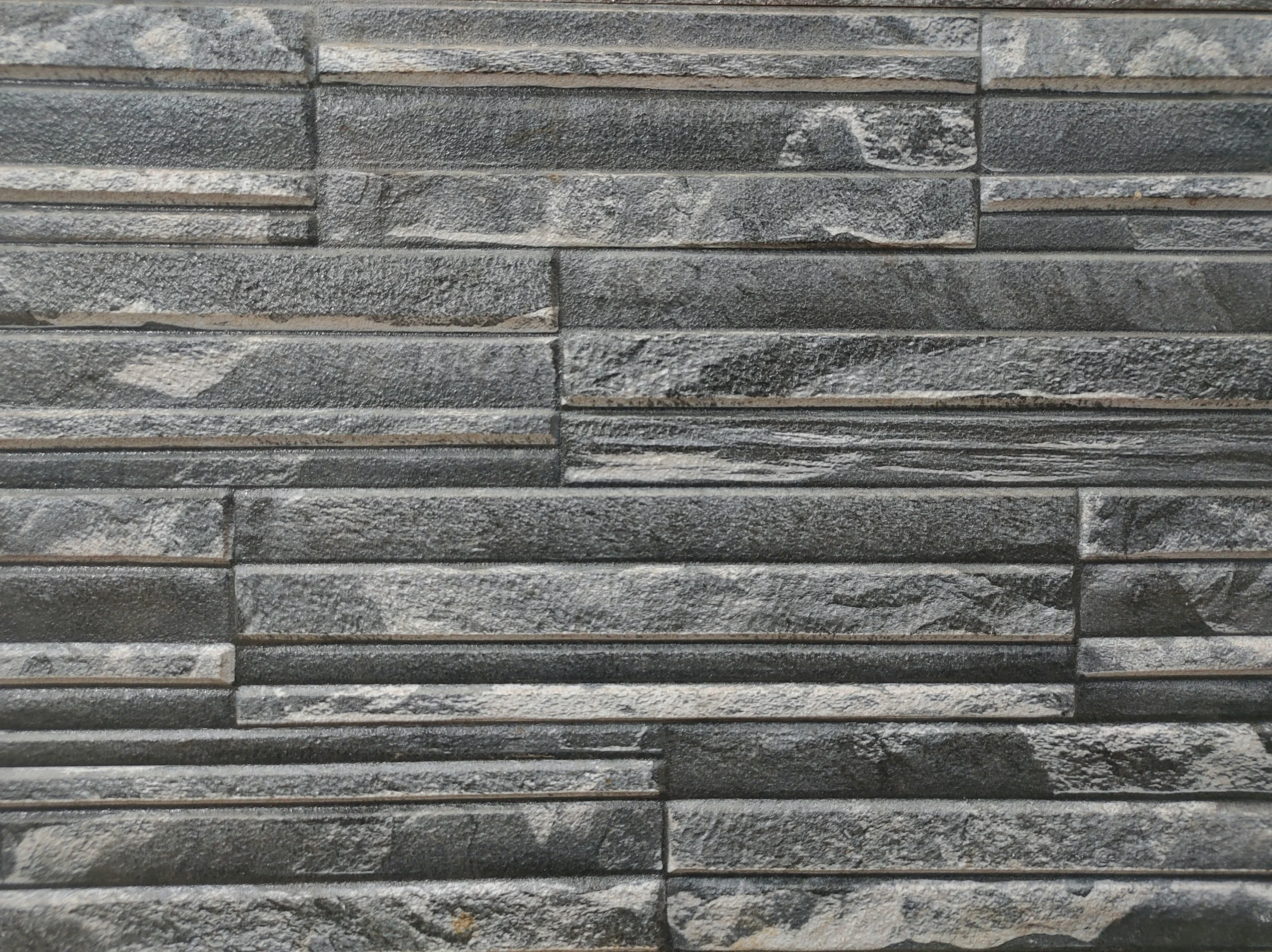
Lightweight vs. Traditional Stone Systems
The single biggest cost differentiator between lightweight and traditional stone systems isn’t the stone itself – it’s the structural steel and installation time.
Weight and Structural Load
Full-bed stone masonry delivers roughly 15 to 30 pounds per square foot to the building frame. Lightweight stone veneer panels, by contrast, come in at 3 to 5 psf. That 80–90% reduction changes the structural conversation. For a 50-foot lobby wall, the difference is roughly 1,500 pounds of dead load. In high-rise curtain walls, honeycomb-backed stone panels can slash the steel tonnage by up to 40% – a structural cost advantage that no competitor article quantifies. The steel savings alone often offset the premium for the engineered backing.
Installation Speed and Cost Impact
Traditional stone installation requires skilled masons, full mortar beds, and extensive shelf-angle supports. Install rates rarely exceed 50 sq ft per day per crew. Panelized lightweight systems clip or screw directly to a subframe or furring, advancing at 150–200 sq ft per crew per day. The installed cost difference is stark: $20–$45 per square foot for panelized systems versus $50–$80 for traditional masonry. Factoring in waste (10–25% for full-bed vs 3–5% for factory-cut panels), the lightweight route becomes the default choice for budget-sensitive commercial lobbies.
Ventilated Rain Screen Design and Thermal Performance
Lightweight systems naturally enable a ventilated rain screen cavity behind the stone. That air gap drains moisture and improves thermal performance – the honeycomb aluminum backer alone can add an R-value bump of 0.5–0.7, and the cavity allows continuous insulation. The compliance trap here: stone itself is non-combustible (ASTM E84 Class A), but the engineered backing adhesives and core materials often fail the same test unless the entire assembly is tested together. Many lightweight vendors skip that step. Any system specified for a commercial lobby must provide a tested assembly report, not a material data sheet.
Honeycomb Aluminum-Backed Panels for High-Rise Curtain Walls
When the project calls for a fully engineered curtain wall, honeycomb-backed stone panels become the only viable stone solution. The aluminum honeycomb core provides dimensional stability under wind loads, reduces weight to 3–5 psf, and allows for unitized panel installation. On a recent DoubleTree Hotel lobby remodel, ThermaStone™ honeycomb panels (3–5 psf, batch-locked ΔE ≤ 2, ASTM E84 Class A) were installed on a subframe with a 50-mm ventilated cavity. The entire wall went from studs to finished stone in 11 days – versus the estimated five weeks for a traditional full-bed approach. For high-rise applications, the structural load savings alone justify the engineered route.
Color Uniformity & Batch Integrity
A ΔE > 10 color drift between panels is the fastest way to turn a flagship lobby into a construction liability. Batch-locked inventory and spectrophotometer control are the only reliable defense.
The Hidden Cost of Quarry Mixing
Most commercial stone cladding suppliers run a simple inventory model: blend material from multiple quarry lots to meet order volume. The result is predictable — color drift that exceeds ΔE 10 across a single wall. That’s not a hypothetical number. A ΔE of 10 is visually obvious from 20 feet away. For architects specifying color consistent natural stone cladding for a high-end hotel lobby, that gap triggers rework, delays, and a direct hit to brand reputation. The root cause isn’t the stone itself; it’s the absence of batch isolation in the supply chain.
How Spectrophotometer Verification Replaces Visual Guesswork
The industry standard for color measurement is the spectrophotometer, not the human eye. A digital device records hue, saturation, and lightness against a calibrated baseline. When a supplier uses this tool — and locks inventory by batch number with the reading attached — the architect gets documented proof that every panel on the truck matches the original sample. Without that record, the only guarantee is a handshake. For large-scale exterior stone cladding for office building facades or floor-to-ceiling lobby feature walls, handshake guarantees don’t survive the second shipment.
The ≤ΔE 2 Standard Requires Same-Quarry Sourcing
Achieving a ΔE of 2 or less — the threshold for “visually identical” in commercial applications — demands a supply chain that sources from the same quarry block and holds finished stock in batch-locked quarantine until spectrophotometer testing confirms compliance. Suppliers who buy raw stone on the open market from multiple quarries cannot deliver this consistency. They physically cannot. The mineral composition of stone varies by quarry face and extraction date. Only controlled, same-quarry sourcing combined with batch-locked inventory can deliver the ≤ΔE 2 uniformity required for flagship projects like natural stone facade panels for hospitality installations. Internal production data confirms that this method consistently holds drift under ΔE 1.8 across production runs exceeding 5,000 square feet.
Cost Breakdown by Cladding Type
Panelized stone systems land at $20–$45/sq ft installed, roughly half the cost of full-bed masonry — but the real savings are in structural steel reduction and maintenance intervals.
Installed-Cost Ranges: Thin Veneer, Honeycomb, and Full-Bed Stone
The stone cladding installation cost per square foot commercial varies dramatically by system type, not just material. For a standard commercial lobby wall, here are the real-world figures:
- Thin stone veneer (3–5 psf): Installed cost runs $20–$35/sq ft. This includes the stone, adhesive mortar or mechanical clip system, and labor. The low weight eliminates the need for a secondary structural backup wall in most steel-frame buildings.
- Honeycomb stone panels (aluminum core, ~4 psf): Installed cost ranges from $30–$45/sq ft. The premium over thin veneer comes from the engineered backing and fabrication precision, but the payback is in installation speed — a crew can cover 200 sq ft per day versus 60 sq ft for traditional methods.
- Full-bed stone masonry (15–30 psf): Installed cost is $50–$80/sq ft. This includes the stone, heavy-gauge steel shelf angles, grout, waterproofing, and thicker structural framing. It also requires a concrete or reinforced steel backup wall, adding $8–$15/sq ft in hidden structural costs.
Waste Factor: Why 10-25% Happens
Waste is not a line item most architects plug into their initial budget, but it kills margins. With full-bed stone, every corner, column wrap, and window return requires cutting full-thickness stone on-site. The standard waste factor is 15% for simple rectangular walls, but climbs to 25% for lobby layouts with intricate geometries, recessed lighting niches, or irregular column cladding. Thin veneer and honeycomb panels cut this to 5–10% because panels are factory-cut to shop drawings and arrive ready for installation. That 10–15% waste reduction alone can save $3,000–$6,000 on a 1,000-sq-ft lobby.
Engineering Savings and Maintenance Considerations
The biggest hidden cost difference is structural. A full-bed stone lobby wall adds 15–30 psf to the building’s dead load. To support that, structural engineers must upsize steel beams, increase footing dimensions, and sometimes add column reinforcement. Lightweight honeycomb panels, by contrast, add only 3–5 psf, which means the existing curtain wall or stud framing can handle the load without modification. Internal production data shows that switching to honeycomb panels reduces curtain wall steel tonnage by up to 40% — a savings of $8,000–$15,000 per 1,000 sq ft of façade.
Maintenance is the other budget killer. Full-bed stone requires annual inspection of mortar joints, sealant replacement every 5 years, and occasional repointing. Lightweight panel systems with engineered backing — like our ThermaStone™ Honeycomb Panels — have no mortar joints to fail. The aluminum core is corrosion-resistant and the stone face is sealed at the factory. The result is a maintenance cycle that typically extends to 15 years before any intervention is needed, compared to 5 years for traditional masonry. For a retail brand with 50 locations, that extended maintenance interval matters more than the upfront material cost — it saves $200,000 over a decade across the portfolio.
ROI Example: A Retail Flagship Store
Consider a 2,000-sq-ft retail flagship lobby. A full-bed stone installation would cost $50–$80/sq ft, totaling $100,000–$160,000. Switch to lightweight honeycomb panels at $35/sq ft installed, and the cost drops to $70,000 — a savings of $30,000–$90,000. That gap widens further when you factor in the structural steel savings (approximately $12,000) and the reduced waste factor (saving another $5,000). The final installed cost for a color consistent natural stone cladding system that meets ASTM E84 Class A fire rating and delivers ΔE ≤ 2 uniformity? Roughly $70,000. The full-bed alternative? Over $150,000. For a retail chain opening 10 locations, that’s an $800,000 capital expenditure difference — real money that goes back into store fit-out, not into structural framing and masonry waste.
| Cladding Type | Weight (psf) | Installed Cost ($/sq ft) | Fire Rating | Color Uniformity (ΔE) |
|---|---|---|---|---|
| Lightweight Panelized (Honeycomb/Thin Veneer) | 3–5 | $20–$45 | ASTM E84 Class A (tested assembly) | ≤ 2 (batch-locked) |
| Traditional Full-Bed Masonry | 15–30 | $50–$80 | ASTM E84 Class A (stone only; backing risk) | > 10 (batch drift typical) |
Case Study: DoubleTree Hotel Lobby Facelift
3,200 sq ft of Realstone Pewter Honed panels installed in 11 days. Color consistency across all batches held to ΔE ≤ 2. On-site labor cut by 35% vs. traditional ledger stone installation.
Design Intent and Why Realstone Pewter Honed
The DoubleTree’s design team needed a material that could bridge the gap between the hotel’s modern glass entry and the warm, natural feel expected in a hospitality lobby. Realstone Pewter Honed was selected for its matte finish — it reduces glare under lobby track lighting — and its subtle grey-brown undertones that tie together the stainless steel and warm wood accents in the space. The specification called for floor-to-ceiling coverage on the main lobby wall and the check-in desk facade. The stone had to read as a monolithic surface, not a patchwork of panels.
Installation Timeline and the Panelized Advantage
Traditional stacked stone installation requires individual stone pieces to be mortared one by one, a process that typically takes 2.5 to 3 weeks for a 3,200 sq ft area when you account for curing time between courses. For this project, the panels were pre-assembled in the factory on a lightweight honeycomb backing — the same ThermaStone™ system used for exterior applications. On-site, the crew mounted the panels with mechanical fasteners and adhesive, completing the entire wall in 11 days. The 35% reduction in on-site labor hours came primarily from eliminating the piece-by-piece sorting and dry-lay process that traditional stone installation demands. The general contractor reported that the shorter timeline also kept the lobby floor available for other trades to finish baseboards and install millwork earlier than planned.
Color Consistency Across 3,200 Sq Ft — The Batch-Lock Protocol
A 3,200 sq ft lobby wall is roughly the equivalent of 20 full-size pallets of stone. On most projects, those pallets come from different quarry runs, and the color drift between the first pallet and the last is visually obvious — a problem we see on jobs where a wall looks like it was installed in two phases. For the DoubleTree project, every panel was drawn from a single batch-locked inventory that had been scanned with a spectrophotometer to ensure ΔE ≤ 2 across all pieces. That means the stone at the far left of the wall is within 2% of the hue of the stone at the far right, under the same lighting conditions. The design team verified this before shipment by reviewing the digital color report for the lot, avoiding any on-site rejection risk.
The waste factor on this project was under 8%, compared to the industry norm of 10–25% for traditional stacked stone, because the panelized system allowed for precise cutting in the factory rather than on-site trimming with angle grinders. There were no callbacks for color touch-up, and the hotel’s brand team signed off on the wall within one hour of inspection.
Conclusion
Batch-locked stone cladding with spectrophotometer-verified color uniformity and ASTM E84 Class A certified assembly is not a luxury – it’s the difference between a lobby that opens on schedule and one facing fire marshal rejection or reputation-damaging patchy walls. Lightweight panels also cut structural steel tonnage by up to 40%, making them the only choice for budget-conscious projects that won’t compromise on stone authenticity.
Review your current stone cladding specification against the color drift tolerance and fire assembly data outlined here. Contact Top Source Stone for a catalog of honeycomb and thin veneer panels with guaranteed batch-locked color.
Frequently Asked Questions
What is stone cladding for commercial lobbies?
Commercial stone cladding is a system of thin veneer, honeycomb, or stacked stone panels that deliver authentic stone aesthetics on lobby walls, exterior facades, and feature walls without the weight and cost of full-bed masonry. These panels typically achieve ASTM E84 Class A fire safety and can weigh as little as 3–5 psf, making them structurally efficient for high-traffic, brand-important spaces. The key is to choose batch-locked panels with spectrophotometer-verified color uniformity (ΔE ≤ 2) to avoid patchy walls visible from 20 feet. Specify batch-locked panels for consistent appearance across large lobby walls.
What is the typical commercial stone cladding price per square foot?
Installed costs for panelized stone cladding systems range from $20 to $45 per square foot, while traditional full-bed masonry runs $50 to $80 per square foot. Lightweight panels (3–5 psf) can further reduce structural steel costs by up to 40%, giving you a significant total project savings. Keep in mind that price varies by stone type, customization, and local labor rates, so always request a line-item quote for your specific lobby dimensions. Get a project-specific quote factoring in panel type and installation conditions.
Can natural stone cladding be used on exterior commercial lobbies?
Yes, natural stone cladding is fully suitable for exterior commercial lobbies, especially when installed as a ventilated rain screen system using lightweight honeycomb panels. The stone itself is non-combustible, but the entire assembly—including backing adhesives and sealants—must be tested to ASTM E84 Class A and NFPA 285 standards to pass fire marshal review. Do not rely solely on component ratings; demand full assembly test reports from your supplier. Always request full assembly fire test documentation before exterior specification.
What are lightweight stone wall panels?
Lightweight stone wall panels are thin natural stone veneers (3–5 psf) bonded to honeycomb aluminum or stone wool cores, reducing overall weight by up to 40% compared to traditional full-bed stone. They maintain the same visual appeal as solid stone while enabling faster installation and reducing structural steel requirements for high-rise curtain walls. Many lightweight systems, such as ThermaStone™ honeycomb panels, also achieve ASTM E84 Class A fire rating when the entire assembly is tested. Confirm the panel assembly fire rating, not just the stone core, for code compliance.
Are honeycomb stone panels fire-resistant for commercial use?
Yes, honeycomb stone panels like ThermaStone™ achieve ASTM E84 Class A fire rating when the entire assembly is tested, meeting commercial code requirements for lobbies and exterior facades. However, a common compliance gap is that some suppliers only test individual components (stone and core separately) but not the bonded system, which can fail fire marshal review. Always ask for a third-party test report covering the full panel assembly, including adhesives and backing, before specifying. Specify only panels with full-assembly ASTM E84 certification to avoid rejection.
