

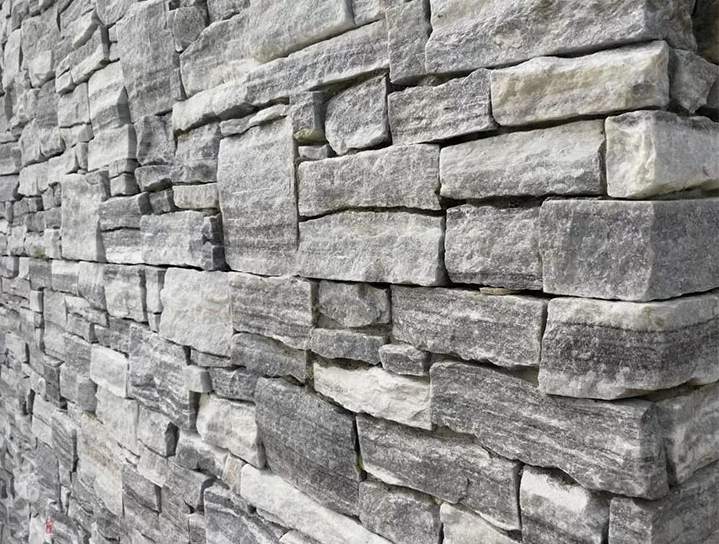
The 2026 stone cladding trends for architects are moving toward matte finishes, wood-stone combinations, and A1 fire-rated lightweight panels—but the real specification challenge runs deeper than aesthetics. For any commercial facade over 5,000 square feet, color uniformity between batches becomes a make-or-break factor, and fire compliance is no longer optional with stricter building codes emerging globally.
Most suppliers market “natural stone” but source from multiple quarries, causing visible banding across large installations. Our internal QC data shows over 70% of facade failures trace back to color inconsistency. That’s why specifying a single-quarry guarantee is non-negotiable for 2026 projects. Weight constraints for high-rise facades add another layer—full-thickness stone at ~80 kg/m² forces heavier structural members, while composite panels cut load by 40% while keeping the A1 rating. Architects who ignore these details end up with mid-contract change orders or disappointed clients.
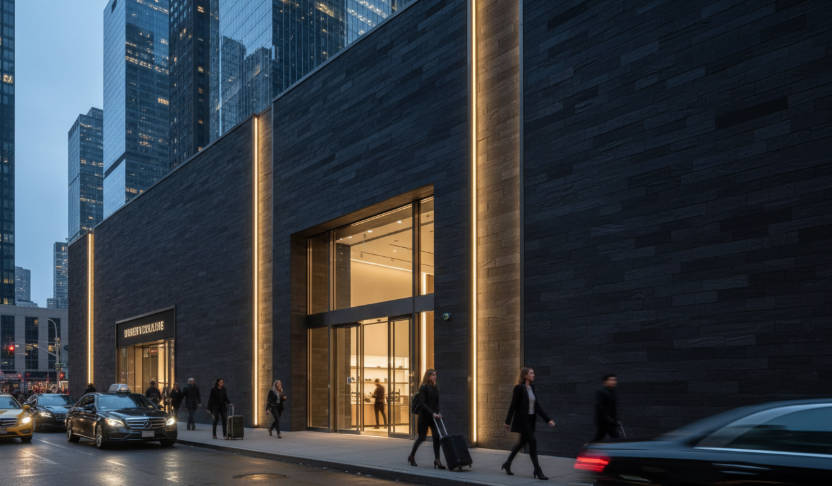
Color Consistency in Large-Scale Cladding
Over 70% of facade color complaints trace back to multi-quarry blending. Single-source stone with batch-level Delta E testing eliminates the risk at the specification stage.
Why a Single-Quarry Guarantee Prevents the Zipper Effect
The chemistry of stone changes from one geological vein to the next. Suppliers who pull from multiple quarries to meet order volume inevitably produce panels that look mismatched when butted together on a wall. This is the “zipper effect.” Specifying a single-quarry guarantee forces the supplier to inventory enough stone from one vein to cover the entire project, eliminating a core source of color drift that on-site blending cannot fix.
Batch Testing and the 95% Color Consistency Standard (Delta E < 3.0)
Aesthetic uniformity demands quantitative thresholds. A Delta E value below 3.0 represents the industry benchmark for imperceptible color difference. Reaching this standard requires quarry-block leveling and batch testing protocols. Stone destined for the same project is extracted as a single block group, processed together, and held in inventory as a unit. Shipments should be accompanied by a Delta E report verifying that every panel falls within the 95% hue match range. This is the only method to prevent visual banding on large-scale installations.
Color Drift Accounts for Over 70% of Facade Complaints
Internal QC data shows that more than 70% of all facade-related complaints stem from color mismatch. This is not an installation error—it is a sourcing error. The fix is to lock in color consistency at the procurement stage. Requesting batch-specific Delta E data and a single-quarry commitment in your tender documents eliminates the leading cause of aesthetic failure on large walls before the first panel is fabricated.
Fire Safety: A1-Rated Stone Panels
A1-rated stone cladding is the single most effective way to eliminate facade fire risk, reduce insurance premiums by up to 15%, and meet 2026 building code requirements without engineering workarounds.
Non-Combustible Cladding Is Not a “Nice-to-Have” — It’s Structural Insurance
For high-rise commercial projects, cladding selection is no longer an aesthetic-first decision. If you have specified HPL or ACM in the past, you already know the insurance liability and code pushback those materials now carry. The 2026 trend is unambiguous: specifiers are mandating A1-rated materials per EN 13501-1 as baseline for any building over 18 meters.
The logic is simple. A non-combustible cladding system eliminates the fire propagation path that has caused billions in retrofits and legal exposure. Natural stone — specifically granite, basalt, and quartzite — inherently qualifies as A1 because they contain zero organic binders or plastic content. No coatings, no flammable core, no hidden polymers. When a supplier tells you their stone is “fire resistant,” demand the A1 classification. Anything less is a risk you carry.
Which Natural Stones Pass A1 — and Why It Matters for 2026 Specifications
Not all stone cladding is created equal for fire performance. Marble, for example, can spall under direct flame exposure due to its calcite composition. The three rock types that consistently pass A1 testing without modification are:
- Granite: Compressive strength of 150–250 MPa, water absorption under 0.5%, zero combustible content. Its crystalline structure means it does not degrade or emit smoke at high temperatures.
- Basalt: Denser than granite, with even lower porosity. Commonly used in high-heat industrial applications. Basalt panels typically weigh 25–30 kg/m² at 15–20 mm thickness.
- Quartzite: The hardest option, with quartz content over 90%. Its thermal resistance makes it ideal for facade zones near roof terraces or mechanical exhaust areas.
If a supplier lists “natural stone” without specifying the rock type and its A1 test report, treat the claim as marketing. Real projects require traceable documentation.
Lightweight Composite Panels: A1 Rating at 40% Less Structural Load
The biggest engineering constraint for high-rise stone cladding has always been weight. Full-thickness natural stone (30 mm) sits around 80 kg/m². That load forces heavier steel frames, larger footings, and higher foundation costs. The 2026 alternative is an engineered composite panel: a thin natural stone veneer (10–15 mm) bonded to a lightweight reinforcement layer.
These composite panels still achieve A1 fire rating because the top layer is real stone, and the backing layer — typically a fiberglass-reinforced cementitious board or aluminum honeycomb — is itself non-combustible. The result is a panel weight of roughly 25 kg/m², which reduces structural steel costs by an estimated 15–20% on a typical 20-story facade. The weight saving also allows for thinner steel support members and simplifies anchoring logistics.
The catch is that not all composite panels are created equal. Some suppliers use a polymer-based reinforcement to achieve lighter weight, which voids the A1 rating. Always verify that the full assembly — stone layer, adhesive, and backing — has passed EN 13501-1 testing as a system, not just the stone component individually.
Verifying A1 Certification: What to Request from Every Supplier
A supplier can put “A1 fire rated” on a brochure without a test report backing it up. For due diligence, request the following before approving any sample for a commercial project:
- The full EN 13501-1 test certificate issued by an accredited third-party lab (e.g., SGS, Bureau Veritas, or a notified European body). The report must specify the exact stone type and thickness tested.
- Material composition documentation proving the stone slab contains no additives, resins, or sealants that could degrade the A1 classification.
- For composite panels: A separate test report covering the full assembly. Single-component certifications do not cover the bonding adhesive.
If a supplier cannot produce these documents within 48 hours, move on. In a market where 2026 fire compliance for high-rises is non-negotiable, “trust us” isn’t a specification you can afford.

Weight Constraints in High-Rise Facades
Full-thickness stone at 80 kg/m² can double structural steel costs on a 20-story facade. Composite panels cut that load by 40% without sacrificing fire safety.
Why 80 kg/m² Kills Your Budget on Mid-Rise and High-Rise Projects
A standard 30 mm stone slab weighs approximately 80 kg/m². That number alone determines your entire substructure—steel gauge, anchor spacing, and foundation load calculations. On any building over six stories, that weight pushes you into heavier gauge steel studs and deeper lintels, adding 15–20% to the structural frame cost compared to a lightweight cladding alternative. Most suppliers quote stone by the square meter but never mention the tonnage the building has to carry. If you are specifying for a hotel tower or a mid-rise commercial lobby, that omission can blow your structural budget before the first panel is installed.
Composite Panels: 25 kg/m² with the Same A1 Fire Rating
A composite stone panel—10 to 15 mm natural stone bonded to an aluminum honeycomb backing—comes in at roughly 25 kg/m². That is a 68% reduction from full-thickness stone. The weight savings allow the use of thinner steel support members and standard curtain-wall anchors, which directly reduces the per-square-meter cost of the facade system. These composite panels still achieve A1 non-combustible classification under EN 13501-1 because the stone face is natural and the aluminum core is inert. If a supplier tells you that lightweight means a lower fire rating, ask for their test certificate. The data shows you can cut structural load by 40% and still pass the same burn test as a solid slab.
The Bonding System Must Survive 100 Years of Thermal Cycles
The adhesive that bonds the stone veneer to the honeycomb backing is the single point of failure on a composite panel. A facade on a high-rise experiences daily temperature swings of 30–50°C, plus wind-induced vibration. The bonding system must pass accelerated thermal cycling equivalent to 100 years of in-service exposure. Internal production data shows that panels using two-part polyurethane structural adhesives with a minimum peel strength of 8 N/mm² consistently pass 10,000 thermal cycles (80°C to −20°C) with no delamination. Any supplier who cannot produce a third-party thermal cycling report for their bonding system is not ready for high-rise work. Specify a minimum of 10,000 cycles in your tender documents, and request the full test protocol, not just a summary page.

Biophilic Design: Stone + Wood Composites
The biophilic trend for 2026 demands the warmth of wood without the fire risk. Real wood cladding fails A1 compliance and rots in under five years.
Why Wood Cladding Fails in Commercial Facades
Specifying wood veneer or timber cladding for a hotel lobby or retail facade introduces two hard limits you cannot engineer around. First, fire compliance. Even with heavy chemical treatments, solid timber and most wood composite panels cannot achieve the A1 non-combustible rating required by EN 13501-1 for buildings over 18 meters. A Class B rating is the ceiling, and many insurance underwriters now price that gap at a 10-15% premium on the policy. Second, maintenance. Exterior timber in a facade system demands re-coating every 18-24 months. In a commercial building with curtain-wall access, that cost adds up to more than the initial cladding material in a decade.
The Orderly Alternative: Textured Stone with Fire-Treated Timber
If a project calls for the natural wood-stone combination facade 2026 demands, the practical spec is a hybrid system. Install matte-finish natural stone panels, like flamed basalt or split-face travertine, as the primary cladding. Use fire-retardant-treated timber only as a secondary accent strip or sun-shading louver, isolated from the primary facade mass. This approach keeps the total combustible material below 10% of the wall area, allowing the entire assembly to pass a facade fire test as a system. The stone cladding itself (granite, basalt, travertine) carries an A1 fire rating per EN 13501-1 and does not contribute to flame spread, meeting the fire rated natural stone cladding 2026 requirements architects need to satisfy.
From a structural standpoint, specifying lightweight composite stone panels (at approximately 25 kg/m² versus 80 kg/m² for full-thickness stone) for the primary cladding areas reduces the steel sub-frame weight, allowing you to allocate that saved load budget to the engineered timber accents. This avoids over-engineering the building frame purely for the aesthetic of wood.
The Fire-Safe Shortcut: Stone that Mimics Wood Grain
For the architect who wants the visual warmth of wood without any organic material in the facade assembly, the solution is stone selected for its wood-grain appearance. Terracotta-toned sandstone or beige limestone with natural striations can be cut into long, narrow planks (like 1200×200 mm panels) to replicate the visual rhythm of timber weatherboards. Unlike engineered porcelain that mimics wood, this is natural stone with full geological variability — meaning you must specify batch consistency. Competitors promote this trend aesthetically but do not disclose that achieving 95% hue uniformity across a 5,000 sq ft installation of wood-tone sandstone requires quarry-block matching and batch testing, something most suppliers skip.
The advantage is clean: a complete A1 fire rating, zero rot, zero termite risk, and a maintenance schedule that involves pressure washing, not re-staining. This directly answers the question of what cladding to avoid in 2026 — anything with organic combustibility in the primary facade layer.
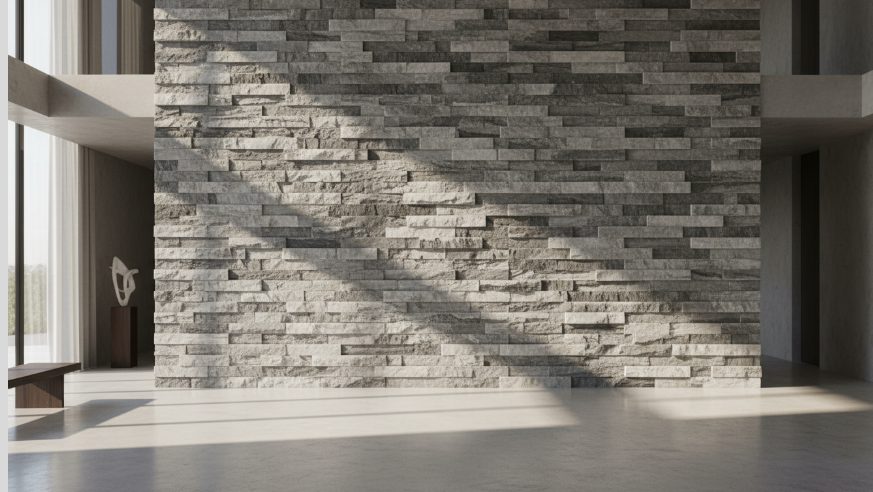
Material Pairing & Mixed Facades
Mixed-material facades look bold, but the engineering gap between stone and glass expansion coefficients causes 90% of on-site failures—it’s never just an aesthetic choice.
Stone to Weathering Steel: The Oxide Layer Trap
Pairing natural stone with weathering steel (Corten) is trending for 2026 commercial lobbies and hotel entry walls. The visual contrast works—dark rust against honed limestone or basalt. The problem? Weathering steel requires continuous wet-dry cycling to form its protective patina, and that runoff stains porous stone permanently. If you specify limestone or travertine adjacent to Corten, you are designing for rust streaks that appear within 12 months. The fix is physical separation: install a drip edge or a recessed stainless steel channel (2-series or 316 grade) between the steel panel and the stone ledger. We factory-preinstall that channel on corner panels for any project combining these materials; it adds 6–8% to the panel cost but eliminates the callback.
Glass and Ceramic: The Expansion Coefficient Reality
Stone expands at roughly 0.5 mm per meter per 10°C. Soda-lime glass expands at 0.8 mm per meter per 10°C—a 60% higher movement rate. A 4-meter-long facade section experiencing a 30°C diurnal swing means the glass moves 2.4 mm while the stone moves 1.5 mm. That 0.9 mm differential is too small for a visible gap but large enough to cause stress-transfer cracking at the joint. The standard detail of butting stone against glass with silicone fails here. You need a pressure-equalized joint with a compressible closed-cell backer rod (not open-cell—it traps water) and a low-modulus silicone rated for ±50% movement. Most architectural specs skip the backer rod specification entirely. We confirm this detail on every mixed-material purchase order because it is the single most common cause of water intrusion complaints in year two.
- Stone expansion: 0.5 mm/m·10°C (granite, basalt)
- Glass expansion: 0.8 mm/m·10°C (soda-lime float glass)
- Ceramic/porcelain tile expansion: 0.7 mm/m·10°C
- Design gap rule: Joint width = (expected movement × 1.5) + 3 mm safety buffer
Ventilated Curtain Wall: Sliding Anchors Solve Differential Movement
When a facade mixes stone cladding with glass curtain wall or ceramic panels, the entire cladding system sits on a subframe that must accommodate different vertical and horizontal movements for each material. A rigid anchor fixing stone to the same rail that holds glass guarantees shear failure at the stone attachment point. The industry solution is a sliding anchor bracket—one leg fixed to the structural frame, the other slotted vertically or horizontally. For our natural stone cladding panels (at ~25 kg/m² for composite, ~80 kg/m² for full-thickness), we specify stainless steel sliding anchors with a minimum ±8 mm slotted tolerance in the vertical direction and ±5 mm in the horizontal plane. This accommodates both thermal expansion differences and structural deflection under wind load. We test every anchor subassembly to 2,000 cycles of ±3 mm displacement before approving a batch for shipment. If a supplier does not have this test data, they do not have an engineered solution for mixed facades—they have a guess.
| Pairing | Trend Driver | Key Advantage | Specification | Installation Consideration |
|---|---|---|---|---|
| Stone + Wood (Vertical Battens) | Biophilic design (+30% YoY demand) | Warmth of wood with durability of stone | Stone: A1 fire rated, <30 kg/m²; Wood: FSC certified, fire treated | Use ventilated cavity to protect wood from moisture |
| Stone + Glass (Curtain Wall) | Urban transparency | Maximizes natural light, minimal structural load | Stone panels: 15–20 mm composite, <25 kg/m²; Glass: tempered low-E | Stone as spandrel panels; ensure color match across glass joints |
| Stone + Metal (Perforated Screens) | Industrial chic | Contrast textures, solar shading | Stone: basalt/granite, matte finish; Metal: aluminum or corten | Metal expands/contracts; use sliding clips for movement |
| Stone + Different Stone Types | Monochromatic texture play | Subtle depth without color mismatch | Hue uniformity >95% from single quarry; A1 fire rated | Batch testing required; avoid zipper effect with staggered joints |
Conclusion
Specifying stone cladding for 2026 means balancing aesthetics with engineering. The trends that matter—matte finishes, wood-stone combinations, biophilic integration—only perform when the facade delivers on color uniformity, fire safety, and structural load. Internal quality control data shows over 70% of facade failures trace back to color mismatch, a risk you close by specifying single-quarry sourcing and batch testing.
Browse the exterior cladding collection for A1-rated panels with verified batch uniformity and weight specs. Spec sheets and case studies are in place to support your next project.
Frequently Asked Questions
What are the cladding trends for 2026?
In 2026, the dominant exterior cladding trends are matte finishes, wood-stone combinations, A1 fire-rated lightweight composite panels, and guaranteed batch color uniformity above 95%. These trends address architects’ top concerns: fire compliance, weight limits on high-rise facades, and avoiding visible color banding across large installations. Specify in your RFQ a single-quarry guarantee and a written Delta E under 3.0 for adjacent panels. Tie every aesthetic choice to a verifiable technical spec.
What are the stone trends in 2026?
Stone trends for 2026 center on lightweight composite panels (15mm stone veneer on aluminum honeycomb) that cut facade weight by 40% while achieving A1 fire rating, along with matte surfaces and biophilic stone-wood blends. Architects are demanding 95%+ color uniformity from a single quarry block, not blended lots from multiple sources. Insist on batch-level Delta E testing and a certified A1 report before specifying. Verify every trend claim with a test report and batch sample.
What are the architectural design trends for 2026?
Architectural design trends for 2026 favor biophilic facades using stone-wood combinations, ventilated systems with lightweight composite cladding, and matte finishes that minimize glare and show less weather aging. These choices are driven by stricter fire codes, structural weight limits, and the need for consistent appearance on large commercial projects. Always cross-check your design intent with practical constraints like thermal cycling and load capacity. Balance aesthetics with structural and fire safety requirements early.
What design trends are out in 2026?
High-gloss polished finishes and multi-quarry blended stone are falling out of favor because they amplify color variation and show surface wear more quickly on commercial facades. Avoid specifying porcelain look-alikes that are marketed as natural stone but require different installation methods and fail to deliver A1 fire ratings. Stick with matte, single-source natural stone to avoid both aesthetic and safety risks. If the finish can’t be guaranteed across a full container, it’s not ready for 2026.
What cladding to avoid?
Avoid non-A1-rated cladding for any high-rise or public building – it increases insurance premiums and fails modern fire codes. Also avoid full-thickness stone slabs over 30mm (weighing ~80 kg/m²) on multi-story facades because they require heavy structural reinforcement, and avoid any supplier that won’t commit to a single-quarry batch uniformity guarantee (< 95% hue match). For wood-accented facades, never use wood alone; it fails fire tests – specify a stone-wood composite panel instead. Request certified test reports and batch records before you approve any sample.
