

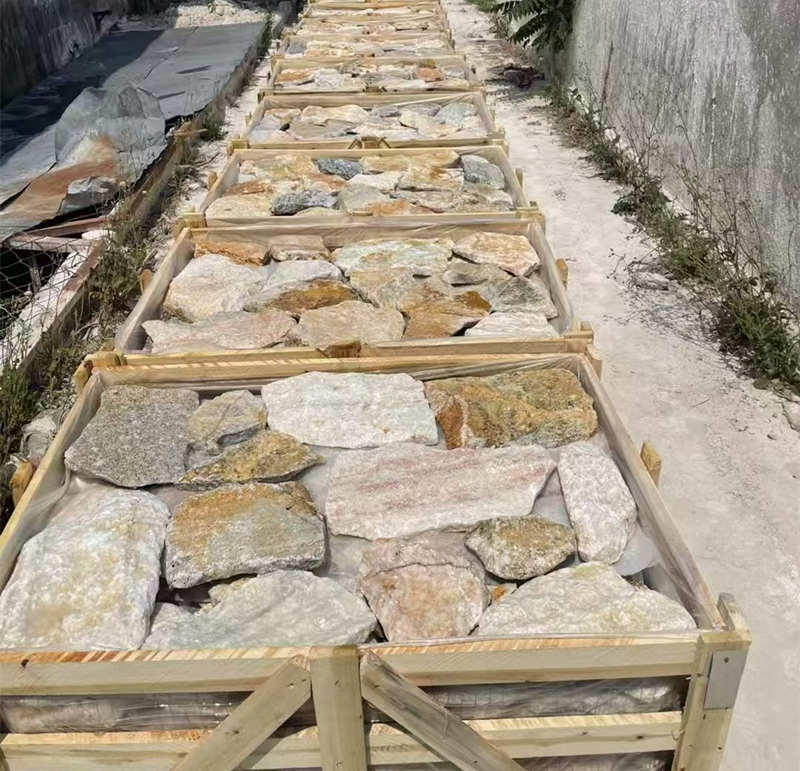
Choosing between natural vs faux stone veneer is a high-stakes specification decision that directly impacts a project’s long-term durability, client satisfaction, and the risk of costly callbacks or premature facade failure. This choice determines whether an installation will last for decades as a timeless asset or begin to show its weaknesses within a few seasons, compromising the integrity of the entire build.
This technical guide serves as your definitive specification document, cutting through marketing claims to compare core material properties. We will analyze the fundamental composition of quarried stone versus colored concrete, scrutinize UV resistance and colorfastness, and provide data on freeze-thaw durability for harsh climates. You’ll also learn to identify the repetitive patterns of manufactured molds, understand the environmental implications of quarrying, and get clear answers to the most pressing installation and longevity questions. This is the operational standard you need to specify with confidence.
The Composition: Real Quarried Stone vs Colored Concrete
The fundamental choice between real stone and colored concrete comes down to a trade-off between inherent geological authenticity and engineered performance at a controlled cost.
Material Origin and Authenticity
Real quarried stone begins as solid bedrock, extracted and cut into slabs or tiles. Its composition—minerals like quartz, feldspar, and calcite—was formed over millennia, resulting in unique, non-repeating veining and texture. Each piece is one-of-a-kind. In contrast, colored concrete is a manufactured composite of cement, aggregates, water, and synthetic iron oxide pigments. Its appearance is applied through pigmentation and surface treatments, aiming for uniformity but often revealing its artificial origins upon close inspection.
This distinction is not just visual; it’s foundational. Natural stone’s authenticity is inherent, impossible to replicate perfectly. Colored concrete’s aesthetic is a simulation, a finish applied to a man-made base. For projects where provenance and geological character are paramount, this difference is decisive.
Physical Properties and Performance
The core materials dictate long-term behavior. Natural stone is exceptionally dense and durable, with high compressive strength and permanent, UV-resistant color that is part of its mineral structure. Its performance is a function of geology. Colored concrete’s durability is a function of formulation; its resistance to UV fading and surface wear depends entirely on the quality of its pigments, mix design, and curing process.
Weight is a critical practical factor. Full-dimension stone is heavy, often requiring reinforced structural support. Modern thin stone veneer systems, like our 25–40mm thick loose stone, solve this by reducing weight to approximately 65kg/m² while maintaining a full-depth visual profile. Pre-cast concrete panels are generally lighter than full stone but can be heavier than thin veneer, offering predictable, consistent weight for engineering calculations.
| Property | Real Quarried Stone (Thin Veneer) | Colored Concrete / Manufactured Stone |
|---|---|---|
| Material Origin | 100% natural stone, quarried and precision-sawn. | Cement-based composite with synthetic pigments. |
| Color Integrity | Inherent mineral color; zero risk of UV fading. | Applied pigment; susceptible to fading over 10-25 years. |
| Aesthetic Character | Zero-repeat natural variation; every piece is unique. | Mold-cast; prone to repetitive pattern flaws on large surfaces. |
| Weight (Approx.) | ~65 kg/m² (for 25-40mm thin veneer). | Varies; generally lighter than full stone, but often heavier than thin veneer. |
| Installation | Individually sawn-back pieces for flat bonding; requires skilled masonry. | Lighter weight allows for easier handling and cutting; more DIY-friendly. |
| Material Cost (USD/sq ft) | $15 – $30 (thin veneer). | $8 – $12.50. |
Aesthetic and Design Implications
Real stone delivers timeless authenticity and depth. Its natural variations—subtle shifts in tone, unique mineral deposits, and non-repeating texture—create a rich, organic aesthetic that conveys permanence and luxury. This is the essence of a bespoke random-lay pattern that cannot be factory-programmed. Colored concrete offers broad design flexibility for color matching and can be molded into specific shapes, suiting projects that demand a monolithic, uniform, or intentionally industrial look.
The primary aesthetic weakness of molded concrete is pattern repetition. Even with advanced mold libraries, the same shape can appear multiple times across a facade, undermining realism. While high-quality manufactured stone can mimic stone from a distance, the lack of true geological variation is often discernible upon close inspection, a critical factor for premium applications where detail matters.
Cost and Installation Considerations
Upfront cost favors colored concrete, with material prices often half that of premium natural stone veneer. However, a lifecycle cost analysis reveals a different story. Natural stone requires virtually no maintenance and its color integrity lasts for decades, contributing to long-term property value. Colored concrete may need periodic resealing or even re-coloring to address surface wear and fading.
Installation complexity has evolved. Traditional full-bed stone is labor-intensive. Modern systems have leveled the field: panelized stone and pre-cast concrete both aim for faster installation. For thin natural stone veneer, the key is the individually sawn-back finish, which provides a flat bonding surface that can reduce on-site labor by up to 30% compared to irregular stone, making it a more competitive option for efficient, high-quality cladding.
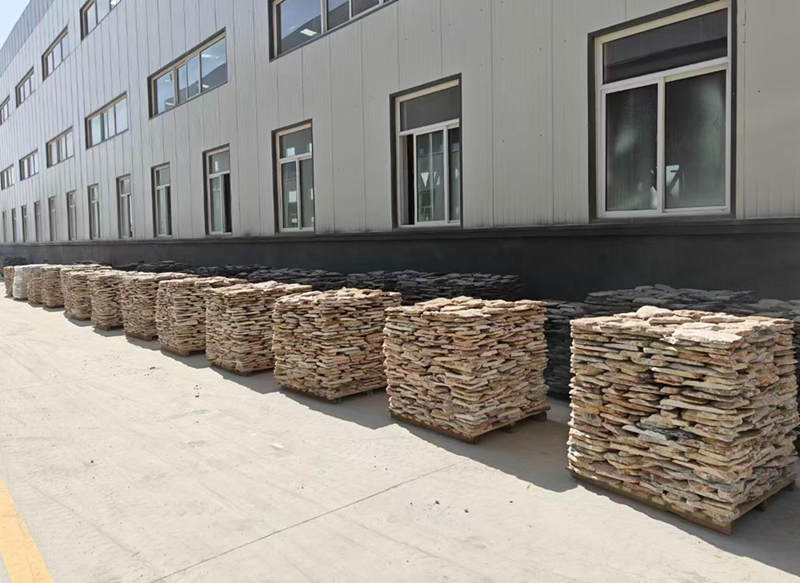
Color Longevity and Fading Under UV Sun Exposure
The color in natural stone is permanent because it comes from minerals, not dyes, making it the only cladding that offers a true lifetime warranty against fading.
Natural Stone’s Inherent UV Stability
The defining advantage of natural stone veneer is that its color is not applied; it’s inherent. The hues in slate, quartzite, or sandstone come from the mineral composition of the stone itself—iron oxides, micas, and other geological elements. These minerals are embedded within the crystalline structure of the rock, making them fundamentally stable and non-reactive to ultraviolet (UV) radiation. This is why a stone wall can face the sun for a century and not fade. The color is the material.
This intrinsic stability means the aesthetic is permanent. You aren’t just installing a finish; you’re installing a piece of the earth that will weather consistently and gracefully. There’s no surface layer to degrade, no pigment to break down. This delivers what synthetic products cannot: absolute certainty that the color you specify is the color that will remain for the life of the structure, with only a natural patina developing over time.
The Fading Mechanism in Manufactured Alternatives
Manufactured stone veneer relies on synthetic chemistry for its color. Iron-oxide or other pigments are mixed into a cementitious or resin-based matrix. While these pigments are designed for stability, they are fundamentally additives, not integral components. Prolonged UV exposure initiates a photochemical degradation process. The high-energy UV rays break down the molecular bonds in the pigments and can cause the binder itself to chalk or powder at the surface.
The result is a gradual but inevitable loss of color vibrancy. Dark, saturated tones on south and west-facing walls are most susceptible. This isn’t a product failure in the short term; it’s a predictable characteristic of the material system. Higher-quality products use UV inhibitors and integral coloring to slow this process, but they cannot stop the fundamental chemical reaction between sunlight and synthetic compounds. The fading is not uniform, often leading to a mottled, washed-out appearance that betrays the material’s artificial origins.
| Performance Factor | Natural Thin Stone Veneer | Manufactured Stone Veneer |
|---|---|---|
| Color Origin | Inherent mineral composition (e.g., iron oxide in quartzite) | Synthetic iron-oxide pigments added to concrete/resin matrix |
| UV Resistance | Geologically permanent; zero fading | Degrades over time; high-quality products fade slowly (10-25 yrs) |
| Surface Degradation | Develops a natural patina; no chalking or powdering | Binder can chalk; surface pigments can erode or flake |
| Typical Aesthetic Lifespan | 50+ years with minimal change | Industry guides cite 10-25 years before noticeable fading |
Long-Term Performance and Warranty Implications
This fundamental difference in material science has direct commercial and liability implications. With natural stone, the performance claim is simple: the color is permanent. There is no need for a warranty against fading because the color cannot fade. This translates to a zero-risk specification for long-term property value and eliminates the potential for costly recladding or repainting projects decades down the line.
Manufactured stone products often carry limited warranties against fading, typically ranging from 10 to 25 years. These warranties frequently expire long before the building’s expected service life. Once they do, the owner assumes all risk and cost for the material’s declining appearance. For a specifier or builder, specifying natural stone isn’t just an aesthetic choice; it’s a risk mitigation strategy that protects the client’s investment and the project’s legacy far beyond the expiration date of a synthetic product’s warranty.
Maintenance and Color Preservation
The UV stability of natural stone translates directly to low maintenance. It requires no special sealants, UV-blocking topcoats, or periodic chemical treatments to preserve its color. Cleaning involves water and a soft brush—there’s no risk of stripping away a protective color layer because the color is the entire mass of the stone. This simplifies long-term ownership and reduces lifecycle costs.
In contrast, to prolong the color life of manufactured stone, manufacturers often recommend—or require—the application of protective sealers with UV inhibitors. This adds a recurring maintenance cost and effort. Furthermore, harsh cleaning methods like pressure washing or acid-based cleaners can accelerate fading and surface degradation on synthetic products, introducing another point of failure that simply doesn’t exist with high-density quartzite or slate. The consistent, maintenance-free performance of natural stone is a direct result of its climate-tested durability and integral color.
Premium Stacked Stone for Architectural Needs

Durability and Freeze-Thaw Resistance in Harsh Climates
In severe climates, the true cost of a cladding material isn’t its initial price, but its ability to withstand decades of thermal cycling without spalling, cracking, or losing structural integrity.
Material Performance in Cyclic Freeze-Thaw Testing
The benchmark for exterior material durability in cold regions is the ASTM C666 test, which subjects samples to repeated freezing and thawing cycles in a saturated state. The performance gap between natural and engineered materials is defined by their fundamental composition. Natural stone’s durability stems from its geological formation; dense, low-porosity stones like quartzite and slate have minimal water absorption, which is the primary driver of freeze-thaw damage. Water that can’t penetrate can’t expand as ice. Engineered stone veneers combat this through design, incorporating air-entraining agents and polymers to create a network of microscopic voids that relieve internal pressure from freezing water.
Not all natural stone performs equally. High-density quartzite, a core material for premium thin veneer, typically shows negligible weight loss or structural degradation after hundreds of cycles. More porous sandstones or limestones may fare worse. The engineered approach can be effective, but its success is formula-dependent and relies on consistent manufacturing to ensure those protective air pockets are uniformly distributed. For specifiers, the data from these standardized tests is non-negotiable for projects in IECC zones 6-8.
| Performance Factor | High-Density Natural Stone (e.g., Quartzite) | Manufactured Stone Veneer |
|---|---|---|
| Primary Defense Mechanism | Inherently low porosity and density; minimal water ingress. | Engineered air voids and polymer additives to manage internal ice pressure. |
| Failure Mode in Testing | Surface scaling on weaker stones; high-density stones show virtually no change. | Cracking or spalling if air-void system is inadequate or inconsistently produced. |
| Long-Term Track Record | Centuries of performance in historic masonry; proven geological stability. | Decades; performance is tied to specific chemical formulations and quality control. |
| Key Specifier Takeaway | Request ASTM test data for the specific stone type and quarry vein. Provenance matters. | Require certified test reports for the specific product line, not just generic claims. |
The Spalling and Cracking Risk in Engineered Alternatives
Spalling—where the face of a material flakes or chips away—is a critical failure point for veneers in freeze-thaw cycles. For manufactured stone, this risk is multi-faceted. The product is a composite: a pigmented surface layer bonded to a concrete base. These two layers can have different coefficients of thermal expansion. Over repeated seasonal cycles, this differential movement can cause delamination, a failure often called “shelling.” Furthermore, micro-cracks inherent from the molding process or improper curing become direct pathways for water infiltration, setting the stage for internal ice damage.
Real, loose thin stone veneer operates differently. Each piece is a monolithic, homogenous unit. Thermal stress is distributed evenly throughout its mass. There is no layered interface to delaminate. When installed in a bespoke random-lay pattern, the system also allows for slight, natural movement between individually sawn-back stones, accommodating expansion without concentrating stress at rigid joints. This monolithic integrity is why you don’t see century-old natural stone facades suffering from spalling in the way modern composite systems sometimes can.
Lifecycle Cost vs. Initial Price in Extreme Environments
The financial analysis for cladding in harsh climates shifts from simple first-cost to a 30+ year total cost of ownership. The initial premium for a material like high-density quartzite veneer is offset by its virtual elimination of planned replacement costs. It often outlasts the building structure itself. Engineered alternatives, with a typical aesthetic lifespan of 10-25 years before noticeable wear or color change, introduce a high probability of a major recladding expense within the building’s lifecycle.
Repair scenarios further illustrate the cost divergence. A spalled section of manufactured stone is difficult to patch invisibly; the repair often remains visible, and sourcing an identical color match from a product line that may be discontinued decades later is a challenge. For individually sawn-back natural stone, a damaged piece is simply removed and replaced with another from the same quarry vein, maintaining the wall’s zero-repeat natural variation. For commercial asset managers, this translates to predictable, low maintenance and superior asset preservation.
Climate-Driven Design and Modern Building Codes
Building codes are evolving from prescriptive rules to performance-based standards, especially for the building envelope. In severe climate zones, specifiers are now mandated to select exterior cladding with documented performance data for durability metrics like freeze-thaw resistance. It’s no longer sufficient to choose a material based solely on aesthetics or initial cost; you must prove it can survive the local environmental load.
This trend directly advantages natural stone from a direct quarry source factory that can provide certified test data tied to a specific geological source. It creates a compliance advantage. While engineered products can meet these standards, their performance is a function of a proprietary recipe. Natural stone’s performance is a function of geology, offering a track record measured in geological time rather than laboratory accelerated cycles. As resilience becomes a higher priority in design, materials with this inherent, centuries-proven stability are being re-evaluated not as a luxury, but as a prudent, long-term technical specification.
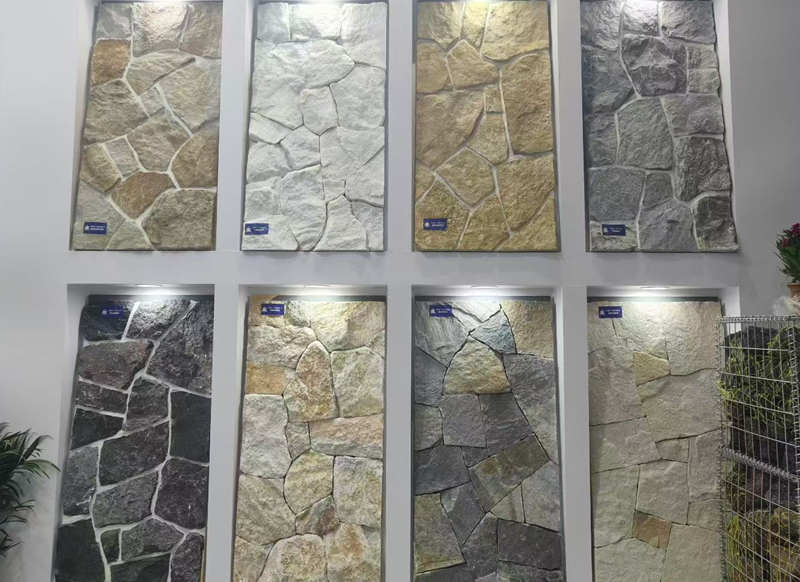
The Repetitive Pattern Flaw in Manufactured Stone Molds
The single most reliable visual indicator of a faux stone installation is the repetition of identical shapes and textures, a flaw natural stone can’t have because it’s not made from molds.
The Growing Scrutiny of Pattern Repetition
The market for high-end façades is no longer fooled by generic manufactured stone. Specifiers, architects, and homeowners have become acutely aware of the tell-tale repeating patterns inherent in molded products. What was once a minor compromise is now a major mark against a project’s perceived quality and authenticity. On large, uninterrupted surfaces like full-height feature walls or expansive commercial exteriors, these repeats become glaringly obvious, transforming a premium aesthetic into a mass-produced look.
This heightened scrutiny is a direct result of a more educated market. End-users view repetitive patterns as a clear sign of a factory-made product, undermining the natural, bespoke character they’re paying for. The demand for genuine realism has intensified, putting immense pressure on faux stone manufacturers to evolve beyond their foundational flaw: the finite library of molds.
How Manufacturers Are Addressing the Flaw
Leading manufacturers are investing heavily to mitigate the pattern problem, though they’re fighting an uphill battle against physics and economics. The primary strategy is scaling up: expanding physical mold libraries from dozens to hundreds of variations and employing digital sculpting to create more unique stone faces. This increases the “vocabulary” of shapes available for a single product line.
On the production floor, smarter processes aim to introduce randomness. This includes randomized casting sequences and strategic panel layout algorithms designed to prevent predictable placement of identical molds side-by-side. Some premium brands now provide detailed pattern-mixing guides and installer training, acknowledging that a skilled mason can partially disguise the flaw through careful placement. However, these are mitigation tactics, not a fundamental solution.
The Inherent Advantage of Natural Stacked Stone
Genuine thin stone veneer, like the loose stone cladding from Top Source Stone, sidesteps this issue entirely. There is no “pattern flaw” because there is no pattern to begin with. Each piece is a unique slice of quarried geology—slate, quartzite, or sandstone—with its own distinct grain, mineral composition, and fracture texture. This guarantees what we term zero-repeat natural variation.
This inherent randomness isn’t a manufacturing feature; it’s a geological fact. It’s the core value proposition for projects where authenticity is non-negotiable. The bespoke random-lay pattern achieved by hand-laying these individual stones adds character and perceived value that manufactured stone simply cannot replicate, no matter how large its mold library grows.
Pattern Control as a Quality Differentiator
As the market matures, the control of visual repetition has become a key benchmark separating product tiers. For manufactured stone, advanced pattern randomization is now a hallmark of the premium segment, commanding higher prices. For contractors and distributors, specifying these better-varied products is a risk-management strategy, reducing the likelihood of client callbacks and dissatisfaction over a visibly artificial installation.
Ultimately, natural stacked stone remains the unassailable benchmark. For architects and designers who prioritize a genuine, one-of-a-kind look without compromise, it is the default choice. The bespoke random-lay pattern of individually laid, sawn-back stones delivers full-depth visual integrity, making the finished project indistinguishable from a traditional, structural stone wall—an authenticity that no molded product can ever fully achieve.
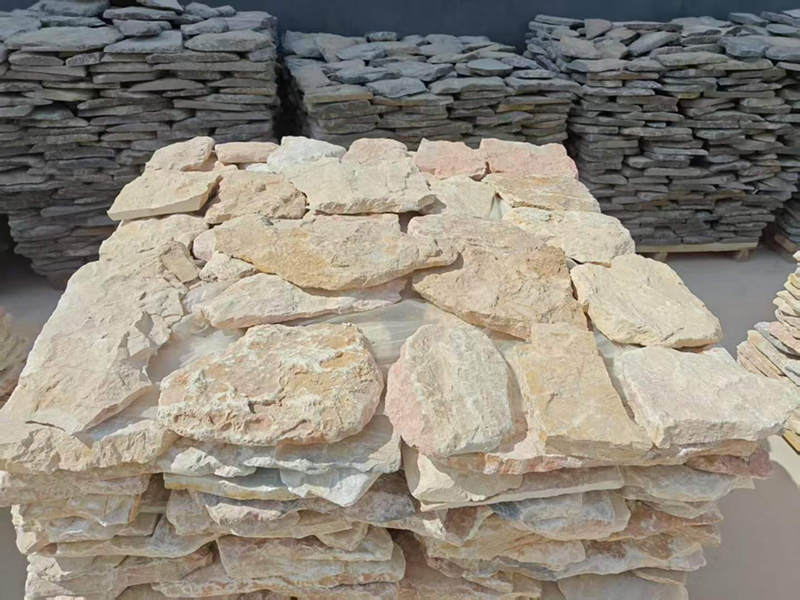
Environmental Impact and Sustainability in Quarrying
Modern quarrying is no longer just extraction; it’s a lifecycle operation defined by rigorous land rehabilitation, closed-loop water systems, and a drive for circularity that directly challenges the energy-intensive manufacturing of engineered alternatives.
The conversation around sustainability in building materials often simplifies to “natural vs. manufactured.” The reality is more complex. While manufactured stone avoids the direct land impact of a quarry, its production is carbon-intensive, relying heavily on cement. A life-cycle assessment reveals the trade-off: resource extraction versus energy-heavy manufacturing. For specifiers, the decision hinges on verified data—water consumption per ton, carbon footprint from cradle-to-gate, and the post-extraction fate of the land. Modern quarrying operations are now accountable to these metrics, implementing practices that move beyond mitigation to regeneration.
Land Use and Rehabilitation in Modern Quarrying
The image of a permanently scarred landscape is outdated. Today, responsible quarrying is a temporary land use with a legally binding end plan. Before a single block is extracted, operators must submit detailed closure and rehabilitation plans to regulatory bodies. The goal isn’t just to backfill a hole; it’s to restore or enhance ecological function.
Progressive rehabilitation is the new standard. Instead of waiting until the entire site is exhausted, restoration happens in phases alongside active extraction. As one section is mined, another is being reshaped, re-soiled, and re-vegetated. This minimizes the site’s overall environmental footprint at any given time. End-state visions are ambitious: former quarries are transformed into recreational lakes, wetlands that support biodiversity, agricultural land, or community parks. This shift from a liability to a community asset is a core part of the modern quarry’s social license to operate, supported by real-time monitoring to control dust, noise, and vibration for surrounding ecosystems.
Water Management and Resource Efficiency
Water is a critical resource in quarrying, used for cutting, dust suppression, and equipment cooling. The industry’s answer to high consumption is the closed-loop system. On-site water treatment and recycling plants capture process water, remove suspended solids, and recirculate it. This practice can reduce freshwater withdrawal by over 90%, turning a quarry into a nearly net-zero water consumer for its processes.
Preventing contamination is equally critical. Sediment ponds and advanced filtration systems are standard, ensuring that runoff water is cleaned before it leaves the site boundary. This protects local waterways from siltation and preserves groundwater quality. For architects pursuing projects like the Living Building Challenge, this level of documented water stewardship is a tangible differentiator. It provides a quantifiable counterpoint to the water used in the production of cement for manufactured stone.
Energy and Carbon Footprint: From Quarry to Project
The carbon footprint of natural stone is concentrated in two areas: extraction/processing and transportation. Diesel-powered excavators and haul trucks, along with the energy for diamond-wire saws and processing plants, contribute to the initial embodied carbon. However, this must be compared to the manufacturing phase of faux stone, where the production of Portland cement is a major global CO2 emitter.
| Impact Factor | Quarried Natural Stone | Manufactured Stone Veneer |
|---|---|---|
| Primary Carbon Source | Diesel for extraction/transport, electricity for processing. | High-energy calcination of limestone for cement production. |
| Material Composition | 100% inert mineral. Zero synthetic binders or pigments. | Cement-based matrix with aggregates & synthetic iron-oxide pigments. |
| Key Mitigation Strategy | Electrification of equipment, on-site solar, and sourcing local stone. | Use of supplementary cementitious materials (SCMs) like fly ash. |
| End-of-Life | Inert, can be crushed for aggregate or landfill with no leaching. | Cementitious waste, less easily recycled, typically landfilled. |
Forward-thinking quarries are tackling their footprint head-on by investing in electric machinery, powering operations with renewable energy, and optimizing logistics. The single most effective carbon reduction strategy for natural stone, however, is sourcing locally. Specifying stone from a regional quarry can slash transportation emissions, making the total embodied carbon competitive with—or lower than—a manufactured product shipped from a distant factory.
Waste Reduction and Circular Economy Practices
A quarry’s primary product is dimensional stone, but its secondary output is a stream of valuable by-products. The circular economy model turns waste into resource. Stone fragments and slurry from cutting and processing are not sent to landfill; they are screened and crushed into construction aggregates, road base material, or terrazzo chips.
Innovation is pushing this further. Fine stone dust, once a nuisance, is now researched as an additive for concrete or as a soil amendment. Advanced cutting technology, like computer-controlled wire saws, optimizes block yield, minimizing raw waste at the source. Even packaging is scrutinized, with a shift to recycled and recyclable materials. This comprehensive approach to resource efficiency means over 95% of what comes from a modern quarry site finds a use, contrasting with the linear “take-make-dispose” model of many manufactured goods.
Sustainability Certifications and Transparency for Specifiers
For architects and designers, greenwashing is a real risk. Third-party certifications cut through the noise. Tools like Environmental Product Declarations (EPDs) provide a standardized, quantifiable report card on a product’s environmental impact—from global warming potential and water use to resource depletion. Certifications like NSF 347 for sustainable quarried stone or Declare Labels offer transparent, third-party-verified data.
This transparency allows for an apples-to-apples comparison. A specifier can directly compare the EPD of a locally quarried sandstone to that of a manufactured stone veneer. This data feeds directly into major green building rating systems like LEED and BREEAM, where points are awarded for material transparency and low embodied carbon. For a B2B buyer, specifying certified natural stone isn’t just an aesthetic choice; it’s a documented, defensible sustainability decision that contributes to the project’s overall environmental goals and marketability.
Conclusion
Choosing between natural thin stone veneer and manufactured faux stone ultimately depends on the project’s priorities for authenticity and longevity. The core differentiators—100% natural composition, zero-repeat patterns, and lifetime color fastness under UV exposure—ensure that real stone provides a durable, unique aesthetic that ages with character rather than deteriorates. For premium residential and architectural projects, these factors translate directly into lasting value and visual integrity.
For dealers and wholesalers sourcing materials that meet these high standards, reviewing a detailed catalog of quarry-direct, climate-tested stone is the next logical step. Contact us to request samples and technical specifications for our core inventory of individually sawn-back loose stone veneers.
Frequently Asked Questions
Is real thin stone veneer better than manufactured stone?
“Better” depends on project priorities. Real stone offers premium durability, unique natural variation, and high-end prestige, but comes with higher cost, weight, and more complex installation. Manufactured stone (colored concrete) provides excellent mimicry of stone’s look with lighter weight, faster installation, lower cost, and often better sustainability metrics due to reduced transport emissions. The choice balances authenticity against performance and budget.
Does faux stone veneer fade in the sun?
High-quality faux stone veneer is manufactured with UV-stable pigments and sealants specifically to resist fading. However, prolonged, direct exposure to intense sunlight over many years can cause some degree of fading in lower-quality products. For critical exterior applications, always specify products with a manufacturer’s warranty against fading and ensure they are rated for full sun exposure.
How to tell the difference between natural and cultured stone?
Key identifiers are weight, texture, and pattern repetition. Natural stone is significantly heavier, has a cooler temperature to the touch, and features completely random, non-repeating patterns and color variations. Cultured (manufactured) stone is lighter, often feels warmer, and may show repeating mold patterns or a more uniform distribution of color if you examine multiple pieces side-by-side. The back of natural stone is rough and untextured, while manufactured stone often has a flat, concrete-like back with mesh or a grid pattern.
Which stone veneer lasts longer outdoors?
Properly installed, both can last for decades. Natural stone veneer generally has a longer inherent lifespan as it is a geological material highly resistant to weathering, freeze-thaw cycles, and UV degradation. High-quality manufactured stone is engineered for outdoor durability with additives for strength and weather resistance. The longevity of either product is heavily dependent on correct installation, including proper moisture management (flashing, weep holes) and the use of compatible mortars and sealants.
Will chipping manufactured stone ruin the color?
No, chipping will typically not ruin the color of quality manufactured stone. The color pigments are integrated throughout the entire thickness of the concrete mix, not just applied as a surface coating. Therefore, a chip will reveal the same color beneath the surface. However, the exposed area will have a different, rough texture compared to the finished face, making the chip visually noticeable.
